
Israel’s relations with Middle Eastern countries have been enhanced during the war with Iran, The Jerusalem Post learned on Monday.
One angle the Post understands is that many Abraham Accords countries are working sometimes directly with Israel militarily, and even those who have not yet joined the accords are sometimes working in parallel to Israel through US Central Command (CENTCOM) as the current war has impacted them more.
Iran’s latest massive ballistic missile and drone attacks on them have only drawn them closer to Israel and the US in a variety of ways.
While there are many dimensions to these ever-evolving relations, one area where relations have become enhanced is specifically with some Abraham Accords countries.
Morocco, the UAE, and Bahrain have all increased military exchanges with Israel in their own individual ways since the accords were signed in 2020.

For example, on February 16, Morocco was announced as one of a group of countries slated to participate in the International Stabilization Force (ISF), expected to be deployed in Gaza to supervise the Israel-Hamas ceasefire.
Prior to the Abraham Accords and the ongoing positive military interactions and trust built between Israel and Morocco, this might not have been possible.
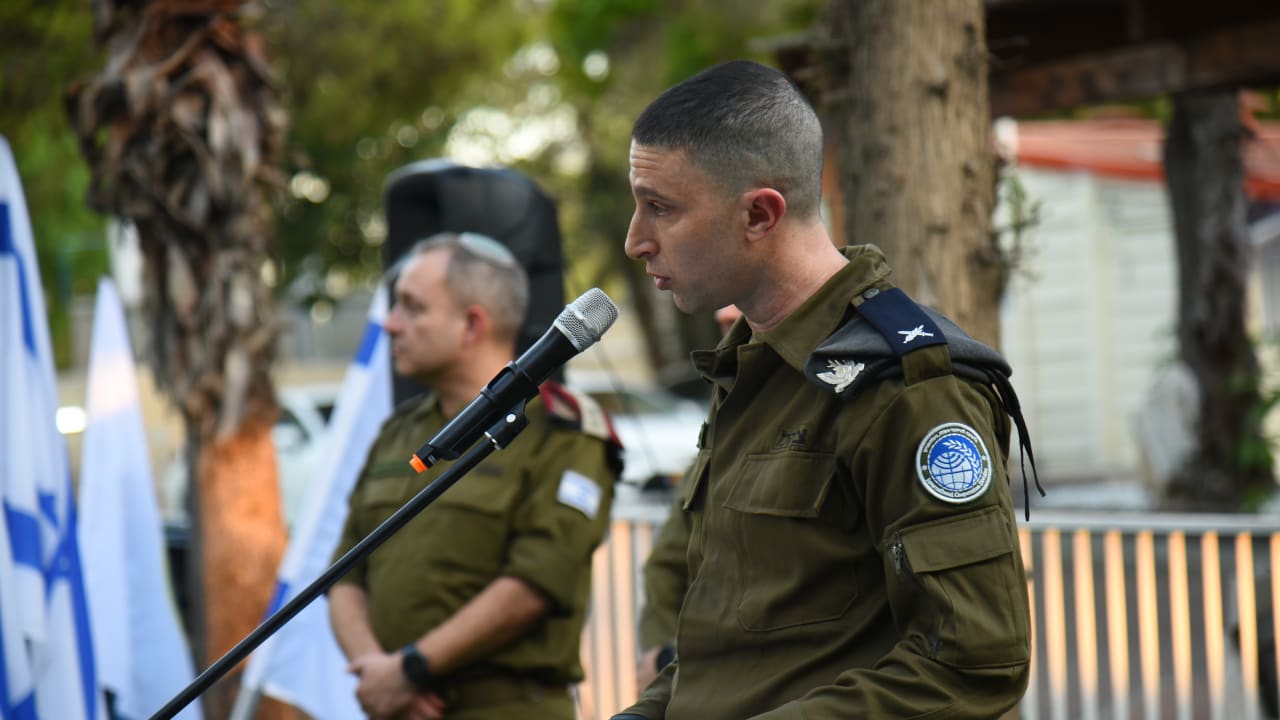
In November 2025, around 130 foreign military officials visited IDF installations and received classified briefings about IDF tactics, head of IDF Commander Training Col. “A” told the Post.
Israel-Morocco military ties
“A” added that these foreign military officials, which included representatives from Morocco, can become “ambassadors” on behalf of Israel in their home countries.
In addition, “A” discussed the participation of Morocco specifically, noting, “these are very important relations. Any country which wants peaceful relations will be invited to be a friend, but building relations beyond peace, a serious partnership, this is an advantage – it helps them and it helps us.”
Israel and Morocco have also held joint publicly acknowledged military exercises in 2023 and 2025.
In July 2025, the Post exclusively reported that in his role as Defense Ministry’s director-general from 2023 – March 2025 – prior to becoming IDF chief, Eyal Zamir facilitated the export of arms to Morocco and the United Arab Emirates.
With many of these countries, and even their leaders, he had deep personal connections from his three-year period in the Prime Minister’s Office during the previous decade.
Israel should build cyberdefense coalition with Middle East partners, former INCD chief tells ‘Post’
In May 2025, Gaby Portnoy, who had just exited his role as Israel National Cyber Directorate chief, told the Post in an exclusive interview that Israel should build a cyberdefense coalition including all of the Middle Eastern countries that helped defend Jerusalem against Iran’s ballistic missiles in two attacks in 2024, which included the Saudis.
Portnoy said, “We and the UAE still have an international project to combat cybercrime. We are building a platform for information sharing between 33 countries,” said the outgoing INCD chief, who ran the authority since early 2022.”
He also told the Post that Israel and the UAE had added 20 new countries to the initiative in the last year. All of this meant that those countries actively sharing information jumped to 33 from 13, and those passively on the platform jumped to 70 from 40 a couple of years ago.
Also, despite the war, in cyber relations with Morocco and Bahrain, “there is also progress forward,” he stated.
A major distinction between various activities is that entities like the INCD or the IDF’s International Cooperation Division work together with their cyber and military counterparts in Abraham Accords countries, whereas the Mossad generally is at the forefront with countries where Israel does not have formal diplomatic relations.
For example, former Mossad directors Tamir Pardo and Yossi Cohen met with Saudi Crown Prince Mohammed Bin Salman while they ran the spy agency.
Despite that general distinction, there is sometimes some crossover.
In May 2025, then-IDF Operations Directorate head Maj.-Gen. Oded Basyuk met with Turkish officials in Azerbaijan to facilitate potential relations with the new Syrian government, run by Ahmad al-Sharaa.
Though the IDF denied that Israeli and Syrian officials met directly, a variety of reports, including sources confirming directly to the Post, have alluded to various kinds of contacts between Israelis and Syrians since December 2024.
These relations would presumably be managed by the International Cooperation Division.
Likewise, in 2022, then-IDF chief Aviv Kohavi met with senior Arab military leaders, including Saudi Arabia’s Chief of Staff Gen. Fayyadh bin Hamed al-Ruwaili, in Sharm el-Sheikh to discuss countering regional threats posed by Iran.
According to a report by The Wall Street Journal, the meeting was conducted under the auspices of the United States, represented by then-CENTCOM chief Gen. Frank McKenzie, and brought together the top military commanders from Israel, Saudi Arabia, Qatar, Egypt, and Jordan.
This, too, would likely have been coordinated by the International Cooperation Division, currently headed by Brig.-Gen. Amit Adler, who previously served in the air force.