
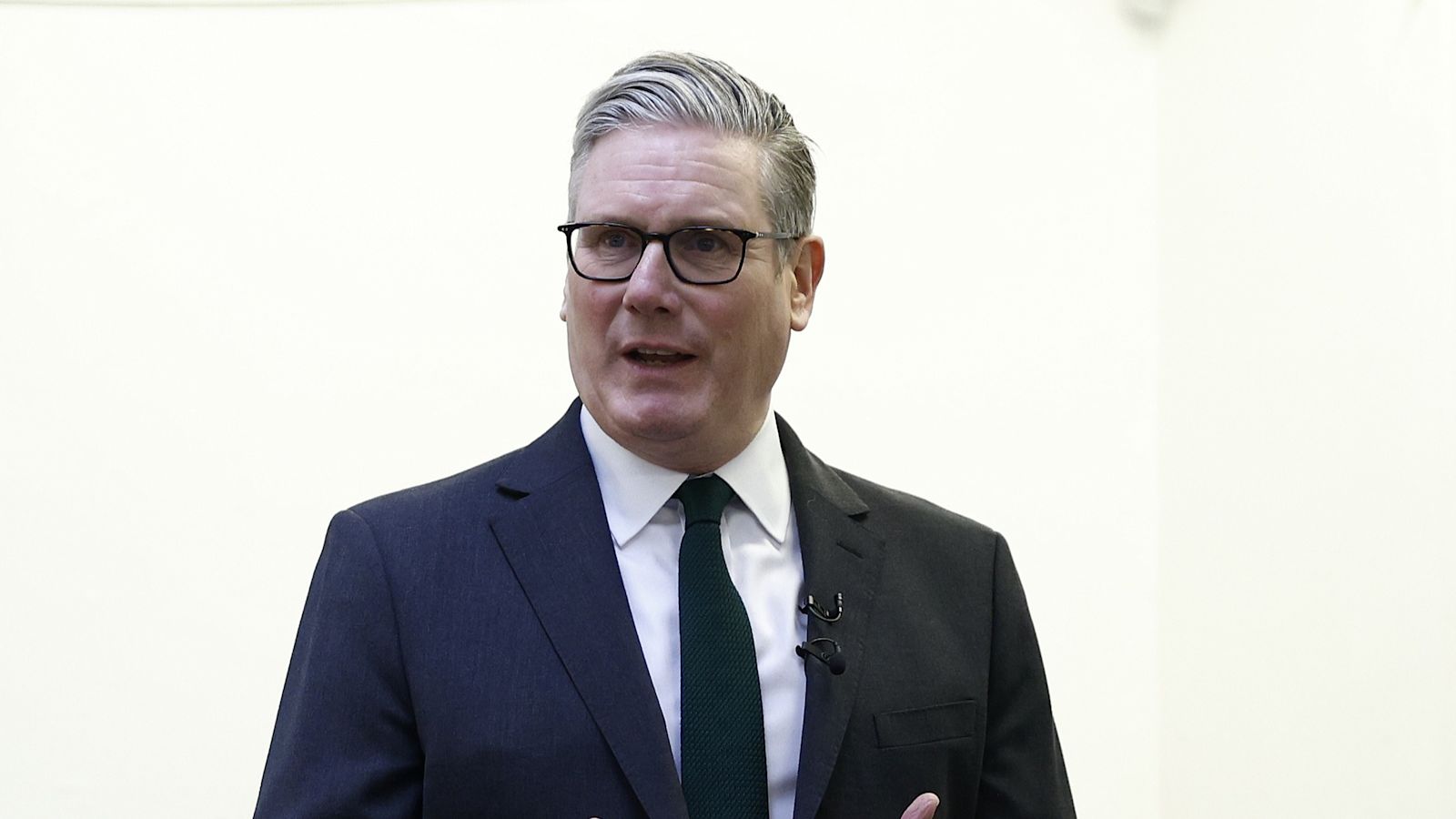
The war in Iran could hit “every household and every business” in the UK, the prime minister has warned, as he promised “to get ahead” of any potential impact on people’s finances.
Speaking at a community centre in London after the price of oil surged to a four-year high, the prime minister said: “The longer this goes on, the more likely the potential for an impact on our economy, impact on the lives and households of everybody and every business.”
The PM said the government’s job is to “get ahead of that, to look round the corner, assess the risk.”
He insisted the economy is better place to absorb the impact of war in comparison to the Ukraine invasion in 2022.
Starmer said: “I do understand the anxiety now, at nine days into this conflict, where a number of people will be saying, ‘well, now is the situation going to get worse, and how’s it going to impact me and my family?’
“At the moment, what we’re doing is monitoring the risk, working with others to mitigate the risk.
Oil prices have soared above $100 a barrel for the first time since 2022 in response to the crisis.
London’s FTSE 100 Index fell nearly 2% soon after opening as the Middle East conflict caused an acute supply crunch.
Subscribe free to our weekly newsletter for exclusive and original coverage from ITV News. Direct to your inbox every Friday morning.
Most UK households will be protected from the impact of rising energy prices in the short-term by the energy price cap. But rising oil prices will be felt by consumers at the pump.
The Bank of England is now unlikely to cut interest rates this month, contrary to earlier expectations, as rising energy costs have increased the risk of higher inflation.
Finance ministers from the G7 group of leading democracies, including Chancellor Rachel Reeves, met virtually on Monday to discuss the crisis.
Following the meeting, Reeves made a statement to the Commons, in which she warned rising oil prices would impact inflation in the UK, but that she was “taking action to ensure that people pay the lowest possible price at the pump”, amidst the ongoing conflict .
Starmer said the US and the UK “are working together every single day, as they always have” despite the public attacks on him by Trump.
“I had a telephone call with President Trump yesterday talking about the conflict in Iran and the region and what we were doing together, and that was important in terms of the ongoing discussion,” he said.
But he added that “decisions about what’s in Britain’s best interests are decisions for the Prime Minister of Britain, and that’s how I’ve approached all of the questions and all the decisions that I’ve had to make”.
Earlier this week, the president said he was “not happy” with Starmer over his decision not to get involved in the initial strikes.
He also said, “This is not Winston Churchill that we’re dealing with”, after Starmer denied him permission to launch strikes on Iran from UK territory.
US President Donald Trump has sought to play down the impact of the turmoil unleashed by joint US-Israeli attacks on Iran on February 28, insisting the prices will “drop rapidly when the destruction of the Iran nuclear threat is over” and were a “very small price to pay”.
“ONLY FOOLS WOULD THINK DIFFERENTLY,” he asserted in a post on his Truth Social platform.
From Westminster to Washington DC – our political experts are across all the latest key talking points. Listen to the latest episode below…