
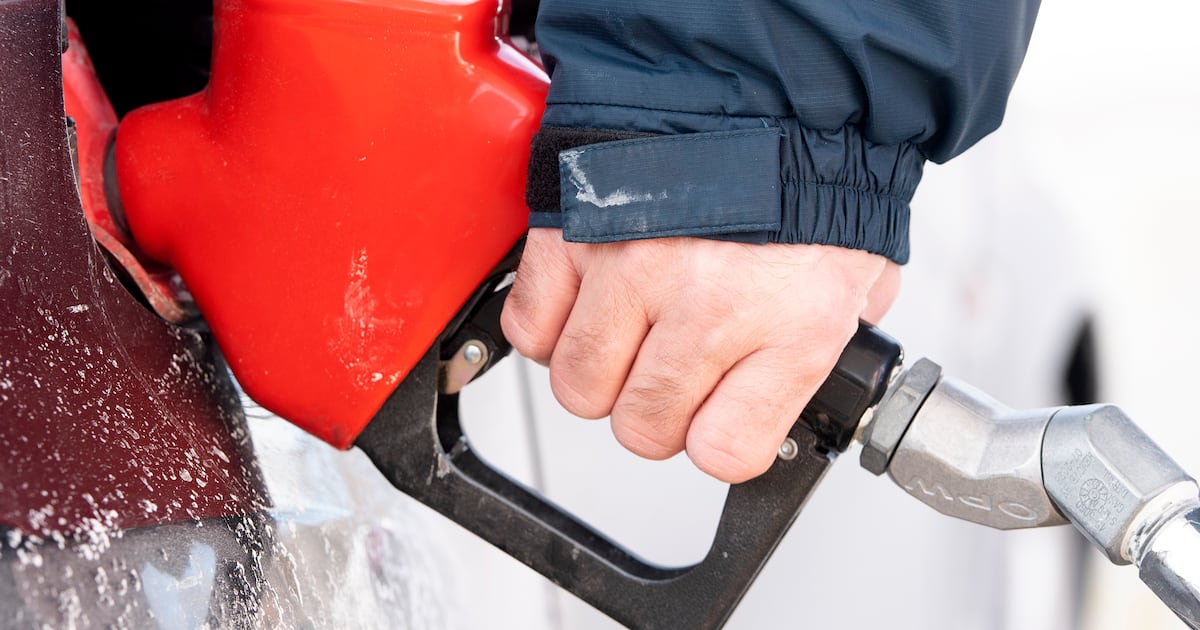
The war in the Middle East is taking a direct hit on gas prices across Canada and around the world. With no clear indication on how long the conflict will last, Canadians are bracing for gas prices to continue to soar.
Across the country, prices are spiking at the pump, from 173 cents/litre in B.C., to 166.6 cents/litre in Newfoundland as of Monday.
CTV News Channel spoke to two experts on Monday to gage where things could be headed next.
Ian Lee is a business analyst with Sprott School of Business at Carleton University in Ottawa. He said that, despite the strides taken in alternative energy sources like solar and wind, oil and gas still dominate energy supplies across the globe.
Strait of Hormuz re-opening ‘critical’ for lower oil and gas prices: business analyst Business analyst Ian Lee says he expects the price of oil and gas to come down ‘very, very quickly’ once the strait reopens.
Lee added that according to data from International Energy Agency, more than 50 per cent of all energy is produced by oil and gas, and 20 per cent of the world’s supply of oil goes through the Strait of Hormuz, which is currently closed because of the war.
Lee said a lot depends on how long the Strait will be closed for.
“When they open it up, those prices will come down very, very quickly,” he told CTV News Channel on Monday. “But that’s really a question of when the war with Iran will end.”
Lee said that the good news for Canadians is that unlike oil, natural gas prices depend on the region. Since North America has a significant supply of natural gas, he said those prices won’t be impacted, adding that the same can’t be said for places like Europe and Asia, where they’re “seeing natural gas going through the roof, in addition to gasoline prices.”
‘Oil is the thing that greases the wheels of the economy’: Analyst on rising gas prices Macdonald Laurier Institute’s Heather Exner-Pirot on what the closure of the Strait of Hormuz and higher energy prices mean for the wider economy.
Beyond the pump
Heather Exner-Pirot is the senior fellow and director of natural resources, energy and environment at the Macdonald-Laurier Institute. She described oil as the “wheels of the economy,” which impacts everything from transport to manufacturing and in turn “just about everything gets impacted when you have higher energy prices.”
“What happens when you have high energy prices is you start to see creeping inflation,” she said. “So just about everything gets impacted when you have higher energy prices.”
On Monday, G7 finance ministers met to talk about the possibility of releasing oil reserves. Exner-Pirot said that’s helped subside fear and panic around the situation, with oil on the market taking a bit of a tumble. However, if the Strait of Hormuz continues to be closed, Exner-Pirot stressed that we’ll continue to watch oil prices climb.
“It’s based on physical supply,” she said. “We are simply getting less physical supply into the world. And so you’ll see prices increase until you can get that flow through Strait of Hormuz.”
She added that there will likely be pressure for the U.S. to get prices down going into driving season, and before the midterms.
Oil prices will take time to recover: expert
Gitane De Silva, former CEO of the Canada Energy Regulator, told CTV News Channel on Monday that she thinks the volatility around the price of oil will continue as long as the conflict does, and for some time thereafter. “It’s pretty easy to turn the taps off, but it does take a while to get that production flowing again on the other side,” she said. “So even if peace were to break out tomorrow, I think this volatility will continue for a little while after that.” She added that potential damage to oil and gas infrastructure, like the bombing of a refinery in Bahrain, will impact global oil prices beyond the end of the war.