Israel, 2026
Before I begin, a little about myself.
I grew up in Jerusalem in what many Israelis would recognize as a somewhat unusual environment. It was a deeply Anglo neighborhood, the kind where English drifted through the streets almost as often as Hebrew. My family was modern religious, my school was Israeli, and the result was a childhood lived somewhere between worlds. Hebrew in the classroom, English at the Shabbat table, and a hybrid language we jokingly call “Hebrish” became my most fluent language.
Like many children of parents who made Aliyah, I grew up with a slightly divided cultural compass. Israeli by birth, yet shaped by a diaspora mindset. The small questions of identity appeared everywhere. Which sports team do you support? Which humor feels natural? Which language do you instinctively reach for when something really matters?
Over time, I realized that living in this kind of tension can be an advantage. It forces you to translate constantly between perspectives.
That dynamic has stayed with me into adulthood. Even today, I often find myself living between Jerusalem and Tel Aviv. Between religious and secular life. Between an Anglo outlook and an Israeli reality that moves at a different rhythm.
Professionally, I work in my father’s company, an Aliyah shipping business that has been helping families move to Israel since 1979. It is a deceptively simple service. People think we move furniture. In reality, we move lives. Every shipment represents a family making one of the most consequential decisions possible: choosing whether their future will unfold in Israel or elsewhere.
In a world where talented people can live almost anywhere, that decision is no longer automatic.
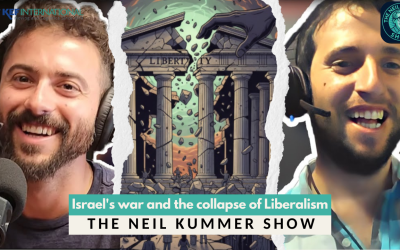
Alongside that work, I also manage and produce a podcast focused on Israel and the Middle East. The idea behind the show is straightforward. Try to shed light on what is actually happening here, beyond the headlines.
Many of the conversations focus on geopolitics and security. I often interview analysts who specialize in the Middle East, individuals who have spent their careers studying regional strategy, Iranian ambitions, or the shifting alliances of the Arab world. But the podcast also moves beyond pure policy. One episode might feature a Jewish artist whose work is shaped by the resurgence of antisemitism. Another might bring on an American Jew running for Congress who finds that Israel has suddenly become a defining issue in his campaign.
The show reflects the strange breadth of the Israeli story itself.
The war has also created another unexpected opportunity for me.
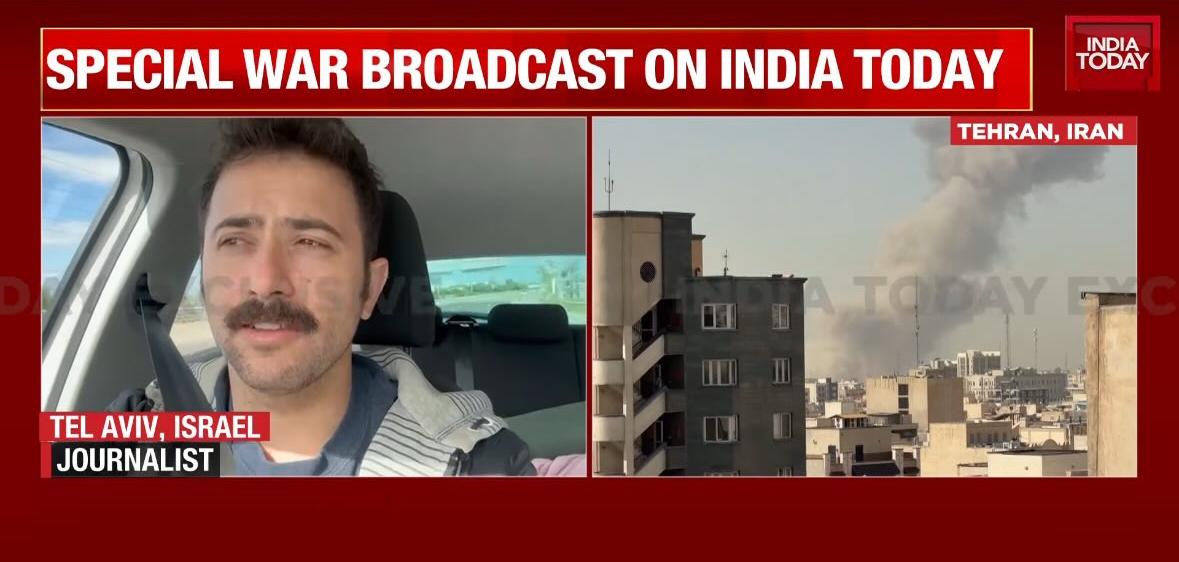
After October 7, journalists from across the world arrived in Israel to try to understand what had happened and what might come next. I began working with some of them as a fixer.
It is a curious profession and perhaps one of the most fascinating jobs the Western world has to offer. On paper, the fixer is the person who coordinates the interview/ story and logistics. In reality, the role becomes much more than that.
Within minutes, you become something like a semi-producer for major reporters and television crews. You do not just drive them from place to place. You help them understand the country, suggest interview subjects, brainstorm angles, and guide them toward stories that might otherwise remain invisible.
In subtle ways, you help shape the narrative that reaches audiences across the globe.
The work sits at the intersection of journalism, strategy, and storytelling. And for someone who cares about how Israel is understood abroad, it carries a quiet sense of responsibility. A fixer has unusual influence over what foreign reporters see and what they miss.
It is also, I admit, an unusual combination of meaning, excitement, and livelihood. Few jobs place you so directly inside history while it is still unfolding.
All of this is happening while Israel faces one of the most serious confrontations in its modern history, a direct conflict with the regime in Iran.
For decades, Iran has existed in the background of Israeli strategic thinking, the distant but constant adversary shaping security doctrine. Today, that tension has moved from the shadows into the open.
Yet what stands out most is not panic but resilience.
Israeli society continues to function with a kind of determined normalcy. Cafes remain open. Entrepreneurs still raise capital. Families continue planning weddings and vacations even as reserve soldiers rotate in and out of service. People who are making Aliyah are still calling in; the port is still working at full capacity.
So far, the confrontation, even against such a formidable enemy, has unfolded better than many feared. The casualties, while painful and deeply felt, have not reached the catastrophic levels once predicted. Israel’s defense systems, intelligence capabilities, and military planning have proven formidable.
But the deeper story is not technological. It is human.
Israelis have developed a cultural instinct for absorbing shocks without losing forward momentum. The country argues constantly about politics, religion, and identity, but when the moment demands it, the society shows a remarkable ability to hold together.
You can see this resilience reflected in the relationship between the country’s two most symbolic cities.
Jerusalem possesses a certain intellectual gravity. Conversations there often feel historical and philosophical. The city carries layers of memory, and that weight creates a culture deeply engaged with ideas, theology, history, and identity. It feels like a place where culture and intellect are produced through reflection.
Tel Aviv moves to a different tempo. It is vibrant and creative, but its energy today feels fast and intensely productive. It is a city of startups, technology, and constant motion. Tel Aviv produces culture as well, but its attention is often directed toward building the next company, the next product, the next technological breakthrough.
If Jerusalem leans toward spirit, Tel Aviv leans toward creation.
Both forces shape Israel.
And perhaps the country’s secret is that it lives in the tension between them.
Even now, in the midst of war, there remains a cautious optimism here. Many Israelis quietly believe that the current confrontation with Iran may eventually open the door to a different Middle East once the era of the Ayatollahs ends.
It is a distant possibility, but in Israel, imagining the day after is almost a national habit.
From where I stand, moving between Jerusalem and Tel Aviv, between Hebrew and English, between war reporting and everyday life, that instinct feels like the country’s most durable form of resilience.
Israel does not simply endure crises.
It builds through them, argues through them, and somehow keeps imagining what might come next.