
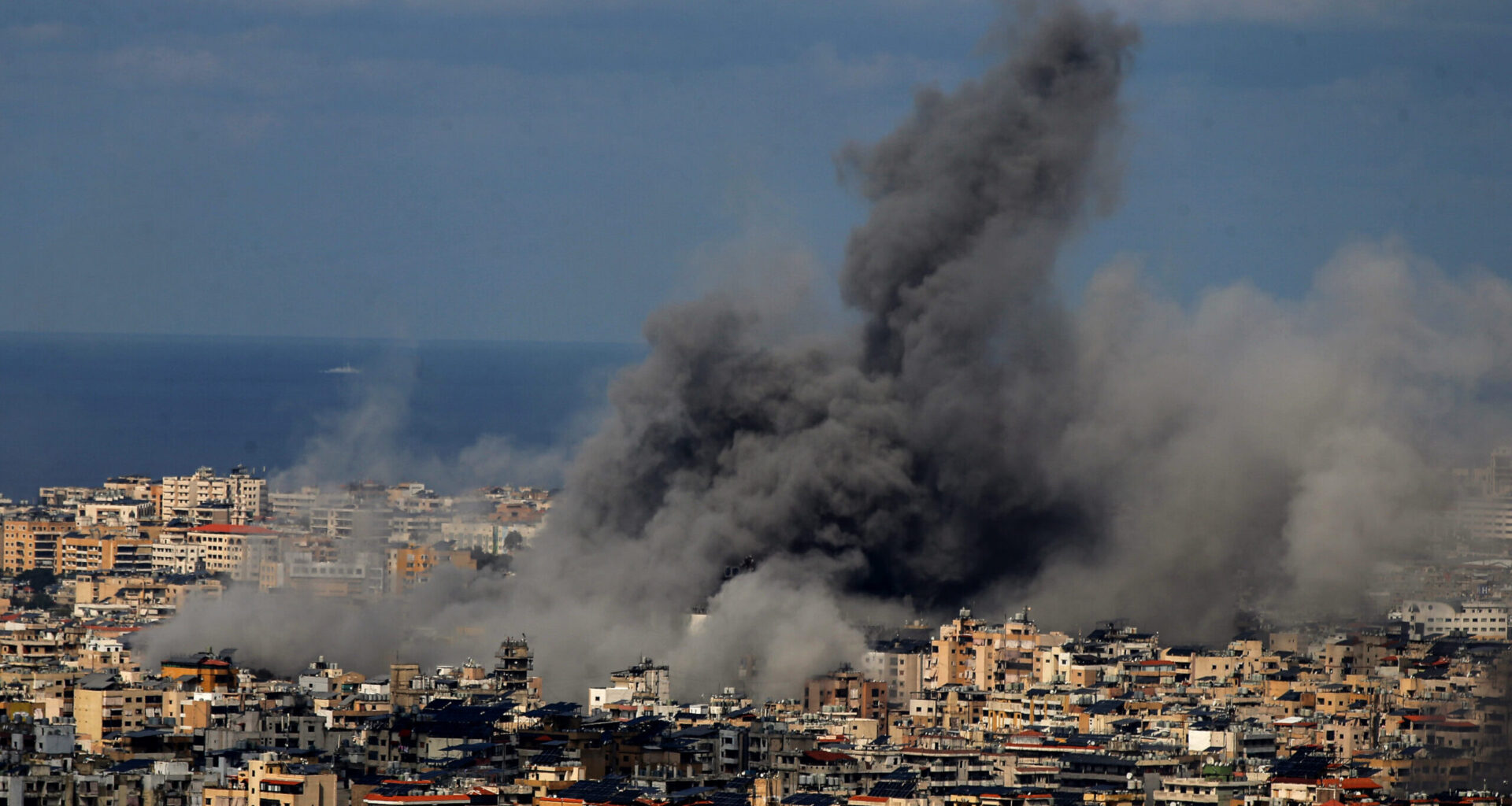
JERSUALEM — Israel is now embroiled in a multi-front war, one week after it launched airstrikes alongside the United States targeting Iran. The Israel Defense Forces have been carrying out airstrikes on Iran as well as striking at Hezbollah, an Iranian-backed militant group in Lebanon.
But experts and analysts consulted by Breaking Defense believe that the IDF should be able to handle both the Iran and Lebanese campaigns, as Israel has long labored under the assumption that a multi-front conflict was inevitable.
“The understanding in the IDF always was that in a war with Iran, Hezbollah would be involved,” says Yaakov Katz, author of “Shadow Strike,” a book about Israel’s raid on Syria’s nuclear program, and a fellow at the Jewish People Policy Institute. “This has long been drilled and prepared for and is playing out now.”
On March 2, the IDF launched strikes on Hezbollah in Lebanon after the Iranian-backed group launched rockets at Israel. On March 8, Israel’s Chief of Staff Lt. Gen. Eyal Zamir warned that Israel must be prepared for the fighting to take “considerable time,” and since then the IDF has expanded the operations, warning residents of southern Beirut to evacuate.
But while there have already been casualties in the Lebanese offensive — there have been reportedly several Israeli soldiers wounded and two soldiers killed — the analysts noted that the differences between Iran and Lebanon mean different levels of operation.
The IDF March 8 said that it has used around 820 munitions in Lebanon so far and eliminated 190 Hezbollah members. In contrast, the IDF said that in the first four days of conflict over Iran, it had used 5,000 munitions in strikes on Iran.
Sarit Zehavi, a former officer in the IDF and the founder and president of Alma Research and Education Center, noted the differences in the battlefields means the same kind of assets aren’t being stretched between the two theaters. In particular, the IDF is doing a ground operation focused on border security as opposed to long-range air operations in Iran.
“I don’t think anybody is surprised and that’s why I don’t think it’s too much [for the IDF],” she said.
Noted Katz, “Hezbollah has been severely weakened since the last war and therefore will have a hard time doing real damage to Israel. The IDF can also fight on two fronts at the same time since, in Iran, the focus is on the air while in Lebanon it can be on the air war but also on the ground.”
Eric Mandel, the founder and director of the Middle East Political Information Network (MEPIN), noted that “Israel’s northern air defense architecture; Iron Dome and the emerging Iron Beam laser system, is purpose-built for that theater of war, and less critical against Iranian projectiles.” Hence, he said, “the combined weight of American and Israeli forces and weapons systems against Iran allows Israel to redirect aerial power northward when needed.”
Given the way Hezbollah has been degraded over time, the threat on Israel seems less acute than that from Iran. Hence, Tehran will likely remain the primary focus for the IDF — with Elizabeth Tsurkov, a senior non-resident fellow at the DC-based New Lines Institute for Strategy and Policy, predicting that “Once the war with Iran wraps up, Israel may seek to expand operations inside Lebanon to destroy Hezbollah capabilities and also to force a new ceasefire deal.”
“This is a window of opportunity, one with no American restraint, allowing Israel to profoundly degrade Hezbollah’s capabilities,” Mandel said.