
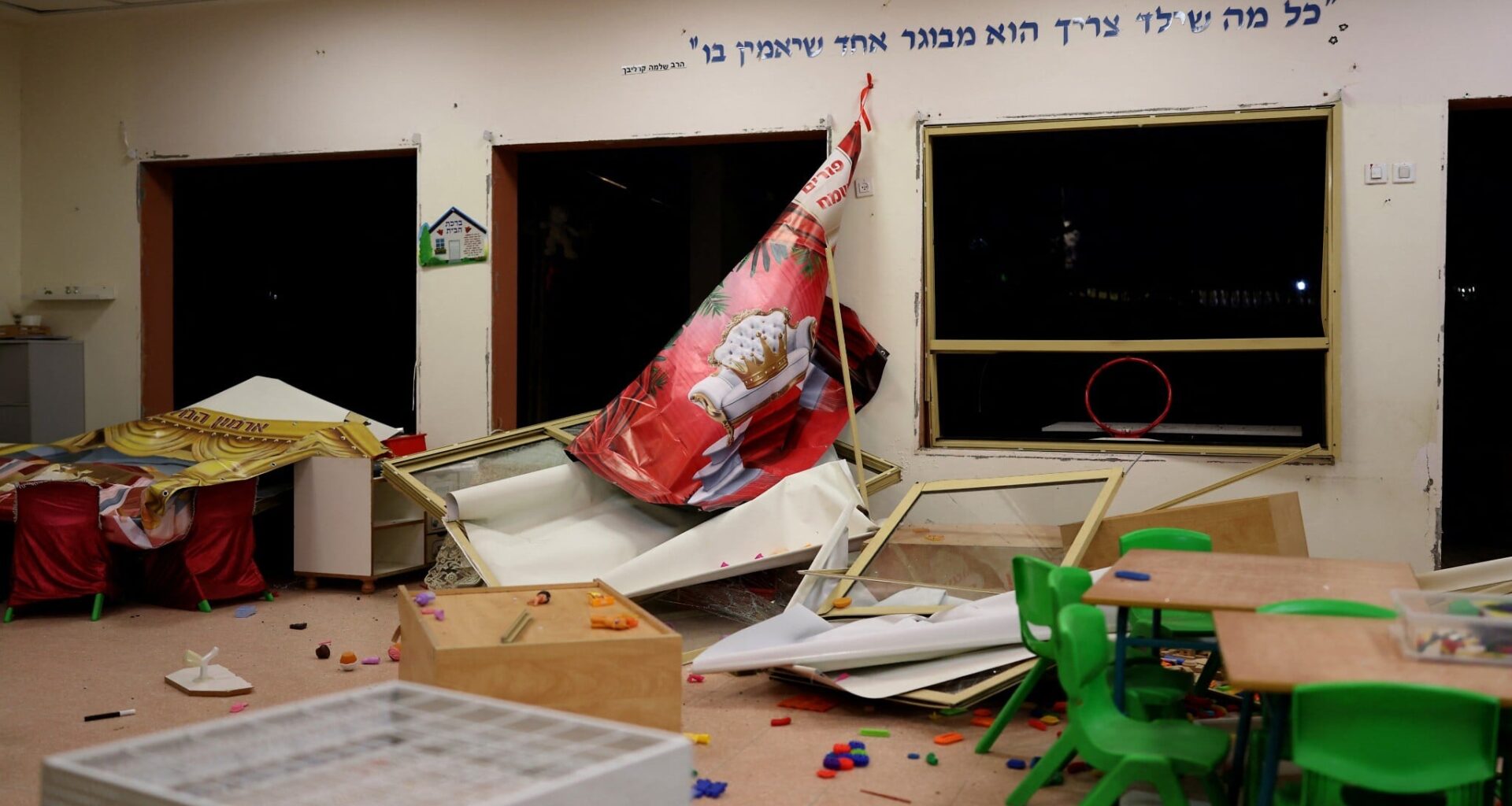
The Hezbollah terror group on Monday launched a barrage of missiles at central Israel, in its deepest attack since hostilities intensified last week, wounding 16 people lightly and causing damage to “infrastructure” and a daycare, authorities said.
The long-range attack came amid reports that officials expect the attacks from Lebanon to ramp up in the coming days, in an attempt to draw Israeli attention away from its conflict with Iran.
The Israel Defense Forces said air defenses intercepted some of the missiles and others hit open areas.
One missile impacted in central Israel, and the “circumstances of the incident are under investigation,” the military said.
That missile, which hit the central city of Ramle, lightly injured 14 people and caused damage to a daycare, rescue workers and the Magen David Adom ambulance service said.
Get The Times of Israel’s Daily Edition
by email and never miss our top stories
By signing up, you agree to the terms
No warning sirens had sounded in the city. The IDF Home Front Command was investigating the incident.
Meanwhile, “damage was caused to infrastructure,” and two people were lightly hurt when a missile struck “an open area in the Mateh Yehuda [Regional Council] area,” police said.
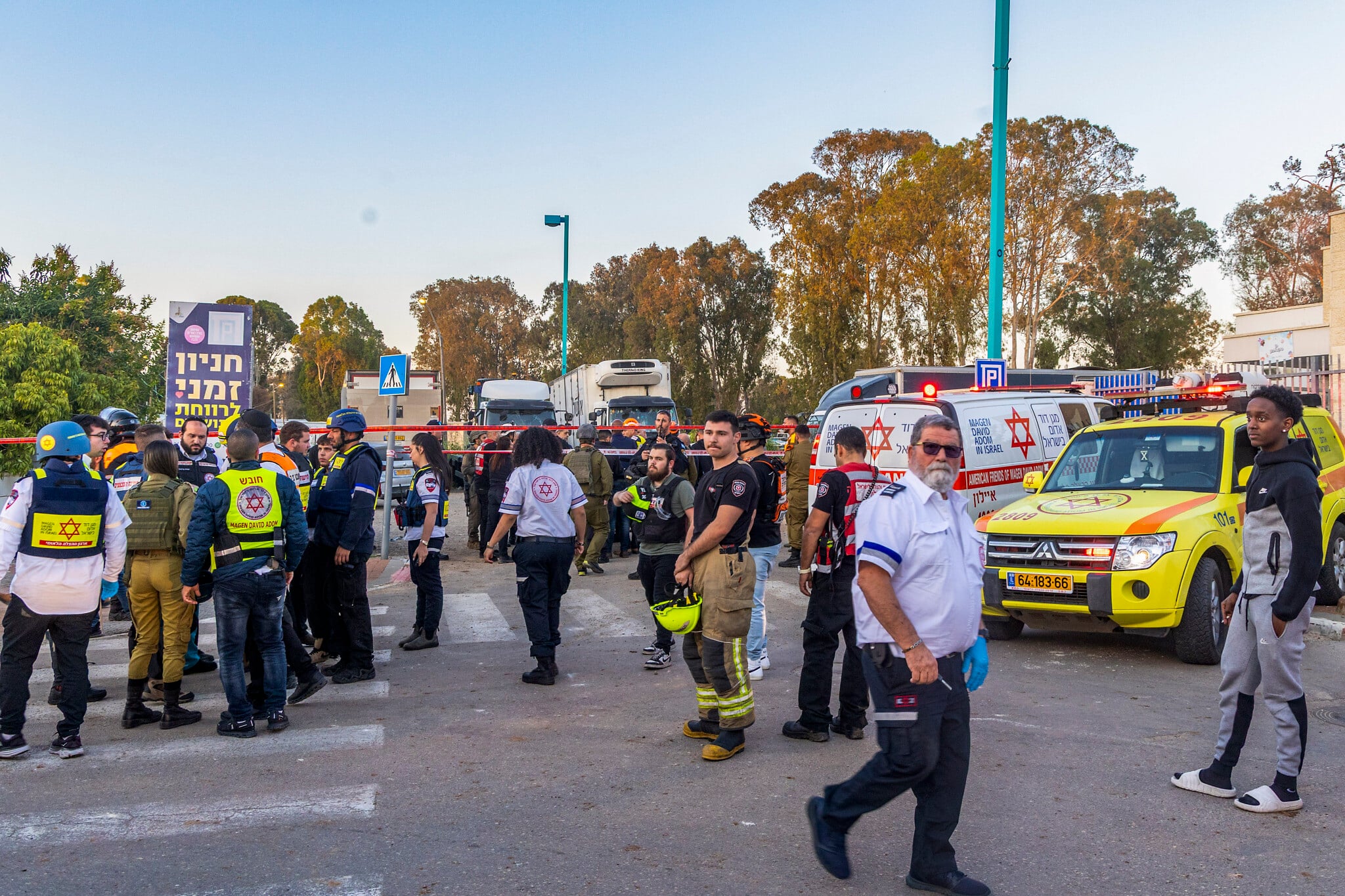
Israeli rescue and emergency forces at the scene where shrapnel from a missile fired from Lebanon fell outside a kindergarten in Ramle, March 9, 2026. (Yossi Aloni/Flash90)
In separate statements, the Iran-backed terror group claimed to have targeted the IDF Home Front Command headquarters in Ramle, known as Rehavam Base, as well as a “satellite communications station” in Haela Valley near Beit Shemesh, with a “barrage of precision missiles.”
Hezbollah claimed the satellite station belonged to the “Communications and Cyber Defense Division of the Israeli enemy army,” although the site is in fact not a military installation, but rather a civilian-commercial site operated by the European company SES.
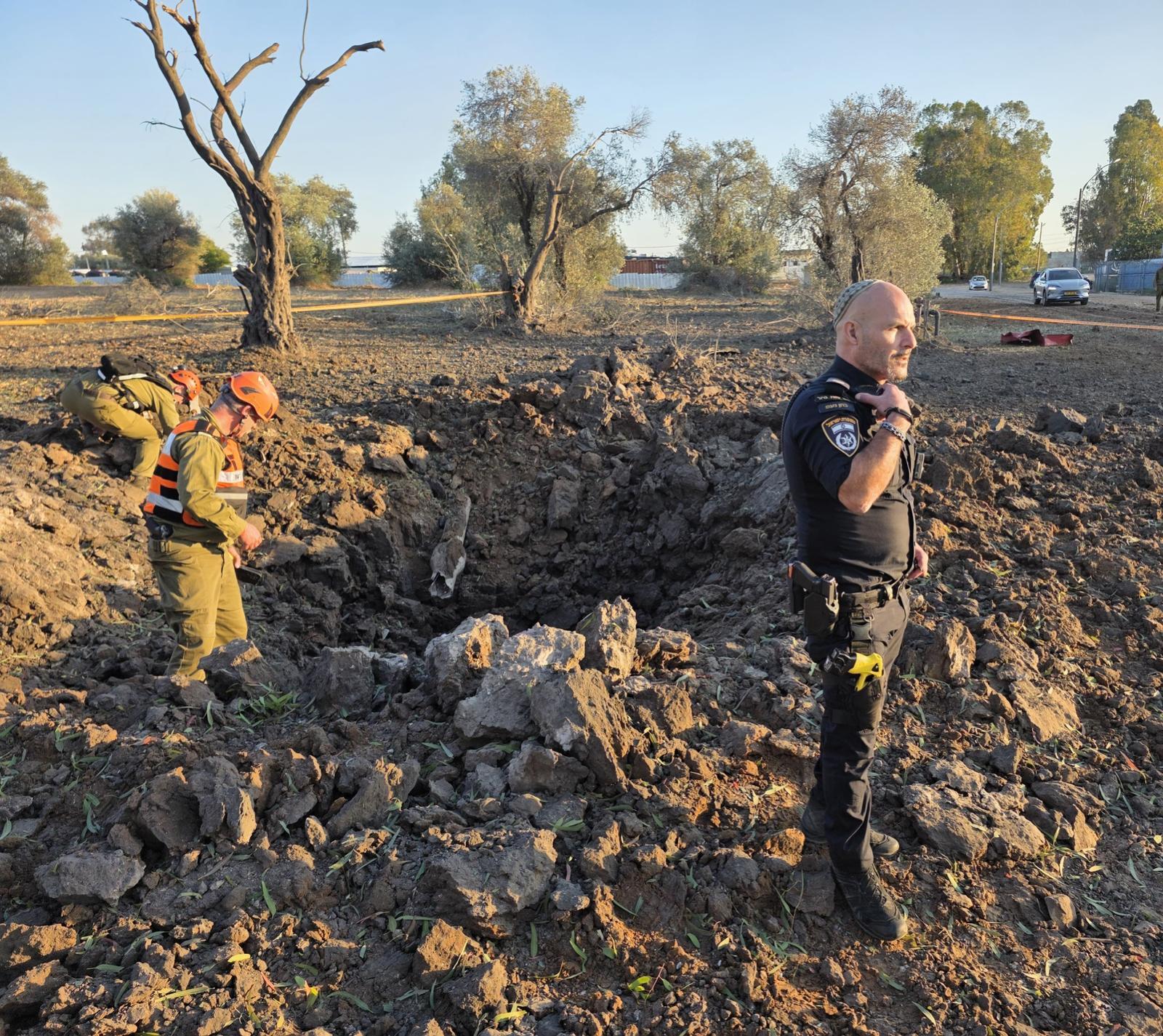
The site of a Hezbollah missile impact in an open area of central Israel, March 9, 2026. (Israel Police)
The IDF later said that the three Hezbollah launchers that had been used to fire the long-range projectiles at Israel were destroyed in airstrikes within an hour of the attack.
תוך דקות ספורות: חיל-האוויר תקף את המשגר ממנו נורו הרקטות לעבר שטח הארץ לפני זמן קצר pic.twitter.com/7MSjRgG7Ts
— Israeli Air Force (@IAFsite) March 9, 2026
The terror group has been attacking Israel with renewed rocket and missile fire since last Monday, claiming it is in retaliation for the killing of Iran’s late supreme leader Ali Khamenei.
Israel, in response, has struck hundreds of Hezbollah targets across Lebanon, including dozens in Beirut, and the IDF has pushed ground forces deeper into southern Lebanon in what it has said is a defensive measure to protect communities in northern Israel.
On Monday evening, Lebanese media reported that an Israeli airstrike hit a building belonging to the Hezbollah-linked Al-Qard al-Hasan (AQAH) association in the village of Aaqbiyeh, south of Sidon.
The IDF issued an evacuation warning for the building ahead of the strike, and warned earlier Monday that it would be striking branches of AQAH, which is known to be used by the terror group as a quasi-bank.
Founded in 1983, AQAH describes itself as a charitable organization that provides loans to people according to Islamic principles that forbid interest. It has more than 30 branches across Lebanon, mainly in Hezbollah bastions such as Beirut’s southern suburbs, but also in central Beirut and other major cities.
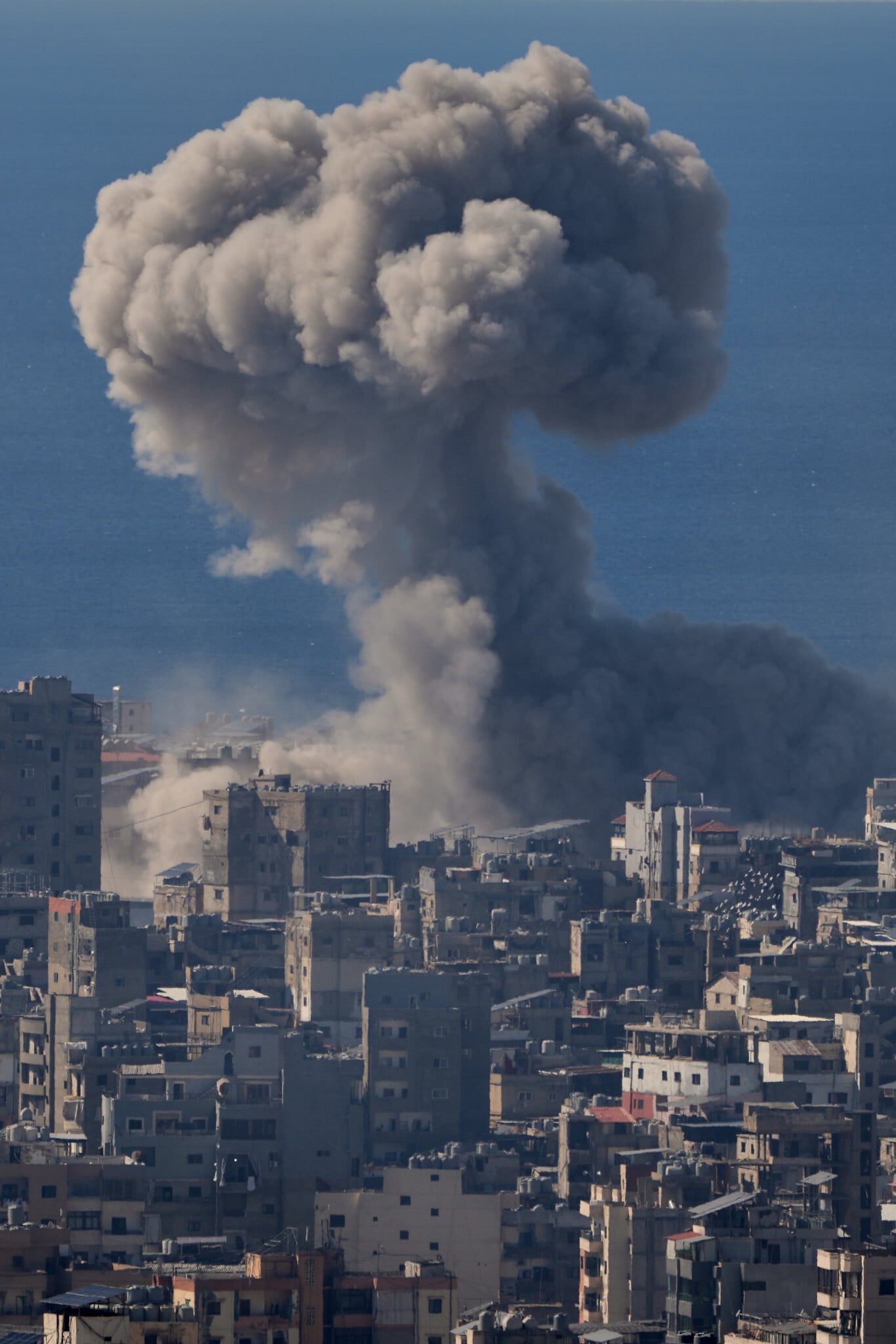
Smoke rises from an Israeli airstrike in Dahiyeh, Beirut’s southern suburbs, Monday, March 9, 2026. (AP Photo/Hassan Ammar)
However, the US Treasury Department, which sanctioned AQAH in 2007, has said that Hezbollah uses it as a cover to manage “financial activities and gain access to the international financial system.”
“While AQAH purports to serve the Lebanese people, in practice it illicitly moves funds through shell accounts and facilitators, exposing Lebanese financial institutions to possible sanctions,” it said in a statement sanctioning individuals linked to the organization in 2021.
The IDF also issued a wide evacuation warning for the entire village of Ansariya, just south of Aaqbiyeh, on Monday.
“The activities of the Hezbollah terror organization are forcing the IDF to act against it with force. The IDF does not intend to harm you,” said army spokesman Col. Avichay Adraee.
“For your safety, you must evacuate your homes immediately and move away from the village to a distance of no less than 1000 meters,” he said.
Diverting attention
As the IDF pushed ahead with its renewed operations in Lebanon, defense officials were said to have warned Prime Minister Benjamin Netanyahu and Defense Minister Israel Katz in a meeting on Monday evening that Hezbollah could be expected to increase its rocket and drone attacks in the coming days.
Citing senior Israeli officials, Channel 12 reported that security officials warned at the meeting that Hezbollah was seeking to wear down northern Israel and the broader home front by launching larger daily volumes of missiles and UAVs, including at strategic facilities.
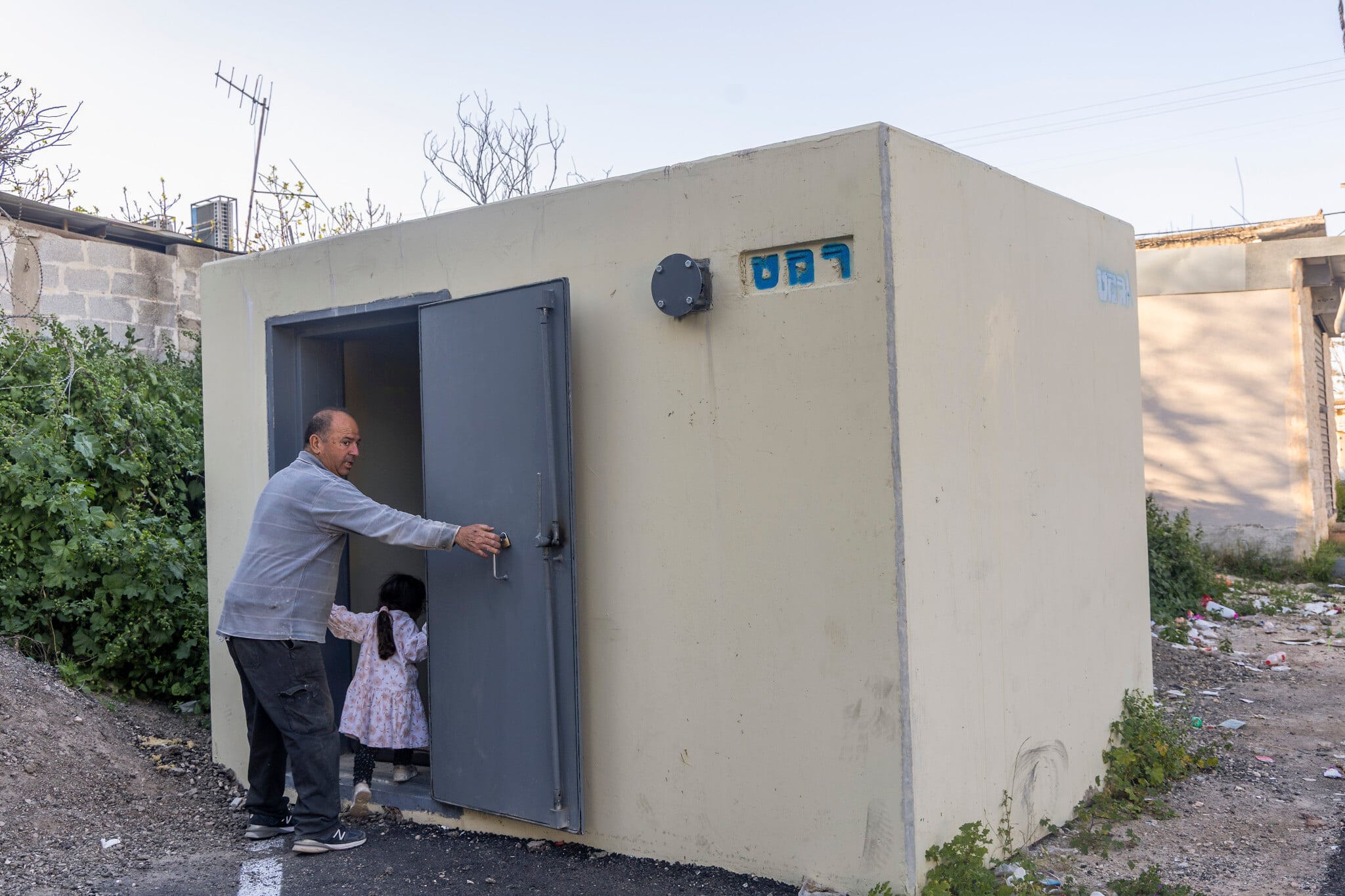
People rush to a public shelter in the city of Ramle after a siren warning of incoming missiles from Lebanon, March 9, 2026. (Yossi Aloni/Flash90)
Israeli officials have assessed that this, combined with reports of Hezbollah and other terror groups clashing with the Lebanese Armed Forces in southern Lebanon, is part of a broader effort to divert Israel’s attention from the ongoing campaign in Iran.
Weakening Hezbollah as a ‘shared interest’
Foreign Minister Gideon Sa’ar defended the IDF’s advances to the UN Special Coordinator for Lebanon, Jeanine Hennis-Plasschaert, telling her the deployment of the troops was necessary to prevent ground incursions by Hezbollah forces and rocket fire toward Israeli civilians and communities.”
“Hezbollah launched an attack against us, and there is no actor in the international community working to stop it except us,” said Sa’ar, in comments provided by his office.
He told the UN envoy that weakening Hezbollah was a “shared interest” of both Israel and Lebanon.
Shoring up that assessment, the Axios news site reported on Monday that the Lebanese government had recently proposed holding direct negotiations with Israel aimed at ending its war with the Iran-backed group and possibly reaching a peace agreement with Beirut.
According to the report, which cited five sources familiar with the matter, the possibility was raised through the Trump administration.
Both Jerusalem and Washington responded skeptically to the proposal, according to sources, including a US official, an Israeli official, and three sources with direct knowledge of the matter.
The Lebanese government was said to approach US envoy Tom Barrack — who worked on the Lebanon file last year but has been less active in recent months — last week, asking him to mediate with Israel. Beirut reportedly claimed that some Hezbollah members were open to a deal and proposed holding direct talks with Israel at the ministerial level in Cyprus.
Barrack was said to respond that the Lebanese government must “stop with the bullshit” on disarming Hezbollah in order to move forward. “If it’s not real action about Hezbollah’s weapons, there’s no point,” a source told Axios.
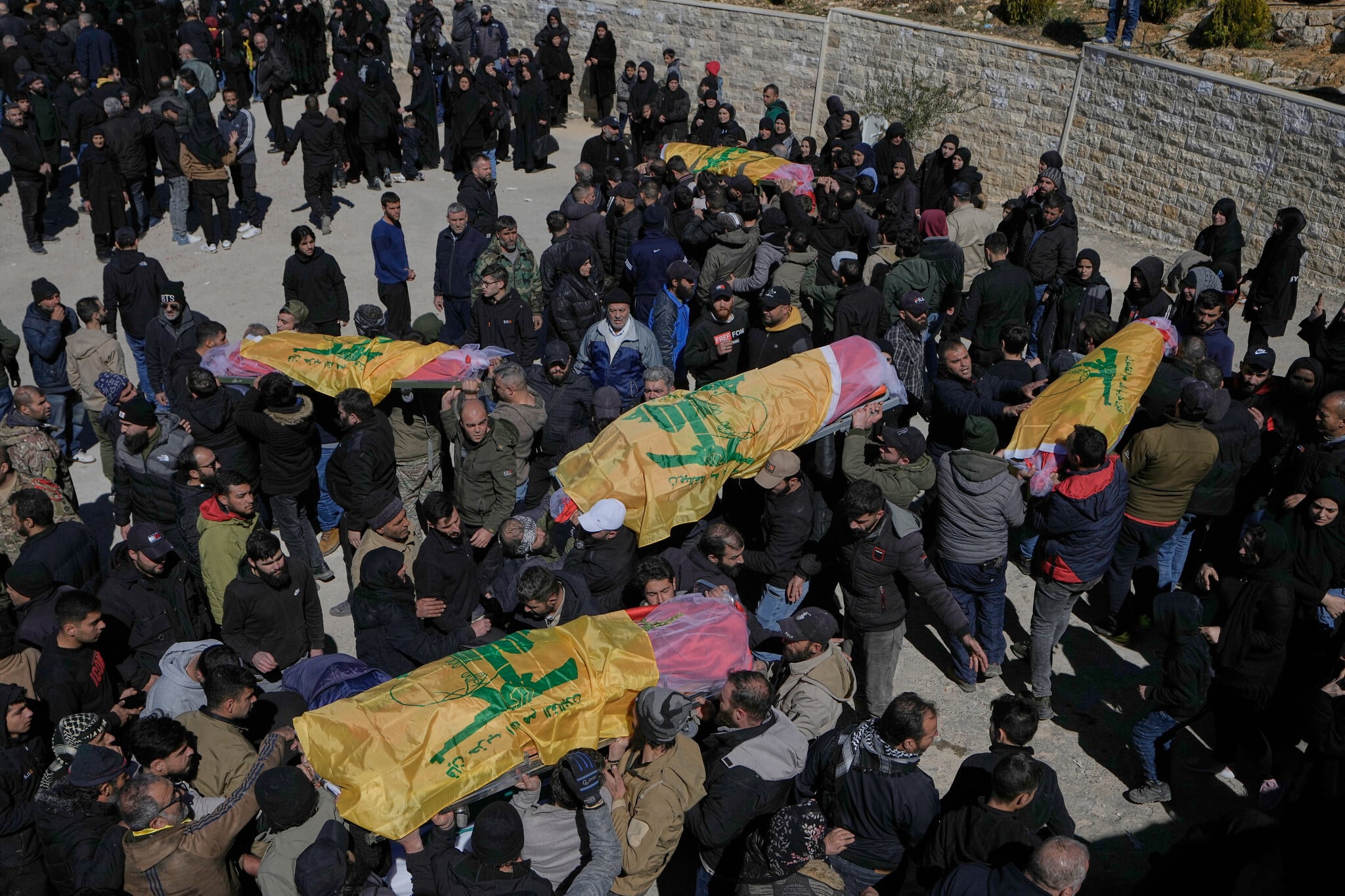
Mourners carry the bodies of Hezbollah fighters who were killed by Israeli airstrikes during their funeral procession in Khraibeh village, eastern Lebanon, March 8, 2026. (AP Photo/Bilal Hussein)
Some sources said that Lebanese Army chief Gen. Rodolphe Haykal has resisted deploying troops against Hezbollah while fighting continues, despite the army’s stated commitment to disarming the terror group. This has reportedly prompted pressure from Washington on Lebanese President Joseph Aoun to remove Haykal.
Israel rebuffed the proposal, Axios reported, saying that it was too late and that its military is currently focused on eliminating Hezbollah, the sources said, although Israel’s Channel 12 reported that Jerusalem was still examining the offer.
According to the sources cited by Axios, Lebanese officials have grown increasingly frustrated that the Trump administration has largely ignored their outreach, leaving little room for mediation or peace talks with Israel.
“There is no interest from the Trump administration to deal with Lebanon,” one source with knowledge told Axios.
Netanyahu’s office did not immediately respond to a request for comment on the report.
An Israeli official told The Washington Post in an earlier report that Israel is “willing to engage with Lebanese officials [to] reach agreement on a ceasefire,” though the official made no indication that any Lebanese proposal had been made.
Still, with or without Israeli peace talks, the Lebanese government appeared committed to keeping up the pressure on Hezbollah on Monday, with Aoun accusing it of working to “collapse” the state.
To stop the fighting in his country, the president proposed a four-point initiative and called on the international community to help implement it.
The plan included “establishing a full truce” with Israel, “logistical support” for the army to disarm Hezbollah, and “direct negotiations (with Israel) under international auspices.”
Syrian President Ahmed al-Sharaa endorsed his Lebanese counterpart on Monday, saying, “We stand alongside Lebanese President Joseph Aoun in disarming Hezbollah.”
But the head of Hezbollah’s parliamentary bloc, Mohamed Raad, vowed on Monday evening that his group would “defend our existence whatever the cost,” saying it has “no other option to preserve honor, pride and dignity than the option of resistance.”
Israel regularly struck Hezbollah targets in Lebanon following a November 2024 ceasefire agreement, accusing the terror group of ceasefire violations, and continued to hold on to five border posts inside Lebanon, citing security needs. It has now expanded beyond those points, citing defensive needs.
The ceasefire ended a year of hostilities between Hezbollah and Israel, which started when the terror group began firing missiles and drones into northern Israel one day after its ally Hamas launched a devastating attack on southern Israel that set off the war in Gaza.