
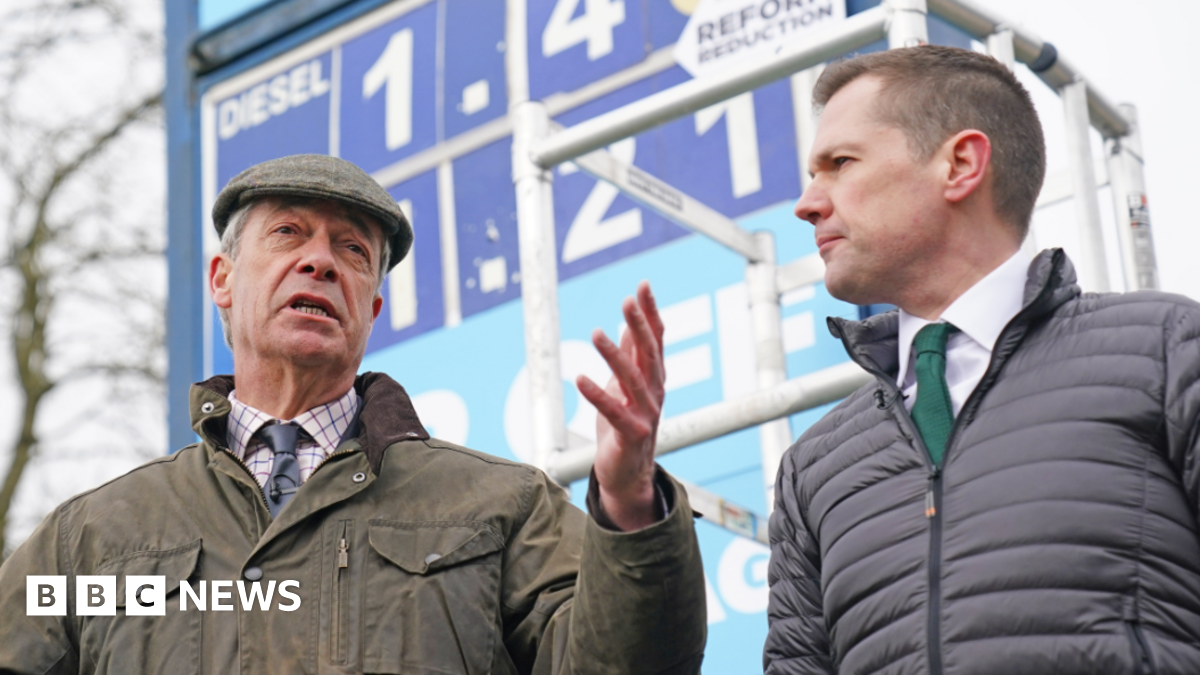
The 5p cut to fuel duty was announced by Tory chancellor Rishi Sunak in 2022 after Russia’s full-scale invasion of Ukraine caused a worldwide spike in energy costs.
Originally billed as a temporary measure that would last 12 months, it was extended in 2023 by the previous Conservative government, before being extended again by Labour upon entering office.
Reeves prolonged the cut again at last year’s Budget, alongside plans to phase it out from September, with the 5p reduction fully unwound by March 2027.
It has been the longstanding policy of successive governments to raise fuel duty in line with inflation, but this has not happened since 2011.
Also speaking at the news conference, Farage branded the government’s green levies “lunatic” and hit out at Labour’s restrictions on new oil and gas exploration in the North Sea.
But he also faced questions over his party’s stance on the Iran conflict, after mixed messages from some of the party’s frontbench MPs in media interviews.
There were “differing opinions” about whether the UK should “physically” join strikes on the country, he added, but the UK should not have rejected the initial US request to use British bases for strikes on missile sites used to target allies.
He argued that the US and Israel would have launched the strikes “whatever we said or did”, but in any case the UK was unable to “get involved directly” due to previous defence cuts.
Labour Party chairwoman Anna Turley said: “Nigel Farage spent the past week calling for escalation that would make cost of living pressures even worse.”