
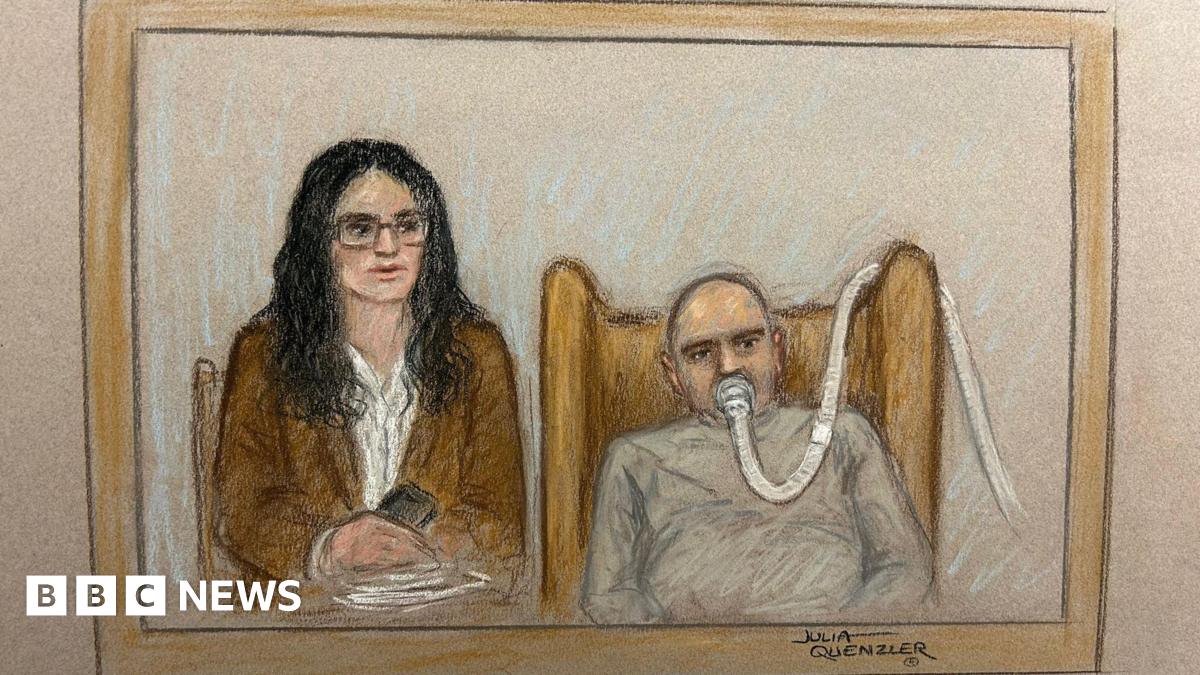
Chief magistrate Paul Goldspring remanded Al-Salem on bail until his next court appearance at the Old Bailey on Friday. No indication was given as to how al-Salem will plead to the charges.
Al-Salem remained seated on the video link throughout the hearing, wearing what appeared to be an oxygen mask. The court heard that he has been diagnosed with spinal onset motor neurone disease and was too unwell to confirm his name.
It had been argued by Al-Salem’s lawyer that he should not be named in the media, and that doing so could put him at risk.
But the chief magistrate turned down the application, saying the fact that it might “rise in people strong feelings of hostility and concern is not, and never has been, sufficient for the principle of open justice to be derogated”.
He added it was important he was named for the public’s understanding and to maintain confidence in the justice system.
Al-Salem is accused of being responsible for killing Omar Al-Homsi and Nizar Fayoumi-AlKhatib, or causing them to be killed “as part of a widespread or systematic attack against a civilian population” on 22 April 2011.
He is also accused of engaging in conduct “ancillary to murder as a crime against humanity” in respect of Mohammed Salim Zahrak Balik on the same day.
Another charge relates to three months later in July 2011where he is accused of being responsible for killing Talhat Dalal, or causing him to be killed, as part of a widespread or systematic attack against a civilian population.
He is also charged with torturing Mohammed Al-Hakim, Hani Dahrouj and Ziauddin Mahammed Tayseer Dahrouj between the beginning of August 2011 and the end of March 2012.
Al-Salem was first arrested in December 2021 and Counter Terrorism Policing London has described the case as “an incredibly complex and challenging investigation, involving enquiries across many countries”.
Witnesses have been interviewed in several European nations.
This is the first time the Crown Prosecution Service has brought charges of murder as crimes against humanity under the International Criminal Court Act 2001.
It is thought to be the first time someone alleged to have been part of ex-President Bashar al-Assad’s security forces has been prosecuted in the UK for crimes relating to the Syrian civil war.