
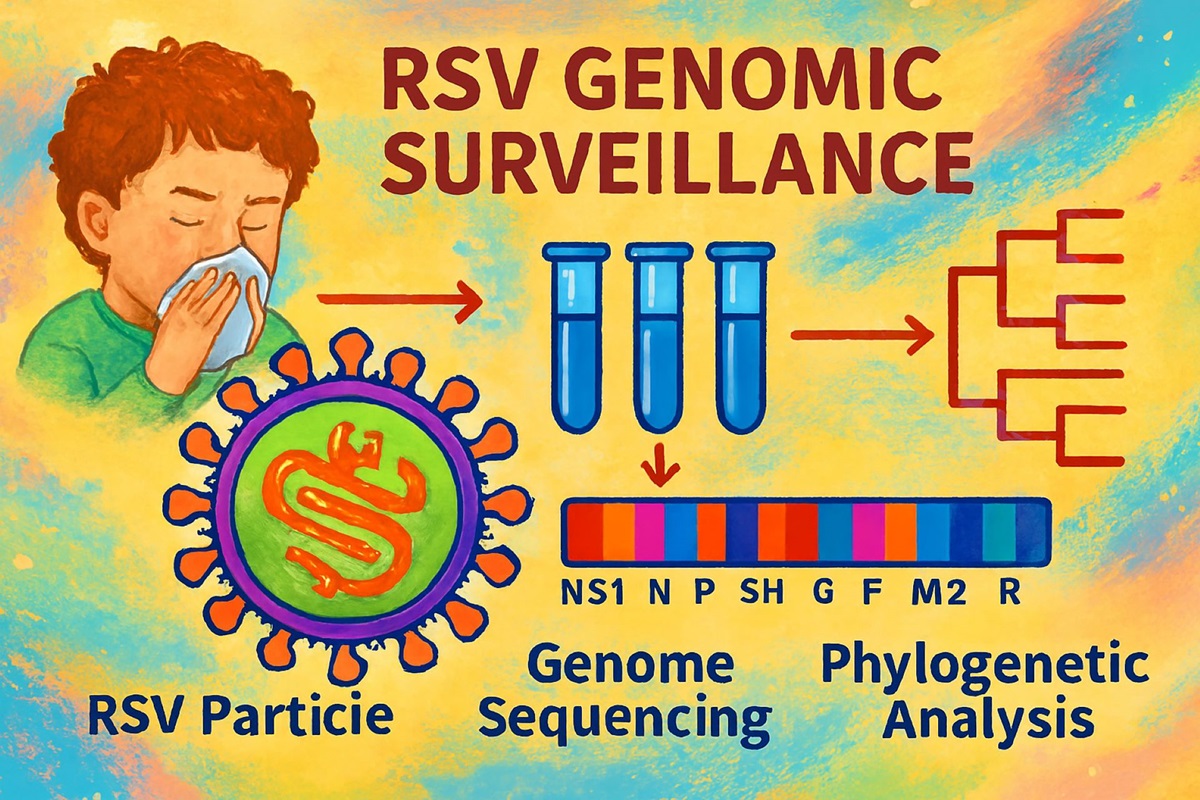
Respiratory syncytial virus (RSV) is a common virus that causes infections of the upper and lower respiratory airways (including the nose, sinuses and lungs). Each year, RSV causes an estimated 3.6 million RSV-associated hospitalizations and approximately 100 000 RSV-attributable deaths in children under 5 years of age worldwide .
The RSV genomic surveillance guidance is critically important, operationalizing a core pillar of the Global Genomic Surveillance Strategy for Pathogens with Pandemic and Epidemic Potential (2022–2032). Specifically, it:
Increases awareness amongst policy makers of the public health importance of RSV genomic surveillance,Strengthens laboratory and genomic surveillance and bioinformatics capacities in Member States,Serves to generate an evidence base of genetic sequence data for RSV at the global level and fill information gaps especially in low- and lower-middle income countries.ObjectivesTo orient the public health community on the importance of RSV genomic surveillance and the technical and operational considerations for RSV sequencing and bioinformatics,Support in strengthening LMICs capacities for RSV genetic sequencing and bioinformatics, to better understand and monitor RSV phylogenetic diversity,Help standardize genomic surveillance practices across countries, encouraging timely sharing of genetic sequence data to public-accessible data platforms.Speakers
Introduction of EPI-WIN, housekeeping, introduction to topic and speakers: EPI-WIN Science and Knowledge Translation, WHO HQ
Welcome remarks – the importance of RSV genomic surveillance, WHO efforts: Global Influenza Program, WHO
RSV genomic surveillance – operational considerations: Thomas Williams, University of Edinburgh, UK
Leveraging RSV genetic sequence data for public health: Sebastian Maurer-Stro, GISAID
Q&A
Closing remarks: EPI-WIN Science and Knowledge Translation, WHO HQ