
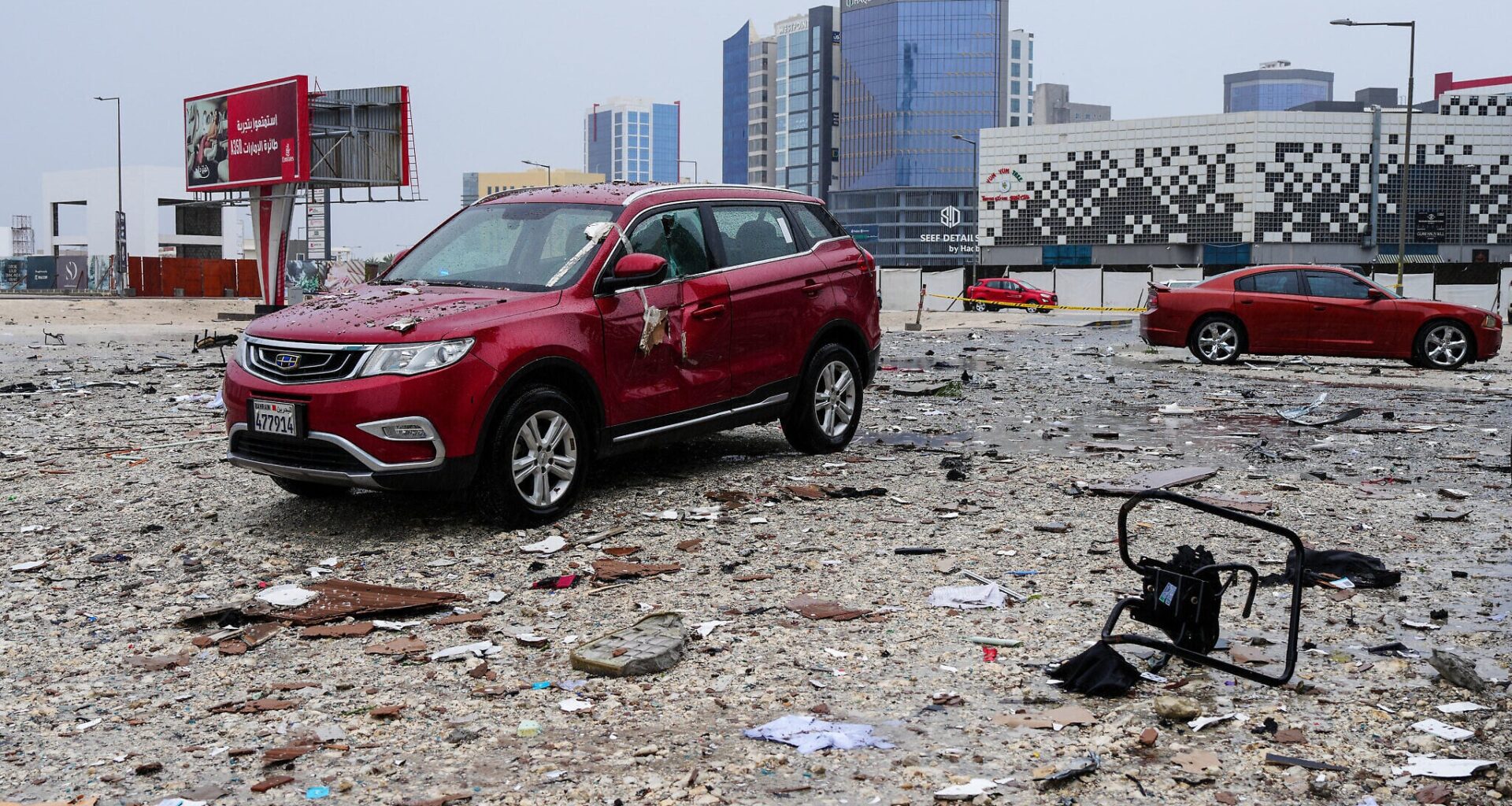
Iran launched new attacks on Tuesday at Gulf Arab countries as its Revolutionary Guards vowed not “a single liter of oil” would leave the Persian Gulf amid the US-Israeli bombing campaign on the Islamic Republic.
Authorities in Bahrain reported that the country, which hosts the US 5th Fleet, was attacked by three missiles and a drone on Tuesday, including an attack that hit a residential building in the capital, Manama, killing a 29-year-old woman and wounding eight people.
Saudi Arabia said it destroyed two drones over its oil-rich eastern region and Kuwait’s National Guard said it shot down six drones.
In the United Arab Emirates, nine Iranian drones made impact on Tuesday while another 26 drones and eight missiles were intercepted, the Emirati Defense Ministry said. No injuries or deaths were immediately reported.
The United Kingdom Maritime Trade Operations center said a ship also likely came under attack in the Persian Gulf off the coast of Emirati capital Abu Dhabi, after a captain aboard reported seeing “a splash and heard a loud bang in proximity of a bulk carrier.”
Get The Times of Israel’s Daily Edition
by email and never miss our top stories
By signing up, you agree to the terms
The possible attack on the bulk carrier would expand the radius of ongoing assaults against shipping by Iran during the war.
In total, six people have been killed and 122 others wounded in Iran’s attacks on the UAE following the start of the US-Israeli bombing campaign in the Islamic Republic on February 28, the defense ministry said.
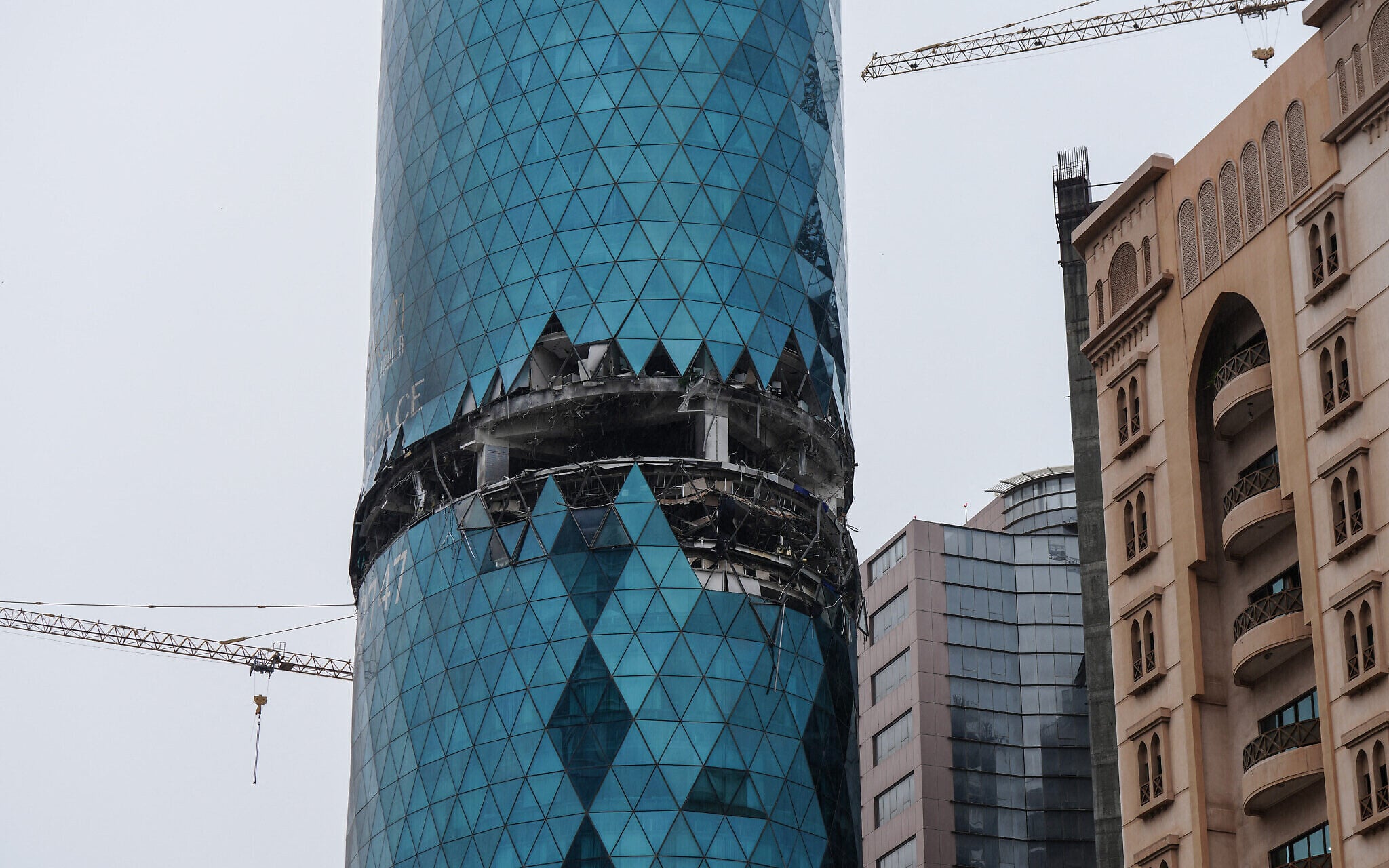
A photograph shows a damaged building in the aftermath of a drone strike in the Seef district of Manama, Bahrain, on March 10, 2026. (AFP)
Emirati officials said Tuesday that firefighters battled a blaze in the industrial city of Ruwais, home to petrochemical plants, following an Iranian drone strike. No injuries were reported.
A source with knowledge of the situation told Reuters that a fire broke out within Abu Dhabi state oil giant ADNOC’s Ruwais compound, and that the company had shut its refinery there as a precautionary measure, in the latest energy infrastructure disruption of the war.
All other operations at the complex were continuing normally, the source said.
The complex is the site of Abu Dhabi National Oil Company (ADNOC) facilities that can refine up to 922,000 barrels of oil a day and serves as the central hub for the emirate’s downstream operations, including significant chemical, fertilizer and industrial gas plants.
Industry monitor IIR Energy said ADNOC was forced to shut the lone crude distillation unit at its 417,000 barrel-per-day Ruwais Refinery 2 (West), and is planning to undertake a plant-wide safety shutdown.
IIR said ADNOC had previously reduced operations at multiple units at its 400,000-bpd Ruwais Refinery 1 (East) by around 10% to 20% on March 6 due to the regional conflict.
ADNOC, the Abu Dhabi Media Office and the UAE foreign ministry did not immediately respond to requests for comment.
Gulf officials warn of ‘catastrophic’ consequences from energy market disruptions
Iran’s attacks have forced several countries to cut production as shipping in the vital Strait of Hormuz oil transit chokepoint, the Persian Gulf waterway through which roughly a fifth of global oil travels, has ground to a near halt. US President Donald Trump has warned that Iran could be hit “much harder” if it continues disrupting oil shipments.
On Tuesday, a spokesman for the Islamic Revolutionary Guard Corps (IRGC) threatened that Iran “will not allow the export of even a single liter of oil from the region to the hostile side and its partners until further notice.”
“Their attempts to reduce and control oil and gas prices will be temporary and ineffective,” said Ali Mohamad Naeini. “Trade in wartime conditions is subject to security considerations.”
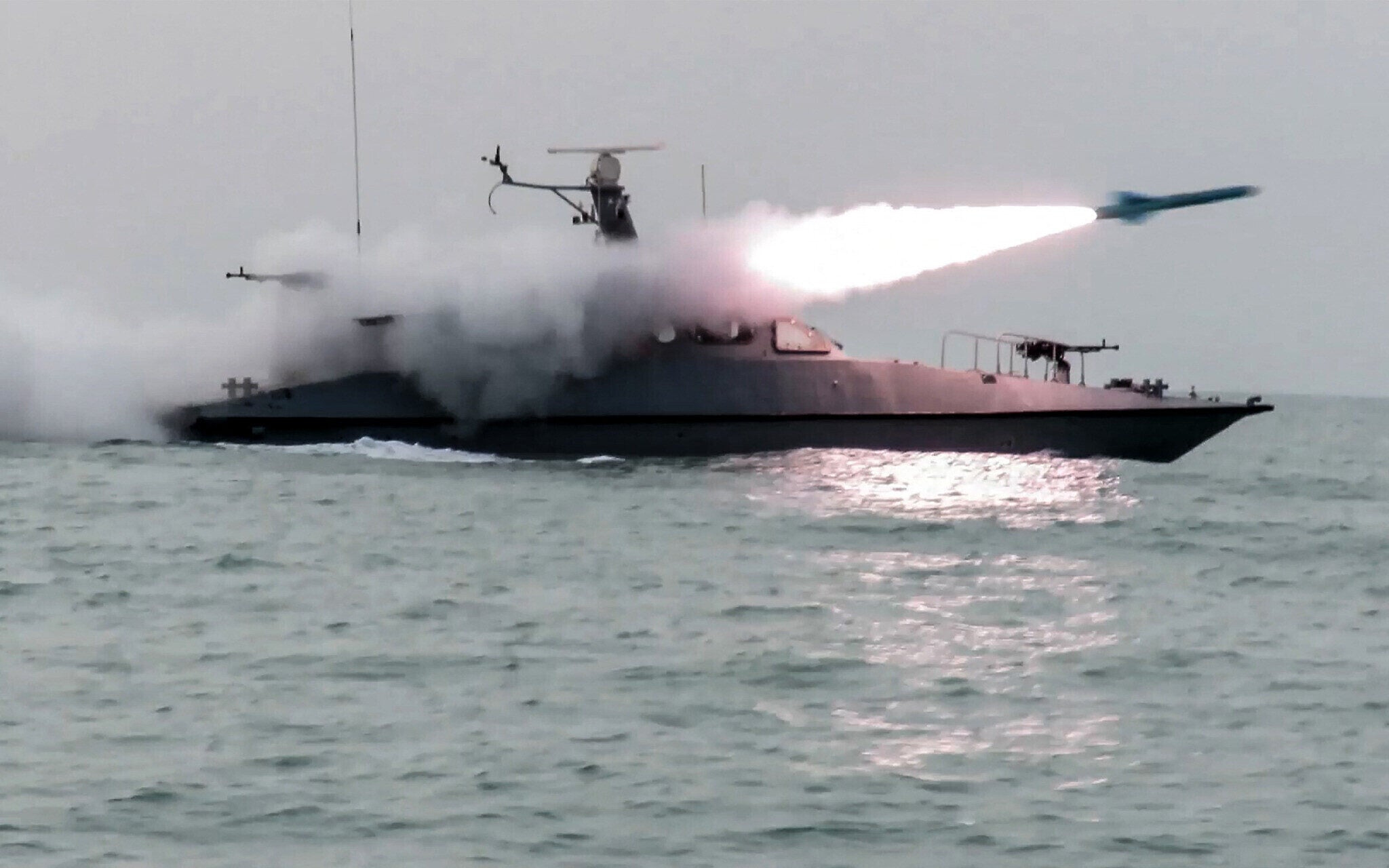
This handout photo released by Iran’s Revolutionary Guards Corps (IRGC)’s official website Sepanews on February 16, 2026, shows a boat firing a missile during a military exercise by members of the IRGC and navy in the Gulf (SEPAH NEWS / AFP)
Qatar, which has also been targeted by Iran amid the conflict, warned both sides of the war on Tuesday against attacks on civilian sites and energy infrastructure, saying it could result in a humanitarian disaster.
“This region cannot take these kinds of attacks on its facilities,” said Foreign Ministry spokesman Majed Al-Ansari. “We will see a humanitarian catastrophe.”
“We have seen these kinds of attacks on both sides of the Gulf,” he said, pointing fingers at both Iran and the US and Israel.
“The attacks on energy facilities, which have also happened on both sides, is a dangerous precedent,” he said. “What is happening right now is going to have grave consequences for the international economy.”
The CEO of Saudi state oil giant Aramco, Amin Nasser, also warned of “catastrophic” consequences if the Strait of Hormuz closure continues.
“While we have faced disruptions in the past, this one by far is the biggest crisis the region’s oil and gas industry has faced,” Nasser said in a media call after the company posted its 2025 results.
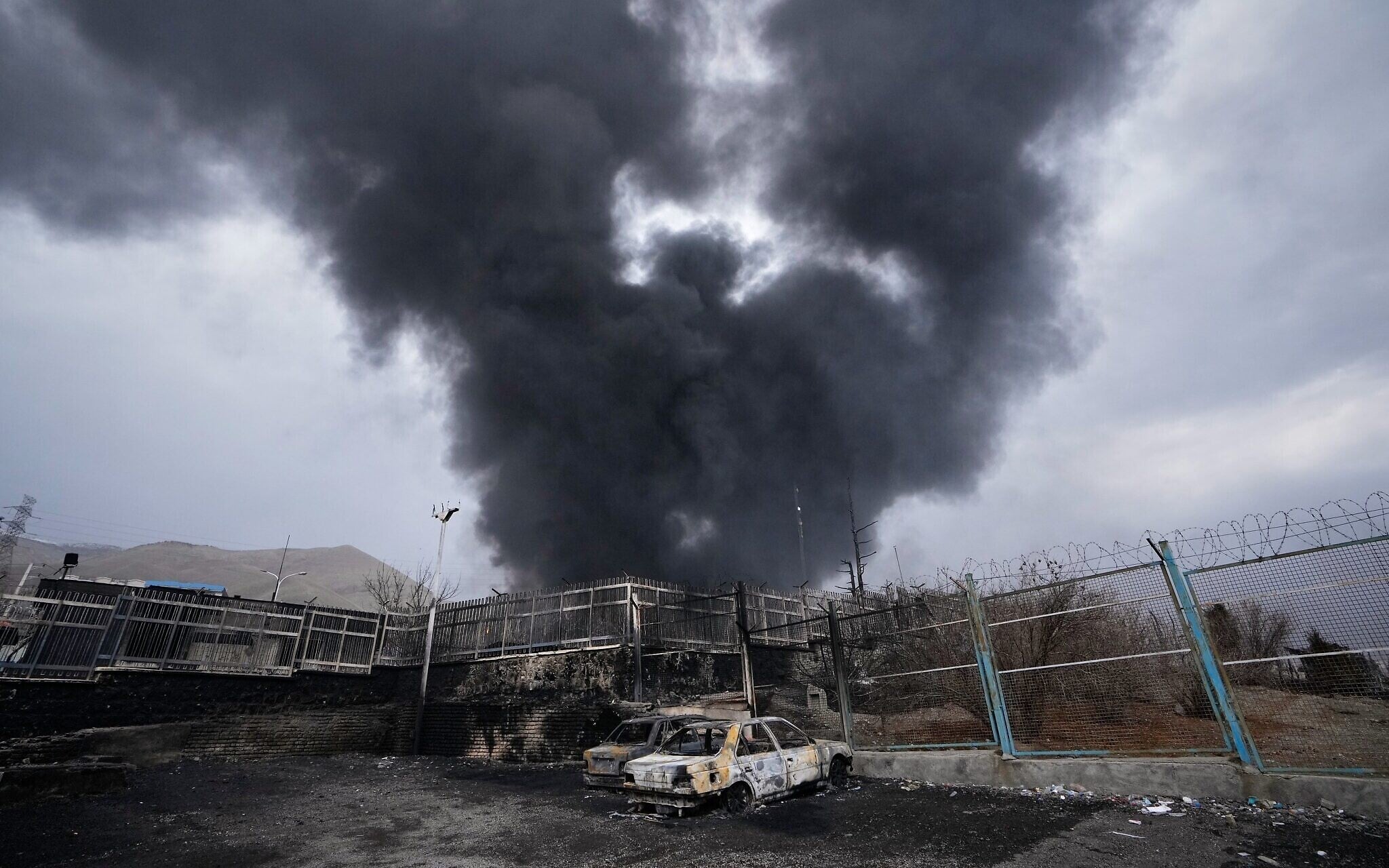
A thick plume of smoke rises from an oil storage facility hit by an Israeli strike late Saturday in Tehran, Iran, March 8, 2026. (AP Photo/Vahid Salemi)
The comments came after the Israeli Air Force, in an apparent first, struck oil facilities in Tehran on Saturday, sparking some criticism even from the US, which, together with Israel, has been striking Iran in a bid to topple its clerical regime and destroy its nuclear and ballistic missile capabilities.
A senior Gulf energy industry official, speaking on condition of anonymity because of the sensitivity of the matter, said stopping the Iran war is the only option to get oil and gas moving again through the Strait of Hormuz.
Lazar Berman contributed to this report.
You appreciate our wartime journalism

You clearly find our careful reporting of the Iran war valuable, at a time when facts are often distorted and news coverage often lacks context.
Your support is essential to continue our work. We want to continue delivering the professional journalism you value, even as the demands on our newsroom have grown dramatically during this ongoing conflict.
So today, please consider joining our reader support group, The Times of Israel Community. For as little as $6 a month you’ll become our partners while enjoying The Times of Israel AD-FREE, as well as accessing exclusive content available only to Times of Israel Community members.
Thank you,
David Horovitz, Founding Editor of The Times of Israel