
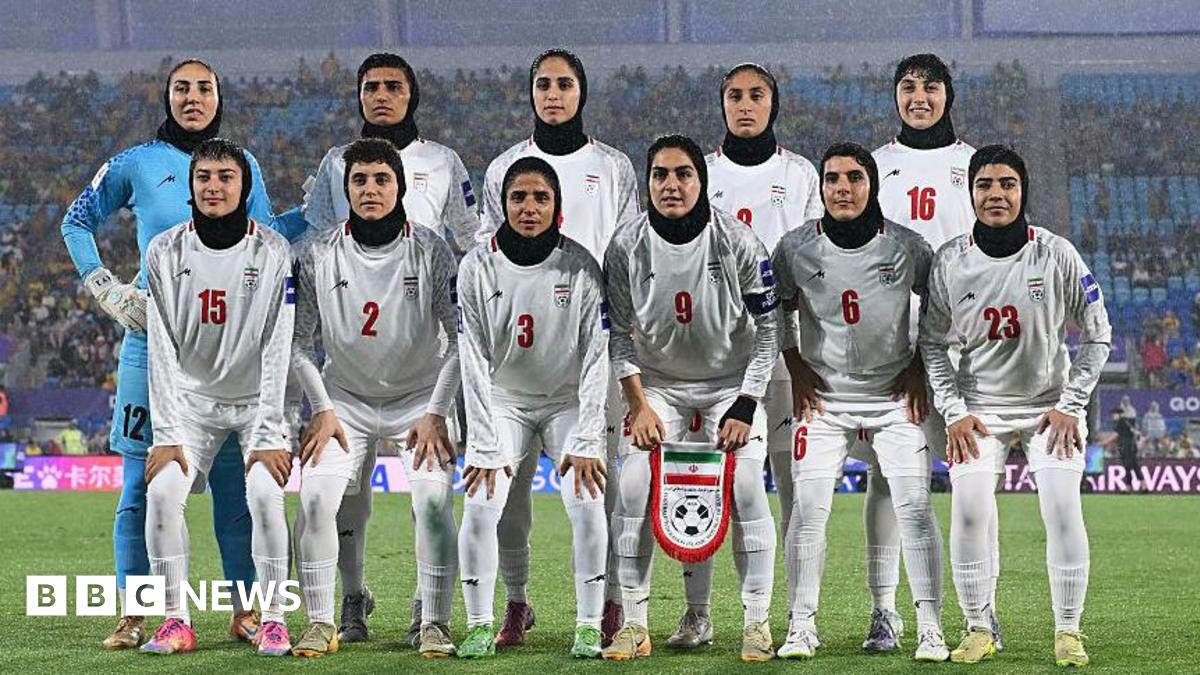
Before all this played out, activists had been liaising with Australian Federal Police and hotel security to ensure that the women were first able to confide that they wanted to remain in Australia, and secondly that when they did so, they would be protected.
“We went to the stadium chanting [their] name, saying if you want to stay here, we are going to support you,” Orouji said.
And that, said Orouji, was a game-changer for at least some of the women choosing to seek asylum.
“They mentioned that, they said it was great,” he says. “It was the first time this big crowd came to the stadium and just supported us – there was lots of energy, motivation about what was going on in Australia.”
The biggest challenge for Orouji and his friends has been giving the women correct information – and trying to counter misinformation spread by the Iranian regime who are reportedly accompanying the group.
“When we said to one of the [remaining members of the team], do you know the women already have their visas, they said no way!”
Some women, he said, had been told there was no guarantee they could seek asylum and may have to go to a detention centre instead, as a refugee.
Orouji made the initial connections with the players through a family member – but communicating with them wasn’t straightforward.
“They don’t have internet all the time,” he explains. “We send a message, we can see they didn’t receive the message, and then they get internet, and we count the two blue ticks on WhatsApp.”
Every member of the Iranian community we spoke to seemed to be finding their own way of communicating with players – reaching out on social media, sending messages when they could.
There are more than 85,000 Iranians living in Australia. Many have formed a tight-knit community,
Also at the hotel on Monday evening was migration agent Melody Naghmeh Danai, on standby to assist those choosing to stay about their options. She’d been at the stadium on Sunday night, keen to show her support as many ways as possible.
“Australia is going to support them according to migration law – it’s not anything which is extraordinary,” she told the BBC during the halftime break. “We are very concerned for their lives, and we are here to support them any way they want.”