
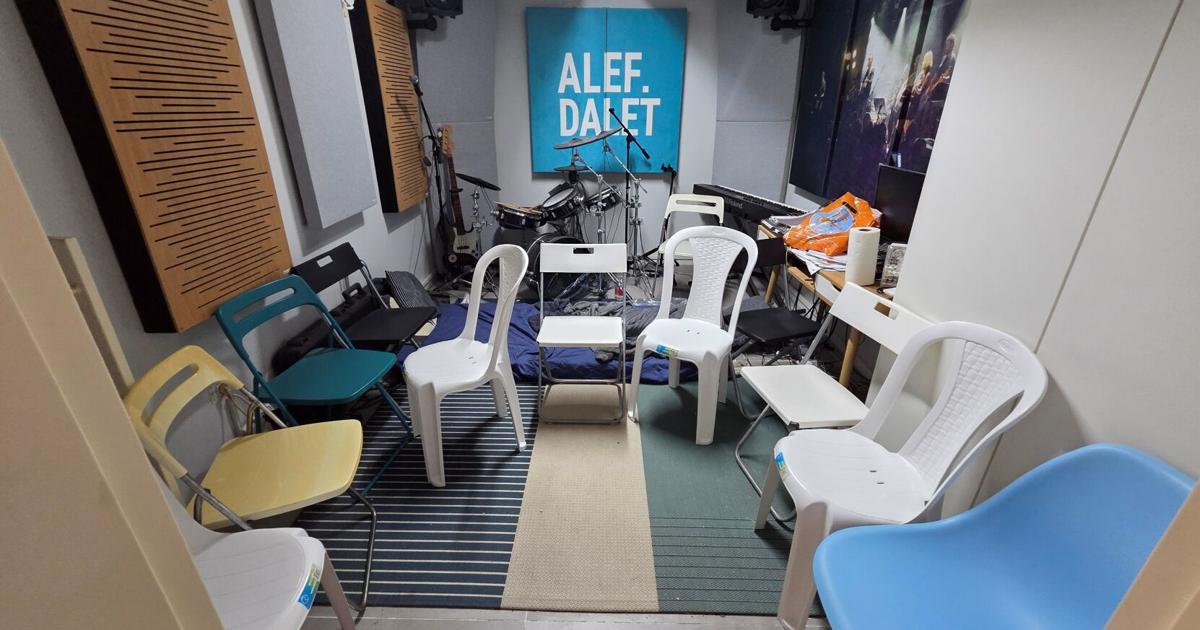
Sirens, shelters and resilience in the middle of the night.
At 1 a.m., the smartphones beside our bed explode with that now-familiar, jarring alert — a sound engineered to cut through sleep and spike the pulse. For reasons I still don’t understand, my phone always goes off first. Within seconds, my wife Lisa’s joins mine in a shrill duet of urgency.

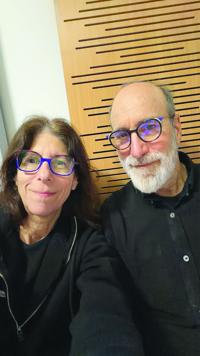
Lisa and Hannan Lis
We silence the phones, switch on the lights and dress quickly. The message is clear: Ballistic missiles have been launched from Iran toward Israel. The IDF expects impact in our region within minutes. We have a short window before the siren sounds — and then 90 seconds to reach shelter.
We sat in the living room near the stairs leading down to the bomb shelter. Three minutes later, the siren pierces the night. Another alert flashes across our screens. We head downstairs.
Our shelter sits beneath our small Tel Aviv apartment building. We reunite with our neighbors — for the fourth time in 24 hours. They have three daughters; two are already lying on mattresses behind the folding chairs arranged along the wall. The heavy metal door closes with a familiar grind.
Almost instinctively, we all check our phones. WhatsApp groups light up. Amateur analysts and Telegram feeds speculate about trajectories, interceptions, impact zones. In the background, we hear the muffled booms of aerial interceptions over Tel Aviv. It is a strange comfort — the sound of defense at work — even though it means missiles are close enough to require it.
After about 10 minutes, someone scans for the “all clear.” Usually, it comes within 15 minutes. The first person to see it announces the good news, and we reverse the ritual: Open the heavy door, climb the stairs, return to interrupted sleep.
By now, the choreography is automatic — wait for the last neighbor, seal the door, sit, listen, scroll, wait again. The June 2025 war prepared us well. What is remarkable is not the danger. It is how routine it feels.
This is déjà vu.

The empty streets in Tel Aviv.
After the 12-day war with Iran last summer, few Israelis believed it was the final chapter. We assumed the confrontation would resume. Almost everyone I know accepts that confronting and dismantling Iran’s capacity to attack us carries risks — but that avoiding it carries greater ones.
For weeks before this escalation, as unrest simmered inside Iran, American forces repositioned in the region and anticipation hung in the air. The waiting was almost worse than the war itself. Israelis postponed trips abroad. Some cut vacations short to avoid being stranded overseas if fighting resumes. Israel may be the only country where people go out of their way to be home for a war.
For Lisa and me, this war began in Jerusalem.
We had driven there for a weekend getaway — dinner with friends, walking tours, a bit of hiking. Friday night was beautiful. We dined with friends, then strolled through the Russian Compound near Bezalel Academy on a warm 35-degree Jerusalem evening. We knew our weekend might be interrupted, but we refused to let the Ayatollah dictate our plans.
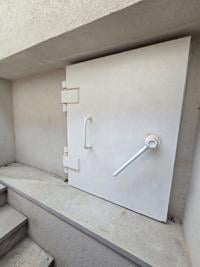
The entrance to the safe room.
Wars with Iran tend to begin at night. When we woke up on Saturday morning and our phones sounded alongside the city’s sirens, the message read:
The IDF is initiating preventive action against Iran. Prepare for possible attacks. Stay near a secure area. Israel is under emergency status. Schools, work and public activities are suspended.
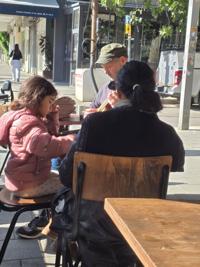
The Lis family tries to live as normally as possible while staying close to shelter.
We packed immediately. There was no reason to sit in a hotel safe room when our own shelter awaited us in Tel Aviv. The normal 90-minute drive home took 39 minutes on nearly empty roads.
By Saturday afternoon, the first siren sent us back underground. It felt almost normal — our first return to the shelter since June. Since then, we have been down nearly 20 times.
By that Monday morning, we were back in what Israelis call the “war routine.” We try to live as normally as possible. In Tel Aviv, that means walking — to the grocery store, to a coffee shop, to the park and to always calculating distance from shelter. We stay close enough to reach our building quickly but know we can duck into a public shelter or a stranger’s safe room, if needed. Since that Monday, the alerts have decreased slightly. The last two nights gave us six uninterrupted hours of sleep — a gift.
We also welcomed a neighbor whose building lacks modern shelter. She is staying with us for now, so she does not have to run across the street in the middle of the night.
Early that Monday morning, Hezbollah entered the fight. That did not surprise anyone, but it deepens the concern. Israeli soldiers are now engaged in ground operations in Lebanon. Friends have been called to reserve duty. We wait, like all parents here, hoping our own son’s phone does not ring with the same call.
And yet, life continues.
Grandchildren attend school over Zoom. Our son and daughter work remotely while juggling childcare. The grandchildren are most upset about missing their Purim celebrations. From my backyard, the usual roar of traffic and construction is muted. The birds seem confused by the quiet.
It feels almost peaceful.
But the calm is deceptive. At any moment, my phone could erupt again with that rude, insistent alarm announcing another ballistic missile on its way to Tel Aviv.
This is what the second Iran war feels like from here — not abstract geopolitics, not op-eds, not televised panels — but a series of interrupted nights, shared shelters, WhatsApp rumors, muffled explosions, and a stubborn determination to live normally in a city that refuses to surrender its rhythm.
We do not romanticize this.
But we understand something clearly: Freedom is not theoretical. Security is not guaranteed. And resilience is not a slogan.
It is simply what you do at 1 a.m. in the morning when the phone goes off.
Hannan Lis is a former Detroiter and native Israeli living in Tel Aviv.
The Detroit Jewish News has been supported by readers like you since 1942. Support independent, local, Jewish journalism with a donation today.