
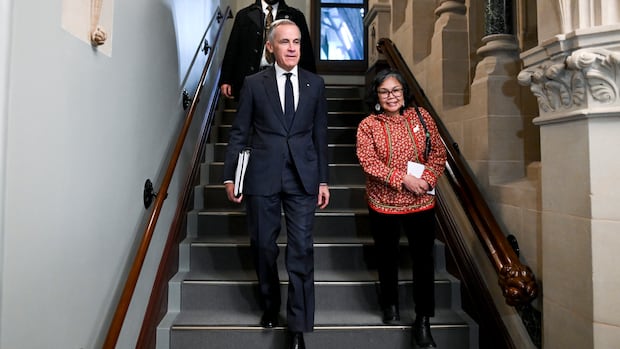
Smiling broadly, Prime Minister Mark Carney welcomed MP Lori Idlout to the Liberal caucus on Wednesday after convincing yet another opposition member to defect to the governing party — a political coup that brings him one step closer to a majority government.
Speaking briefly to reporters on Parliament Hill with Idlout by his side, Carney said the former New Democrat is “one of the greatest constituency MPs” who has ably represented Nunavut, a riding he noted is as big as Mexico but has a small fraction of the people.
He said Idlout is “very down to earth,” and together they will work on projects “large and small in Nunavut.”
Idlout said there wasn’t one overriding factor that pushed her into the Liberal fold.
“Like with any complicated issue, it wasn’t one thing that happened,” she said when asked why she made the switch.
“A variety of things have allowed me to really reflect on this and I’m thankful to be so warmly welcomed.”
Idlout has flirted with joining the Liberals for months — even though she has been a fierce critic of the government’s policies at times. In January she said she wasn’t ready to make the jump.
Last week, she appeared a campaign rally for Avi Lewis, who is widely regarded as the front-runner in the NDP leadership race. She offered what seemed to those in the room to be a half-hearted endorsement of Lewis.
“I truly am nervous about my influence,” she told the assembled crowd at an Ottawa church.
Then, Idlout met privately with Carney in his office on Tuesday, according to his spokesperson, and formally set in motion the departure.
WATCH | Offering support to a fellow floor-crosser: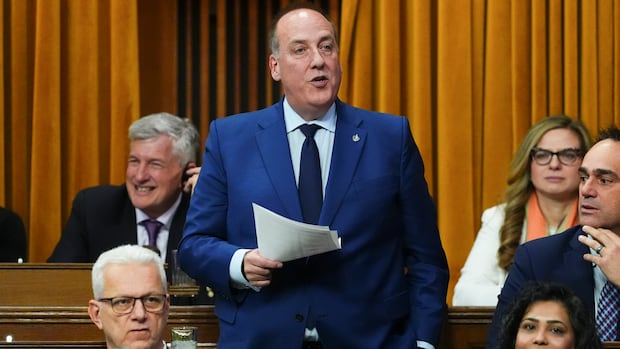
‘The decision is not an easy one’: Fellow floor-crossing MP reached out to support Lori Idlout
Liberal MP Chris d’Entremont — the first MP to join this government from the Conservatives in November — said he reached out to support Nunavut MP Lori Idlout when she crossed the floor to the Liberals from the NDP Tuesday night.
In a written statement released by the Liberal Party, Idlout said that threats to Canada’s sovereignty and “pressures on the well-being of people throughout the North” inspired her to join a government that can address those issues.
“Mark Carney is our first prime minister from the North, and at this turning point in our history, I am ready to work with him to build a strong future for Nunavut and for all of Canada,” she said, referencing Carney’s birth in the Northwest Territories.
This defection means the Liberals now have 170 MPs — just two seats shy of a majority government.
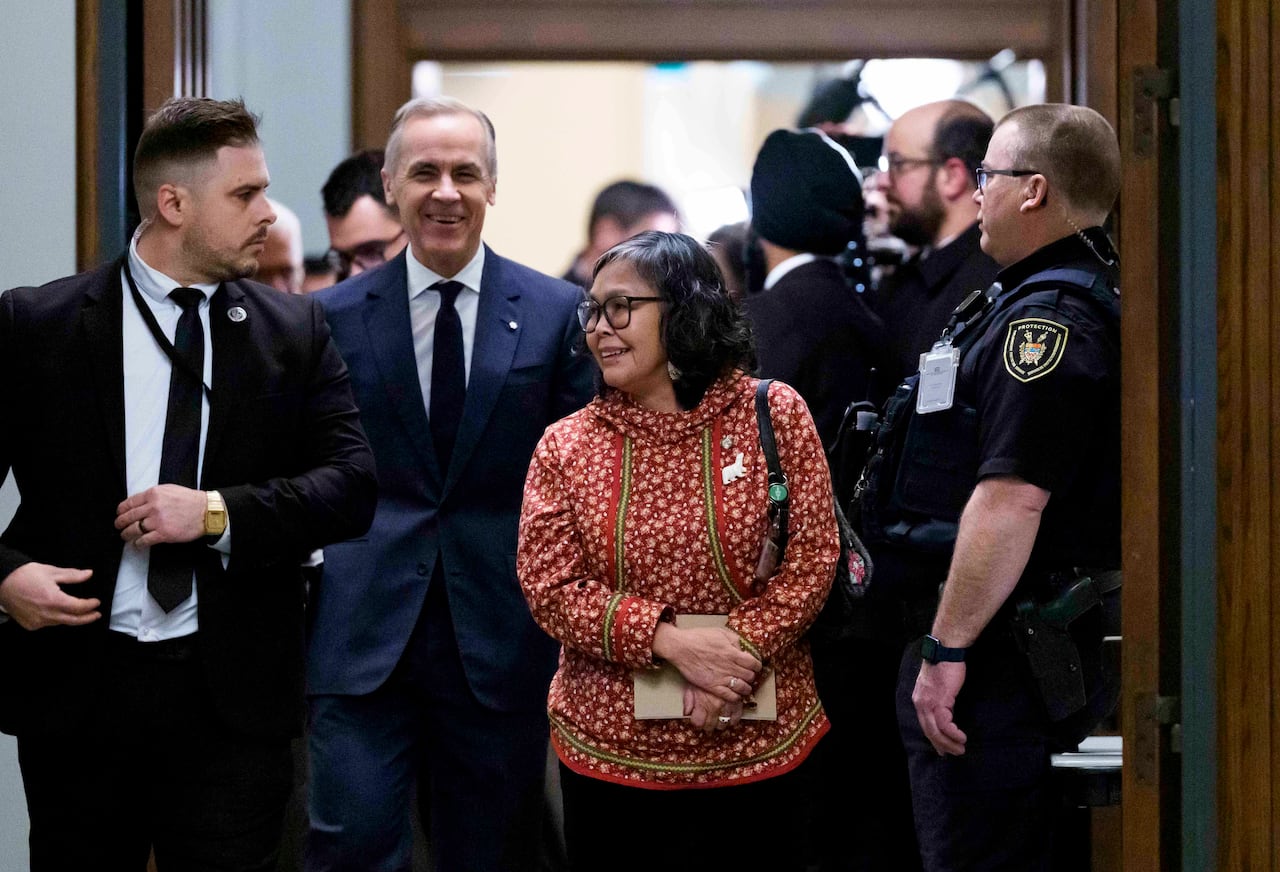 Prime Minister Mark Carney arrives with MP for Nunavut Lori Idlout, who crossed the floor from the NDP to the Liberals, as they make their way to a meeting of the Liberal caucus on Parliament Hill in Ottawa, on Wednesday, March 11, 2026. (Justin Tang/The Canadian Press)
Three federal byelections will be held on April 13, including in two Toronto ridings the Liberals easily won at the last general election and one in an off-island Montreal-area suburb that the party won by a single vote over the Bloc Québécois.
Winning two of the three byelections would deliver a majority government, albeit a very narrow one. A clean sweep in all three would give the government more breathing room and a freer hand to pass whatever legislation it wants, because it wouldn’t have to rely on the Speaker to break any tied votes.
Conservative Leader Pierre Poilievre could face more than three years on the Opposition benches if the Liberals cobble together a majority through a combination of floor-crossings and byelection wins.
In a statement on social media, Poilievre accused Carney of using “backroom deals” to “seize a costly majority that voters rejected, which will enable Liberals to balloon debt, inflate the cost of living, block resources and turn criminals loose on our streets.”
Liberal MP Karina Gould, a former minister who challenged Carney for the leadership and was later left out of his cabinet, refuted that characterization, saying in Canada’s Westminster parliamentary democracy voters pick a local MP not a party per se at election time.
Gould said the country is facing “multiple crises” and Idlout’s floor-crossing is a sign that some “MPs want to be part of the solution and not part of the problem.”
“They like what this government is doing and want to be here on this side at a really important moment in Canadian history,” she said, adding she feels “pretty confident” the party can pull off wins in the upcoming byelections to secure a majority.
Finance Minister François-Philippe Champagne said Idlout and others are drawn to the government’s plan to grow the economy and protect the country.
“In these uncertain times you see more and more people rallying behind us. I’m not surprised to see colleagues doing some soul-searching and saying, ‘I want to be at the decision table. I want to be there,'” he said.
“Look at the polls. Canadians are behind the agenda.”
WATCH | NDP calls Idlout’s defection to Liberals undemocratic as caucus shrinks to 6: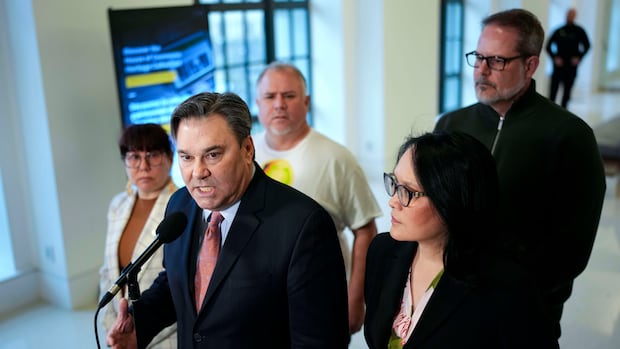
NDP calls Idlout’s defection to Liberals undemocratic as caucus shrinks to 6
NDP interim Leader Don Davies declined to answer what the loss of Nunavut MP Lori Idlout means for his party in a news conference on Wednesday that lasted less than two minutes.
NDP interim Leader Don Davies, who released a statement late Tuesday before Idlout herself had announced her decision, said he was “very disappointed” she was leaving the party.
Davies is calling for a byelection in Nunavut to let voters have a say on which party represents them.
The NDP, which lost its official party status in the House of Commons after a very poor showing at the last election, now has an even smaller parliamentary rump with just six MPs.
In a brief scrum with reporters after those remaining NDP MPs met Wednesday, Davies said, like Poilievre, he is “increasingly concerned by the way that Mr. Carney is trying to stitch together a majority government in this country.”
“Whether or not there’s a majority government is fundamentally a decision by the Canadian people at the ballot box,” he said.
Other NDP MPs declined to say anything more.
“No comment. We only have a statement that is on the website,” said NDP MP Alexandre Boulerice, who is also thinking of leaving for Québec Solidaire, a left-wing separatist provincial party.