
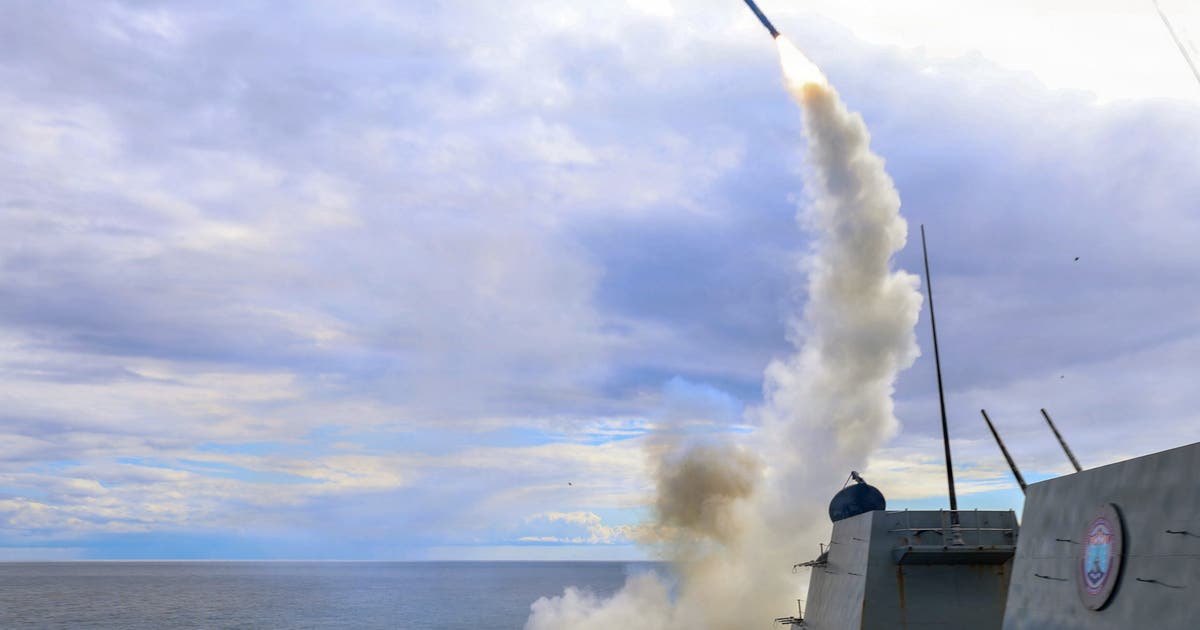
OAKLAND, Calif. – California law enforcement agencies are monitoring potential drone threats tied to escalating tensions in the Middle East as the conflict between the US and Iran intensifies, officials said.
California ‘actively monitoring’ potential threats
What they’re saying:
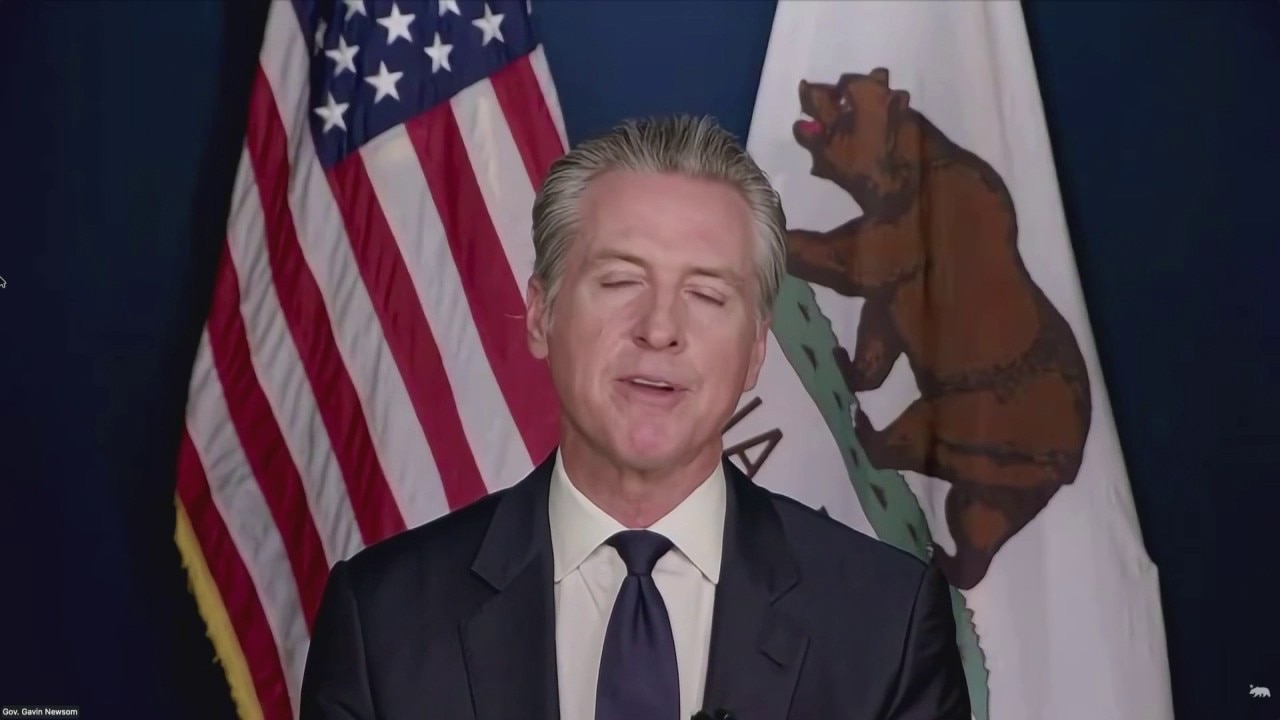
“California is actively monitoring reports of potential threats tied to the Middle East conflict,” Gov. Gavin Newsom’s office said on Wednesday. “The Governor has directed @Cal_OES to elevate its security posture and has been coordinating with state, local and federal partners since the start of the conflict to share.”
Newsom said that since the start of the war, California has been transmitting any information it has received about possible threats to local law enforcement partners.
“Drone issues have always been top of mind,” the governor said.
The heightened alert comes after a memo was sent to California law enforcement agencies participating in the FBI’s Joint Terrorism Task Force, as first reported by ABC News.
The memo warned that Iran had allegedly planned a surprise drone attack on an unidentified vessel off the U.S. coast targeting unspecified locations in California, according to the Los Angeles Times.
“We recently acquired information that as of early February 2026, Iran allegedly aspired to conduct a surprise attack using unmanned aerial vehicles from an unidentified vessel off the coast of the United States Homeland, specifically against unspecified targets in California, in the event that the US conducted strikes against Iran,” the memo read, according to the Times.
The Times reported there was no credible intelligence to support the threat.
 What Bay Area, California police departments are saying
Even so, agencies across the state said they are closely monitoring the situation, though most declined to comment on the validity or contents of the memo.
Oakland
The Oakland Police Department told KTVU on Wednesday it has been in contact with federal authorities.
“We have spoken with our federal partners, who informed us that there may be a heightened risk due to the conflict in the Middle East,” the department said in a statement. “To ensure the safety of our community, we are maintaining close contact with local, state, and federal law enforcement.”
Oakland police said they will continue monitoring the situation and determine whether an increased police presence is necessary.
Los Angeles
The Los Angeles Police Department told Fox News it is not aware of any active Iranian drone threat against the city.
San Francisco
The San Francisco Police Department said it is prepared to respond to emergencies and is monitoring the conflict but would not confirm whether it had received the memo.
“The SFPD is always ready to respond to any emergency that may occur in San Francisco, and we are closely monitoring events in the Middle East and around the world. We’re in communication and working closely with our local, state, and federal partners,” Officer Paulina Henderson.
San Francisco Mayor Daniel Lurie said he was aware of reports about the memo.
“We’re always in consultation with our federal partners on that. We have heard the same report, and we feel confident that we are on top of it. We will always, always, keep the people of San Francisco safe,” Lurie said.
San Jose
Similarly, the San Jose Police Department said it is closely monitoring potential threats but that there is no known threat to the city at this time.
“SJPD works closely with our federal partners to stay informed about potential threats and intelligence that may impact our region. As a matter of practice, we do not comment on specific intelligence or alerts. At this time, there is no known threat to our community,” the department said.
 How the Iran war could affect your next flight
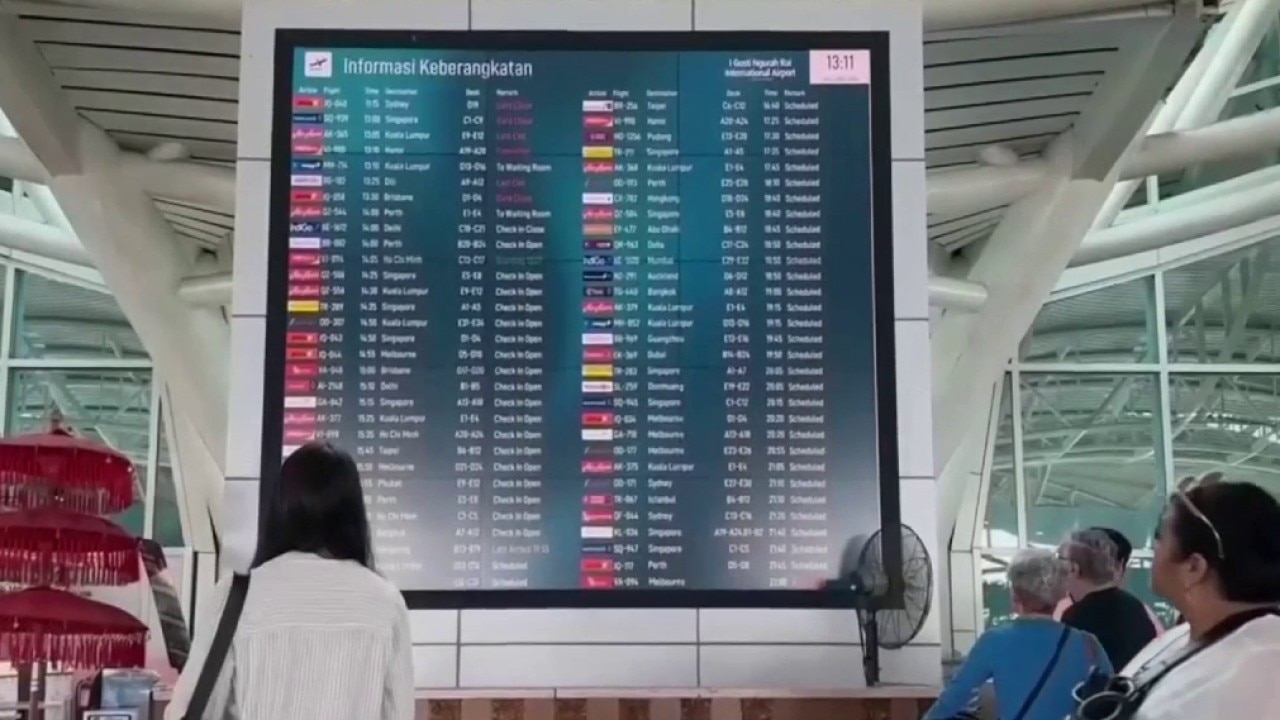
As tensions tied to Iran grow, travelers could soon feel the impact, from longer flight routes to higher fares and potential delays across some of the world’s busiest airline corridors. Stephen Pratt, department chair of tourism, events and attractions, at the University of Central Florida, gives insight.
Iran conflict enters 12th day
What we know:
The U.S. and Israel have been engaged in a war with Iran since launching a series of airstrikes on Feb. 28. Since then, both sides have escalated their rhetoric as the conflict entered its 12th day.
The war is impacting nearly every corner of the Middle East and causing economic tremors around the globe. With neither side budging, the war is now on an unpredictable path and a credible endgame is unclear.
Defense Secretary Pete Hegseth said Tuesday it was up to Trump “whether it’s the beginning, the middle or the end” of the war. Trump, during the course of one speech at a House Republican gathering Monday, went from calling the war a “short-term excursion” that could end soon to proclaiming “we haven’t won enough.”
“We have hit them harder than virtually any country in history has been hit, and we’re not finished yet,” Trump told reporters at the White House on Wednesday.
The vacillation has fueled criticism from those who say Trump lacks a clear goal.
“They didn’t have a plan,” Sen. Mark Kelly, D-Ariz., told reporters. “They have no timeline. And because of that, they have no exit strategy.”
A constantly shifting goal line
Dig deeper:
Since ordering the Iran bombardment, Trump has continually shifted his timelines and goals for the war.
Over the past few days, Trump has called for the “unconditional surrender” of Iran’s leaders, while suggesting he was already succeeded in achieving his objective of decimating Iran’s military.
At the same time, Trump’s team has sought to soothe anxious Americans that the war will not be long and drawn out even as the president has insisted he has not ruled out the option of using U.S. ground troops.
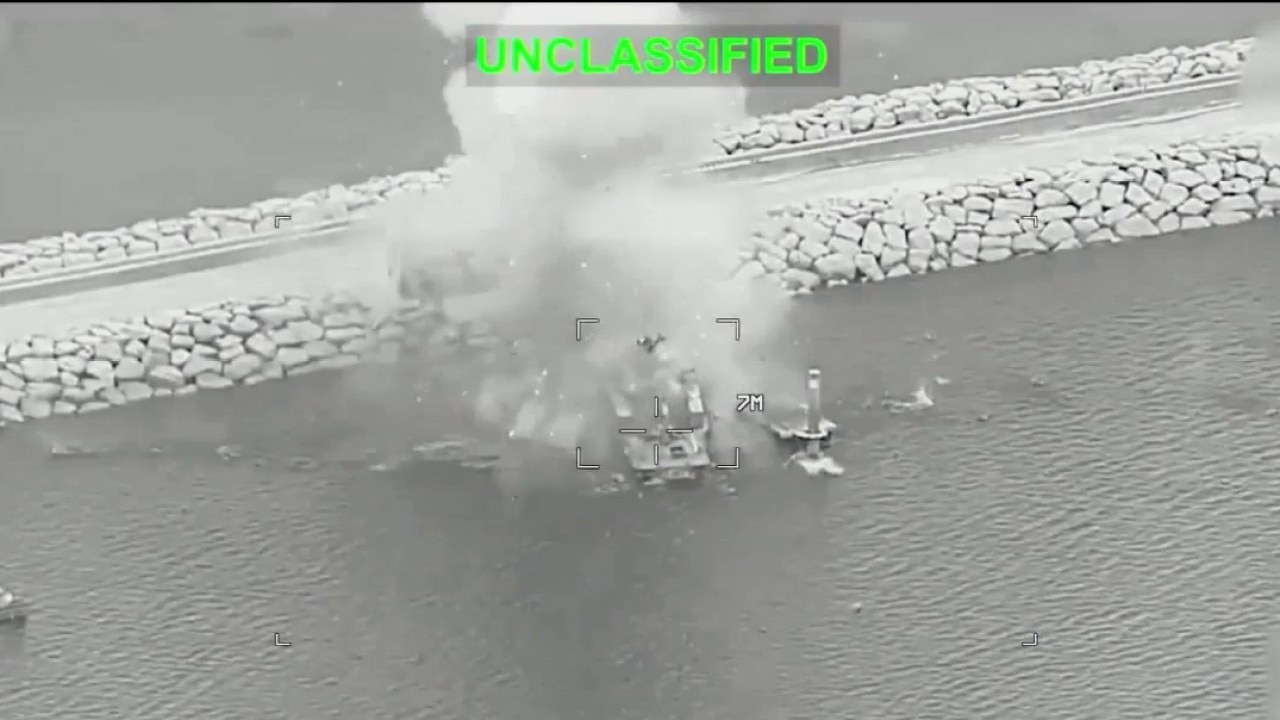
The U.S. military says it has effectively destroyed the Iranian navy and made huge strides in defanging Iran’s ability to launch missiles and drones at its neighbors. Yet the critical Strait of Hormuz, through which roughly 20% of the world’s oil passes on a typical day, remains essentially closed to business, and Iranian leaders are unbowed.
The Revolutionary Guard said Iran would not allow “a single liter of oil” through the vital waterway until the United States stopped its bombing campaign. Ali Larijani, Iran’s top national security official, offered a menacing message on Tuesday after Trump had threatened to attack Iran “TWENTY TIMES HARDER” if Tehran stopped oil flowing through the strait.
“The sacrificial nation of Iran doesn’t fear your empty threats,” Larijani wrote on X. “Even those bigger than you couldn’t eliminate Iran. Be careful not to get eliminated yourself.”
Trump ally Newt Gingrich, a former Republican House speaker, said the administration should have moved on securing the strait on Day One of the conflict.
“If they can’t keep it open, this war will in fact be an American defeat before very long, because the entire world, including the American people, will react to the price of oil if the strait stay closed very long,” Gingrich said in an appearance on Fox Business.
Making the case to Americans
Big picture view:
Trump has struggled to make his case to Americans about why preemptive action against Iran was necessary and how it squared with his pledge to keep the United States out of the “forever wars” of the past two decades. Thus far, seven U.S. troops have been killed and about 140 injured in the retaliatory salvos from Iran.
One of several reasons Trump has offered to justify launching the war was that he had a “feeling” that Iran was getting set to attack the U.S.
White House press secretary Karoline Leavitt slightly amended that position, telling reporters that the president “had a feeling” that was “based on fact.”
But Pentagon officials have told congressional staffers in private briefings that the U.S. does not have intelligence indicating that Iran was planning to preemptively attack the U.S.
Recent polling shows Trump’s decision to attack Iran has not come with the rallying-around-the-flag effect that has typically accompanied the start of recent U.S. wars.
About half of voters in Quinnipiac and Fox News polls said the U.S. military action in Iran makes the U.S. “less safe,” while only about 3 in 10 in each poll said it made the country safer. A CNN poll found about half of U.S. adults thought the military action would make Iran “more of a threat” to the U.S., while only about 3 in 10 thought it would lessen the danger.
In that CNN poll, about 6 in 10 U.S. adults said they trusted Trump “not much” or “not at all” to make the right decisions about the U.S. use of force in Iran.
European allies are treading carefully after British Prime Minister Keir Starmer and Spanish Prime Minister Pedro Sánchez faced the wrath of Trump, who deemed them not sufficiently supportive in backing his war of choice.
Trump on Wednesday lashed out again at Spain, which has said it will not allow the U.S. to use jointly operated bases in southern Spain in any strikes not covered by the U.N. charter.
“I think they’ve been very bad — not good at all,” Trump said. “We may cut off trade with Spain.”
Even German Chancellor Friedrich Merz, who has been broadly supportive of the U.S.-Israeli campaign against Iran, said on Tuesday that “more questions arise with every day of war.”
The Associated Press contributed to this report.
The Source: This story was written based on information from the Oakland Police Department and the Associated Press.