
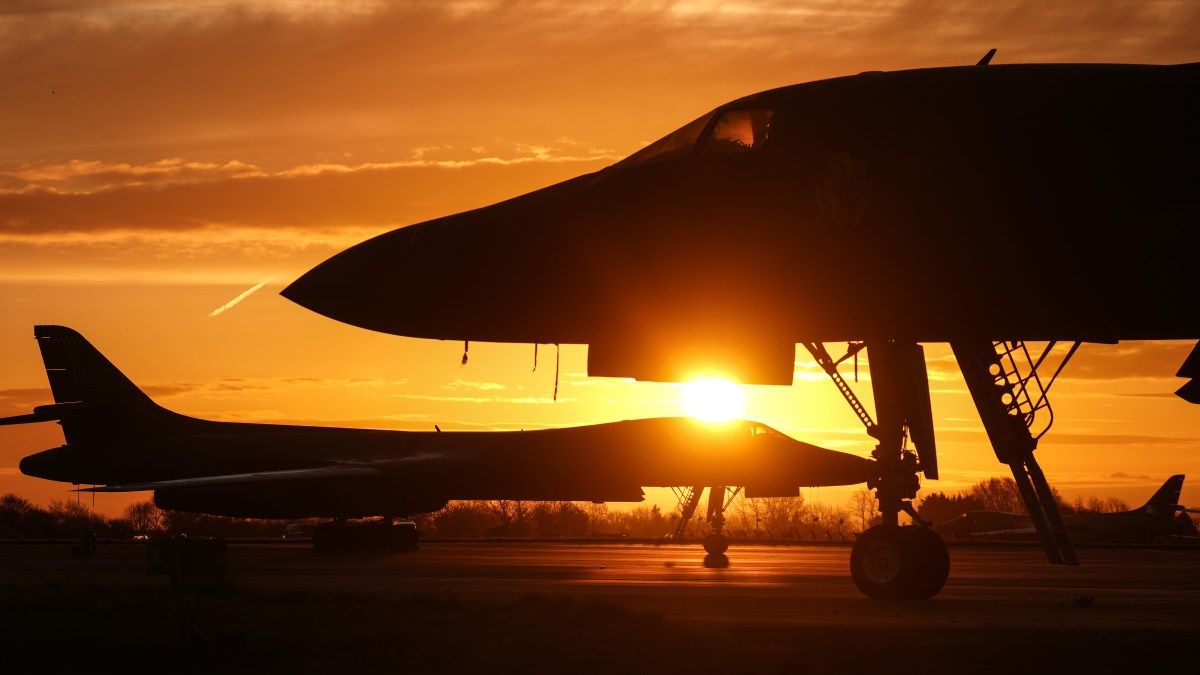
Three US air force B-1B Lancer bombers took off from RAF Fairford on Tuesday after Pete Hegseth, the American war secretary, said it would be the “most intense” day of strikes on Iran since the conflict began.
The supersonic strategic bombers capable of carrying 24 cruise missiles each were expected to carry out “defensive” strikes on Iran for the first time using a British base as a launchpad.
They were filmed leaving the base in Gloucestershire after Hegseth announced that “today” would involve the “most fighters, the most bombers, the most strikes” on Iran since Operation Epic Fury began ten days ago.
The bombers have already conducted long-range strikes deep inside Iran, including to degrade Iran’s ballistic missile capabilities.
Sir Keir Starmer, the prime minister, has allowed the United States to use British bases for “defensive” operations linked to the conflict, such as attacks on missile depots.
President Trump had been enraged by an earlier decision by Starmer not to allow the Americans use of the base for initial “pre-emptive” strikes on Iran and suggested he had ruined the special relationship.
On the 11th day of the war:President Trump said that US forces destroyed 10 Iranian boats attempting to lay naval minesBritain was in talks with allies about how it could help to defend ships in the Strait of Hormuz but had few options available to offer up.Tehran’s security chief said the vital shipping lane would be a place of defeat and suffering for those warmongering against Iran.HMS Dragon, a Type 45 destroyer, set sail for Cyprus as the Royal Navy prepared another ship for a potential rescue mission.The Office for Budget Responsibility warned that inflation in Britain could end the year close to 3 per cent as a result of the war, while petrol prices rose at their fastest rate since 2022.
Nazanin Zaghari-Ratcliffe, the British-Iranian mother who was held in Iranian jails on espionage charges for six years from 2016, has urged the prime minister to avoid further involvement in the conflict.
The British-Iranian author is among three former political prisoners and more than 100 other Iranians living in the UK who signed a letter which says that the way the war is being conducted is strengthening the Iranian regime rather than allowing for democracy. Other signatories include Aras Amiri, a former British Council worker kept in jail for three years in Evin prison in Tehran, and Nasrin Parvaz, who spent eight years in Iranian jails from 1982.
The letter states: “Nobody can claim to want the end of the Islamic republic more than we do. But attacking the country in this way will have the opposite effect. It will entrench the authoritarians and give life to the fiction that has sustained them internally for decades: that they are fighting western imperialism.”
This comes as more than a week of conflict has severely disrupted shipping in the Strait of Hormuz, through which nearly one fifth of the world’s crude oil usually passes.
In comments published by the Fars news agency, which is linked to the IRGC, Ali Larijani, Tehran’s security chief, said Hormuz could be “a strait of peace and prosperity for all, or it will be a strait of suffering and defeat for warmongers”.
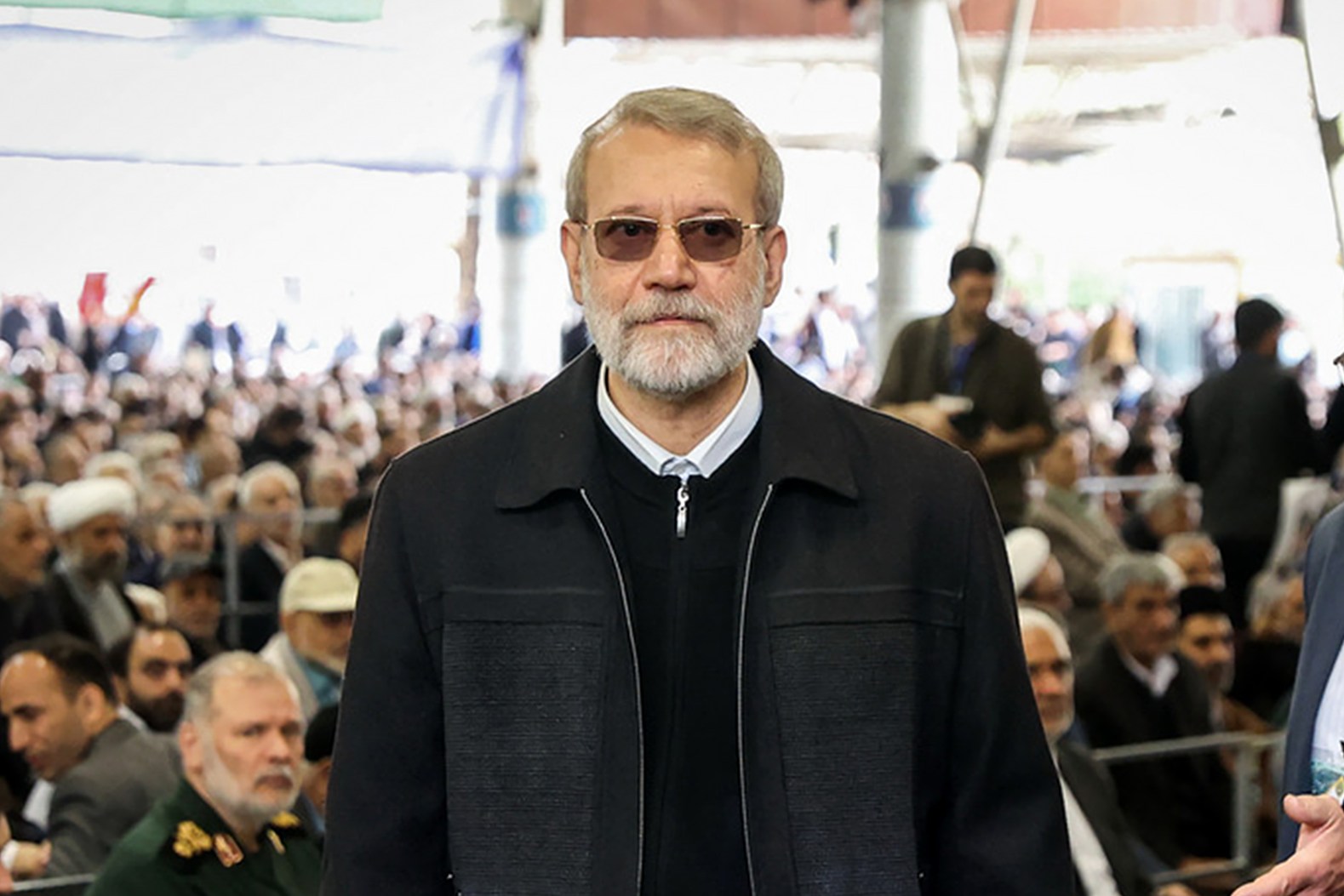
Ali Larijani, Tehran’s security chief
ICANA/AVALON
Iranian forces have threatened to block “the export of a single litre of oil from the region” to allies of the US and Israel as long as the war continues.
Earlier Larijani dismissed threats by Trump to hit the country harder if the flow of oil stopped through the strategic Strait of Hormuz.
“Iran is not afraid of your empty threats. Even those greater than you could not eliminate the Iranian nation. Take care of yourself not to be eliminated!” he said in a post on X.
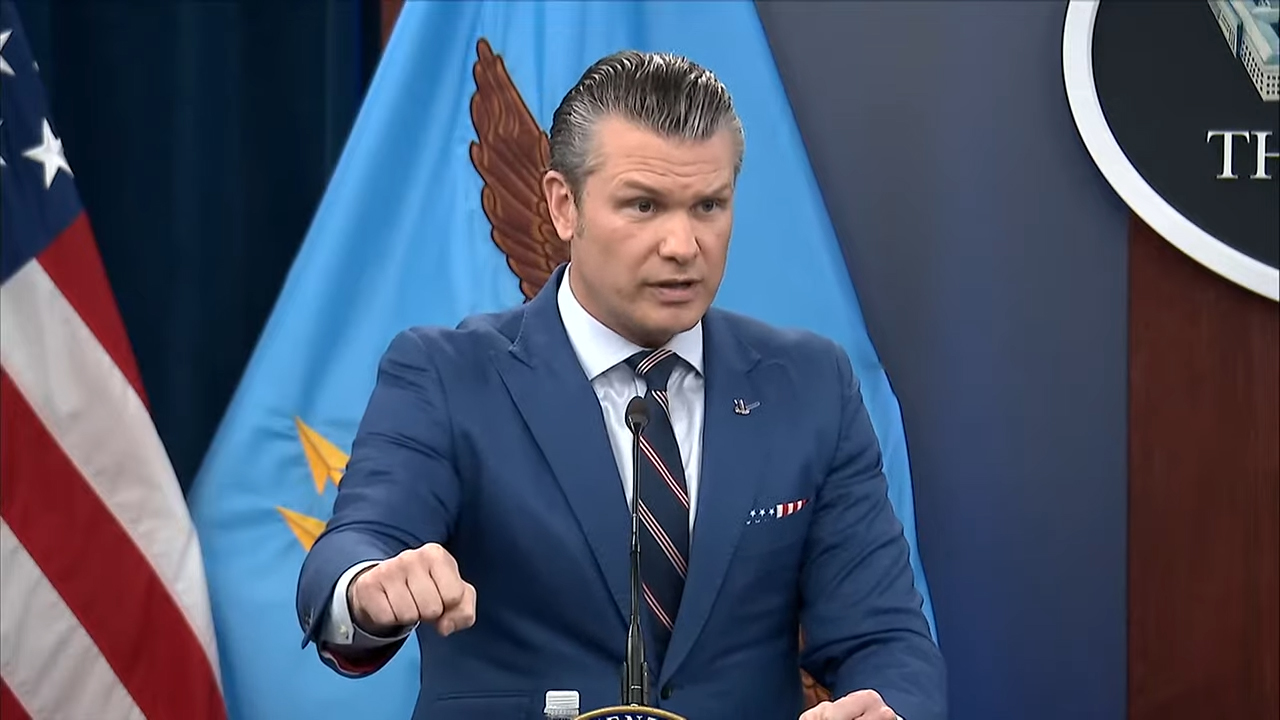
Pete Hegseth, the US war secretary, holds a briefing at the Pentagon
Abbas Araghchi, the Iranian foreign minister, said that his country would keep fighting for as long as necessary, casting doubt on Trump’s statements that the war could be over soon.
The Islamic Revolutionary Guard Corps said that that it would “determine the end of the war”.
Araghchi effectively ruled out negotiations with Washington, saying that Tehran had “a very bitter experience of talking with Americans”.
President Macron has said France wants to set up military escorts to protect container ships and tankers through the Strait of Hormuz “as soon as possible” — once the fighting subsides.
The UK is in talks with allies about how it could help, sources said, but it has no ship in the Middle East for the first time in half a century, leaving the navy with few options to assist in any escort mission.
• Katy Balls: Does Trump really have a plan for what he is doing in Iran?
HMS Dragon, which is capable of shooting down ballistic missiles, finally set sail for Cyprus on Tuesday, a week after it was ordered to go and four days later than expected.
Four out of the remaining five air defence destroyers are in port undergoing repairs, after HMS Duncan was taken out of service last week because it needed maintenance, a military source said. It has taken seven days to prepare HMS Dragon with the weapons it needs to take on Iranian missiles and drones.
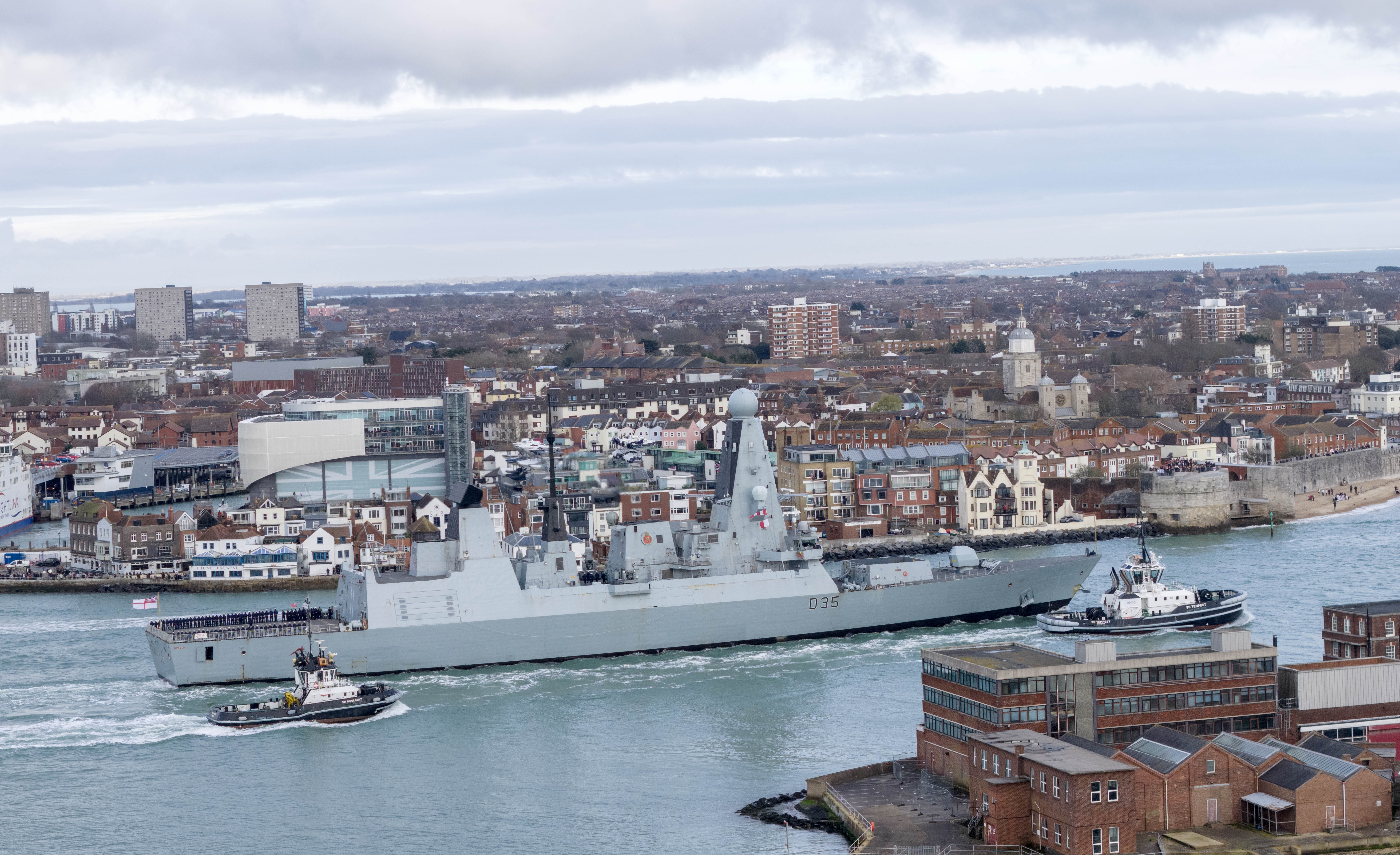
HMS Dragon leaves Portsmouth harbour on Tuesday
CHRIS GORMAN/BIG LADDER
John Healey, the defence secretary, said: “I have only praise for our Royal Navy personnel and civilian teams who have worked flat out to prepare HMS Dragon for deployment to the eastern Mediterranean.
“What is normally six weeks of work was completed in just six days — a remarkable effort delivered around the clock. They are the very best of Britain in action.”
HMS Dragon, armed with a Sea Viper weapon system, which can launch eight £1 million missiles in under ten seconds and guide up to 16 missiles simultaneously, will take five to seven days to reach the region.
The landing ship RFA Lyme Bay is also being prepared for a potential deployment to the eastern Mediterranean if the crisis continues, and could help with any evacuation of civilians.
The Ministry of Defence said: “As part of prudent planning, we have taken the decision to bring RFA Lyme Bay to heightened readiness as a precaution, should she be needed to assist in maritime tasks in the eastern Mediterranean.”
• Which parts of UK economy would be worst hit by oil crisis?
Three of the Royal Navy’s seven frigates are unavailable for operations and several of the others are focused on protecting UK waters from Russian ships.
Neither of the two £3 billion aircraft carriers are at sea, although HMS Prince of Wales is being held at an advanced state of readiness, meaning that it could set sail within five days if given the order, instead of the usual 14 days.
An MoD spokeswoman said: “We are currently discussing with our allies and partners a range of options to ensure the security of shipping in the region.”
Questions have been raised as to why HMS Anson, a nuclear-powered attack submarine capable of firing Tomahawk land-attack cruise missiles, was allowed to transit the Suez Canal on January 31 and head to Australia instead of staying in the region.
Some in the military believe the conflict in the Middle East has helped their case for more money by exposing the lack of UK preparedness for war.
There is no sign of the defence investment plan (DIP) — expected last autumn — which will set out how the Ministry of Defence will spend its money, and insiders in the MoD believe the war will leave Starmer with no choice but to increase the budget during this parliament.
While this might push the DIP back further, if it means the military gets more money faster that would be seen as a positive.
The fact the Royal Navy has been slower than the French to send a warship quickly to the region has also furthered the military’s case for more money.
One military source said: “It is true we have been hollowed out and what this has shown is what happens if we do need to suddenly send a ship somewhere.”
Ministers are trying to get the DIP published before the local elections in May, although some industry insiders fear it could be pushed back to the summer, a whole year after the strategic defence review was published.
One defence source said that because of budget issues the MoD had to save billions of pounds of savings in day-to-day running costs, which meant there was less money for operations, training and availability of equipment.
“That is why all these things aren’t available. The ships are tied up undergoing maintenance all the time, there are fewer exercises and there is less deployment capability,” the source said.
The Ministry of Defence said: “We are working flat out to finalise the defence investment plan and will publish it as soon as possible.”