
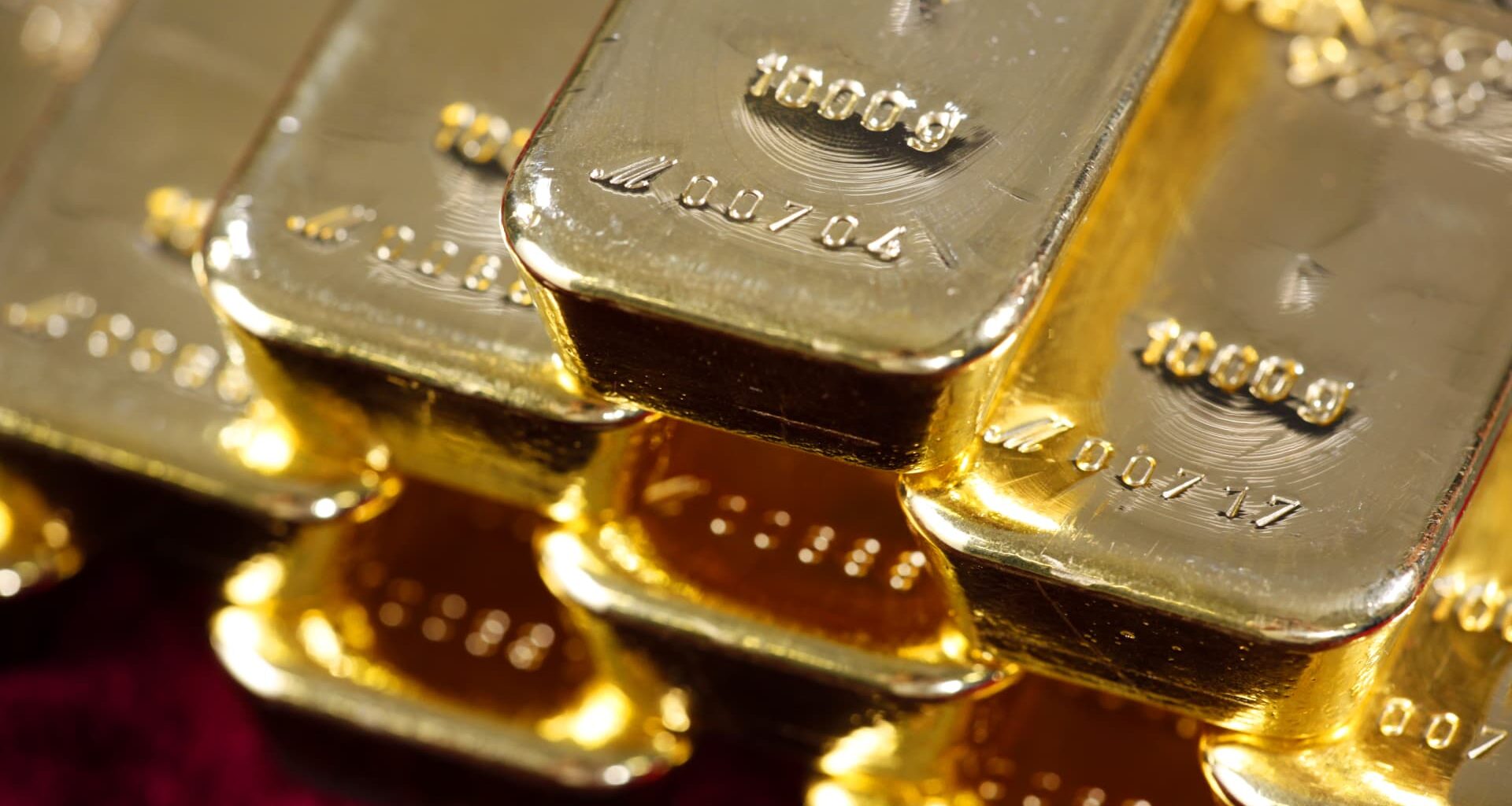
Gold prices rose on Tuesday, as the dollar dipped and oil prices eased, after U.S. President Donald Trump suggested the war in the Middle East could end soon.
Hans-peter Merten | The Image Bank | Getty Images
Gold surged during the 12-day war with Iran last year and then gave up its gains when a ceasefire was announced. But, two weeks into the latest conflict, its price remains largely unmoved.
Gold rose from $5,296 to $5,423 per troy ounce after the U.S. and Israel launched strikes on Iran on Feb. 28, aligning with the axiom that geopolitical turmoil pushes investors toward traditional “safe haven” assets.
But a sell-off saw prices fall more than 6% to $5,085 on March 3. This week, as the conflict has escalated, it has traded between $5,050 and $5,200. Spot gold was last seen trading at $5,175 per troy ounce.
Stock Chart IconStock chart icon
Gold prices over the las five days.
Several factors can explain the lack of upward momentum, including a stronger dollar and higher Treasury yields, according to Ross Norman, CEO of precious metals website Metals Daily.
Norman added that rising oil prices could lead to prolonged inflation and potentially higher interest rates as central banks struggle to contain the fallout from a closure of the Strait of Hormuz, the critical maritime corridor for oil and gas.
Higher rates tend to increase the relative appeal of yielding assets such as government bonds versus non-yielding precious metals like gold.
“Gold and silver’s price movements look lackluster just now, but perhaps that’s the way to feel after some epic moves over the last few months,” Norman told CNBC by email.
He added that some institutional investors have become nervous about holding bullion because it has been unusually volatile.
Another explanation is that conflicts trigger a wave of panic selling among investors, causing a “flush” where traders are forced to sell their positions as prices fall, according to Amer Halawi, head of research at Al Ramz.
“If there is a liquidity crunch, everything would be sold until people make sense of this and the right assets get refocused,” he said, speaking to CNBC’s “Access Middle East” on Tuesday.
“Traditionally, when there is a shock, even gold sells off and picks up later.”
Bank forecasts remain bullish despite the short-term volatility. J.P. Morgan predicts prices will reach $6,300 per ounce by the end of 2026, while Deutsche Bank is standing by a $6,000 year-end target, per their recent notes.