
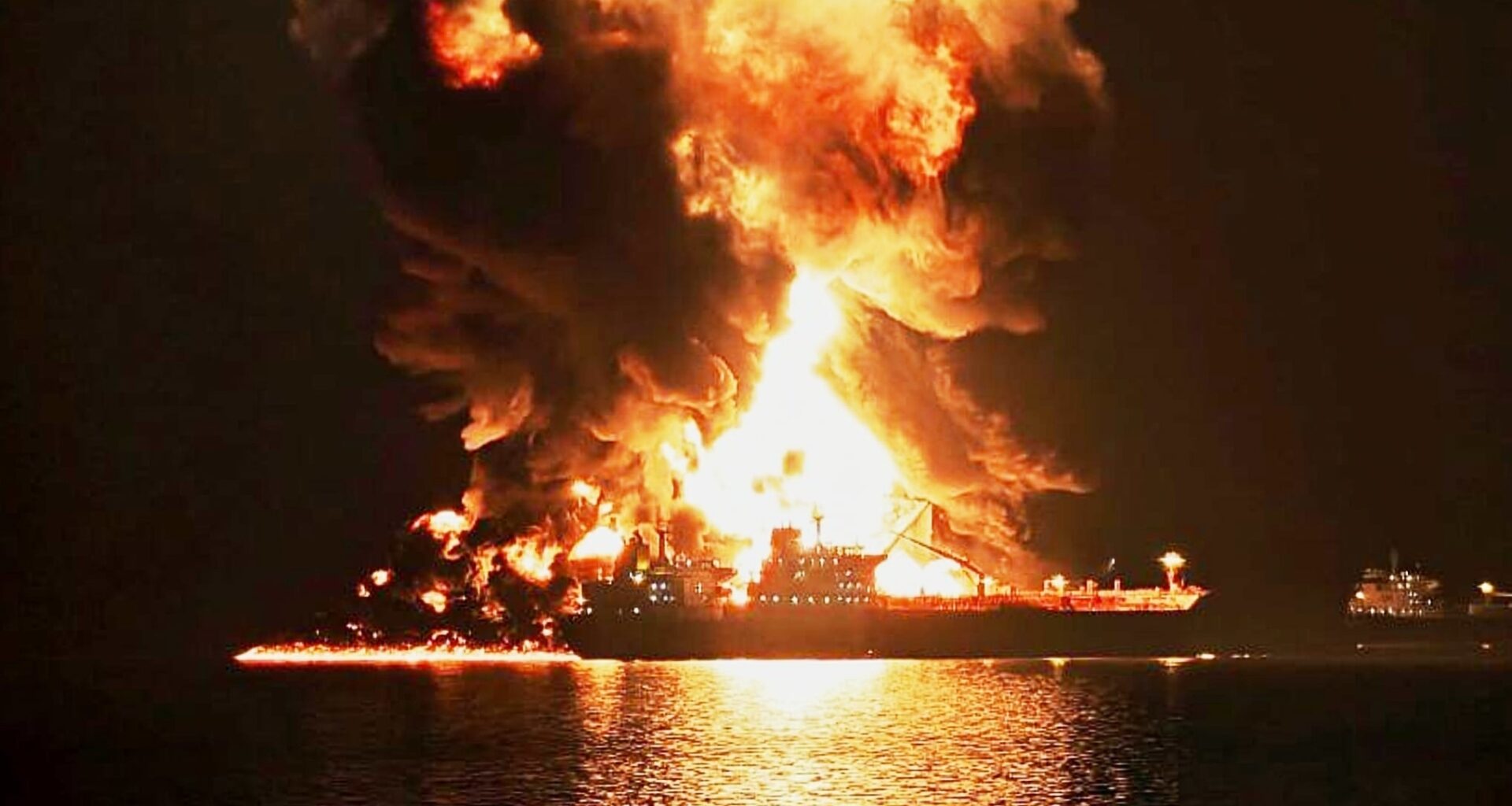
Two oil tankers were struck in the Gulf, killing one person, as Iran continued its attacks on targets across the region and the IDF reported hitting a “critical” nuclear site near Tehran, amid ongoing US-Israeli strikes on the Islamic Republic.
Iran also continued its missile attacks on Israel, firing five salvos by midafternoon Thursday, the 13th day of the war, after attacking Israel on Wednesday night in coordination with its Lebanese terror proxy Hezbollah. No injuries were reported in the Thursday salvos.
Throughout the war, which began with US-Israeli strikes on February 28, Iran has targeted countries across the region and said it would choke off the Strait of Hormuz, a major artery for the world’s oil supply. The attacks on the two oil tankers exacerbated a crisis that has sent crude prices soaring, despite countries releasing their oil reserves at historic rates. Arab states in the region also reported shooting down Iranian projectiles, including in residential and diplomatic areas.
The renewed attacks followed a warning from Tehran that it could wage a prolonged war that would “destroy” the world economy. The Islamic Republic has also threatened to bomb the offices of tech giants in Israel and the region.
US President Donald Trump has sent shifting signals on how long the American fight against the regime would last, and another sign of the war’s cost came in a report from The New York Times that the fighting’s opening week cost the United States more than $11.3 billion.
Get The Times of Israel’s Daily Edition
by email and never miss our top stories
By signing up, you agree to the terms
The report, citing what lawmakers were told in a Pentagon briefing, says the figure excludes many costs connected with the buildup to the strikes — suggesting the final tally for the first week could rise substantially.
Two oil tankers hit near Iraq
The two tankers came under attack near Iraq on Thursday, with Iraqi authorities saying at least one crew member was killed, another 38 had been rescued and a search for others was ongoing.
Additional footage of the two oil tankers struck by Iran in the northern Persian Gulf tonight, both reportedly loaded with Iraqi oil.
The tankers have been completely engulfed in flame, and are leaking burning oil. pic.twitter.com/wX2sNYZXuB
— OSINTtechnical (@Osinttechnical) March 11, 2026
Iran took responsibility for striking one of the tankers and did not mention the other, according to the Times. Iraq believes Iran is responsible for both attacks.
The Iraqi government’s media cell told national news agency INA that the “two tankers were subject to sabotage,” and the country’s oil ministry said it had “deep concern” about incidents involving oil tankers in the Gulf.
The attack forced authorities to halt operations at all the country’s oil terminals, though commercial ports remained open, officials said.
Drones also struck fuel tanks at Oman’s Salalah port, where operations were subsequently suspended as well.
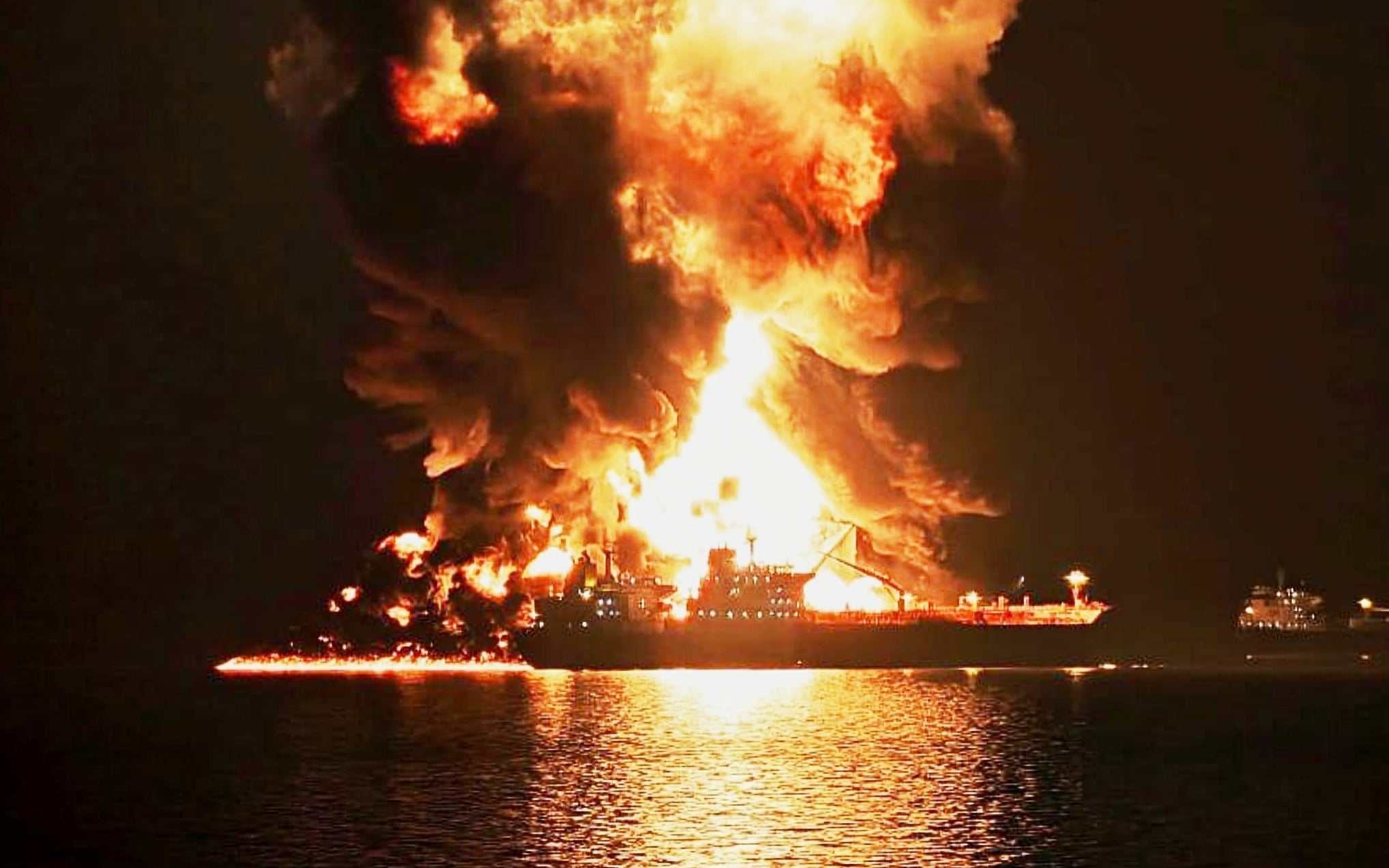
An oil tanker is set aflame after being struck in the Gulf on March 12, 2026. (AP)
Shipping in and around the Strait of Hormuz came under renewed attack, with a container ship near the United Arab Emirates hit by an “unknown projectile,” the UK maritime agency said in an alert Thursday.
The projectile caused a small fire onboard, but all crew were reported as safe, the agency said.
Meanwhile, two members of the Thai-flagged Mayuree Naree bulk carrier, which was hit by two projectiles on Wednesday, were still missing on Thursday “and believed to be trapped in the engine room” of the ship, according to transport company Precious Shipping.
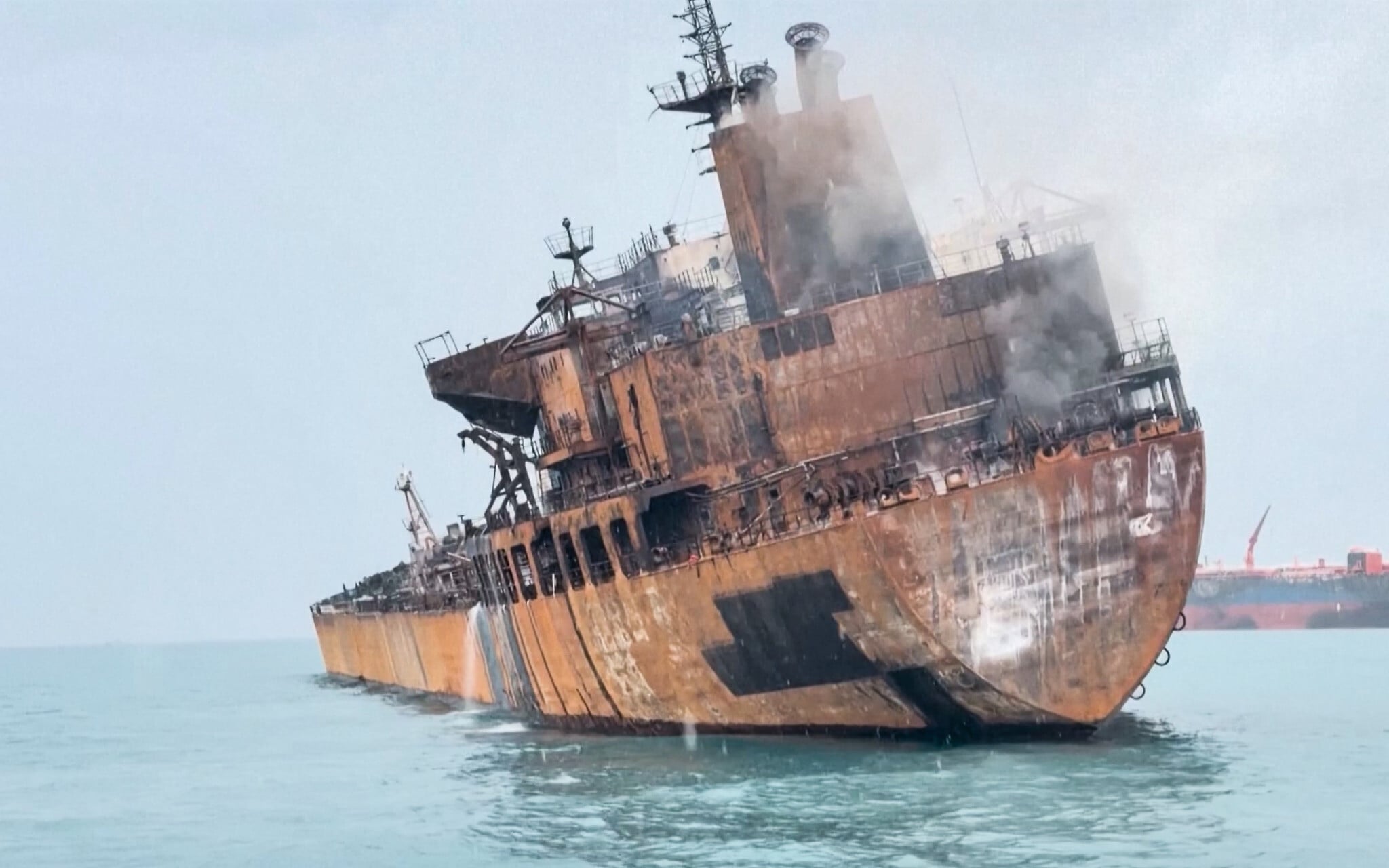
A tanker in the Persian Gulf is seen after being struck on March 12, 2026. (Screenshot from Reuters)
Iran’s Revolutionary Guards said it had struck the Mayuree Naree, as well as a Liberia-flagged vessel, in the strait because the ships had ignored “warnings.”
Oman, meanwhile, has shifted all vessels out of its main oil export terminal at Mina Al Fahal outside the strait in a precautionary move, Bloomberg News reported Thursday, citing direct recipients of a port agent’s notice.
IDF says it hit Iranian nuclear site, conducted strikes in Tehran
The US and Israel, meanwhile, continued to pound regime targets within the Islamic Republic.
On Thursday, the IDF said it had recently struck an Iranian nuclear facility where the regime advanced “critical capabilities in the development of nuclear weapons.”
The site near Tehran, identified by the military as the Taleghan compound, was hit during waves of strikes carried out in the area in recent days.
The IDF said that in recent years, Iran used the site for “the development of advanced explosives and for conducting sensitive experiments as part of AMAD Project,” Iran’s alleged secret nuclear weapons development program.
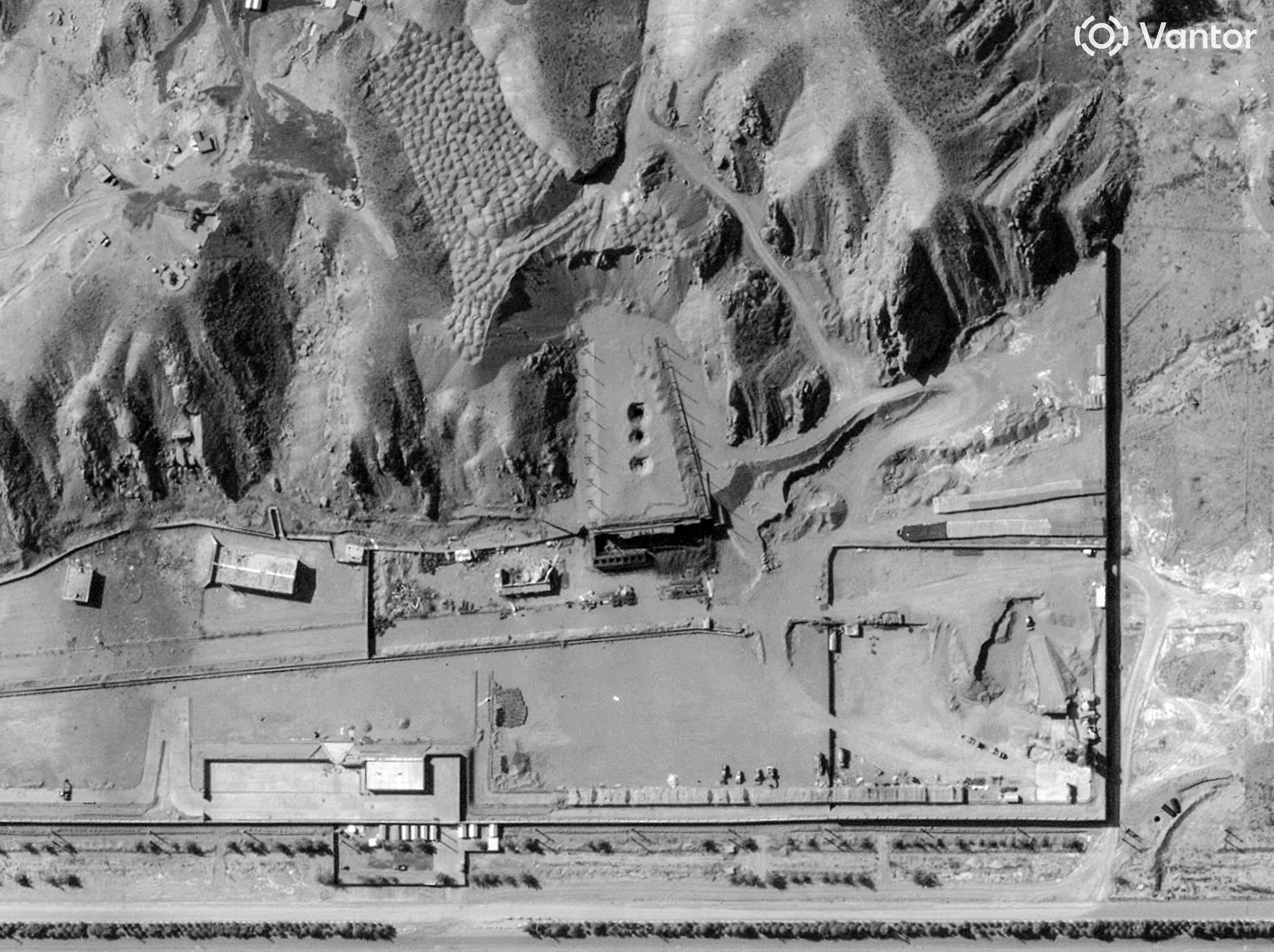
This satellite image taken and released on March 11, 2026 courtesy of Vantor shows a view of Taleghan 2 facility with three craters after airstrikes at the Parchin military complex, some 30 kms (20 miles) southeast of Tehran, Iran (Satellite image ©2026 Vantor / AFP)
The Taleghan compound had been struck by Israel in October 2024, during a retaliation for an Iranian missile attack on Israel earlier that month.
The military said that it recently identified that Iran had “taken steps to rehabilitate the compound” following those strikes.
“The Iranian regime has continued efforts to advance and develop capabilities required for the development of a nuclear weapon,” the IDF said, adding that the recent strike was part of a “series of operations” aimed at “further damaging the Iranian terror regime’s nuclear aspirations.”
Iran has consistently denied seeking to acquire nuclear weapons. However, it has enriched uranium to levels that have no peaceful application, obstructed international inspectors from checking its nuclear facilities, and expanded its ballistic missile capabilities
In addition, overnight, the Israeli Air Force said it launched a new wave of “extensive” airstrikes on Iranian regime sites in Tehran.
Iran threatens to hit offices of tech giants
As Iran continued to fire missiles at Israel, the country’s Tasnim news agency published a list of more potential targets for the regime, including the offices of tech giants such as Amazon, Google, Microsoft and Nvidia in Gulf countries and Israel.
“With the expansion of regional war into infrastructure warfare, the scope of Iran’s potential targets are gradually expanding,” Tasnim wrote, without citing a source for the possible development.
In Israel, the Health Ministry reported Thursday morning that over the preceding 24 hours, 179 injured people, including both civilians and soldiers, had been taken to hospitals as a result of the conflict.
Among those treated in hospitals, four were in moderate condition and 157 were in good condition. Eighteen people had been treated for anxiety.
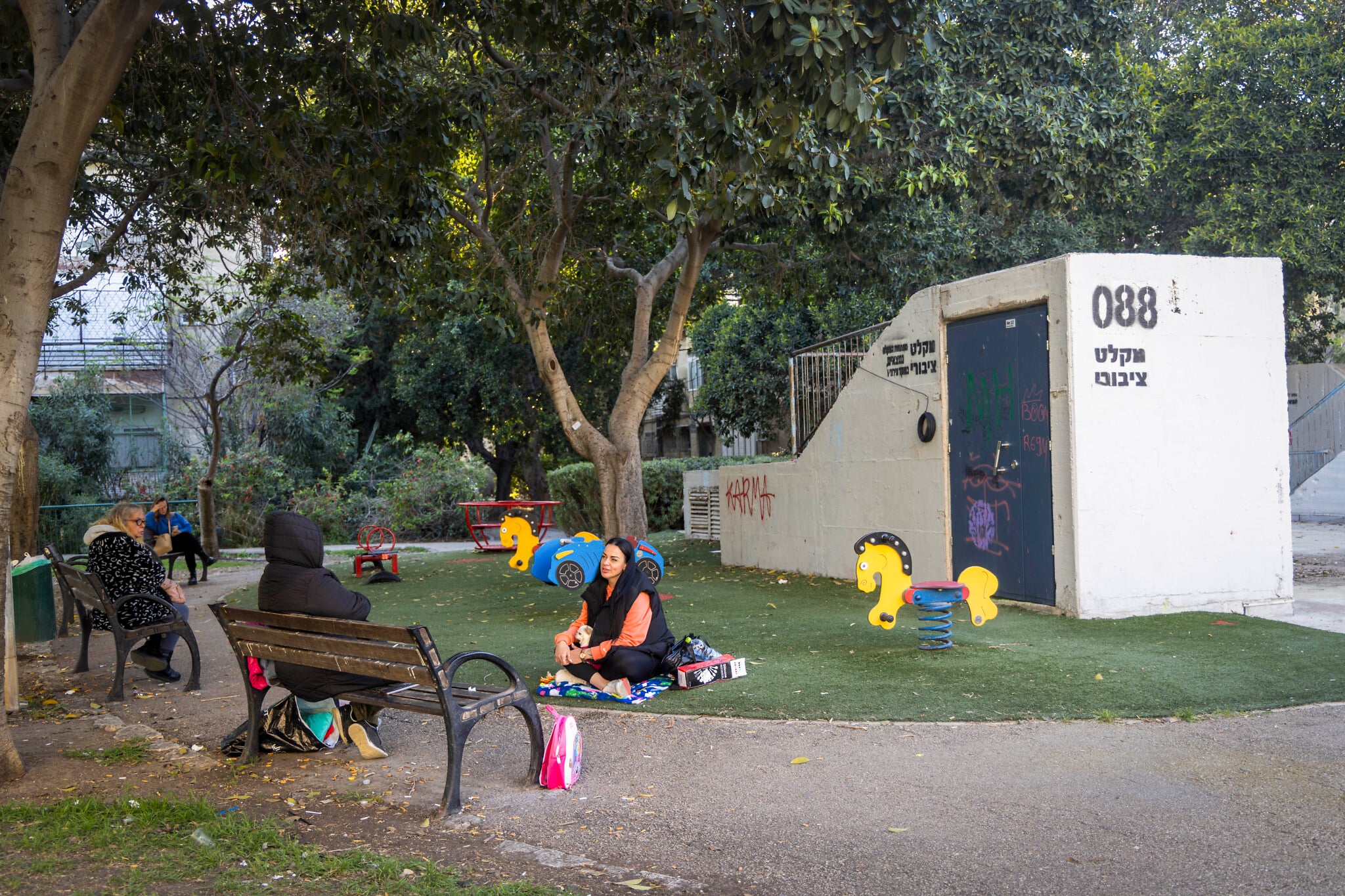
People sit outside a public bomb shelter at a playground in the northern city of Haifa, March 10, 2026. (Yossi Aloni/Flash90)
While the ministry did not give a breakdown of the causes of injuries, it was assumed that most were sustained by people trying to reach shelter rather than as a direct result of missile fire from Iran or rocket fire from Lebanon.
The ministry said that since February 28, when the war began, 2,745 people had been admitted to hospitals, 85 of whom were hospitalized as of the ministry’s update.
Among those hospitalized, 11 people were in serious condition, 10 people were in moderate condition, and 64 were in good condition.
Fourteen people in Israel have been killed throughout the war so far.
Reported Iranian attacks in Bahrain, Kuwait, UAE
Iranian attacks across the Gulf, which has experienced missile fire throughout the war, continued on Thursday. In the morning, Bahrain told residents to stay inside and close windows to keep fumes out after a fire broke out due to an Iranian attack on fuel tanks.
The blaze began in the country’s Muharraq Island, which is home to Bahrain International Airport. The kingdom had already moved some aircraft out of the area of the airport early Wednesday.
Bahrain’s ???????? Interior Ministry said early Thursday that fuel storage tanks at a facility in Muharraq governorate were targeted in an attack attributed to Iran ????????, adding that authorities have begun taking measures to handle the incident and secure the site.
The incident came… pic.twitter.com/3iswZ45qtz
— Saad Abedine (@SaadAbedine) March 12, 2026
Suspected Iranian attacks were also reported in Kuwait, which said two people were injured by a “hostile drone” that hit a residential building, and also that several drones caused “material damage” at the country’s international airport.
In the United Arab Emirates, explosions were heard in downtown Dubai, as the state said its air defense was responding to a missile threat. Small clouds of smoke were seen rising above a residential neighborhood in the metropolis.
The Dubai government’s media office reported “a minor incident caused by debris from a successful interception that fell onto the facade of a building on Sheikh Zayed Road.”
Earlier, the media office reported “a minor drone incident in the Al Bada’a area.”
Both incidents caused no casualties, it said in the statements on X.
Saudi Arabia said it intercepted drones headed toward the Shaybah oil field as well as its embassies district.
Italian Foreign Minister Antonio Tajani said there was an “attack” on an Italian base in the Iraqi Kurdish city of Erbil, but said there were no injuries. Italy has soldiers in Erbil training Kurdish security forces as part of an international coalition force.
As of early Thursday, attacks in the Gulf since the war’s start have killed 24 people, including 11 civilians and seven US military personnel, according to local authorities and the US Central Command.
Crude oil tops $100 a barrel, amid historic supply disruption
Amid the disruptions, the International Energy Agency said Wednesday that its members had agreed to unlock 400 million barrels of oil from their reserves — their largest release ever.
The United States Department of Energy followed up by saying it would release 172 million barrels from the strategic petroleum reserve “beginning next week.”
Still, the price of a barrel of Brent crude oil, the international standard, topped $100 a barrel early Thursday, just days after it spiked near $120, and US benchmark crude oil jumped to about $95 a barrel.
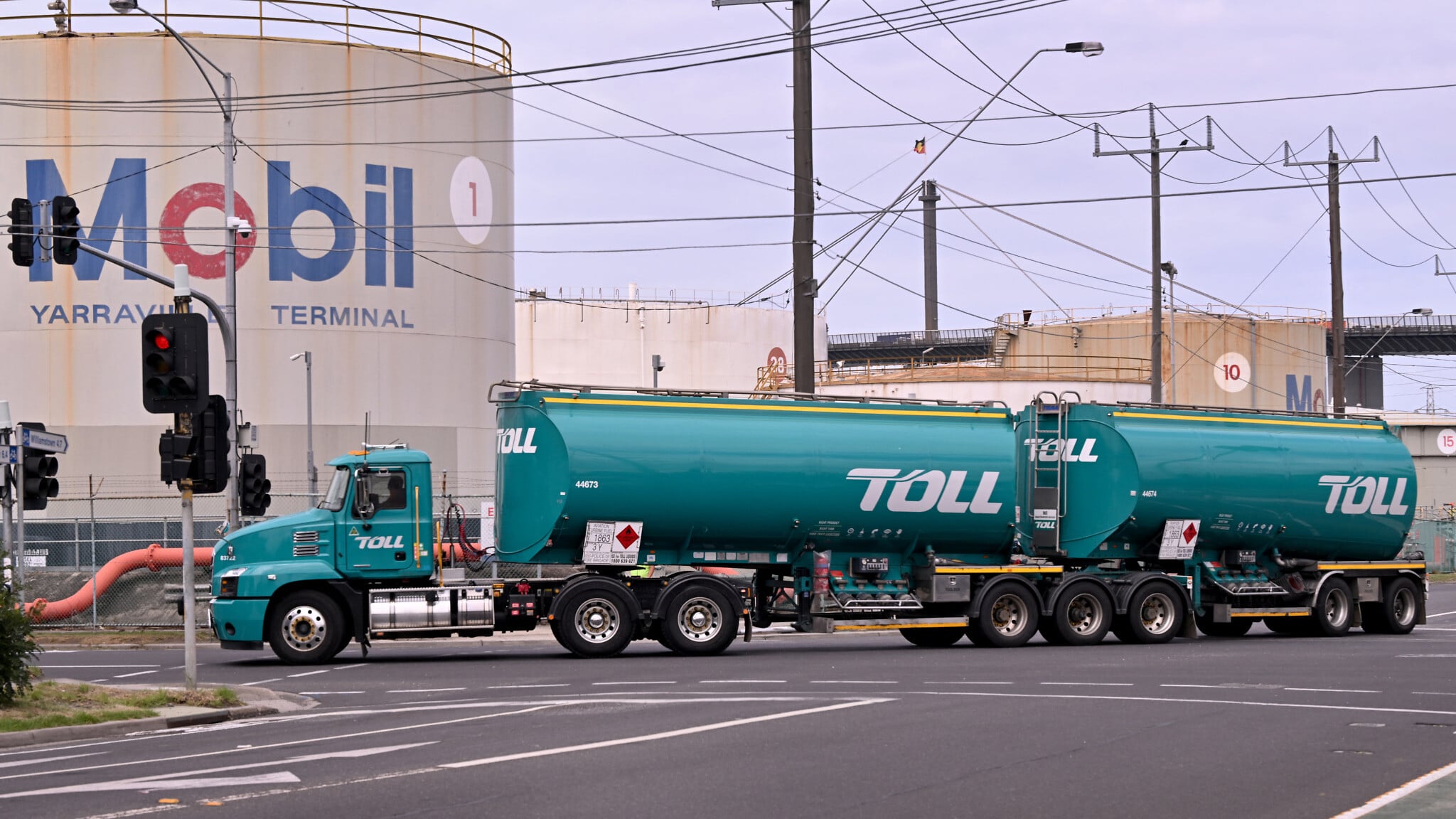
A fuel tanker passes the Mobil fuel distribution centre in the Melbourne suburb of Yarraville on March 12, 2026 as the demands and prices of petrol and diesel soar due to the Middle East conflict. (William WEST / AFP)
The Paris-based IEA, a world authority on energy markets, said Thursday that the 13-day conflict had caused the “largest supply disruption in the history of the global oil market,” surpassing those of the 1970s.
The Gulf states’ total oil output is down by at least 10 million barrels per day and there were “no signs of a de-escalation in hostilities,” it added.
US military shares clip of it destroying Iranian planes
The American military published footage showing the destruction of Iranian cargo planes and other aircraft in strikes at Kerman Airport in Iran’s south.
The Iranian regime is losing air capability day by day. U.S. forces aren’t just defending against Iranian threats, we are methodically dismantling them. pic.twitter.com/CrJj2nFtHB
— U.S. Central Command (@CENTCOM) March 12, 2026
A video released by the US Central Command showed strikes on a Lockheed C-130 Hercules, Lockheed P-3 Orion, and an Ilyushin Il-76.
The US-made planes were supplied to Iran before the 1979 Islamic Revolution.
“The Iranian regime is losing air capability day by day. US forces aren’t just defending against Iranian threats, we are methodically dismantling them,” CENTCOM said on X.