

Anthony OlivieriMar 11, 2026, 08:53 PM ET
CloseAnthony Olivieri is a staff writer for ESPN. He has a degree in communications with a concentration in journalism from Marist College. He’s been with ESPN since 2012.
Multiple Authors
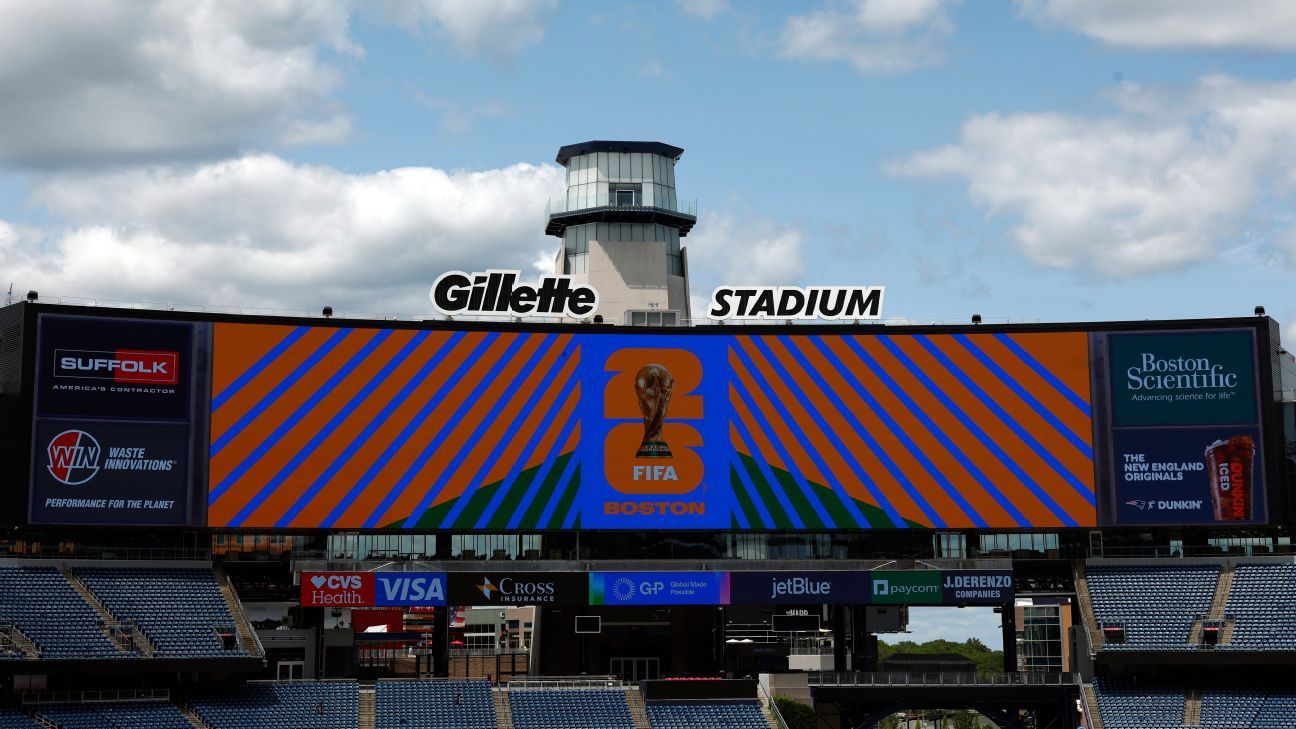
The Massachusetts town of Foxborough, the Kraft Group and host committee Boston Soccer 2026 have agreed to terms that will allow for the approval of a license necessary to play seven World Cup games at Gillette Stadium, ending a protracted battle less than a week ahead of a vote that could have decided their fate.
Central to the dispute was nearly $8 million that Foxborough has said for months it wanted up front to pay its police. The town refused to spend taxpayer money on a promise that it would be reimbursed by federal funds that have been delayed.
But a joint statement by the town, host committee and a company headed by Robert Kraft, owner of the New England Patriots, said that all parties “have reached an understanding collectively” that will allow the town and the host committee to iron out final details of an agreement. That will lead to FIFA’s license approval at the Foxborough select board’s next meeting on March 17, which had been set as the final deadline.
Editor’s Picks
2 Related
“As part of this arrangement, the Town of Foxborough will not incur any cost or financial burden related to the FIFA World Cup,” the statement read, “with Boston Soccer 2026 providing advance funding for security-related capital expenditures and the full extent of deployment that public safety officials have determined is needed to execute the event with Kraft Sports + Entertainment’s backing.”
The statement thanked several public officials, including Massachusetts governor Maura Healey, for the development of the security plan.
Foxborough had taken a hardline stance on the matter, intensifying a standoff that turned heated in recent days, pitting a small New England town against a global soccer giant, its host-committee affiliate and a company headed by a powerful NFL owner.
During a March 3 meeting, the Foxborough select board sparred with two lawyers from the host committee. At the meeting, the host committee said for the first time that it would pay for security funds, if necessary, within two business days of being invoiced. The Kraft Group, which owns the stadium and regularly applies for a similar license for Patriots games, would fund any shortfall.
“If you don’t get paid, you can terminate the license,” host committee lawyer Gary Ronan said. “The next soccer game doesn’t happen.”
But board members immediately challenged the host committee over the purchase of security materials and a deadline for the materials to be in place, as outlined by Foxborough’s police and fire chiefs.
Then, on March 6, board chair Bill Yukna released a statement, making clear that no agreement had been reached.
“What they have presented is essentially an agreement with themselves, but such terms are not responsive to the town’s requirements and will not suffice to address the Town’s needs for providing security services for these events,” the statement said.
Responding to an ESPN follow-up query, the board emailed a second statement on March 6 saying that it was “shocked and dismayed” about statements made to the media by the Kraft Group and other event organizers suggesting an agreement with the town was reached.
“Any such statement is categorically false,” the board statement said.
It added: “That such entities may have miscalculated the cost of hosting the World Cup is not a reason to compromise on event security. The Town cannot and will not finance the Kraft Group’s losses by sacrificing public safety.”
Organizers appeared flummoxed, unable to explain the source of the town’s remarks. In a statement to ESPN later on March 6, the Kraft Group said: “At no point in this process has the Kraft Group claimed to have reached an agreement with the Town of Foxborough.”
The Kraft Group pointed out that the company was neither the applicant on the license nor the host committee, but it has made a “good faith effort” to work with the town to prepare for a “historic event.”
“When they had a liquidity issue, we solved it. When they asked for equipment, we supported it,” the statement said. “We are deeply disappointed that the town has seemingly reached a conclusion unilaterally without the platform of a public hearing … and would like to understand what the town requires at this stage to get to ‘yes.'”
Town manager Paige Duncan didn’t return repeated ESPN requests to clarify the statements the town said the Kraft Group made to the media.
The depth of the division between the two sides became apparent in a March 3 meeting in which town officials insisted on full, immediate funding for security equipment purchases needed far ahead of the seven games to be hosted at Gillette Stadium.
Peter Tamm, a lawyer for the host committee, countered with a slide presentation purporting to outline the legal boundaries of the board’s authority related to the license approval. It could consider safety, he said, but it cannot deny the license based on “refusal to agree to advanced payment of anticipated costs.”
The town’s lawyer disagreed. The meeting ended shortly after.
On March 5, organizers sent a letter to the town that committed to paying public safety costs two business days after receiving an invoice. It also said that the host committee had $2 million in an account and expected to receive at least $30 million more. Kraft Sports & Entertainment, a division of the Kraft Group, offered to backstop the funding if needed, according to written documentation also provided.
The Kraft Group said in a statement that it was “committed to financially ensuring” that the town’s security needs are met. It added that the World Cup games at Gillette Stadium won’t be “revenue generating events,” but instead would generate “a significant amount of tourism and visibility for the state.” Adding to the funding uncertainty is the status of $625 million that the federal government has earmarked for the 11 host cities in the U.S. “to enhance security and preparedness.” But the Homeland Security Department money has been delayed by a congressional freeze on funding related to immigration enforcement.
Boston, which is 25 miles away from Foxborough, was named a host city in June 2022. Foxborough police chief Michael A. Grace said on March 3 that security planning has gone on for a year and a half. The public dispute over funding has heated up since January.
Gillette Stadium is scheduled to host its first game on June 13, when Scotland takes on Haiti.