
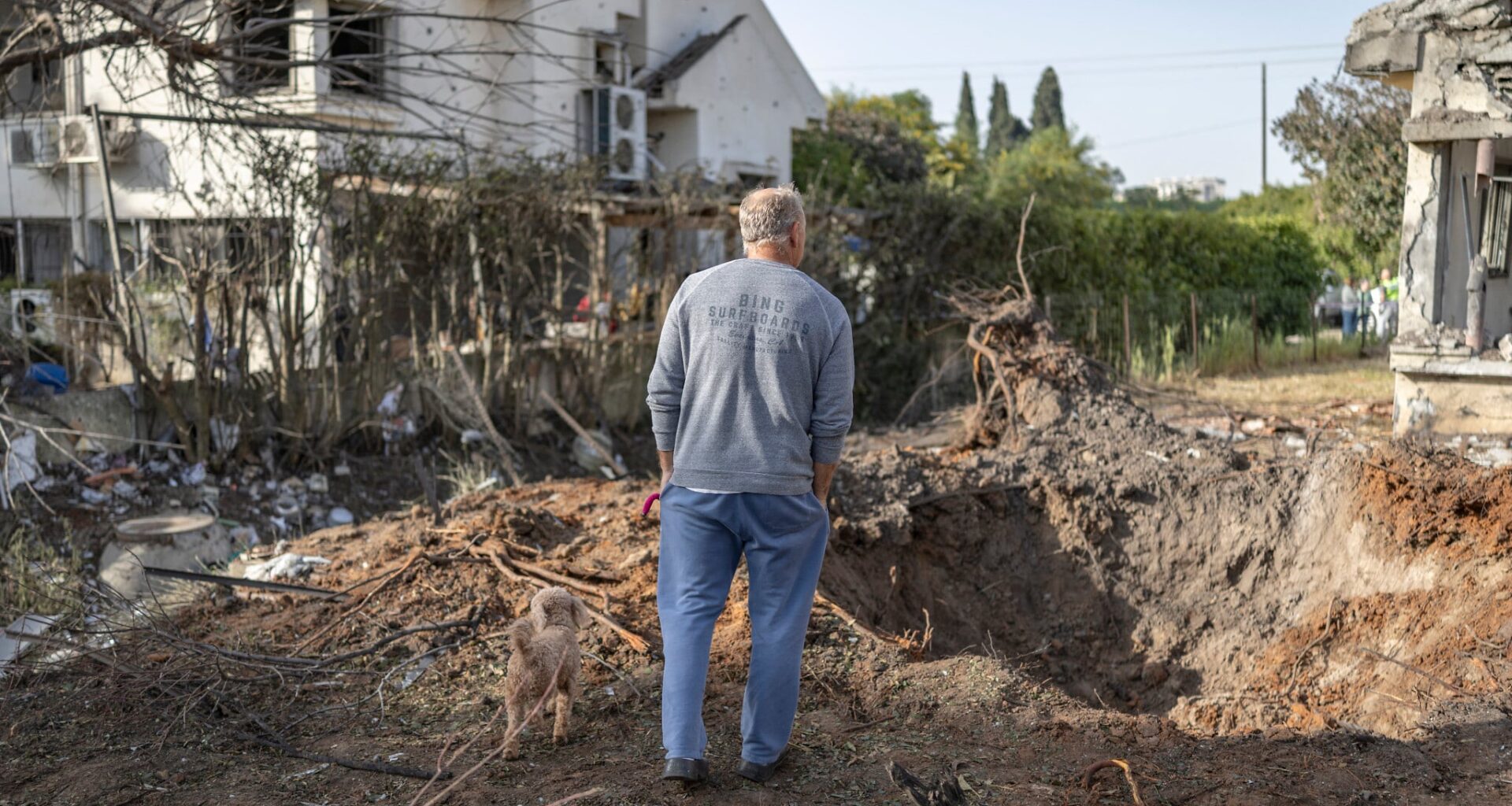
In recent days, the Hezbollah terror group has ramped up its rate of fire against Israel after joining the fight in support of its sponsor, Iran, which is under intense attack from a joint US-Israel air campaign that began on February 28.
The escalation peaked on Wednesday night, when the Lebanon-based organization launched some 200 rockets at northern Israel — a barrage that has renewed questions about the size of its remaining arsenal and the resilience of its supply chain.
Before the outbreak of the war triggered by the October 7 Hamas-led attacks, estimates in 2023 put Hezbollah’s arsenal at around 150,000 rockets and missiles.
Since then, however, that stockpile is widely believed to have been significantly reduced by Israel Defense Forces raids on Hezbollah’s munitions storage and production facilities.
The group’s ability to smuggle in weapons and parts has also been significantly hampered by the loss of Syria as a viable transport route following the overthrow of the Bashar Assad regime in late 2024.
Get The Times of Israel’s Daily Edition
by email and never miss our top stories
By signing up, you agree to the terms
Yet experts believe it still maintains enough firepower to regularly launch significant attacks on Israel.
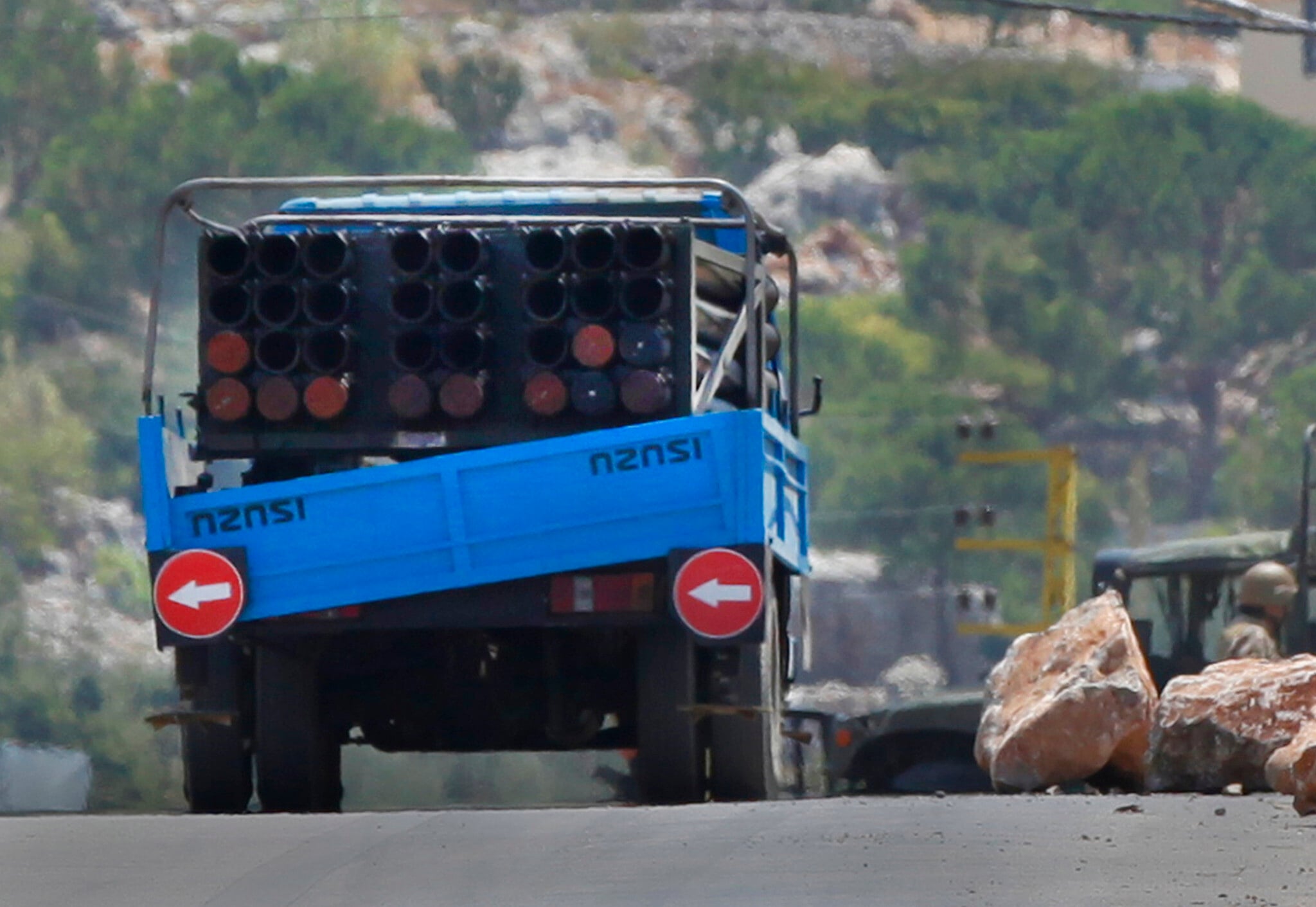
A rocket launcher placed on a pick up truck that was used by Hezbollah to fire rockets at Israel, is seen in the southeastern village of Shwaya, near the border with the Golan Heights, Friday, Aug. 6, 2021. T(AP Photo/Mohammed Zaatari)
“I don’t know how much Hezbollah has left after the IDF strikes in recent days,” said Sarit Zehavi, founder and president of the Alma Research and Education Center, which analyzes security challenges along Israel’s northern borders. “Based on the way it is managing the scale of its fire, I estimate it has enough for at least several weeks.”
On February 26, days before Hezbollah resumed firing at Israel, Alma estimated that the Iran proxy group possessed roughly 25,000 rockets and missiles.
Since Hezbollah entered the fighting on March 2, the IDF has struck weapons depots and rocket launch sites across Lebanon.
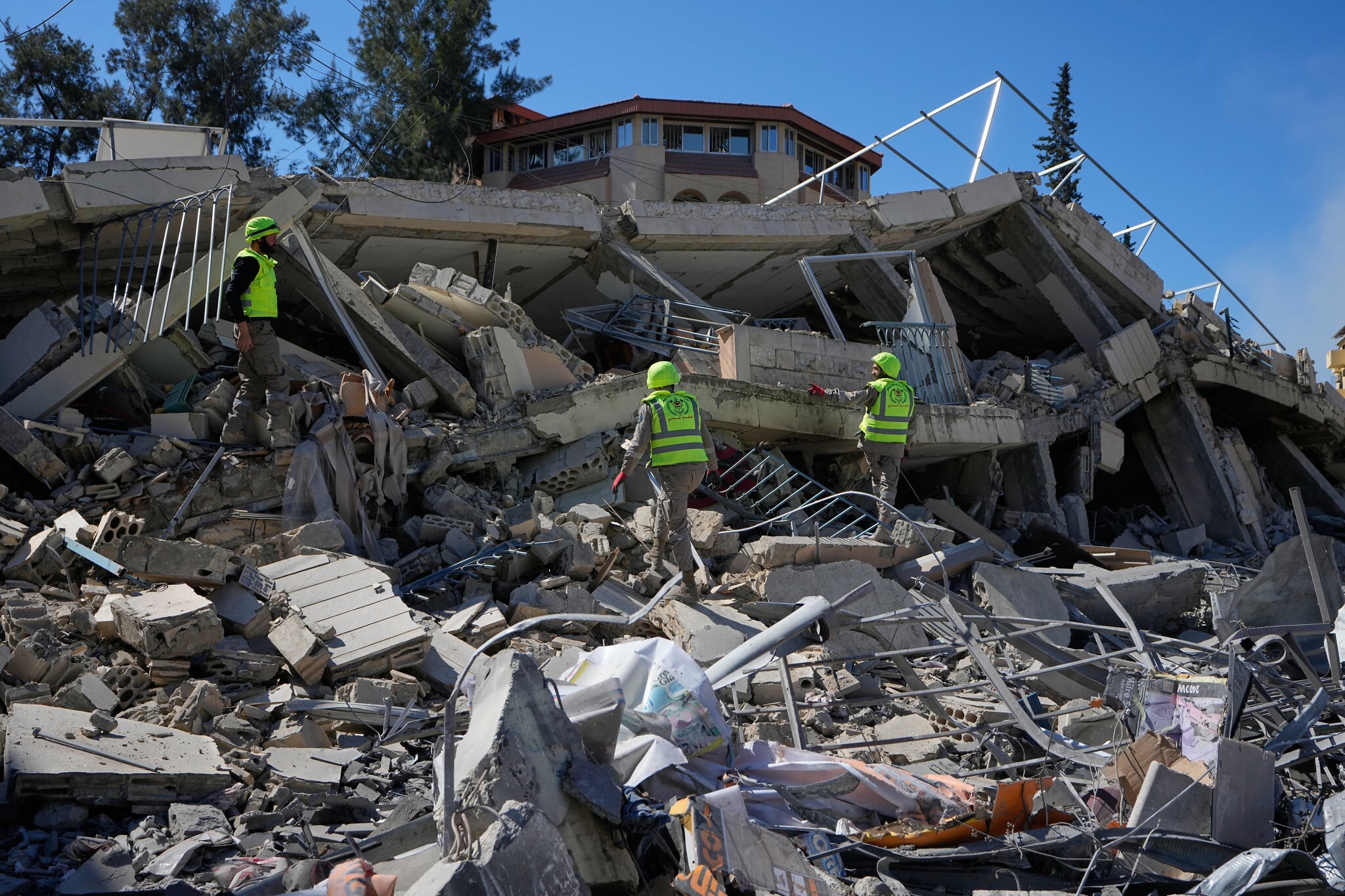
Rescue workers check a destroyed building that was hit by an Israeli airstrike in Nabatiyeh town, south Lebanon, Thursday, March 5, 2026. (AP Photo/Mohammed Zaatari)
Even before the latest escalation, Israel had been preparing for the possibility that Hezbollah might join the conflict. In the weeks leading up to the US-Israel war with Iran — triggered by Israel’s Operation Roaring Lion — the IDF intensified its airstrikes against Hezbollah targets in Lebanon.
According to military sources, those strikes were intended to degrade the group’s rocket and missile capabilities in the event it attempted to resume hostilities.
The IDF had earlier estimated that 70-80% of the group’s rocket fire capabilities had been destroyed in the months of open warfare against the group in the fall of 2024, as well as in near-daily Israeli strikes after the ceasefire took effect.
According to the army, Hezbollah was thought to still possess several thousand rockets — the vast majority of them short-range projectiles like mortars, though most of its weapons were located in areas north of the Litani River, too far away to threaten Israel.
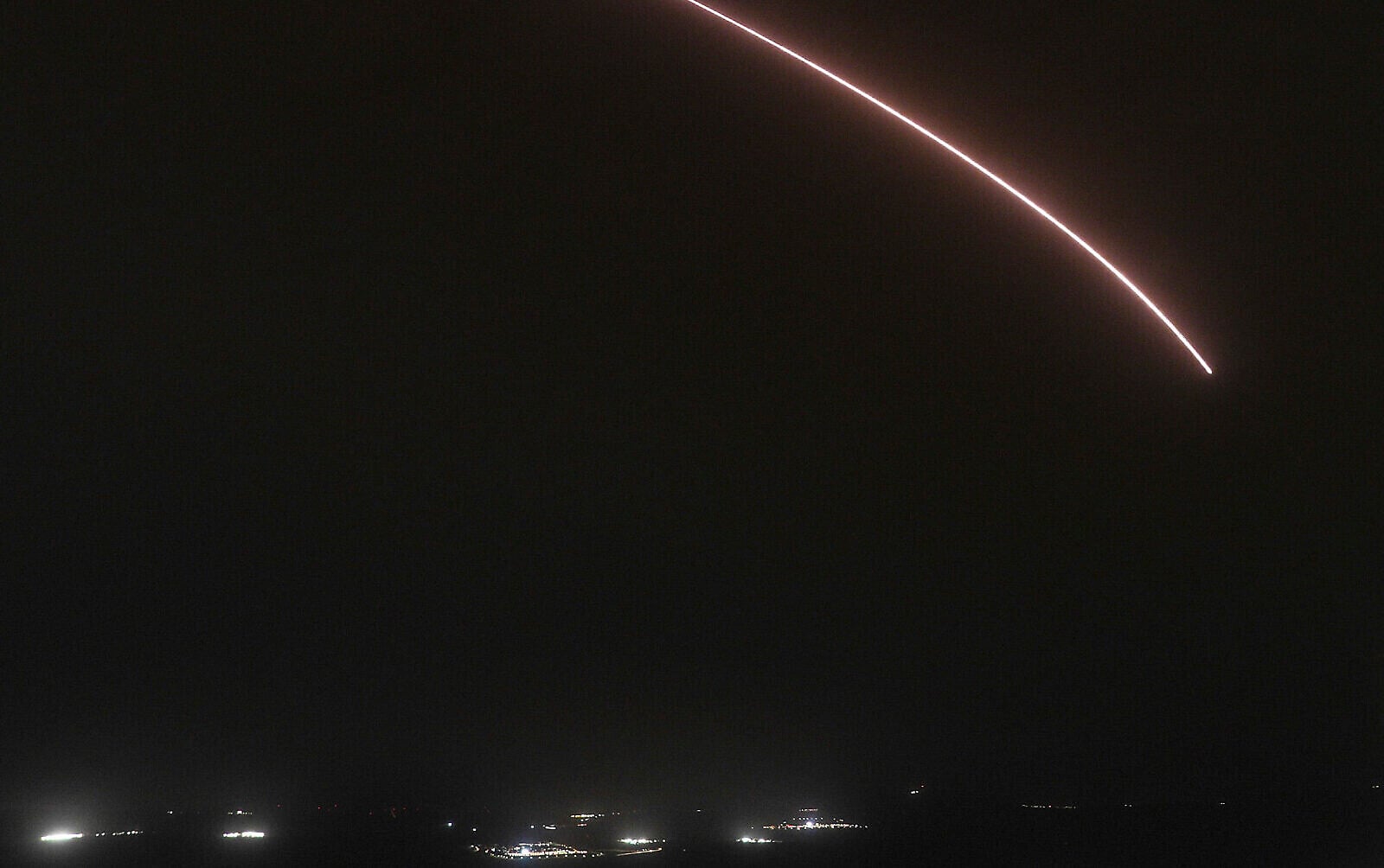
A rocket fired from Lebanon is intercepted by Israel’s air defense system over northern Israel, March 11, 2026. (Ayal Margolin/Flash90)
But the group was still understood to possess several hundred medium- and long-range missiles that can reach deep into Israel, according to the military.
During the current conflict, the terror group has mostly targeted northern Israel, but it has also launched sporadic attacks deeper into the country, including firing at the Tel Aviv area.
The group possesses the capability to rearm, but Israel has repeatedly targeted sites where it is believed to be manufacturing weapons.
In November 2024, just hours before a ceasefire between Israel and Hezbollah came into effect — ending more than a year of persistent rocket fire that displaced some 60,000 residents of northern Israel — the IDF said its fighter jets destroyed the terror group’s largest underground precision-guided missile manufacturing site in Lebanon.
The military said the underground complex stretched for 1.4 kilometers and represented Hezbollah’s most strategically significant weapons production facility. The site was subsequently struck by the IDF several more times, most recently in October 2025.
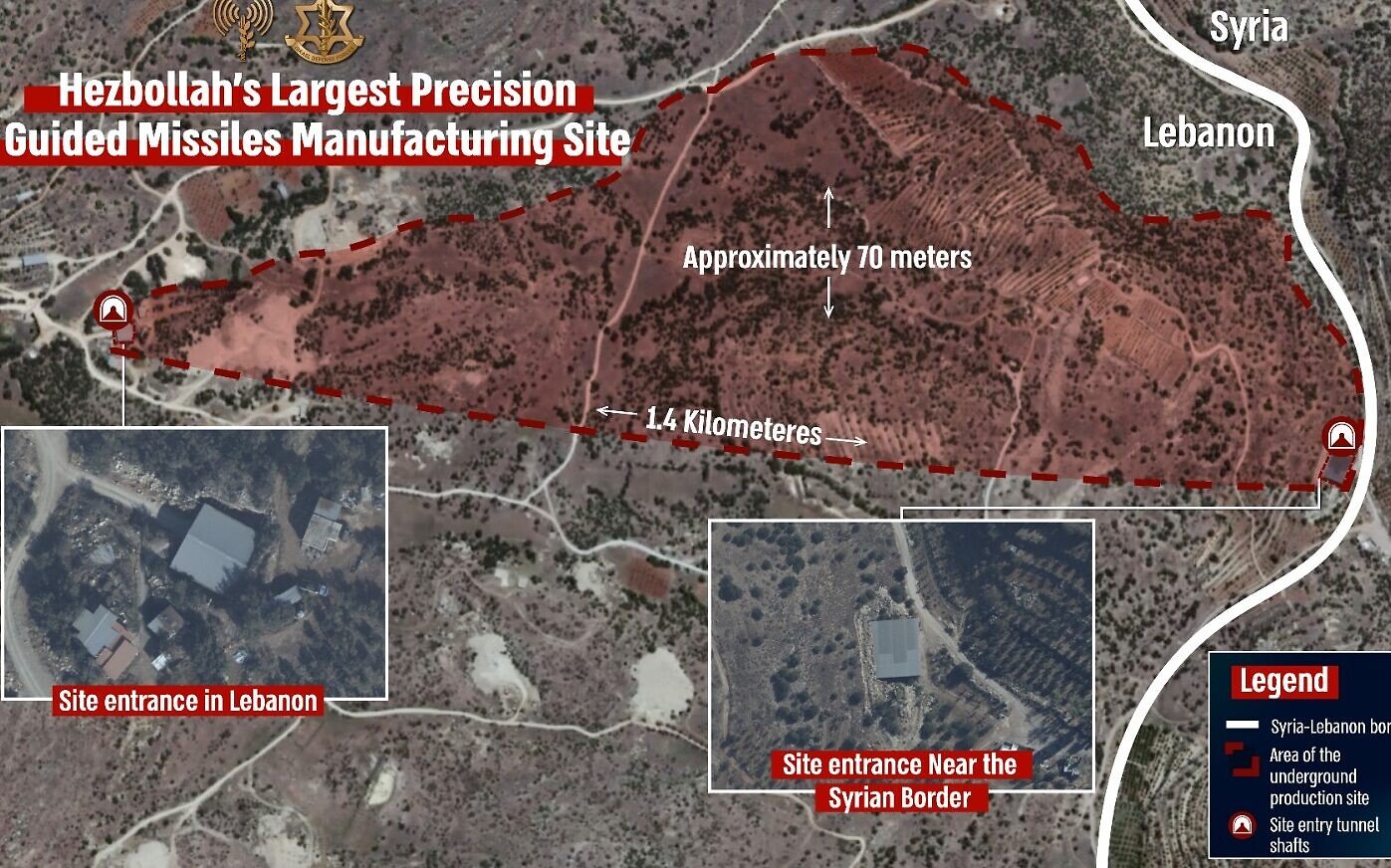
This IDF infographic shows an illustration of an underground Hezbollah precision missile manufacturing site that was bombed November 25, 2024. (Israel Defense Forces)
Notably, the facility was located near the Syrian border, which the military said allowed Hezbollah to smuggle thousands of components into Lebanon for the production of precision missiles, while also enabling operatives to move between Syria and Lebanon.
For decades under the Assad regime, Syria served as the primary land corridor for Iranian weapons destined for Hezbollah. That critical link in the Iran-backed Axis of Resistance supply chain was abruptly severed in December 2024, when Assad was ousted from power.
Still, the border remains difficult to fully control.
“The routes from Syria are not completely closed,” Zehavi warned, explaining that “this is a 400-kilometer (248-mile) border without a fence or wall, only terrain conditions that dictate the smuggling routes.”
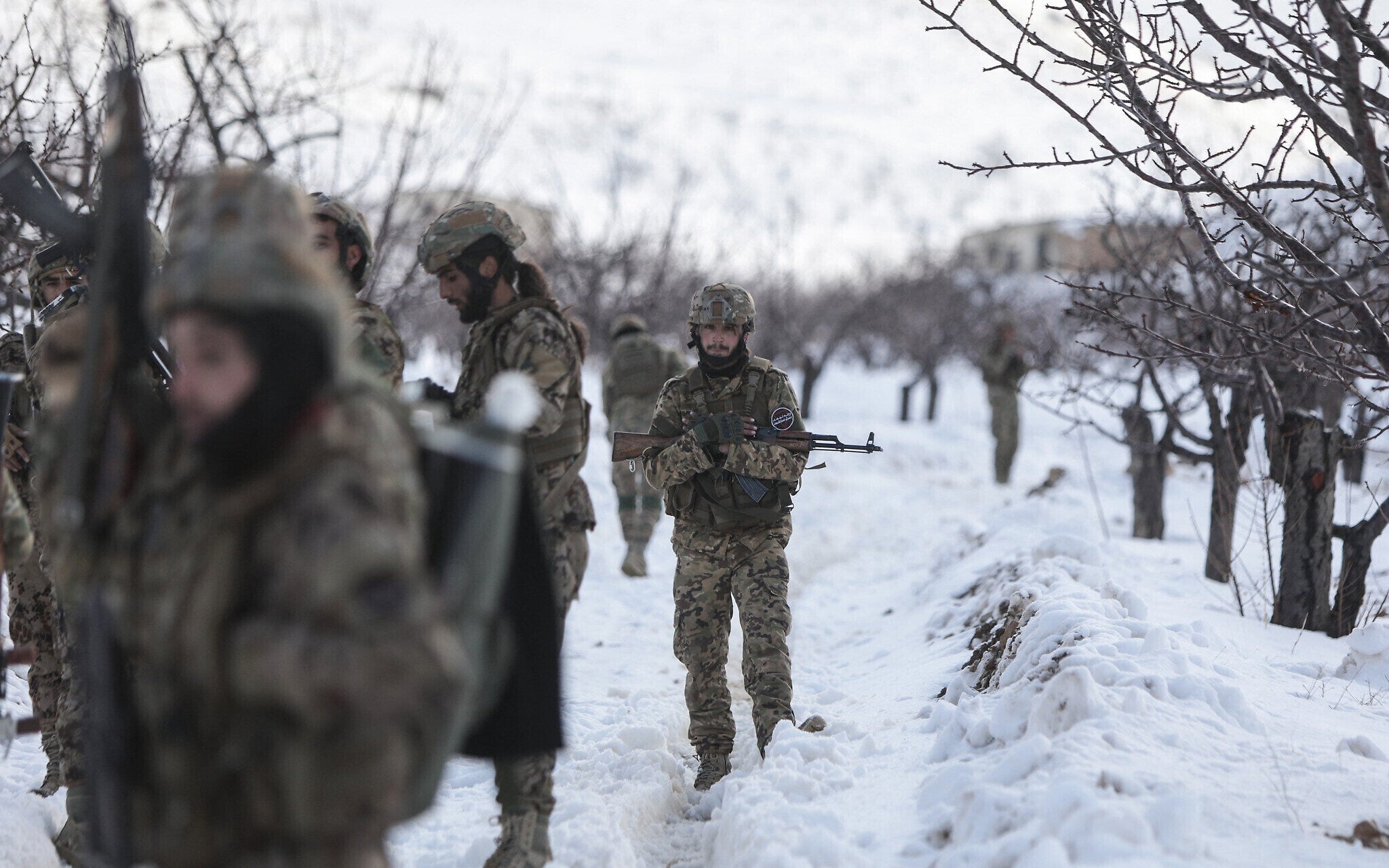
Syrian soldiers stand in the snow in the country’s mountainous Qalamoun region, near the border with Lebanon, during a patrol to secure the frontier and prevent smuggling operations on January 1, 2026. (Bakr ALkasem / AFP)
While there have been continued reports of weapons smuggling attempts across the Lebanese-Syrian border, most appear to involve smaller arms — including mortars and RPGs — rather than components for rockets or missiles.
In one recent example, Damascus thwarted an attempt to smuggle “nine anti-tank guided missiles, 68 RPG rounds, two 107mm rockets, and five boxes of ammunition,” into Lebanon, Syrian state media reported in January.
Even so, Zehavi emphasized that Hezbollah’s exact military posture remains difficult to verify, underscoring the inherent limits of intelligence assessments.
“The first rule of intelligence,” she said, “is that we don’t know what we don’t know.”
You appreciate our wartime journalism

You clearly find our careful reporting of the Iran war valuable, at a time when facts are often distorted and news coverage often lacks context.
Your support is essential to continue our work. We want to continue delivering the professional journalism you value, even as the demands on our newsroom have grown dramatically during this ongoing conflict.
So today, please consider joining our reader support group, The Times of Israel Community. For as little as $6 a month you’ll become our partners while enjoying The Times of Israel AD-FREE, as well as accessing exclusive content available only to Times of Israel Community members.
Thank you,
David Horovitz, Founding Editor of The Times of Israel