
“In theory, Iran can keep threatening shipping indefinitely,” said Nick Brown from the defence intelligence company Janes.
“Iranian forces are well practised in decoy, camouflage and subterfuge tactics, and many of their smaller weapons can be disguised in commercial vehicles, hidden in buildings and out of sight along Iran’s long coastline,” he added.
“Small craft, robot craft, small submarines, shore based missiles, even mobile artillery – all of which Iran has – could attack ships as they sail past,” said Professor Michael Clarke from King’s College London.
The latest data from the ship tracking firm MarineTraffic shows that just six vessels have passed through the strait since Monday.
Tracking these ships has been difficult as some may have been turning off their onboard trackers, as Iran continues to target vessels. Signal jamming is also causing many ships to transmit misleading location data.
The locations of the strikes on vessels reported by UKMTO and Vanguard show the attacks have spanned the length of the Gulf and the Gulf of Oman, but most have been concentrated near the Strait of Hormuz.
About 20% of the world’s oil – around 20 million barrels per day – usually transits through this narrow corridor between Iran in the north and Oman and the United Arab Emirates in the south.
It is also a key trading route for other commodities such as helium, the chemical sulphate, and urea, which is used to produce fertiliser.
“No ship wants to pass through there and no insurer wants to insure those ships that are passing through there. This is the scenario that we’ve all been predicting for a long time – the closing of the strait – which is a nightmare,” said Neil Quilliam from the Chatham House think-tank.
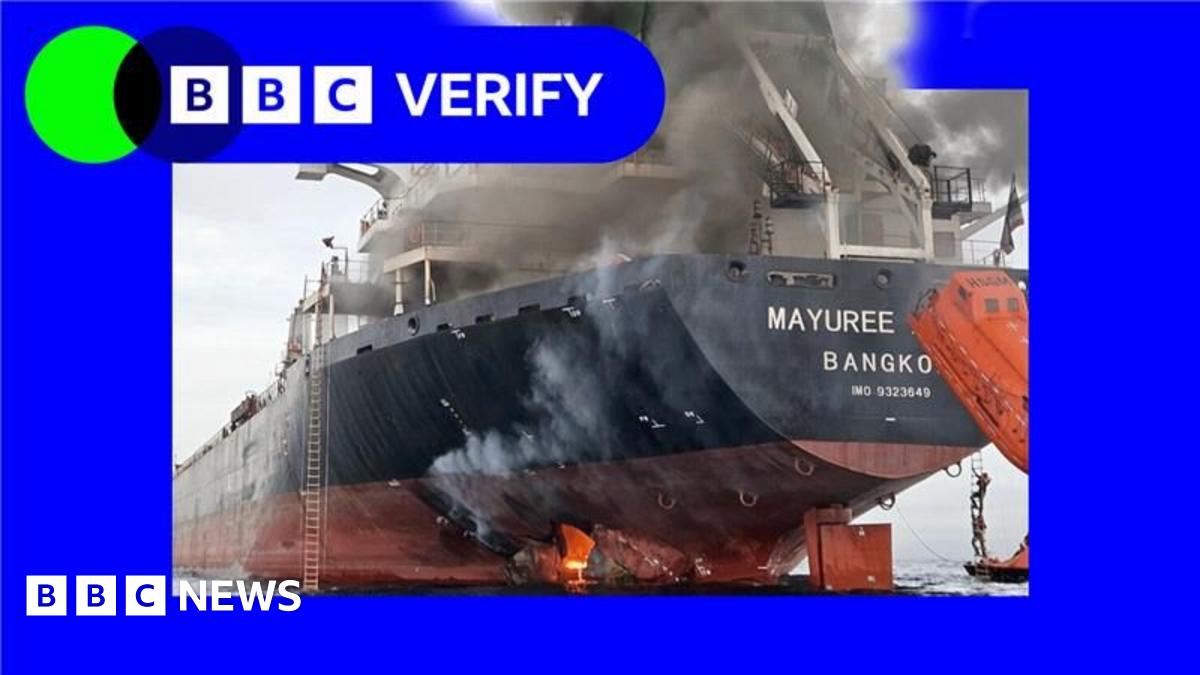
Ten of the ships reported by UKMTO and Vanguard as having been attacked since 28 February are tankers, according to MarineTraffic data.
Iran has said it would “not allow even a single litre of oil” heading for the US, Israel and their partners to pass through the strait.
In addition to strikes on oil tankers, we have also verified 10 strikes on oil facilities and depots since the conflict began on 28 February, spanning Bahrain, Oman, Saudi Arabia, the UAE and Qatar.