
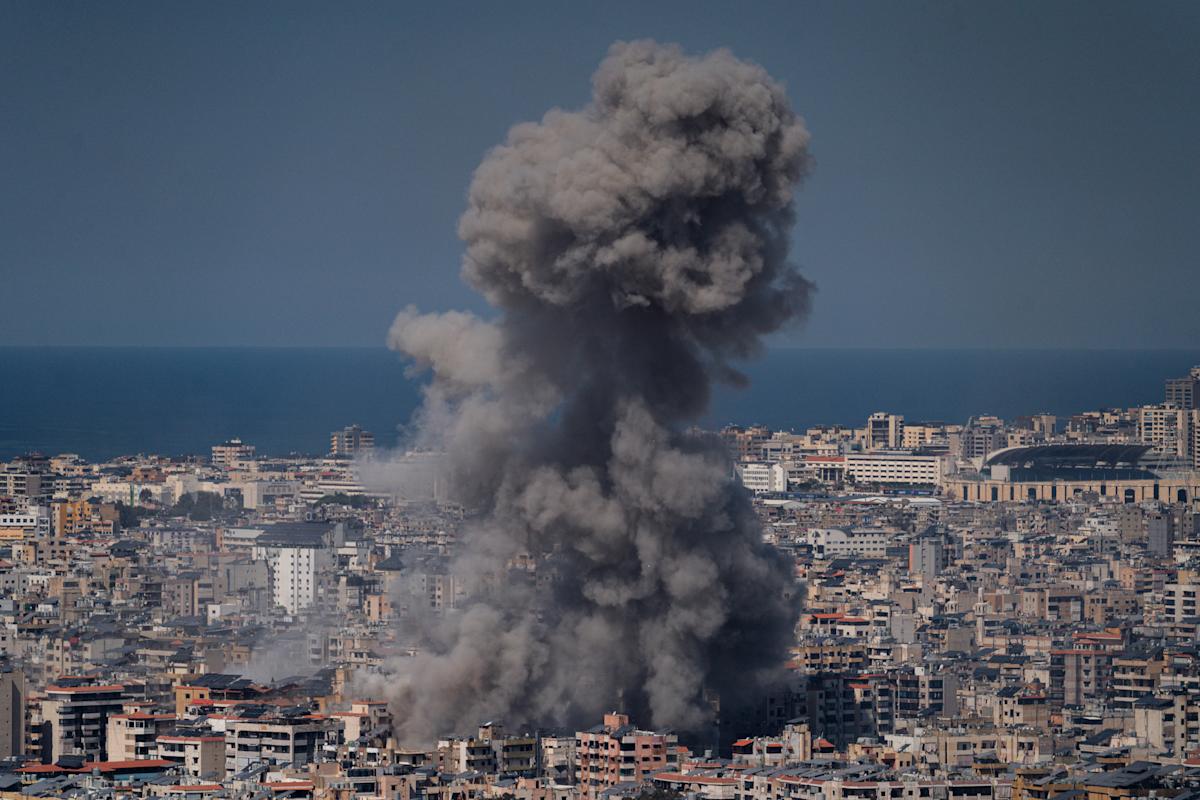
Twenty-four hours after the International Energy Agency (IEA) announced a 400 million-barrel release from the Group of Seven nations’ Strategic Petroleum Reserve, oil prices surged into the mid-$90s per barrel once again.
The war in Iran is now “creating the largest supply disruption in the history of the global oil market,” the IEA said in a report on Thursday, noting that 7.5% of global supply has now been disrupted.
Futures on Brent crude (BZ=F), the international benchmark, gained more than 7% to trade around $96 after briefly crossing $100 per barrel overnight. US benchmark West Texas Intermediate (WTI) crude (CL=F) picked up nearly 9% to change hands above $95.
Read more: You can trade oil futures. What to know before you start.
Multiple tankers and other vessels were struck in and around the Strait of Hormuz throughout Wednesday and Thursday, bringing the tally of vessels attacked since the start of the war to at least 16. Iran has increasingly targeted ports and other key infrastructure throughout the region, even as explosions at its own fuel depots have covered Tehran in black clouds of oil-soaked air.
Flow through the strait, which on a normal day sees roughly 20 million barrels per day (bpd) of petroleum products cross its waters, has remained essentially at zero, with almost nothing except a few Iranian-linked vessels making the passage.
Throughout the Gulf, shut-ins at wellheads and force majeure declarations at key refineries and other infrastructure only continue to climb. Gulf states have now cut 10 million bpd of production volume, while the war has shuttered more than 3 million bpd of refining capacity, according to the IEA.
In his first public comments since the death of his father, Ali Khamenei, Iran’s recently appointed Supreme Leader Mojtaba Khamenei said the Strait of Hormuz will remain closed, Iran will continue attacks throughout the Gulf region, and the regime would open “other fronts” if the war continues, according to Bloomberg. Khamenei did not speak publicly. Instead, an anchor on state TV read a written statement.
On Wednesday, Iran’s Revolutionary Guard Corps said it wouldn’t allow “a litre of oil” to cross the Strait.
“You will not be able to artificially lower the price of oil. Expect oil at $200 per barrel,” the spokesperson said in a public statement. “The price of oil depends on regional security, and you are the main source of insecurity in the region.”
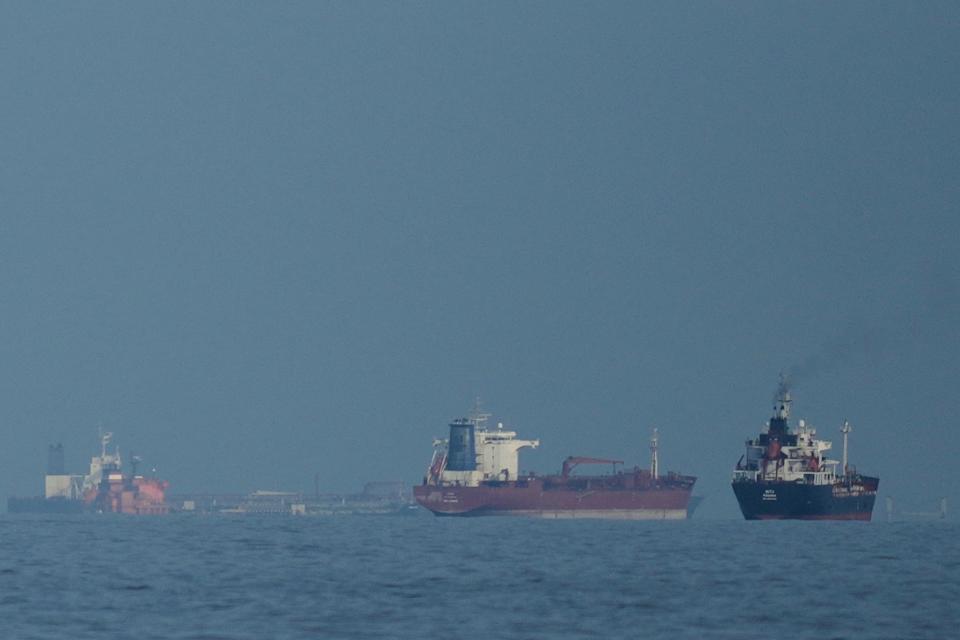 Oil tankers and cargo ships line up in the Strait of Hormuz as seen from Khor Fakkan, United Arab Emirates, on March 11, 2026. (AP Photo/Altaf Qadri) · ASSOCIATED PRESS
Read more: How oil price shocks ripple through your wallet, from gas to groceries
Story Continues
Those developments are showing in quickly moving price targets from Wall Street.
Given the continued market disruption, the Goldman Sachs commodities desk raised its price targets Wednesday night for a third time since the start of the war in Iran. The bank now estimates fourth quarter prices on Brent and WTI at $76 and $72 per barrel, respectively, assuming a 30-day disruption, and prices at $93 and $89 per barrel, respectively, under a 60-day disruption.
A day ago, Goldman predicted Brent and WTI prices of $71 and $67 per barrel, respectively, in the fourth quarter. At the start of the week, those price targets were $66 and $62 per barrel, respectively.
In a recent client note, Macquarie global strategist Vikas Dwivedi wrote that “a few weeks of Hormuz closure will create a domino effect of events that could push crude to $150 or higher.” Bloomberg economists noted recently that a three-month closure of the Strait of Hormuz could push prices to $160 per barrel.
The US Department of Energy said late Wednesday night that the US will release 172 million barrels from its own strategic reserve over a four-month period. Using rough math, the figure divides out to around 1.4 million bpd, far below the 15 million bpd or more of global flows now disrupted by the war in Iran.
In comments on Truth Social Thursday morning, President Trump said rising oil prices are of lesser concern to him than confronting the Iranian regime.
“The United States is the largest Oil Producer in the World, by far, so when oil prices go up, we make a lot of money,” the president wrote. “BUT, of far greater interest and importance to me, as President, is stoping an evil Empire, Iran, from having Nuclear Weapons, and destroying the Middle East and, indeed, the World.”
Gas pump prices in the US now average $3.598 per gallon, up from $2.944 per gallon one month ago, according to AAA data — only nine months away from the midterm elections.
In an attempt to tackle the rising prices, the Trump administration is planning to issue temporary waivers of the Jones Act, Bloomberg reported Thursday morning.
The Jones Act is a 1920 law that requires ships transporting goods between US ports to be US-owned, US-registered, and US-crewed. The move by the administration to grant 30-day waivers is designed to ease costs by opening US coastal trades to foreign tankers, reducing freight costs, and helping move gasoline and diesel from Gulf Coast refining hubs to other markets in the country, such as the East Coast.
Waivers of the Jones Act can somewhat reduce the need for the US to import refined products such as gasoline into the East Coast region that is cut off from the country’s refining capacity, leaving more refined products available for the international market. But analysts largely see the move as having little to no impact on the global oil trade.
Jake Conley is a breaking news reporter covering US equities for Yahoo Finance. Follow him on X at @byjakeconley or email him at jake.conley@yahooinc.com.
Click here for in-depth analysis of the latest stock market news and events moving stock prices
Read the latest financial and business news from Yahoo Finance