

Listen to this article
Estimated 3 minutes
The audio version of this article is generated by AI-based technology. Mispronunciations can occur. We are working with our partners to continually review and improve the results.
The path across the aisle is often a precarious one for members of Parliament and few who switch parties make it through the next election.
Prime Minister Mark Carney’s minority Liberal government has brought in four opposition MPs, making a majority government within reach.
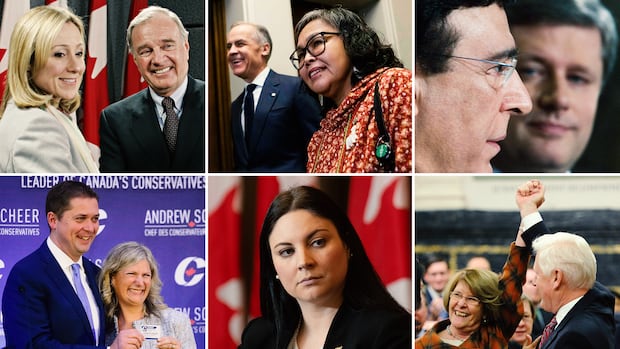
This chart tracks every federal MP who crossed the floor to join a different party since 2004. It maps exactly when in their careers they made the switch and whether their move resulted in a return to Parliament or a forced exit from politics.
Rare successes
Belinda Stronach ran for the leadership of the new Conservative Party in early 2004 before her seismic decision to cross the floor to the governing Liberals the following year.
Her defection was a protest against then leader Stephen Harper’s direction for the party. While the Liberals went on to lose the subsequent general election — marking the start of the decade-long Harper era — Stronach hung onto her Newmarket-Aurora seat north of Toronto in 2006 before retiring from politics in 2008.
In 2018, Leona Alleslev crossed the floor from the governing Liberals to join the opposition Conservatives. She, too, won back her Aurora-Oak Ridges-Richmond Hill seat north of Toronto.
After helping the Green Party secure a three-seat caucus in Parliament in 2019, its largest ever, Fredericton MP Jenica Atwin jumped ship to the Liberals right before the 2021 general election, in which she won back her seat under the Liberal banner.
Others headed for the door before election
Other MPs opt for retirement rather than face their constituents. For example, just days after winning the riding of Vancouver-Kingsway as a Liberal in 2006, David Emerson switched parties and joined Harper’s Conservative cabinet. He didn’t stand for re-election in 2008.
During her single term in office after her 2011 win, MP Lise St-Denis of the Quebec riding of Saint-Maurice-Champlain switched from from the NDP to the Liberals before retiring amid health issues.
Rejected by voters
While still a Liberal MP in 2007, Wajid Khan began serving as a special adviser to Conservative Prime Minister Stephen Harper on Middle Eastern affairs before ultimately crossing into government. When his constituents in Mississauga, Ont., headed to the polls the following year, they resoundingly chose Liberal candidate Bonnie Crombie, ending Khan’s career on Parliament Hill.
In the dying days of the Harper government in 2015, Eve Adams jumped to the Liberals. But she didn’t even reach the upcoming election and didn’t end up joining Justin Trudeau’s new majority government. She was forced into a nomination battle against local lawyer Marco Mendicino and ultimately rejected by the Liberal members themselves, losing the nomination in the Greater Toronto Area riding of Mississauga-Brampton South.
Floor crossing is largely unpopular among Canadians. An online poll conducted by Angus Reid suggests only about a quarter of Canadians think MPs who switch parties should be allowed to finish their term.
All eyes now turn to the three crucial byelections on April 13, which could officially grant Carney the majority he narrowly missed in the 2025 election.