

Listen to this article
Estimated 4 minutes
The audio version of this article is generated by AI-based technology. Mispronunciations can occur. We are working with our partners to continually review and improve the results.
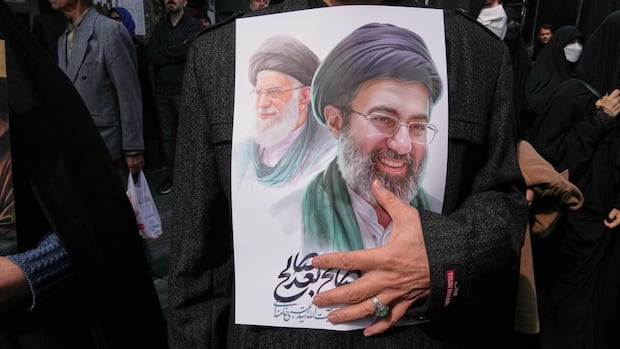
Iran’s new supreme leader did not appear in person to give his first statement Thursday, fuelling speculation that he was injured more seriously than Iranian officials have acknowledged.
Ayatollah Mojtaba Khamenei vowed to keep the critical Strait of Hormuz closed and continue attacking U.S. bases in neighbouring countries, in a defiant statement attributed to him and read by a state TV presenter.
“I assure everyone that we will not neglect avenging the blood of your martyrs,” the statement said.
The TV presenter did not explain why the statement was not delivered in person.
No images of Khamenei have been released since an Israeli strike at the start of the war killed several members of his family, including his wife and his father, Ayatollah Ali Khamenei, who led Iran for more than 36 years.
Iranian officials have said the hardline cleric was “lightly” injured on his face and foot in the airstrike that killed his family members.
WATCH | Mojtaba Khamenei’s 1st message to Iranians: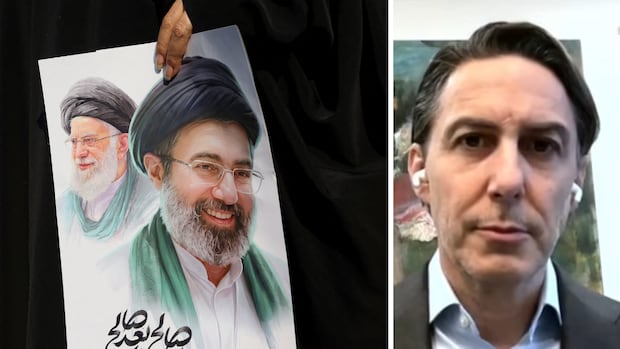
Iran’s new leader issues ‘silent’ first message, former Biden adviser calls it ‘striking’
Iran’s new supreme leader, Mojtaba Khamenei, has issued his first public address, choosing a medium that omitted both his image and his voice. Amos Hochstein, former senior adviser to U.S. President Joe Biden, describes the move as ‘striking’Who is in charge?’
“The longer that he doesn’t make a public appearance on camera, the more rumors are going to circulate about the breadth and depth of his injuries,” said Nader Hashemi, an associate professor of Middle East and Islamic Politics at Georgetown University in Washington, D.C.
Hashemi says Khamenei’s failure to appear does not reflect well on the government, and says if he isn’t seen soon it will raise serious questions about Iran’s leadership.
“If he’s been severely injured, then who issued this statement today?” he said. “If he was unable to issue it, does that suggest that there are other forces that are really running this state, and it’s not the supreme leader who is in charge?”
Khamenei has never held a formal position in the Islamic republic’s government, despite being widely seen as the gatekeeper to his father, and some critics have said he lacks the clerical credentials to be supreme leader.
He has appeared at loyalist rallies but has rarely spoken in public.
Abbas Amanat, professor of history emeritus at Yale University, told CBC News there have been rumours that Khamenei was wounded and is in a coma in hospital in Tehran — or that he may even be dead.
WATCH | Iran sending a message with new leader’s selection: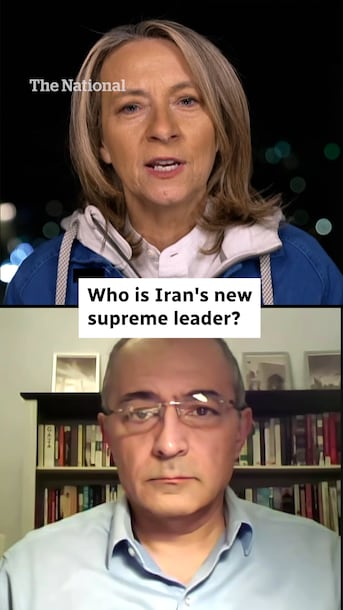
What Mojtaba Khamenei’s appointment means for Iran
For The National, CBC News chief correspondent Adrienne Arsenault asks Nader Hashemi, associate professor of MiddleEast and Islamic politics at Georgetown University, about Iran’s decision to appoint Mojtaba Khamenei as the country’s new supreme leader. Supreme leader could be in hiding
Akaash Maharaj, senior fellow at the University of Toronto’s Munk School of Public Policy, says it’s also possible Khamenei is simply in hiding, given the dangers of offering even a small clue regarding his whereabouts to U.S. and Israeli forces.
“Every time a member of his regime lifts his head above the parapet, it has a bad habit of being blown off by the Americans or the Israelis,” he said. “And even a highly controlled video would provide some clues to the person’s location and his condition.”
But Maharaj also says the ayatollah’s absence raises suspicions that he is more badly injured than officials are letting on.
“If, in fact, he were lightly injured, there could be some propaganda value in showing that he had shed blood for his regime,” Maharaj said. “If he is gravely injured, he does not want his physical weakness to cause people to believe that his regime is politically weak.”
Experts who spoke with CBC News said they were not surprised by the belligerence and bravado in Khamenei’s statement, or by his insistence on continuing the war.
But Maharaj says the language about the Iranian people was “revealing” — and not encouraging.
Khamenei spoke of unspecified individuals who did not appreciate his father during his lifetime, which Maharaj views as an expression of resentment toward the tens of thousands of Iranians who have protested the government — rather than an attempt to placate or appeal to those people.
“It suggests that Trump may have created a situation where he has replaced an old, extreme leader with a young, still more extreme leader, who has learned nothing from his father except hatred of his own population,” Maharaj said.