
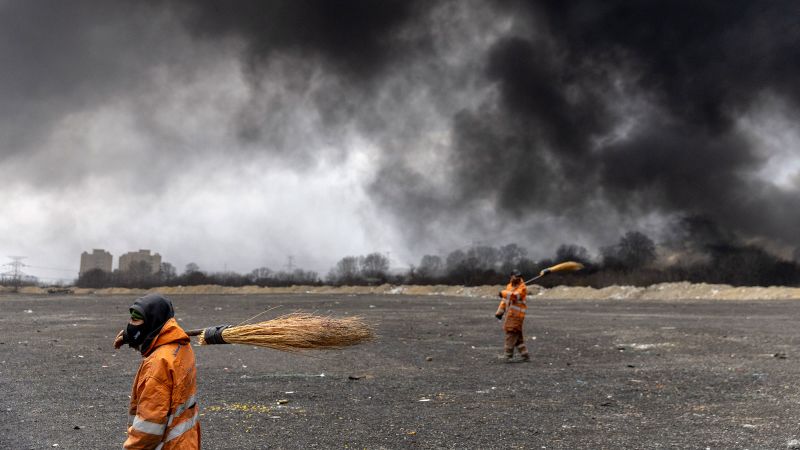
North Korea’s fuel supply runs through a system that is both secretive and fragile.
United Nations sanctions sharply limit how much refined petroleum the country can import legally.
To keep its economy running, Pyongyang relies on a patchwork of supply lines including a pipeline from China near the border city of Dandong, shipments tied to Russia and illicit ship to ship transfers at sea.
A significant share of the fuel circulating inside the country also moves through black markets where prices can fluctuate quickly.
The precarious system could soon face new pressure from the global oil shock tied to the war in Iran.
If global prices stay elevated, those increases are likely to eventually reach North Korea through its main suppliers. China and Russia provide much of the fuel that keeps the country moving, meaning higher prices abroad could soon filter into domestic markets.
“The prices they will soon be paying internationally are going to rise,” said Peter Ward, a research fellow at the Sejong Institute. “One would imagine the Chinese and the Russians will pass on fuel price rises as they see fit.”
Once that happens, the effects could ripple widely through the economy.
Diesel powers the aging trucks that haul food and goods between provinces, tractors used in the countryside and fishing fleets along the coast. Fuel is also burned in diesel generators that factories and households rely on when electricity fails.
“If China is getting pinched, then North Korea is going to get pinched,” said Aaron Arnold, a senior associate fellow at the Royal United Services Institute.
Tracking those impacts will not be straightforward. North Korea does not publish reliable economic or fuel data, meaning analysts often rely on clues such as market price reports from inside the country, satellite evidence of illicit oil transfers and anecdotal accounts filtering out through traders and contacts.
If global oil prices remain high, those signals could offer the first hints that the pressure is beginning to reach North Korea’s already strained economy.