
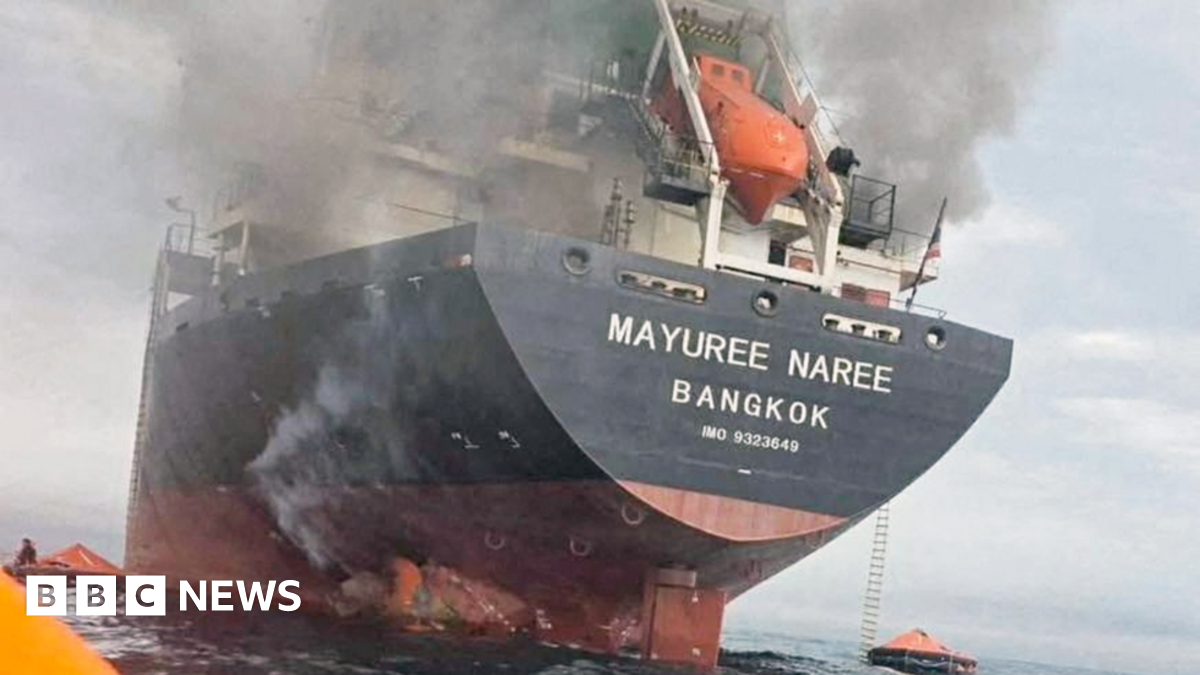
Even if the sailors reach land after their vessels are docked in a safe port, there may be no easy way for them to get home or leave the region.
Hamza says his son, who is stuck on a ship, is among sailors “not being allowed to leave” because their companies have their passports.
At the same time, frightened sailors who don’t fulfil their contracts by abandoning ship will have difficulties finding future employment as shipping companies may blacklist them.
The situation is desperate, and Amir says he can only hope for the best and pray for the safety of all seafarers.
He also urges shipping companies not to force their crew to pass the Strait of Hormuz.
Those fears are hypothetical, but he worries that financial pressures could override safety. He says if any vessel is hit by a drone or a missile it is the sailors who pay the human cost, while cargo and ships can be covered by insurance. “Human life cannot be replaced by any insurance,” he says.
He believes that the war will significantly change the seafaring industry.
“The style and purpose of this war is very different from what we saw in the past few years. This war will have long-term effects on the trade in the Persian Gulf.”
Captain Chowdhury believes sailors are caught up in events they have no responsibility for.
“People should not victimise the ships. When you victimise the ship, you victimise the seafarers also, who are innocent people,” he says.