
“I’m just glad that we were up to the task,” one synagogue member said.
(JTA) When the lockdown was lifted at Temple Israel on Thursday afternoon, David and Nancy Gad-Harf took their dog for a walk and witnessed the aftermath.
“We saw parents carrying their little kids down the street, to safety,” David Gad-Harf recalled to the Jewish Telegraphic Agency.
It was an enormous relief for the couple, whose lives are deeply intertwined with the Reform synagogue that had just hit been hit a car-ramming attack. Nancy worked for years as Temple Israel’s program director, and their son became a bar mitzvah and got married at the synagogue. Their grandson, now 13, attended preschool there; they first heard about the attack from him, after he saw the news on social media while at school.
“If it had been any temple in Detroit, we would have been affected,” said David, who spent 17 years as the head of Detroit’s Jewish community relations group. “But this is really personal for us.”
Indeed, the attack was personal for countless Jews with intimate connections to Temple Israel, the country’s largest synagogue. Many are far-flung The New York City politician Brad Lander, for example, noted that he had worked as a camp counselor with Josh Bennett, one of Temple Israel’s rabbis, while rabbis in Ohio and Alabama spoke on local news about growing up in the Temple Israel orbit.
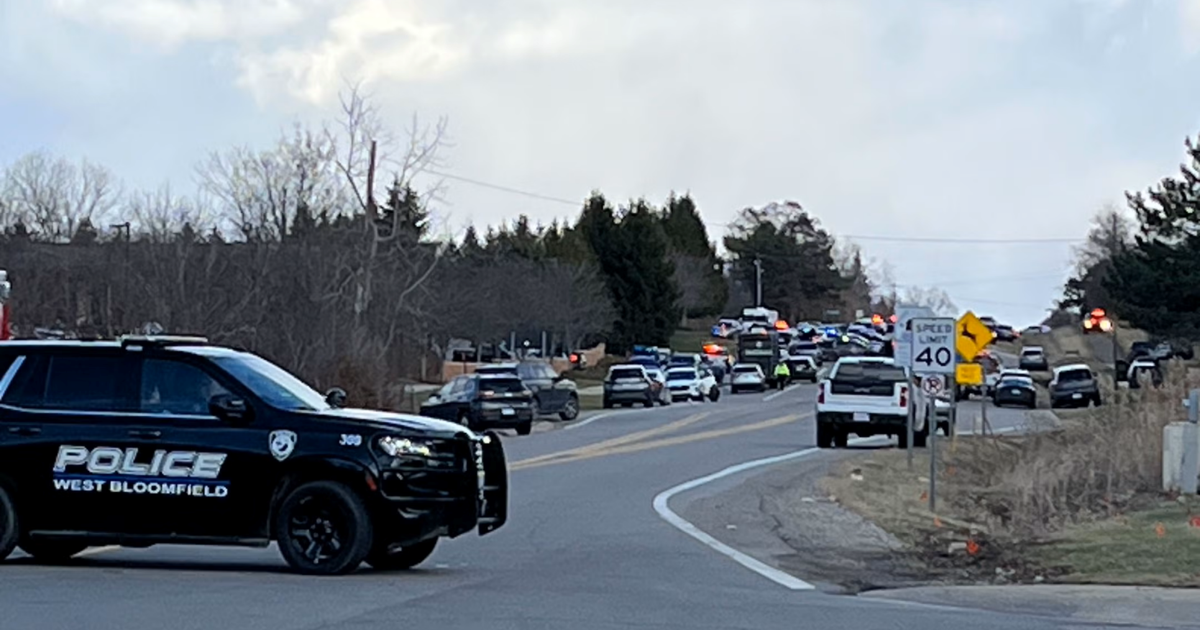
But nowhere was it more deeply felt than in West Bloomfield, where it felt like the entire township held its breath while waiting for an update from inside the massive synagogue building on Walnut Lake Road.
And when it came, the news brought a flood of complicated feelings: relief that the toll wasn’t worse, gratitude for neighbors who stepped in to help and anger that the threat of violence is a fact of life for American Jews today.
All Jewish buildings went into immediate lockdown during the attack, including the federation, other synagogues, the Jewish community center and senior residences. The lockdown was lifted after members of the Temple Israel security team “neutralized the threat,” according to the local sheriff, before any police officers could arrive on the scene. One security guard was injured, and police officers were treated for smoke inhalation because of a fire ignited by explosives in the attacker’s vehicle, but no one died except the assailant.
“They are the most amazing team, the most incredible human beings, who put themselves in the line of fire to protect us,” Rabbi Jen Lader of Temple Israel told JTA.
The security team, Lader said, is not Jewish but is considered full members of the Temple Israel community. She said the team members know the names of every child at the synagogue — 104 of whom were attending preschool in the building at the time of the attack.
“The way they handled that today, it was fantastic,” said George McMillan, a longtime Temple Israel member and resident of the nearby Jewish senior living facility. “I’m just glad that we were up to the task and that our security is there.”
At a time when many American Jews are feeling isolated, another group of non-Jews played a starring role in the rapid response to the attack.
When the preschool children were evacuated, they were taken across the street to a Chaldean country club, where they remained safe until they could be reunited with their parents. The Chaldean community — Iraqi Christians — has a uniquely large presence in Detroit, and its community centers are in close proximity to the West Bloomfield Jewish community.
“We’re all family. We’ll do anything for you whenever you need it,” David Gad-Harf recalled the country club’s owner, a longtime acquaintance, saying to him after agreeing to shelter the children.
Temple Israel thanked the club in its first message to its community following the attack. “We are deeply and humbly grateful to our teachers, staff, security, law enforcement, and Shenendoah Country Club that welcomed us, fed us, and sheltered our staff, teachers, children, and parents,” it said late Thursday. “What incredible neighbors we have. What incredible police force we have.”
Yet even as gratitude reigned, darker feelings simmered. Nancy Gad-Harf said she felt “anger,” while her husband said he was fearful about the long-term effects on the children whose school was attacked.
“I can only imagine what these kids who were at the early childhood center are going to be experiencing for days, weeks, maybe even for their entire lifetimes,” David said. “You’re going to have PTSD for a long time to come.”
Nancy said she was resentful that there had not been a stronger response to previous incidents in the area. In one notable 2022 incident, preschool families at Temple Beth El — whose assistant rabbi founded Temple Israel in 1941 — were berated by a man who shouted antisemitic threats at them.
“We have had a number of antisemitic incidents in the last three years occur here in the metro Detroit area, and there hasn’t been a public outcry,” Nancy said. “When this hate is allowed to flourish, there is no surprise when a synagogue is attacked. The surprise for us was that it took so long.”
From his family’s new home in Poughkeepsie, New York, where he now leads a different congregation, former Temple Israel rabbi Jeff Stombaugh said he felt a “sense of faith in the clergy and the staff and everybody in leadership at Temple Israel.”
“I know that they’ve had drills for this. They have protocols for this,” said Stombaugh, whose own son also attended preschool at Temple Israel. “I just can’t believe it happens.”
Others felt no disbelief. “I’m not surprised, not at all,” said Debbie Rotman, who has belonged to Temple Israel for 40 years. Antisemitism, she said, “is “rampant and that’s the way the world is.” She said she expected new security measures, perhaps permanent metal detectors.
The previous evening, like many at Temple Israel, had been a busy one. The building hosted a gathering of female Jewish federation philanthropic leaders, totaling more than 700 people. On Thursday afternoon, Temple Israel had planned to host its weekly food pantry for the local community.
Now, it finds itself in need — with a community that stands ready to help.
“We’re one big Jewish community, we’re one big Jewish people,” said Rabbi Benny Greenwald, of the Friendship Circle, a Chabad-affiliated nonprofit that operates a kosher cafe across the street from Temple Israel that is staffed largely by people with special needs. The cafe closed for the day because of the attack.
“And you know, when they come to hunt us, they don’t try to figure out what denomination you are,” he continued. “So when it comes to loving each other, we don’t try to make any division between the Jewish people.”
For now, it’s unclear when members will next be able to gather inside Temple Israel, which remains an active crime scene and experienced damage from the attack and the fire. But Rotman said she plans to attend services this Shabbat, when she is marking the anniversary of a loved one’s death, wherever her congregation meets.
“I’m at temple a lot, and so I know all the security guards,” she said. “I don’t really worry when I’m at the temple.”
The Detroit Jewish News has been supported by readers like you since 1942. Support independent, local, Jewish journalism with a donation today.