
Your support helps us to tell the story
From reproductive rights to climate change to Big Tech, The Independent is on the ground when the story is developing. Whether it’s investigating the financials of Elon Musk’s pro-Trump PAC or producing our latest documentary, ‘The A Word’, which shines a light on the American women fighting for reproductive rights, we know how important it is to parse out the facts from the messaging.
At such a critical moment in US history, we need reporters on the ground. Your donation allows us to keep sending journalists to speak to both sides of the story.
The Independent is trusted by Americans across the entire political spectrum. And unlike many other quality news outlets, we choose not to lock Americans out of our reporting and analysis with paywalls. We believe quality journalism should be available to everyone, paid for by those who can afford it.
Your support makes all the difference.Read more
Sir Keir Starmer has risked a fresh rift with Donald Trump by confirming that Britain won’t be following the US in lifting sanctions on Russian oil, saying that the move risks helping Vladimir Putin’s “war machine”.
No 10 has instead urged its international allies to maintain pressure on Moscow, and to avoid inadvertently funding Putin’s war in Ukraine by purchasing Russian oil.
Mr Trump’s decision to issue exemptions for Russian oil already at sea has sparked fears that Putin could use the Iran conflict to boost Russia’s own war chest, with foreign secretary Yvette Cooper accusing Russia and Iran of attempting to “hijack the global economy”.
It comes amid concerns that instability in the Middle East could hit the cost of living around the world, after Brent crude, the global benchmark for oil prices, jumped to more than $100 (£74) a barrel earlier this week for the first time since 2022. Meanwhile, it has been estimated that Russia is earning as much as $150m a day in extra revenue from its oil sales as a result of surging prices.
open image in gallery
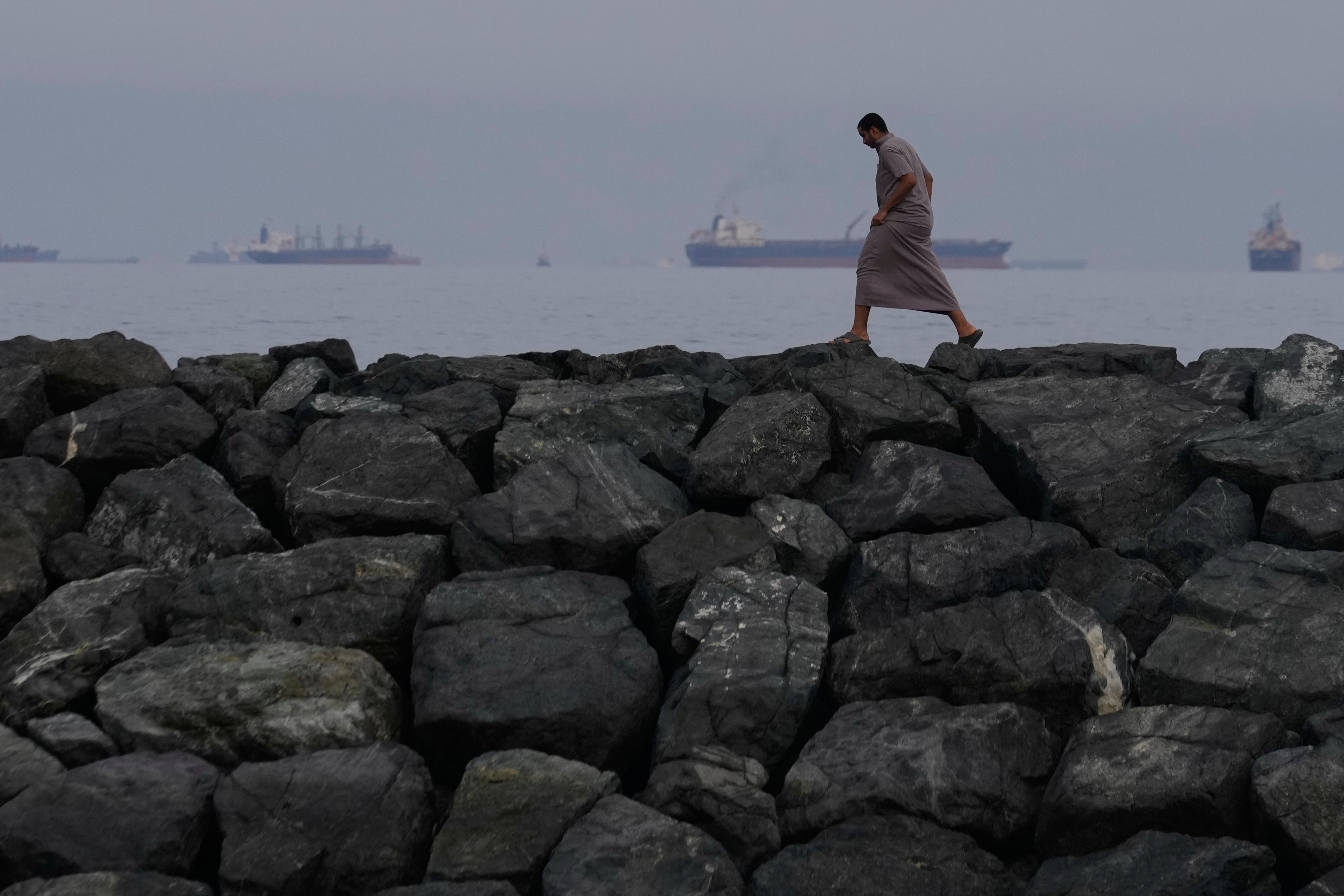
A man walks along the shore as oil tankers and cargo ships line up in the Strait of Hormuz (AP)
But as the conflict continued to escalate, US defence secretary Pete Hegseth played down concerns over disruption in the Strait of Hormuz, claiming that the US was “decimating” the Iranian regime.
He also told a news conference that Iran’s new supreme leader, Mojtaba Khamenei, had been wounded and probably disfigured in the recent attacks.
“Iran’s leadership is in no better shape, desperate and hiding. They’ve gone underground,” he said.
At the briefing, the chair of the joint chiefs of staff, General Dan Caine, also confirmed the deaths of six US service members in a military plane crash in Iraq. US Central Command said all onboard the KC-135 Stratotanker were killed in the incident late on Thursday, as investigators worked to piece together what happened.
At least 13 US service members have now been killed since the war started two weeks ago. Some 140 have been wounded.
Hitting back at Mr Trump’s decision to temporarily ease sanctions on the Kremlin, the prime minister’s official spokesperson told reporters that economic pressure on Moscow must be sustained.
Asked if Sir Keir was disappointed by the move, the spokesperson said: “Ultimately, it’s obviously a decision for the US, but our position is clear. All partners should maintain pressure on Russia and its war chest.
“Our support for Ukraine is degrading Russia’s ability to wage war around the globe, both militarily and financially. The best way to continue to stop Russia supporting hostile actors is to continue [the] collective pressure and end the war in Ukraine.”
open image in gallery
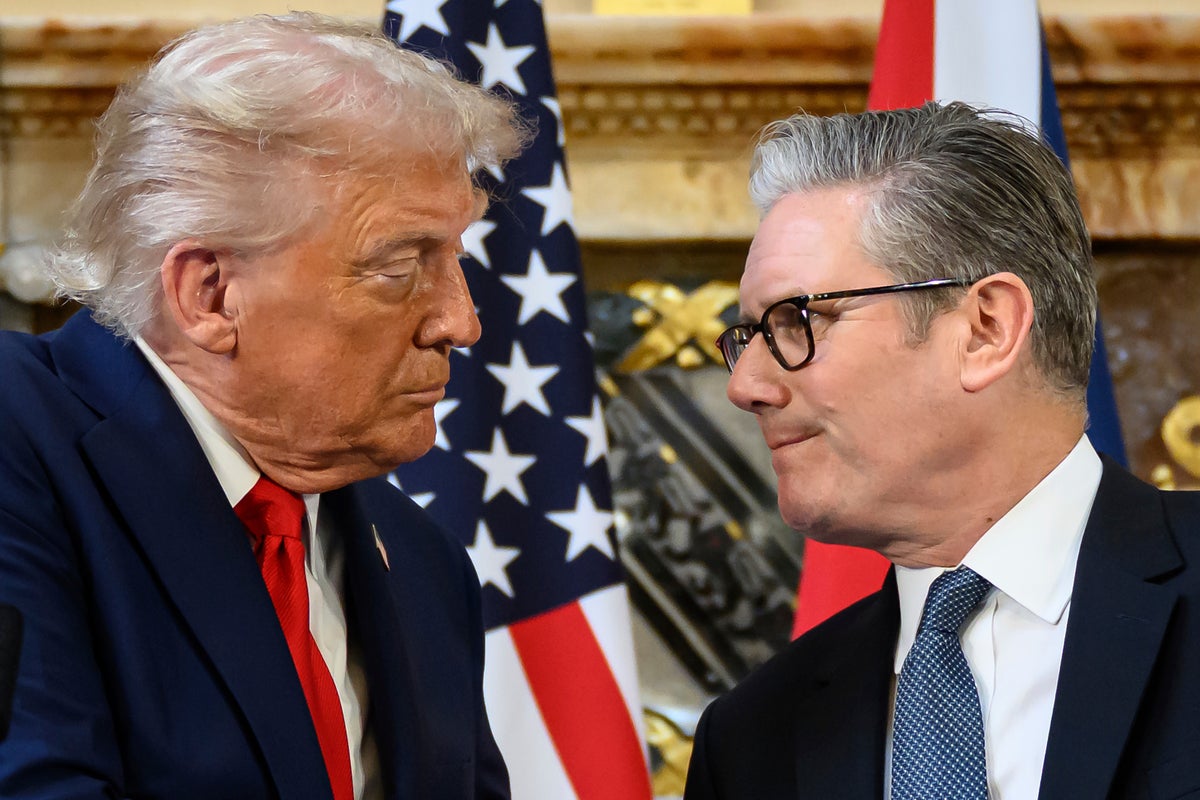
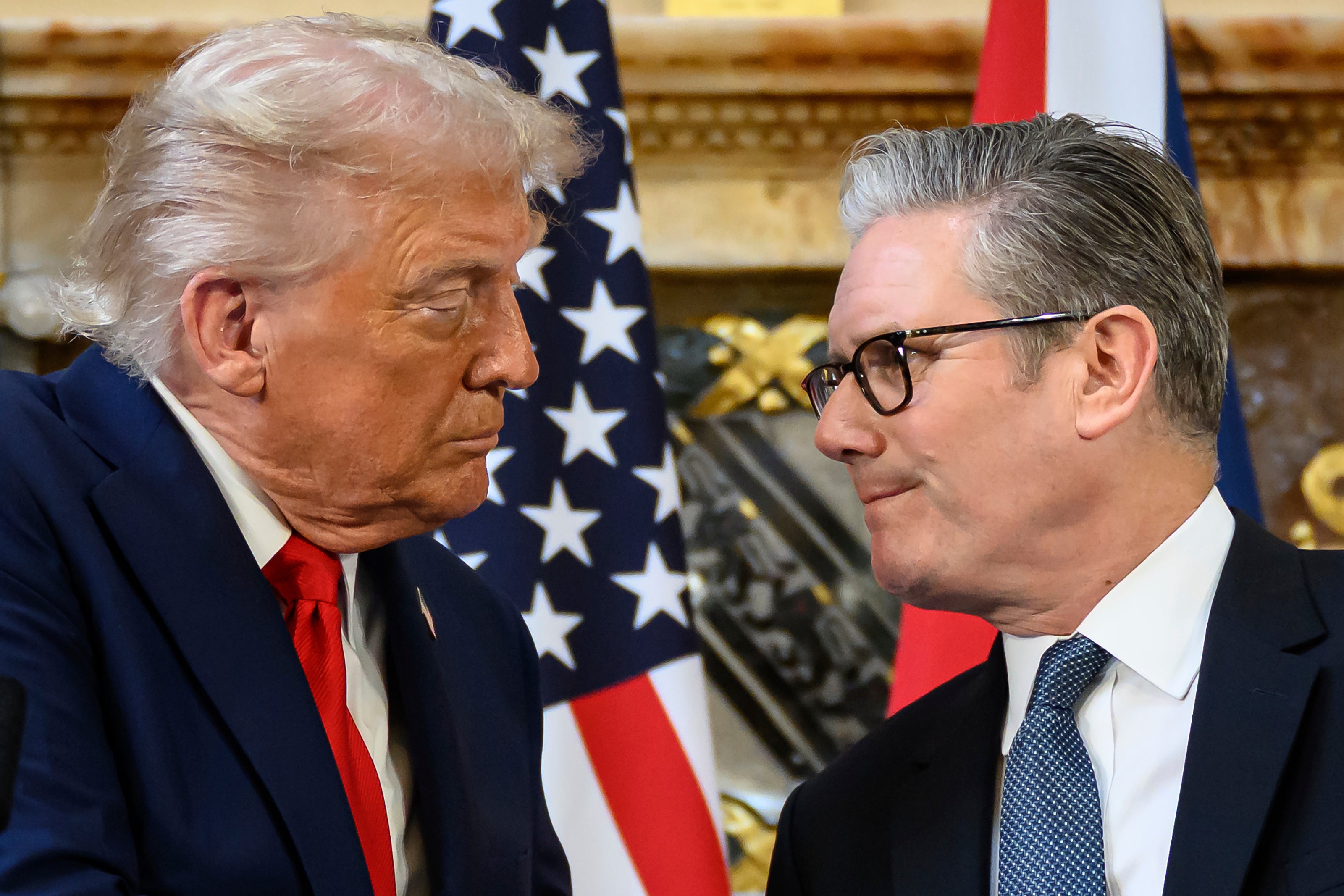
Keir Starmer and Donald Trump have been at odds since the US president launched missiles on Iran (AP)
He also ruled out the prospect of Britain following Washington’s lead, saying: “Our sanctions remain, and there is no question about that. We remain committed to exerting that maximum economic pressure.”
The chair of the foreign affairs select committee, Dame Emily Thornberry, backed that stance, telling The Independent: “We should not be easing sanctions on Russia. We have to remember that we have a war in Europe where Russia is the aggressor.”
Meanwhile, committee member Phil Brickell said Sir Keir was “absolutely right” to make it clear to Putin that the UK “won’t be pushed around by foreign states determined to undermine our fundamental freedoms”.
“US policy is for Washington to decide. But, having been to Kyiv myself and seen firsthand the destruction being wrought by Putin’s barbaric invasion, I don’t want to see any Western nation yield to the Kremlin,” the Labour MP told The Independent.
The position risks sparking fresh anger from Mr Trump, who has repeatedly criticised Sir Keir’s response to the war.
The prime minister was forced to reject criticism from both opponents and allies that Britain had not acted fast enough when fighting broke out, and said that he “stands by” his decision not to join in the initial US-Israeli strikes on Tehran.
open image in gallery
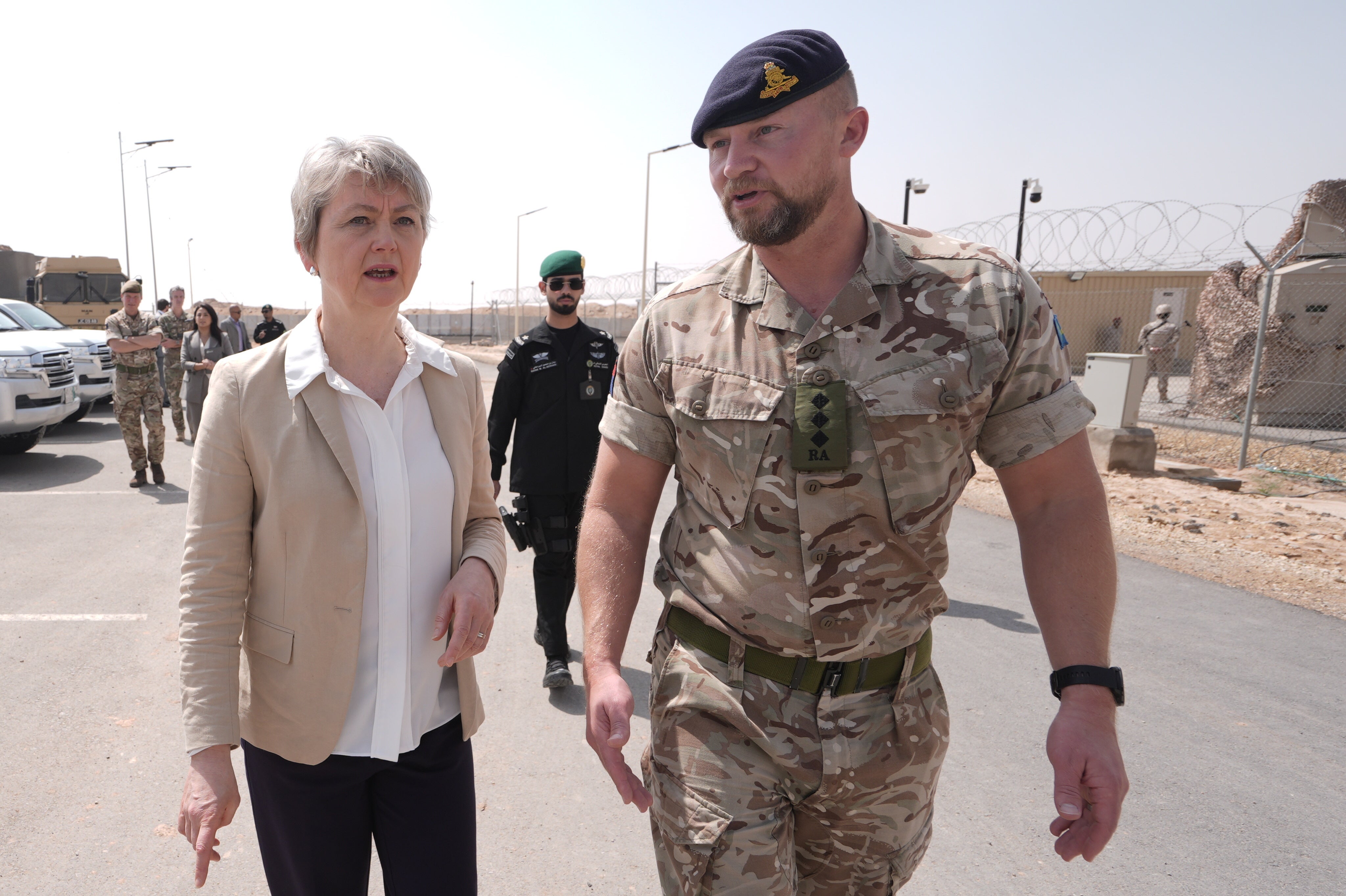
Yvette Cooper pictured on a visit to a British military base near Riyadh, Saudi Arabia, where the 9 (Plassey) Battery Royal Artillery is protecting Saudi critical national infrastructure (PA)
Meanwhile, the foreign secretary, speaking on a visit to Saudi Arabia on Friday, reiterated concerns raised by defence secretary John Healey that Putin’s “hidden hand” lies behind Iran’s war tactics.
“We have seen these links between Russia and Iran over an extended period of time,” Ms Cooper said. “We are very clear about the threat from both Russia and Iran to the global economy, and to all of our wellbeing.”
The US Treasury department announced late on Thursday night that it would temporarily allow countries to buy Russian oil “currently stranded at sea” in an effort to stabilise global oil markets, calling it a “narrowly tailored, short-term measure”.
Russian presidential envoy Kirill Dmitriev said the measure would affect 100 million barrels of Russian crude.
Iran has effectively closed the Strait of Hormuz, threatening to attack any ship that passes through the waterway, which is vital to the global oil supply. The move has led to a spike in the price of oil, which touched $100 (£76) per barrel again on Thursday – threatening to raise inflation in Britain and across the world.
Sir Keir said he would work to “de-escalate the situation” and was coordinating with other world leaders on the supply of oil.