
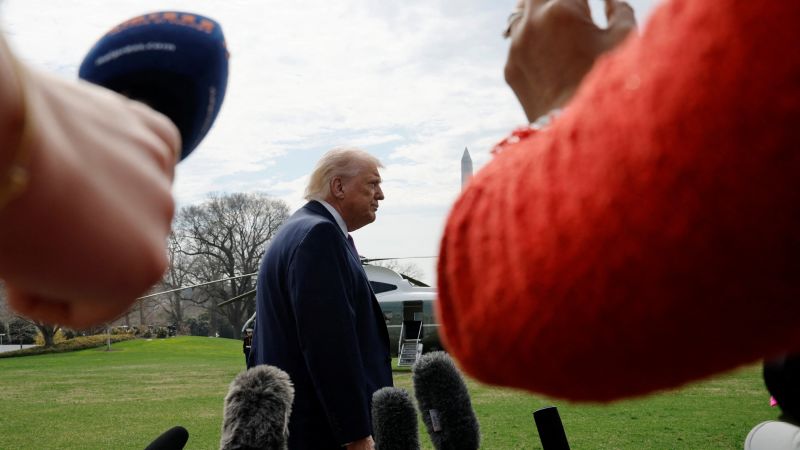
President Donald Trump is heading toward a vexing crossroads in Iran.
He can’t honestly declare victory; he seems to be losing control of an expanding war; and the strategic and economic consequences of quitting would be more disastrous than those of staying in.
Trump is not yet facing the dire predicament of presidents like Lyndon Johnson and George W. Bush who prolonged conflicts that were already lost.
But danger signs are everywhere.
There’s one chapter in the near-two-week war that most epitomizes Trump’s eroding capacity to control its expansion — Iran’s closure of the Strait of Hormuz, a major oil exportation choke point. The regime’s defiance shows that while the US enjoys huge military dominance, not everything can be solved by violence, notwithstanding the administration’s scorched-earth rhetoric.
The Strait’s closure presents Trump with a military conundrum that will be extremely dangerous for the US Navy to try to solve despite the Islamic Republic being military outmatched. It is also the latest fallout from a war that Trump launched based on a “feeling” that seems to betray negligent lack of forethought. US officials have, after all, understood for decades how Iran would respond to an attack.
“You can’t have victory if you can’t use the Strait of Hormuz,” retired US Navy Capt. Lawrence Brennan told CNN’s Erin Burnett on Wednesday. “The Strait of Hormuz has to be reopened to international trade and that is a difficult if not impossible thing to do under the present circumstances.”
Brennan, who served on the USS Nimitz aircraft carrier during the 1979-81 Iranian hostage crisis, added, “As much as I appreciate the president’s optimism … declaring victory after the first day or two is just not the right thing to do. … This is going to go on far longer than any of us hope.”
The widening chain reaction goes beyond oil prices. The loss of a US tanker aircraft over Iraq on Thursday in what officials described as an accident underscored the costs of mass military mobilizations, following the earlier deaths of seven Americans in the conflict.
In the United States, violent incidents in Virginia and Michigan on Thursday highlighted the possibility of domestic blowback from a war half a world away. It is not clear that the incidents are definitively linked to the war in the Middle East. But amid heightened tension and elevated threats, the shooting in Virginia is being treated by authorities as terror-related. The FBI, meanwhile, described a vehicle ramming at a synagogue in Michigan as a “targeted act of violence against the Jewish community.”
The foreboding atmosphere undercuts White House assurances that the conflict has already made Americans safer by removing the possibility of an Iranian nuclear bomb and crushing the country’s ballistic missile program.
“The situation with Iran is moving along very rapidly. It’s doing very well. Our military is unsurpassed. There’s never been anything like it,” Trump said Thursday.
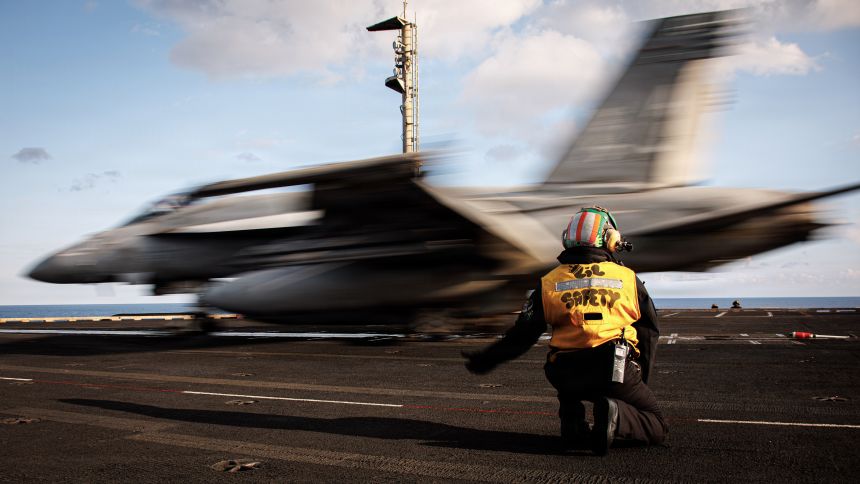
Calling Operation Epic Fury an epic failure would be premature.
There’s no doubt the combined US-Israeli air assault is an operational success and may have eviscerated Iran’s capacity to project threats outside its borders; set back its ability to replace its destroyed missiles and drones; and damaged assets used by the regime’s brutal security state to enforce repression. Plus, the pace of Iranian missile attacks on US Gulf allies has slowed.
While every combat death is tragic, US losses do not yet compare to the killings of US personnel during the occupations of Iraq and Afghanistan — quagmires Trump has pledged not to emulate. Warfare is always characterized by strong emotions and is hard to judge in real time.
And although the anointing of a new Iranian supreme leader dashed hopes a regime that has antagonized the US for nearly 50 years might fall, his failure so far to appear in public doesn’t necessarily promote a sense of permanence.
“Assessments that you make today … may not necessarily be true on April 5, and certainly may not be true on November 10,” said Ray Takeyh, a senior fellow at the Council on Foreign Relations. “I always say to people during this particular time, ‘You have to be a watchmaker.’ You have to take yourself apart and put yourself back together every day, because this is a dynamic situation, and it requires profound degree of intellectual flexibility.”
Trump is facing growing political and military challenges
Trump abhors such restraint as a lifelong salesman who deals in hyperbole.
“Let me say, we’ve won,” he said in Kentucky on Wednesday. “You know, you never like to say too early you won. We won. We won, in the first hour it was over, but we won,” Trump said.
But an objective survey of events suggests that the United States has not yet won. Thickening complexity challenges a politically convenient victory narrative.
The effective choking-off of the Strait by Iran, a conduit point for about a fifth of the world’s oil, and attacks on tankers in the Gulf have sent oil prices — and gasoline at the pump — spiraling. The US Navy, mindful of the risk from anti-ship missiles and seaborne and airborne drones, is reluctant to enter the critical waterway. Insurance rates for vessels have skyrocketed.
There’s no clear military solution to quickly open the Strait. And even if it does become passable, it would require constant escort missions that could be beyond the overstretched and diminished US and Western navies. A better option would be a political solution with Iran. But Trump is demanding unconditional surrender and Tehran is refusing.
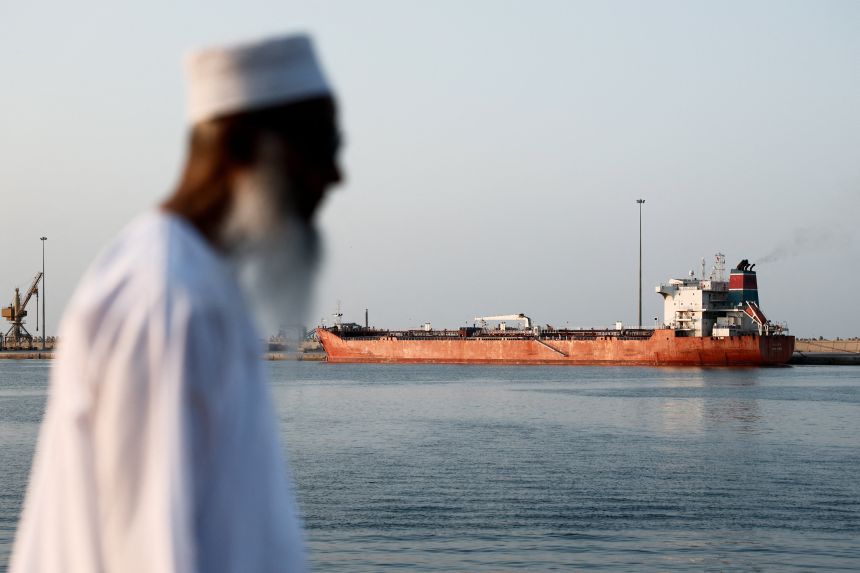
“The problem is that there is really no good way to open up the Strait of Hormuz by force, given the fact that the Iranians can keep it closed with just a small number of really cheap drones,” said Jennifer Kavanagh, director of military analysis at Defense Priorities.
“This is the point that a lot of us made before the war even started, that the challenges that Iran posed are political challenges that need a political solution. Iran’s ballistic missile infrastructures, nuclear program, these are things that require a political solution. And it is the same with this issue,” Kavanagh said. “There’s no military solution to this, because even if you get it open now, what keeps it open?”
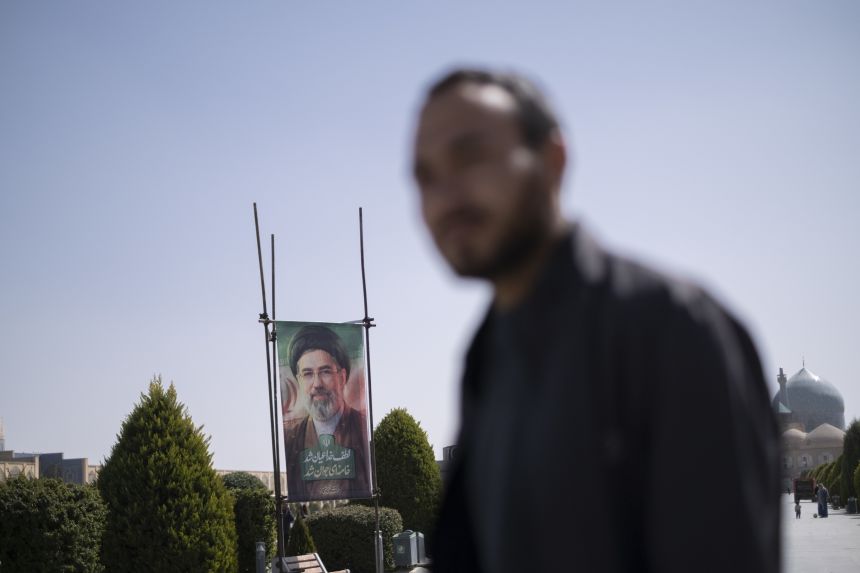
The assassination of Ayatollah Ali Khamenei by the first strikes of the US-Israeli war framed the conflict as a direct attempt to impose regime change — even if US officials de-emphasized the goal following the regime’s subsequent survival. So the replacement of the longtime ruler by his son Mojtaba clouds Trump’s narrative of success. It allows Democrats to portray Operation Epic Fury as a military success but a tactical failure.
Democratic Rep. Jake Auchincloss, a Marine Corps veteran, told CNN’s Kasie Hunt this week that the new supreme leader is “even more extremist, even more hardline than his father.”
Assuming Trump reaches a point where he wishes to end the war for political reasons, there’s no certainty that Israel — which is far more accommodated to the possibility of forever wars due to its geographical position — would agree. There have already been signs that US and Israeli strategic goals may differ, after Israel bombed Iranian oil infrastructure.
Trump said on Sunday that it would be a “mutual decision” between him and Prime Minister Benjamin Netanyahu when the war would end. The comment revived concerns that a foreign nation has undue influence over the military decisions of a US commander in chief. Israel’s frequently reignited wars and military action — in places like Gaza, Lebanon, Iran and Syria — shows that it sees regional security as a continuous mission rather than one with a victorious end date preferred by Trump.
The confusion and contradictions of the administration’s descriptions of its war aims may also thwart the setting of a coherent victory story — especially if events in the Middle East continue to slip out of Trump’s control.
Trump claims to have further destroyed Iran’s nuclear program, which he previously said he had “obliterated” in air raids last year. But if it retains its stocks of highly enriched uranium, Tehran would retain the theoretical possibility of restarting its nuclear program in the future.
There’s been speculation this week that Trump might order a special forces operation to extract the radioactive material. But this would require a huge ground force and a mission of extreme risk. The UN nuclear watchdog believes that there’s still around 200 kilograms of highly enriched uranium at the Isfahan nuclear plant. Without eliminating those stocks, Washington can never be really sure about Iran’s nuclear aspirations.
Trump began the war by telling Iranians “that the hour of your freedom is at hand,” and that they had a once-in-a-lifetime chance to rise up against their theocratic autocracy. There have so far, however, been no public signs of such a revolt. Many analysts believe that the more likely scenario is another brutal crackdown by the government when the US and Israeli bombing stops. While Trump could still claim a strategic victory if the regime’s threat to the wider Middle East is defanged, it would fall well short of his early public war rhetoric.
Officials are assuring Americans that a hike in oil prices caused by the war is temporary and necessary short-term pain for long-term gain. But the prospect of an Iranian nuclear bomb — which did not yet exist when war broke out — is far more distant in the midterm election swing districts than in Israel, where it’s a potential existential threat. As Americans mourn fallen military personnel, and see already-strained household budgets further stretched by rising gasoline prices and knock-on consumer costs, they’re unlikely to share Trump’s victory laps.
The ending of wars is rarely as clean and unequivocal as America’s victory over Nazism and Imperial Japan in 1945. Arguably, the nation has lost far more wars than it has won since then.
But Trump is facing the inevitable consequence of a war of choice. He needs to get out with a win before the early advantage of military might ebbs and a weaker adversary can set an endgame test of endurance.