
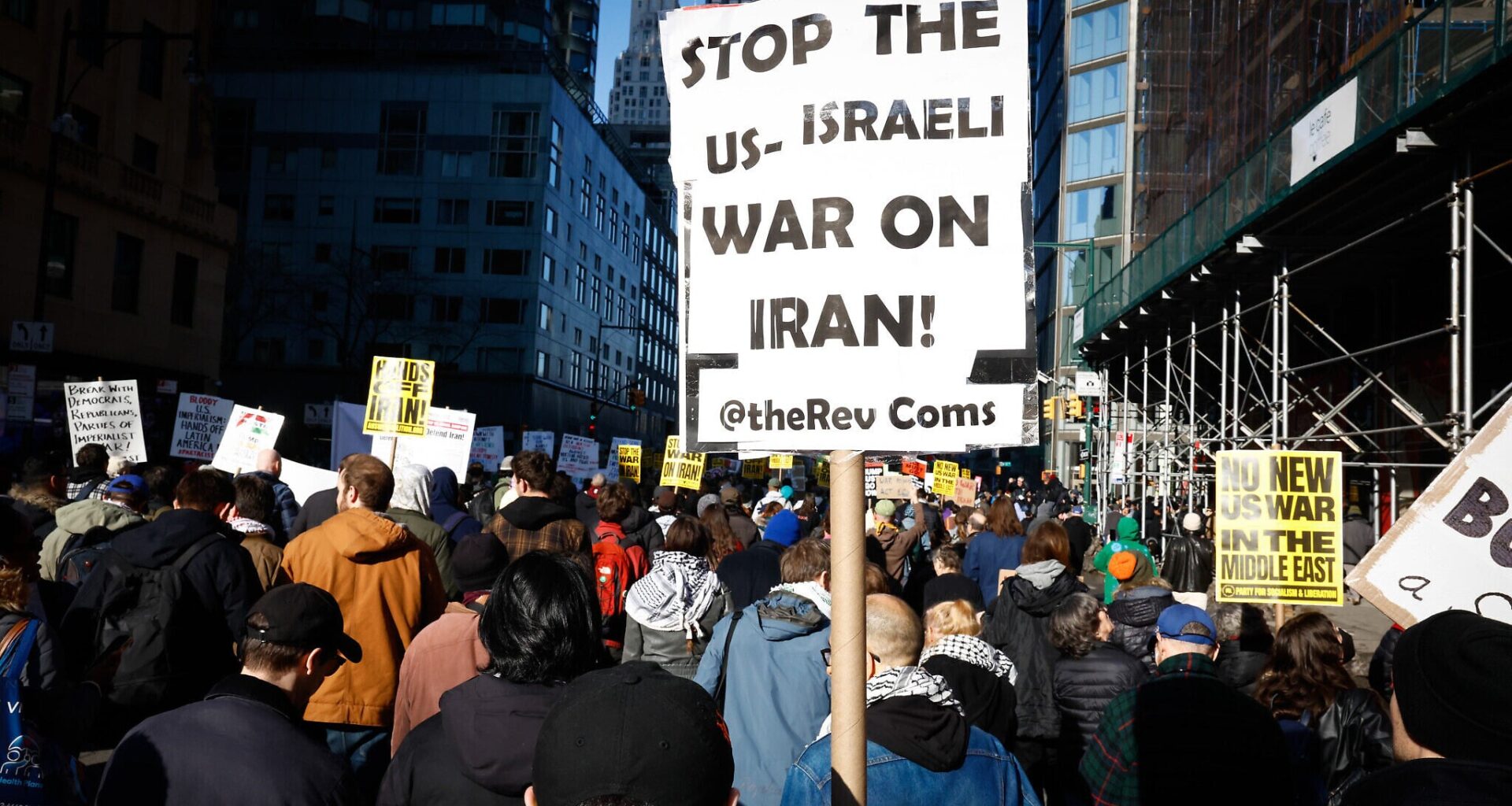
As a high schooler in San Francisco decades ago, Aaron Keyak went downtown one day to check out a protest against the Iraq War.
The slogans criticizing the war, and US President George W. Bush, were there. But he also saw something that surprised him: antisemitic and anti-Israel signs that — to his teenage eyes — seemed out of place.
Some 20 years later, Keyak was serving as the US State Department’s deputy antisemitism envoy under then-President Joe Biden — and, following October 7, 2023, recalled having to make his way through anti-Israel protesters to get to the office.
Now, during the US-Israeli war with Iran, Keyak is seeing what anyone else with an internet connection can see: voices, across the political spectrum, blaming Israel for dragging the US into another Middle Eastern war.
Recalling his experience at the Iraq War protest, Keyak said, “At that time, it puzzled me.” A moment later, he added, “Today, I wouldn’t find that surprising, unfortunately.”
Get The Times of Israel’s Daily Edition
by email and never miss our top stories
By signing up, you agree to the terms
For the past two weeks, this is the uneasy reality American Jews have been confronting: Most of them want a close US-Israel relationship, and are witnessing a case study in that alliance apparently growing closer than ever, at least militarily.
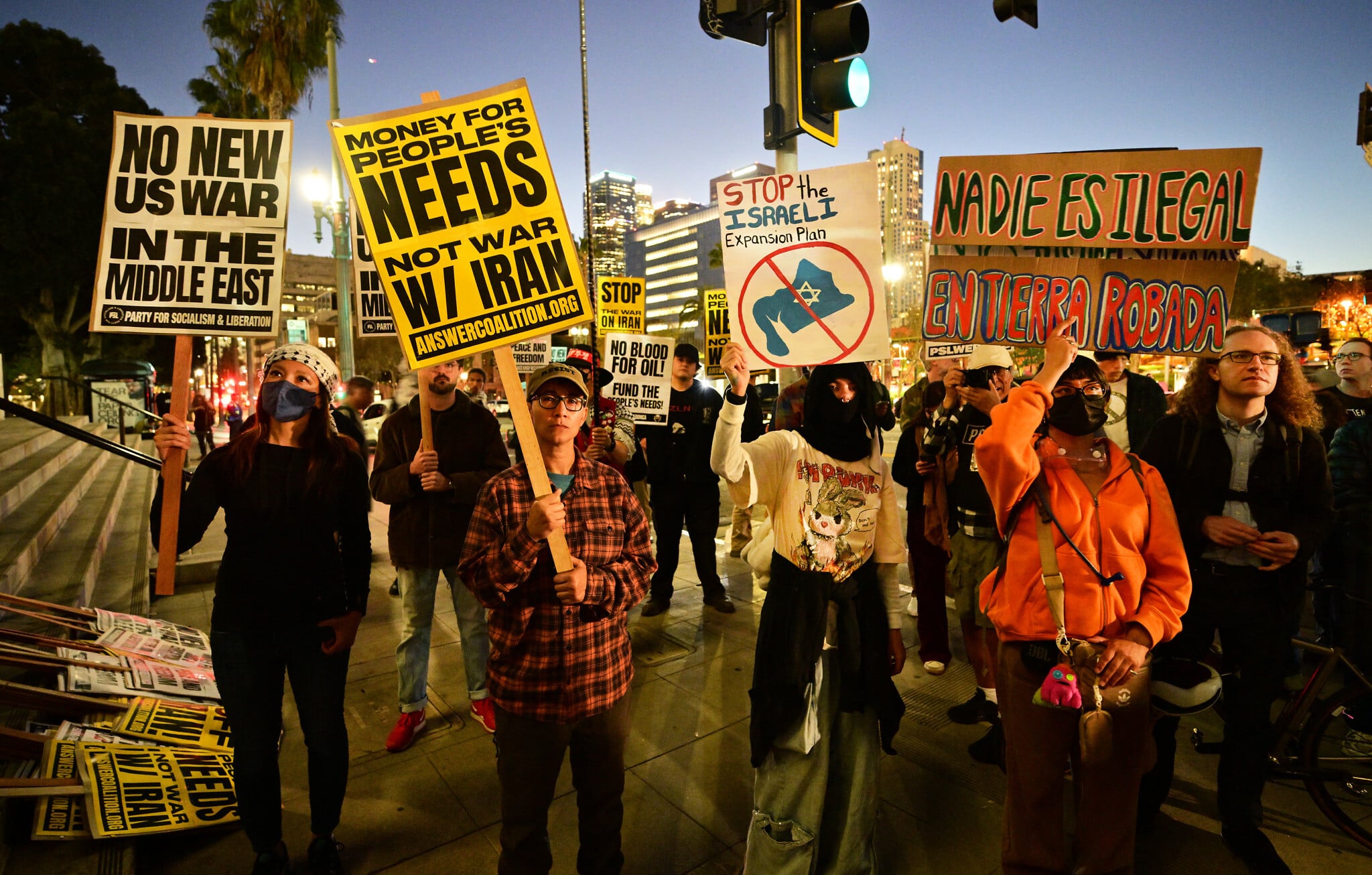
Demonstrators hold placards as they rally during a protest against military action in Iran outside of City Hall in Los Angeles, California, on March 2, 2026. (Frederic J. BROWN / AFP)
But at the same time, that strong bond has proven to be a trap. The close cooperation between Israel and the US has generated fierce backlash against Israel in the United States among the war’s many critics.
That backlash, in turn, seems to be turbocharging an already powerful wave of antisemitism.
Last week, the Anti-Defamation League warned of “an alarming pattern of escalating, inflammatory rhetoric” that “fuels dangerous antisemitic narratives.” This week, two Israeli-Americans were assaulted while waiting in line for a restaurant in California.
On Thursday, someone in Michigan took a gun and rammed their car into a Reform synagogue housing a preschool.
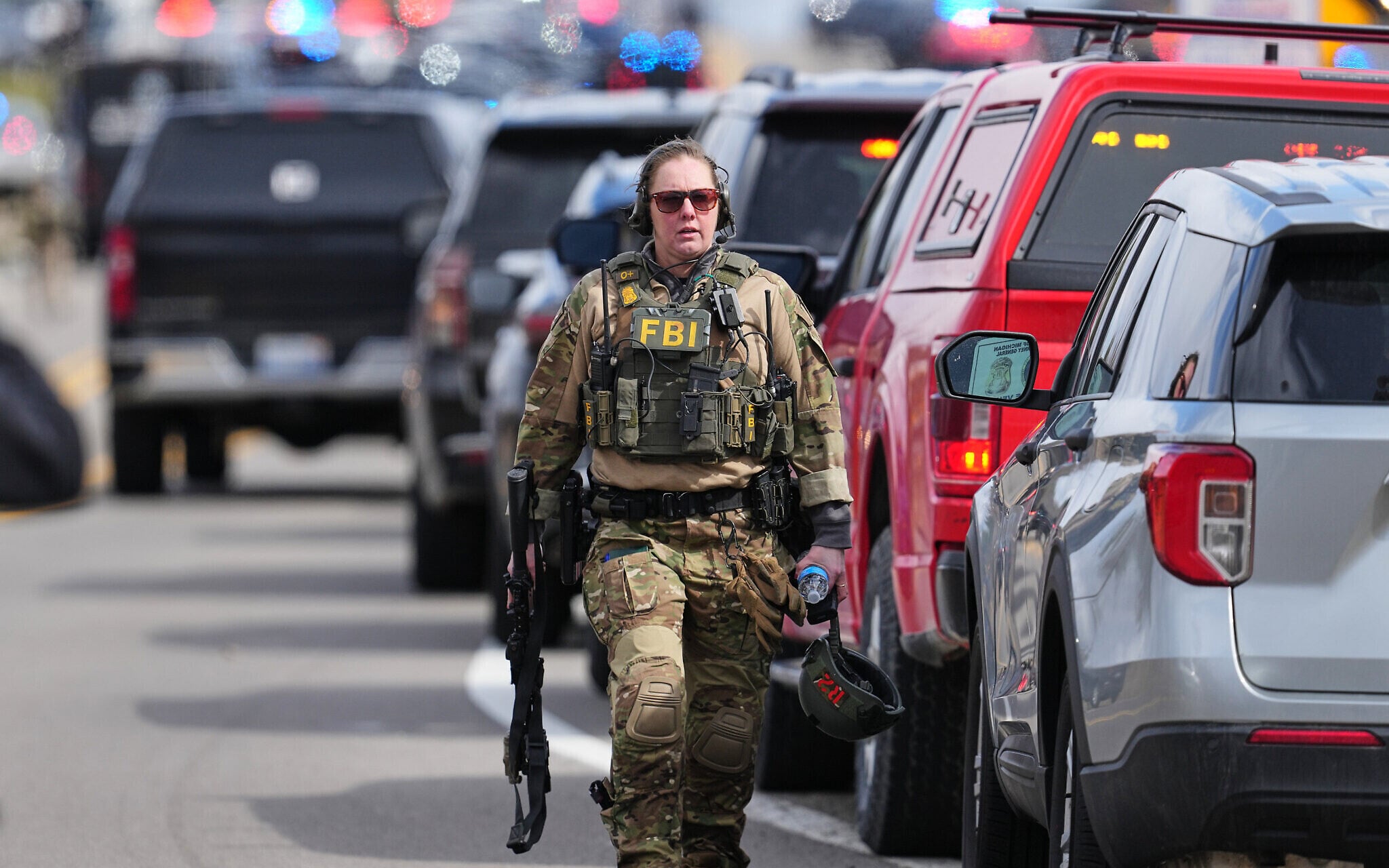
Law enforcement respond to a call at Temple Israel synagogue, March 12, 2026, in West Bloomfield Township, Michigan. (AP Photo/Paul Sancya)
In a rare bout of consistency, US President Donald Trump has endeavored to make clear that the US decided when to start the war, and will decide when to end it.
But it is also true that Israel pushed for this war and, unlike the Iraq War, is fighting it alongside American soldiers. And it is true that the war isn’t particularly popular in the US (though numbers have gone up in recent days).
For some American Jewish opponents of the war, that’s one reason of many why they believe the war is a colossal mistake.
When Debra Shushan, a senior fellow at Georgetown University’s Center for Jewish Civilization, was asked what the best-case scenario would be for American Jews at the end of the war, she responded, “The best-case scenario is that this ends as soon as possible.”
Shushan made clear that she considers the war “bad policy,” not just bad for the Jews. But she said, given the lack of public support for the war, and Trump’s failure to articulate a clear rationale for why it’s happening and what it hopes to achieve, some Americans may resort to pointing the finger at Israel.
“They’re scratching their heads, trying to figure out, why are we doing this? Why are Americans losing their lives?” she said. “A substantial part of the answer seems to be that [Prime Minister] Benjamin Netanyahu talked him into it. Look, it’s ultimately not good for Israel, either. It’s not just about American Jews.”
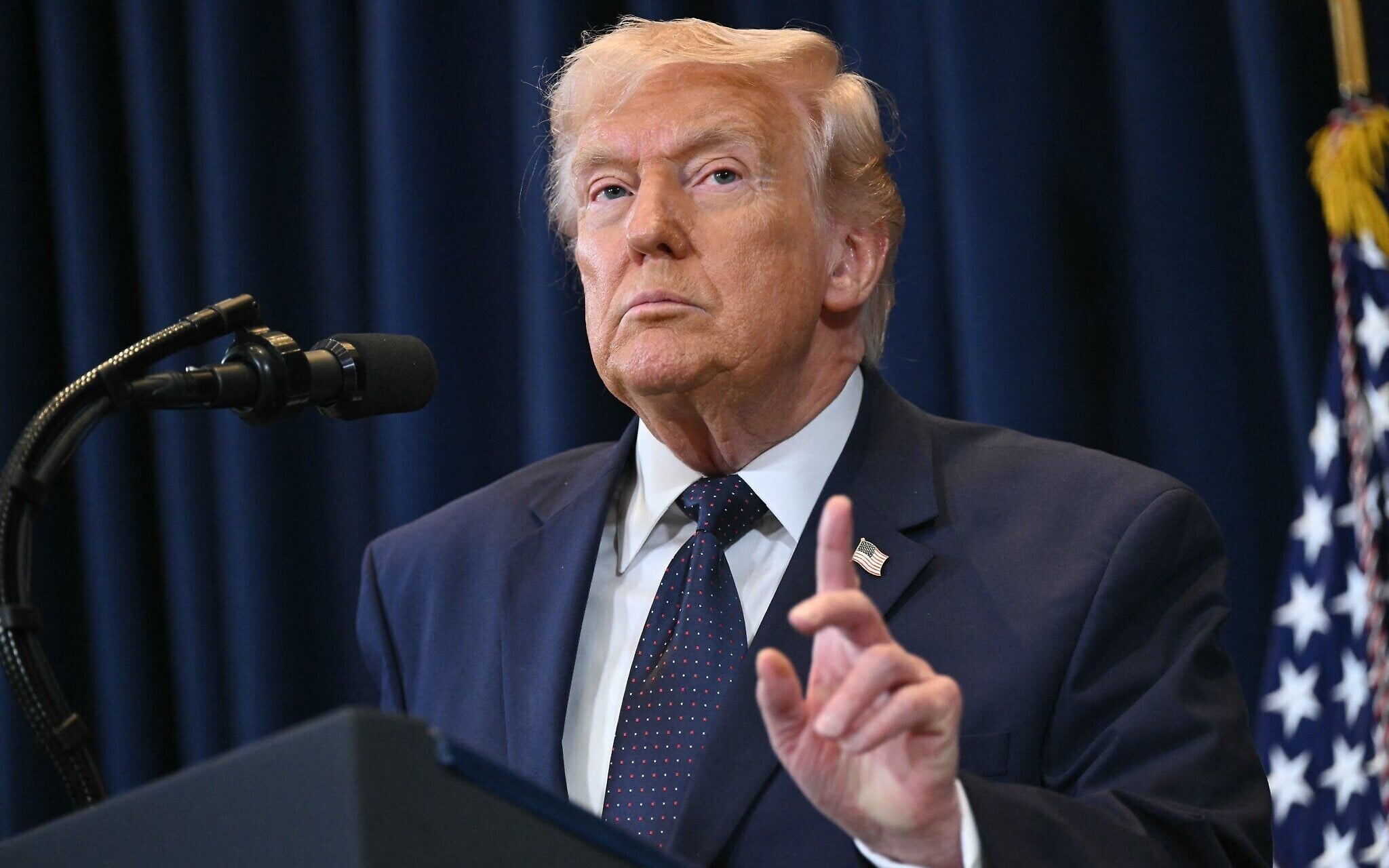
US President Donald Trump speaks during a press conference at Trump National Doral in Miami, Florida, on March 9, 2026. (SAUL LOEB / AFP)
One possible escape from the trap, said Amy Spitalnick, CEO of the Jewish Council for Public Affairs, is to stop thinking in what she calls “false binaries” that she says act as petri dishes for antisemitism: thinking that someone can either have a relationship with Israel or support democratic values, but not both. Or thinking someone can either be a Jew or a loyal American, but not both.
“All of the ways antisemitism operates are rooted in these false choices and binaries,” she said. “So by breaking out of binary thinking, we actually create space for people to have more complex and nuanced understanding of Israel, of the Middle East, of the Jewish community, of antisemitism.”
She also feels it would have been harder to blame Israel had Trump made a more persuasive case for the conflict and its goals, or hewed to the US Constitution’s requirements for declaring war. But she stressed that much of the hateful rhetoric around the war comes from an inability to acknowledge a complex reality.
“It’s really important that we help people understand multiple things can be true at the same time,” said Spitalnick. “This regime in Iran was repressive and dangerous and a major threat to Israel, to the Iranian people, to America, to the broader region.”
It’s also important, she added, that opponents of the war “can raise rightful concerns about the Trump administration’s constitutional obligations, authority, strategy, planning, goals — and that they can do so without losing sight of the harm that this regime has caused.”
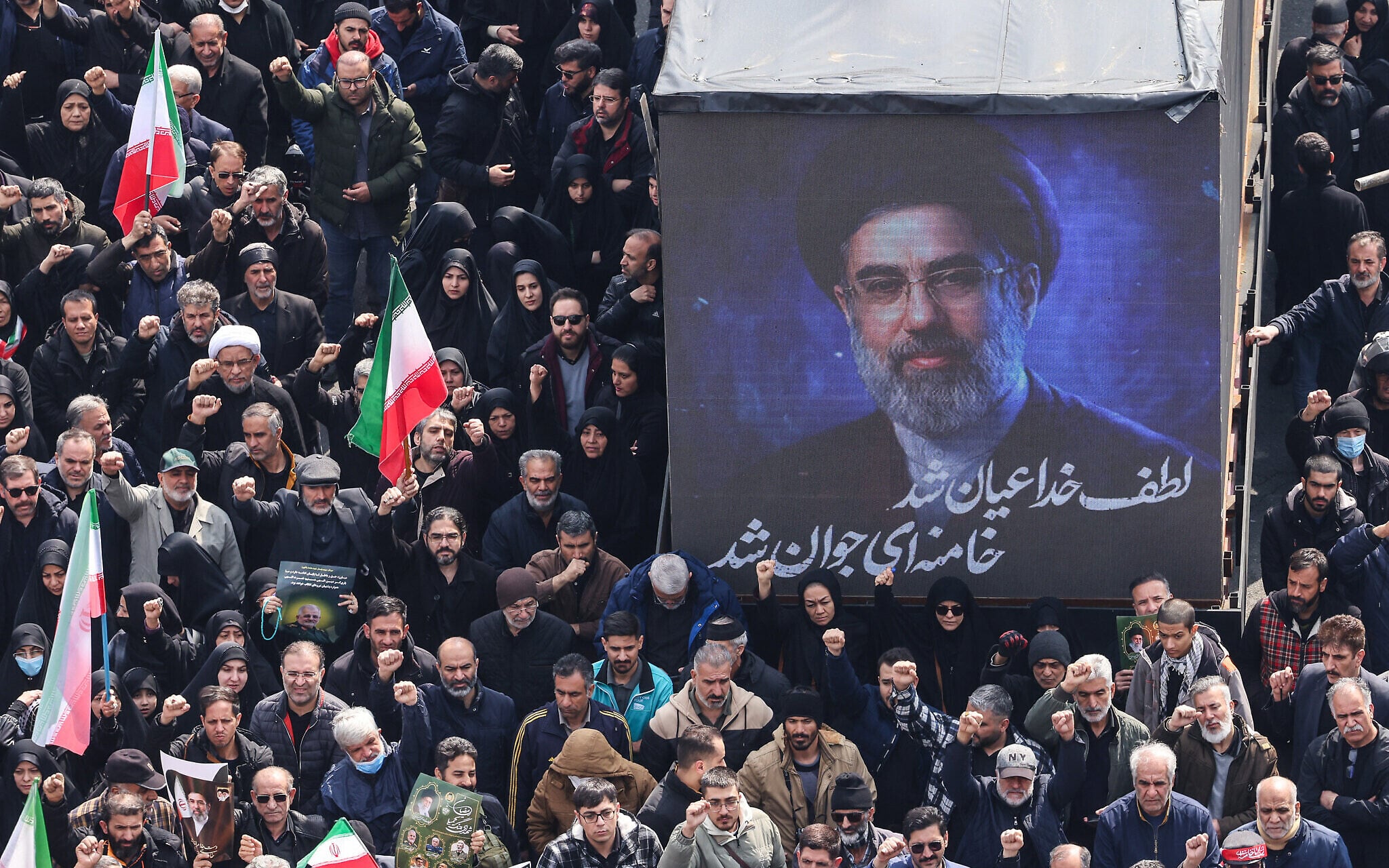
A screen displays a portrait of Iran’s new supreme leader Mojtaba Khamenei, during the funerals of Islamic Revolutionary Guards Corps commanders, army commanders and others killed in the early days of the US and Israeli strikes on Iran, at Enghelab Square in Tehran on March 11, 2026. (Atta Kenare/AFP)
For Keyak, the best-case American Jewish scenario “is for the public discourse to include less about us.” That isn’t what’s happening now.
But he also said the war offered some upside to American Jewry, too, like the death of one of the most powerful antisemites in the world, Ayatollah Ali Khamenei.
“He was a hateful, evil man who spread antisemitism either directly through the Iranian regime or through its proxies,” said Keyak, now a board member with the Combat Antisemitism Movement. “And his no longer being on this earth is a good thing — well, it’s a good thing for all Americans, including the Jewish community.”
More broadly, the war’s proponents say that it will be a net benefit for all Americans.
Nadia Schadlow, a former deputy national security adviser under Trump, depicted a scenario in a New York Times interview where Iran is “a degraded military power that will take a long, long time to regroup,” leading to “opportunities for a better outcome, more stability, maybe more involvement by the Gulf states in helping that stability emerge.”
Ted Deutch, who heads the American Jewish Committee, framed similar goals in more explicitly pro-Israel terms.
“For those of us who care deeply about Israel and its place in the region and in the world, when we think about best-case coming out of this, a dramatically weakened Iran creates an opportunity where Israel becomes more fully integrated into the region in ways that benefit the entire region and benefit the world,” he told The Times of Israel.
People should consider, he added, “what it looks like when the benefits that Israel has contributed to the world can be shared more broadly in a region that becomes more integrated and more peaceful.”
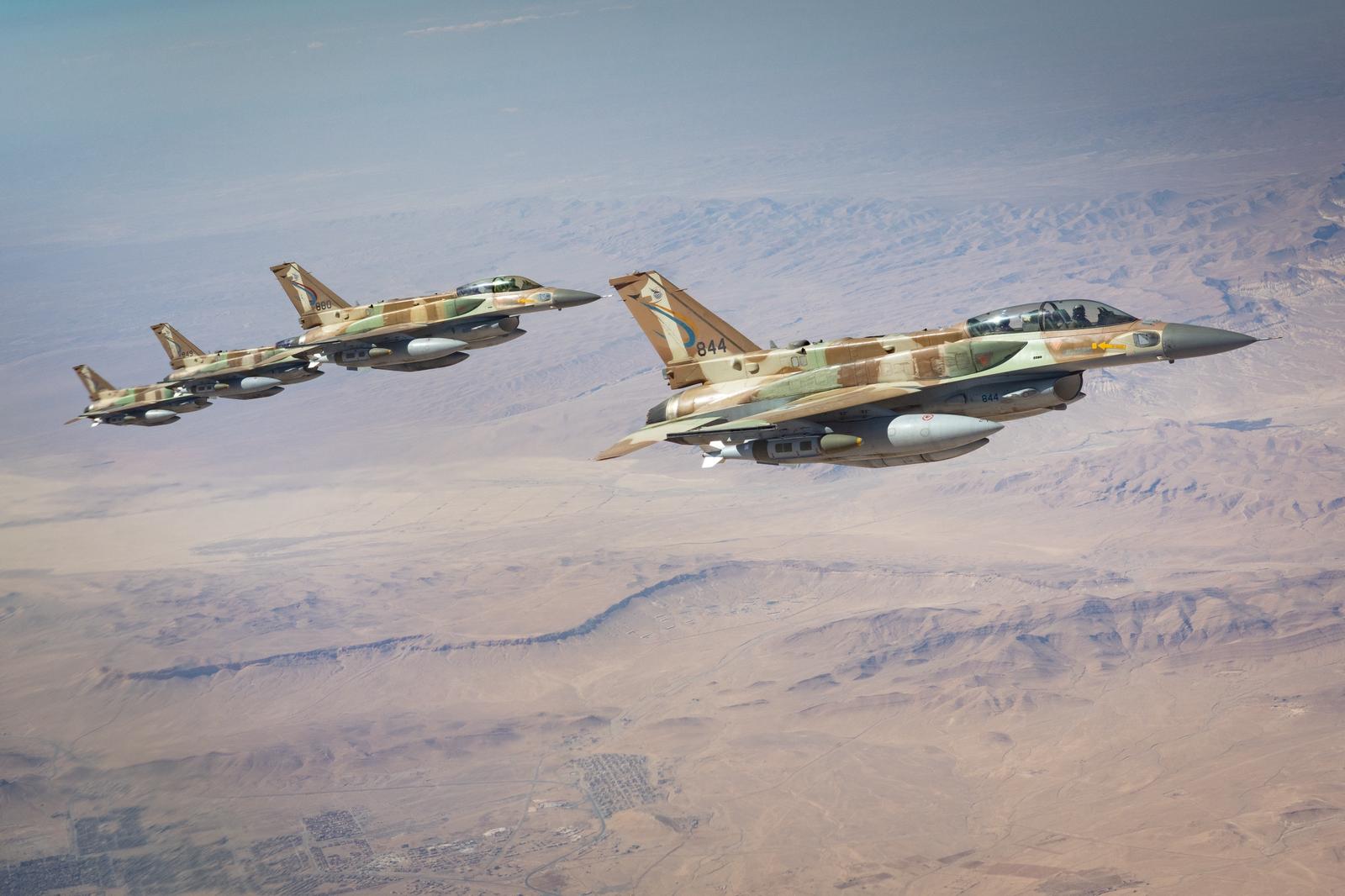
IAF F-16i fighter jets fly to Iran to carry out strikes, in a handout photo published on March 4, 2026. (Israel Defense Forces)
Is Deutch worried about the trap of close US-Israel cooperation leading more people to blame Israel for American actions?
He responded that Israel is the only country that faces that issue. Usually, when the United States makes decisions, it is the United States that gets blamed if those decisions go wrong.
Plus, he said, this isn’t a new dynamic.
After October 7, Biden’s support for Israel was absolute and, for a moment, appreciated across the Israeli political spectrum. He visited Israel during wartime. He gave an Oval Office address about the importance of supporting Israel. He pushed through billions of dollars in military aid.
And in the United States, anti-Israel protests surged, and antisemitism rose to historic levels.
“When there’s conflict in the Middle East, antisemitism spikes here in the United States,” Deutch said. The rise in antisemitism on the extremes of the political spectrum, he added, has led to violence in the past, including at an AJC event, an outcome he called the “worst case.”
But he and Keyak both said that alone doesn’t override the case for the war.
“Regardless of what the actual truth is, the antisemites are going to use the confusion as a rallying call to peddle in their antisemitism,” Keyak said. “Because that’s what antisemites do.”