
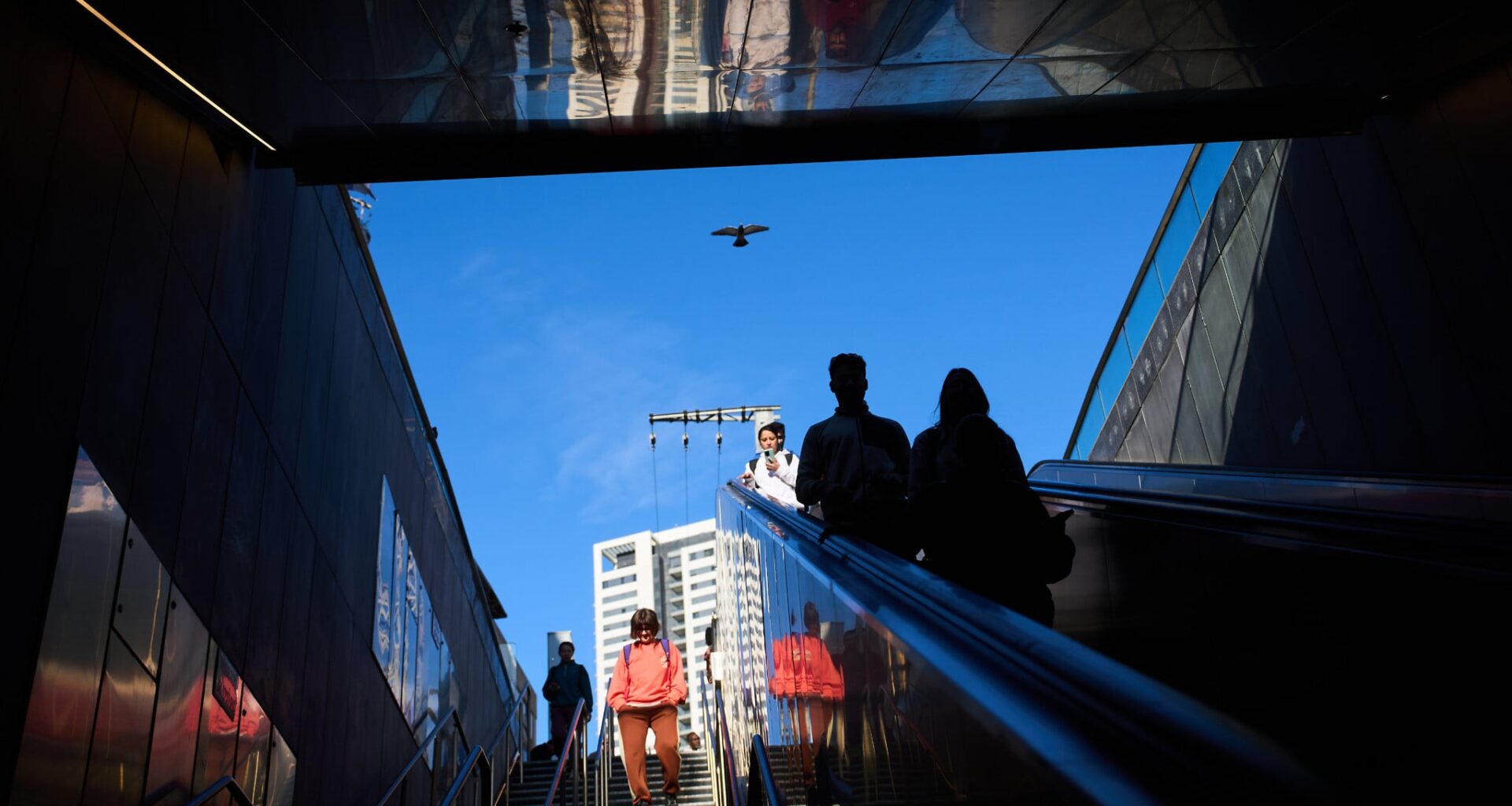
It was a few nights into the US-Israel war with Iran, and former hostage Bar Kuperstein ran into a neighborhood bomb shelter in Tel Aviv, taking cover from the latest Iranian rocket barrage.
“Heading underground once again,” wrote Kuperstein, posting a photo of fellow Israelis standing around in the underground parking lot that doubles as a shelter.
“I take it all with a sense of humor,” Kuperstein told The Times of Israel. “I laugh it off, because if I don’t laugh, we’ll cry. I think you need to laugh about all of it.”
Kuperstein, 23, was among the 251 kidnapped on October 7, 2023, during the Hamas-led onslaught on southern Israel. The invading terrorists also slaughtered some 1,200 people.
Kuperstein was released on October 13, 2025, along with the remaining 19 living hostages as part of the Gaza ceasefire between Israel and Hamas. He has said that he managed to survive the two years of captivity in a cramped Hamas tunnel in Gaza with no sunlight, little food and regular beatings, by clinging to his belief that he was in God’s hands the entire time.
Yet Kuperstein said that this latest round of war with Iran hasn’t overwhelmed him with memories of his time in Gaza.
“It’s just the opposite, I’m finally at home this time,” said Kuperstein. “I can help myself and my family. I was home on Shabbat when it began, and we had to lift my dad into the safe room. It’s such a good thing that I’m here.”
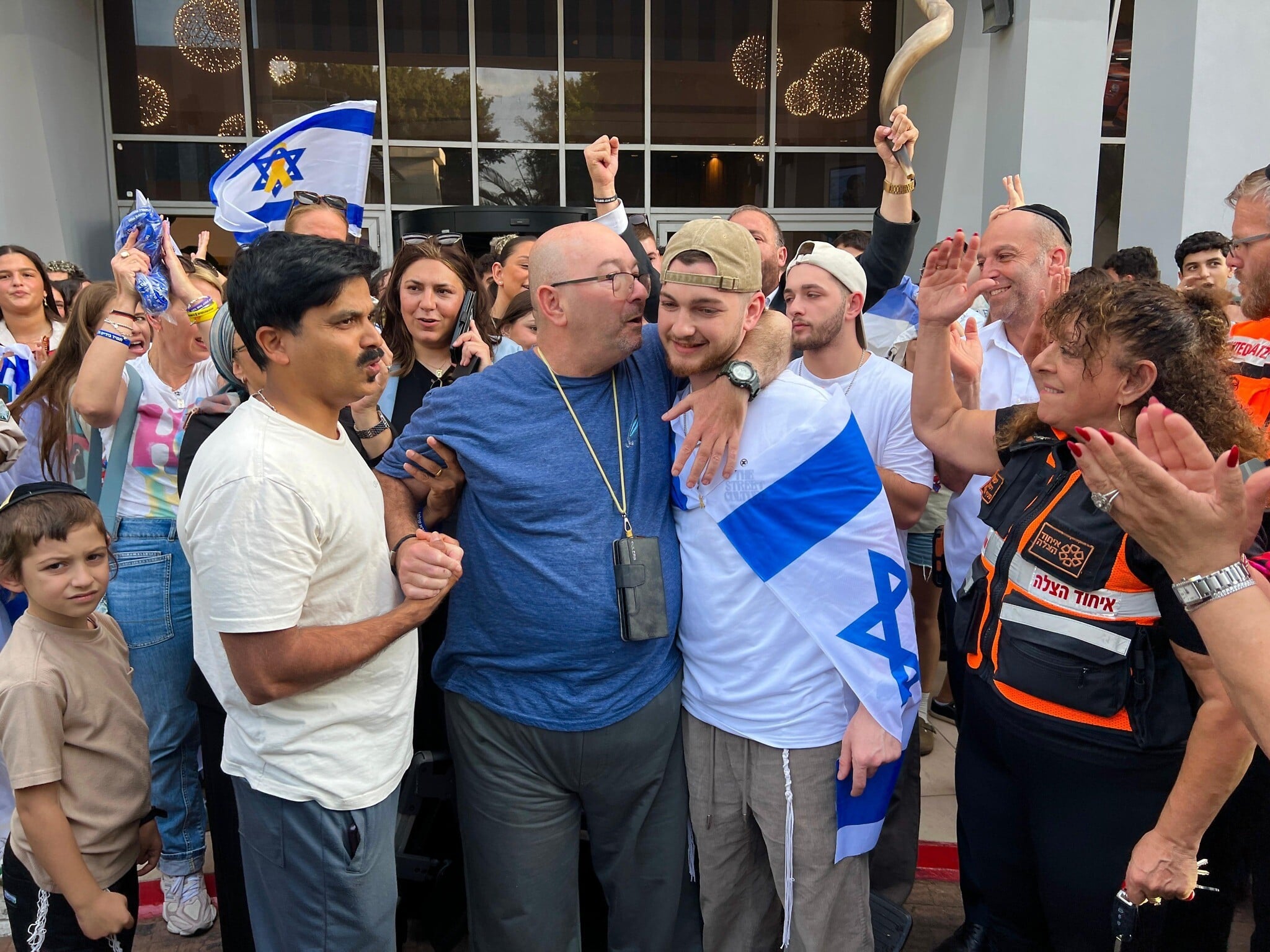
Bar Kuperstein, right, with his father Tal Kuperstein, outside Kfar Maccabiah on November 2, 2025. (Yael Gadot/Israeli Pro-Democracy Protest Movement)
His father, Tal Kuperstein, uses a wheelchair after suffering a stroke during a surgery before the October 7 massacre.
Kuperstein now lives in Tel Aviv and has a sealed safe room in his apartment. If he’s caught outside when a siren sounds, however, he doesn’t hesitate to head to a public shelter.
“No one looks twice at me,” said Kuperstein. “When we’re in the shelter, everyone’s just worrying about themselves. Outside, though, yeah, sometimes people ask me for a selfie.”
Since his release in October, Kuperstein has been writing a book about his experiences and is scheduled to fly to Los Angeles for several speaking engagements. He said he wants to earn enough money to buy an apartment in Israel.
“I don’t look back too much, I just look ahead. I just think about how good it is that I’m here at home or with my parents in my country. And I hope I can get on my flight to Los Angeles,” Kuperstein said, referring to Israel’s mostly closed airspace since the war began.
For some who spent weeks or months trapped in Gaza tunnels, struggling with the physical and emotional torture of captivity, this latest round of rocket strikes from Iran and Hezbollah creates more than just physical fear — it’s a painful reminder of what happened to them.

Aviva and Shai Siegel react as they watch husband and father Keith Siegel released from Hamas captivity on February 1, 2025. (Screen capture/Israel Defense Forces)
Former hostage Aviva Siegel said the sirens trigger sharp memories of worrying about her family in those first days of captivity, when she didn’t know what had happened to her four children and grandchildren after she and her husband, former hostage Keith Siegel, were abducted from their Kibbutz Kfar Aza home.
“Those first couple of days [of the war with Iran], I was in a really bad state,” said Siegel. “I was scared, but slowly, slowly, I’m getting used to it.”
The elder Siegels have relocated to Kibbutz Gazit in the Jezreel Valley, and Siegel said it’s easier to be in this relatively calm part of northern Israel than in the Gaza envelope, where they lived for 40 years, suffering from regular rounds of rocket fire from Hamas.
Siegel asked her four children to stay close during the first days of this most recent round of war with Iran.
“I’ve had enough of worrying about them, I just want to look at them and smile,” said Siegel. “All that time in Gaza, worrying about the people you love, it was terrible. Now I can call them and can see they’re okay, and that has a calming effect. I know very well that things can happen, that bad things can happen.”
Other former hostages have posted intermittently about experiencing the fear, trepidation, and everyday annoyances of war with Iran.

Former hostages Elkana Bohbot and Ohad Ben Ami together in a safe room during the 2026 US-Israel war with Iran (Instagram Story screenshot)
Ex-captives Elkana Bohbot and Ohad Ben Ami, who shared six square meters (65 square feet) underground with four other hostages, posted a video of themselves in a safe room during a siren, laughing uproariously as they joked about asking for tea, as they once did with their captors.
There is a sense of normalcy in the Instagram Story portraits that Avital Dekel-Chen, wife of former hostage Sagui Dekel-Chen, posts on Instagram of her family’s life, with three young children stuck at home due to the war with Iran.
Dekel-Chen recently recorded her daughters talking about the war, with her eldest commenting that the sirens scare her a little. But “it’s nothing compared to what I went through,” said Bar Dekel-Chen, whose youngest sister was born while her father was still in captivity.
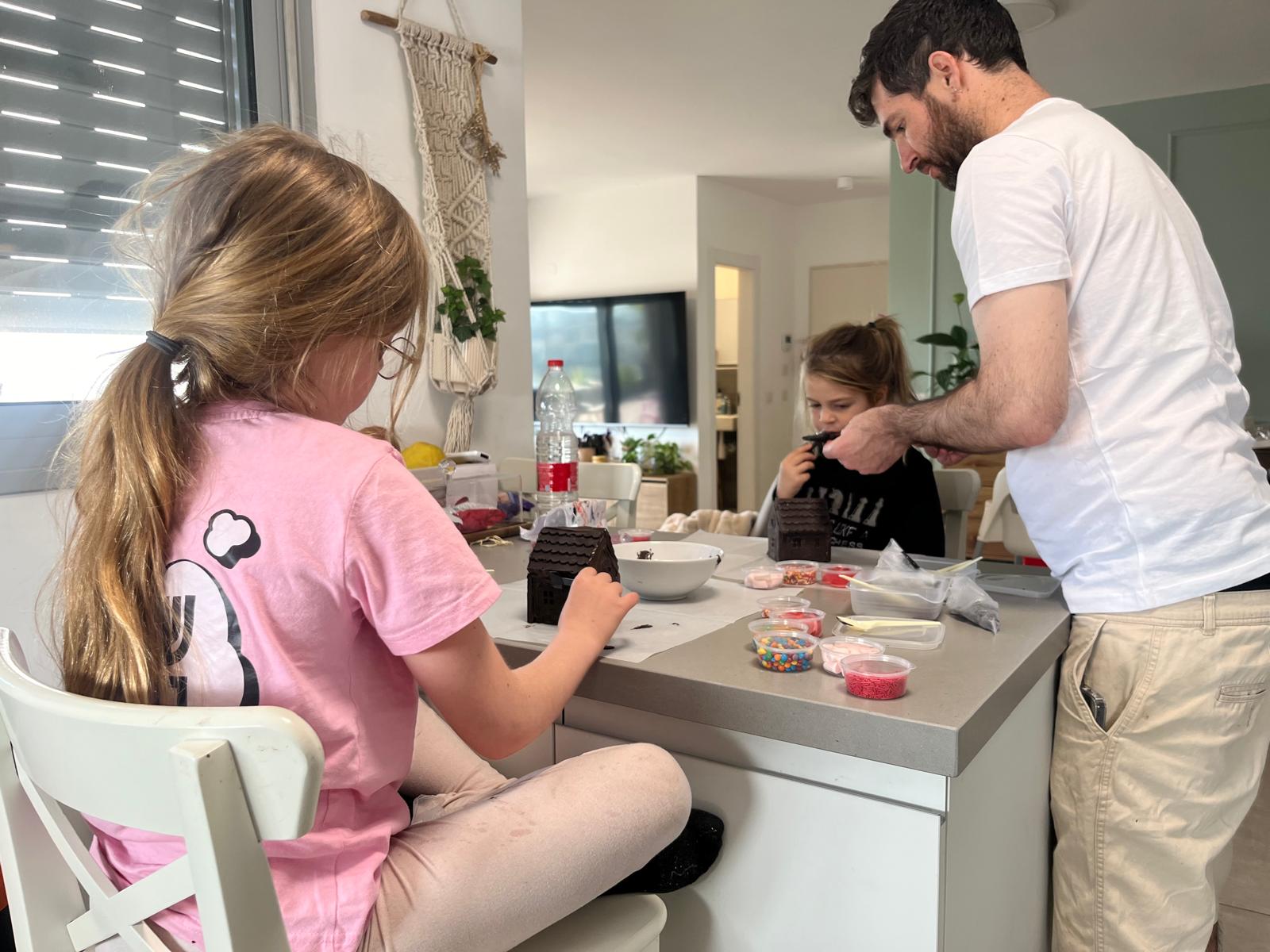
Former hostage Sagui Dekel-Chen with his three daughters, in their temporary hometown of Carmei Gat, after his February 2025 release from Hamas captivity (Courtesy)
Lishay Lavi Miran, whose husband, former hostage Omri Miran, was one of the 20 captives released in October, posted a poem on social media about her young daughter taking off her Supergirl cape and talking about the sirens of Kibbutz Nahal Oz and the sirens in their new home.
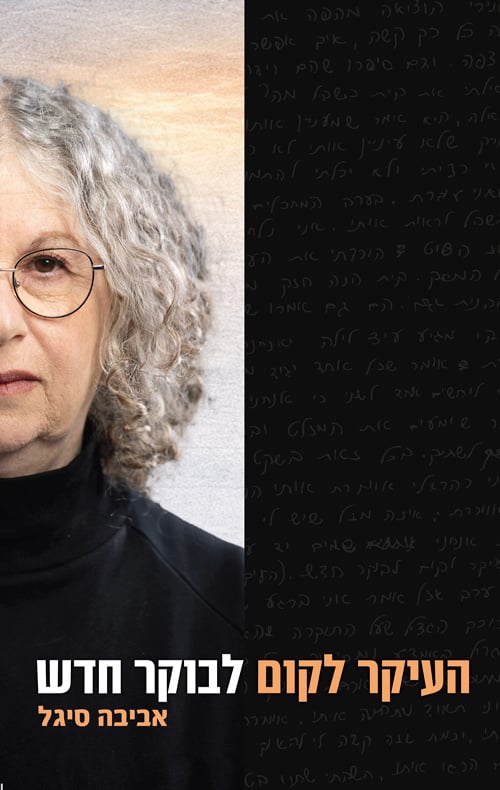
The cover of former hostage Aviva Siegel’s book, announced during the 2026 US-Israel war with Iran (Courtesy)
And last week, Aviva Siegel, who immigrated to Israel as a child from South Africa, announced the release of her book, “Survived to Tell,” written in Hebrew and which will be translated into English.
Siegel described the book as an account of how she survived captivity, how she was helped by others, and helped others, including her husband and two surveillance soldiers, Liri Albag and Agam Berger, who were held captive with the Siegels for a period of time.
The couple was taken captive in their own car by Hamas terrorists on October 7. Aviva was released in the November 2023 ceasefire, and Keith wasn’t released until January 2025.
Siegel said she wrote the book primarily for herself, so that she wouldn’t keep her thoughts bottled inside, and for her grandchildren, who are still too young to understand what happened to their grandparents.
“I think October 7 will always be in the center of everything for me,” said Siegel. “It’s very strong inside me, stronger than the book or the war or anything that I’m going through. I live with all those triggers all the time, wherever I go, there’s always something that reminds me and takes me there.”