
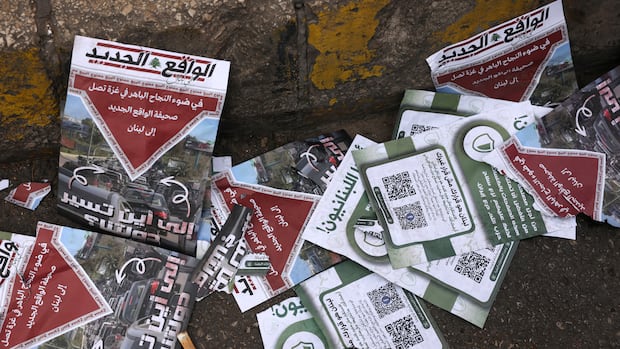
On Friday, two loud booms echoed in Beirut before Israeli leaflets started raining down on residents. The leaflets included captions that evoke Israel’s ongoing offensive in Gaza and urge Lebanese residents to share information with Israeli intelligence.
“In light of the resounding success in Gaza, the New Reality Newspaper arrives in Lebanon,” the leaflets say.
The leaflets appeal directly to Lebanese citizens and encourage them to reach out to Unit 504, an intelligence arm of the Israel Defence Forces (IDF), if they “want to be part of real change and contribute to the prosperity and protection of your country.” QR codes on the leaflets direct people to chats on Facebook and WhatsApp — but Lebanese authorities and residents themselves warned each other not to scan the codes out of fear of data breaches.
Other statements on the leaflets include: “Lebanon is your decision” and “Your land is yours, don’t let it become ‘free money’ for Iranian Hezbollah’s weapons.”
It’s not the first time Israel has dropped leaflets over residential areas. In Gaza, the Israeli army has previously dropped leaflets ordering civilians to evacuate ahead of imminent strikes — a move that has garnered condemnation from human rights group Amnesty International for what they say amounts to forced displacement of civilians and collective punishment, both war crimes.
Israel has repeatedly said that such leaflets are intended to protect civilians by warning them of strikes ahead of time.
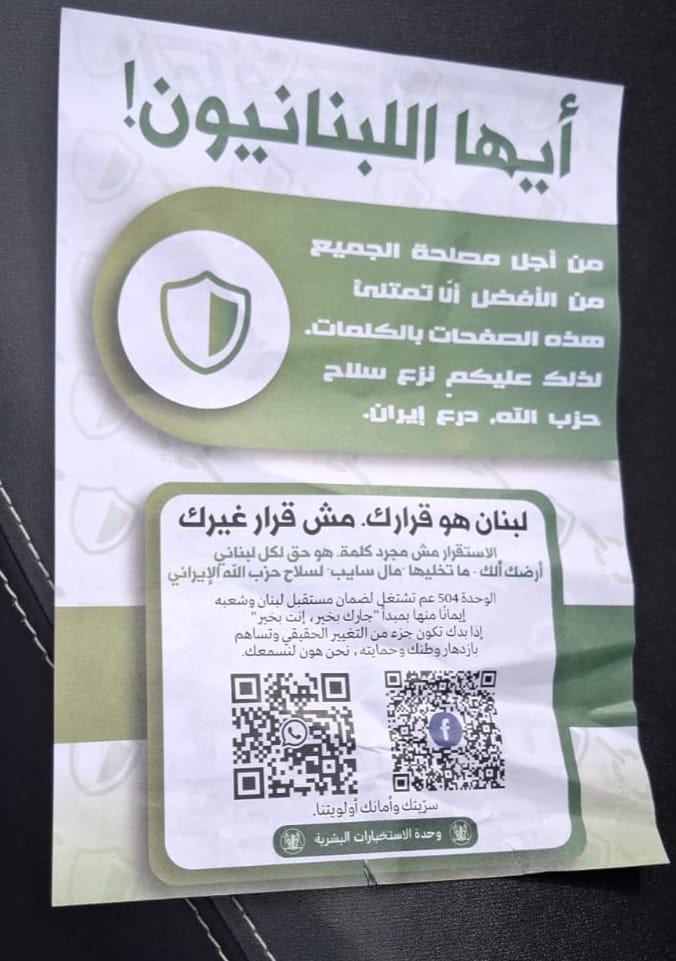 One side of a leaflet that was dropped into Beirut on Friday, startling residents. (Ali Hamzi)
Beirut resident Hala Beydoun watched the leaflets drop, calling the moment “very scary.”
“First there were these big, strong booms. We thought it was a rocket or a drone,” Beydoun told CBC News. “Then, we see these raining pamphlets from the skies, like, what the heck?”
‘Clearly psychological warfare’: UN expert
Multiple experts have said that the leaflets dropped in Beirut on Friday are an example of propaganda. But one legal expert told CBC News that the Israeli fliers dropped in Lebanon could amount to a war crime.
“It is a clear psychological warfare,” said George Katrougalos, an independent United Nations expert specializing in democracy and equitable international order. “Invoking Gaza, where we have a genocide, as a model to be repeated is clearly a threat. Not at all a hidden threat. It’s a direct threat addressed to the population.”
Katrougalos said the flyers violate international law, specifically the Geneva Conventions Art. 51(2) of Additional Protocol I, which states that “acts or threats of violence the primary purpose of which is to spread terror among the civilian population are prohibited.”
A UN Commission of Inquiry, which released its findings in September, found evidence that Israel has committed genocide in the Gaza strip — something Israel has denied, calling the findings “scandalous” and “libelous.”
The IDF international press desk did not respond to multiple requests for comment from CBC News.
Israel has been pounding Lebanon with strikes ever since Iran-backed militant group Hezbollah opened fire on March 2 to avenge Iran’s slain supreme leader, killed at the onset of the U.S.-Israeli war against Iran. Israeli strikes have killed more than 800 people, according to the country’s Health Ministry, and displaced at least 800,000, including women and children, with evacuation orders clearing out parts of southern Lebanon.
World leaders have repeatedly called for de-escalation in Lebanon as the humanitarian crisis within the country rapidly worsens, as have a collection of UN experts, including Katrougalos.
‘Hezbollah bears exclusive responsibility,’ says another expert
Michael Eisenstadt, director of the military and security studies program with the Washington Institute for Near East Policy, said Hezbollah is to blame for the ongoing displacement of Lebanese people for violating its ceasefire agreement with Israel, signed in 2024.
“Hezbollah bears exclusive responsibility for this state of affairs; if they weren’t returning to southern Lebanon, rearming, and resuming armed operations against Israel in violation of the ceasefire resolution, this wouldn’t be happening,” he said in an email.
Though the ceasefire between Israel and Hezbollah was signed in November 2024, Israeli attacks did not stop. Both sides have accused one another of truce violations.
WATCH | Fighting between Israel, Hezbollah pounding Lebanon: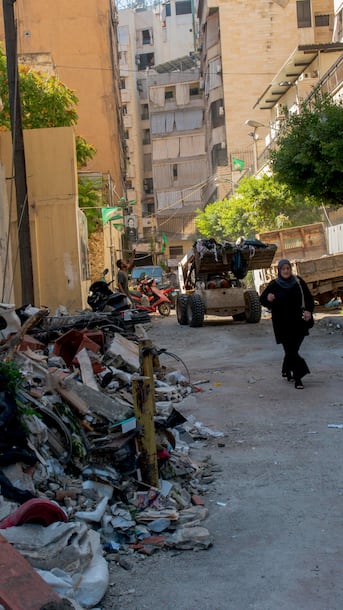
Airstrikes hitting centre of Beirut almost daily
An estimated 800,000 people have already been displaced in Lebanon, as Israel widens its scope to target the centre of Beirut where it claims Hezbollah is hiding.
Eisenstadt noted that the use of propaganda flyers isn’t unique to Israel.
“These are propaganda leaflets, whose use predates World War I, and have been widely used by many countries in wartime,” Eisenstadt said. “It’s just another way of influencing a civilian population and influencing people to cooperate with Israel against Hezbollah.”
Leaflet distribution isn’t a new tactic, and it’s not unique to Israel. Propaganda leaflets were used during both world wars to spread political criticism and information, too.
“That’s why we must distinguish between legitimate propaganda and what is forbidden by international law,” Katrougalos said. “Spread of terror is what is forbidden by international law. Threatening the civilian population — that they are going to have the fate of Gaza — this is against international law.”
Beydoun called the current situation in Lebanon “quite depressing.”
“I fear they [Israel] are trying to reach us in all the ways possible. They want to get into our heads. They want to get into our houses, into our daily lives,” she said. “It’s just too overpowering and it was very scary. It’s like they want to control us.”
Beydoun said she and her friends want the ongoing conflict to end. But in the meantime, she’s trying to live her life as normally as possible.
“The majority of my friends feel they don’t want any interference — neither from the U.S. and Israel nor from Hezbollah and Iran,” Beydoun said. “They just want to live, and be Lebanese, and live Lebanese, and strive to be better and look for a more secure and peaceful Lebanon.”