
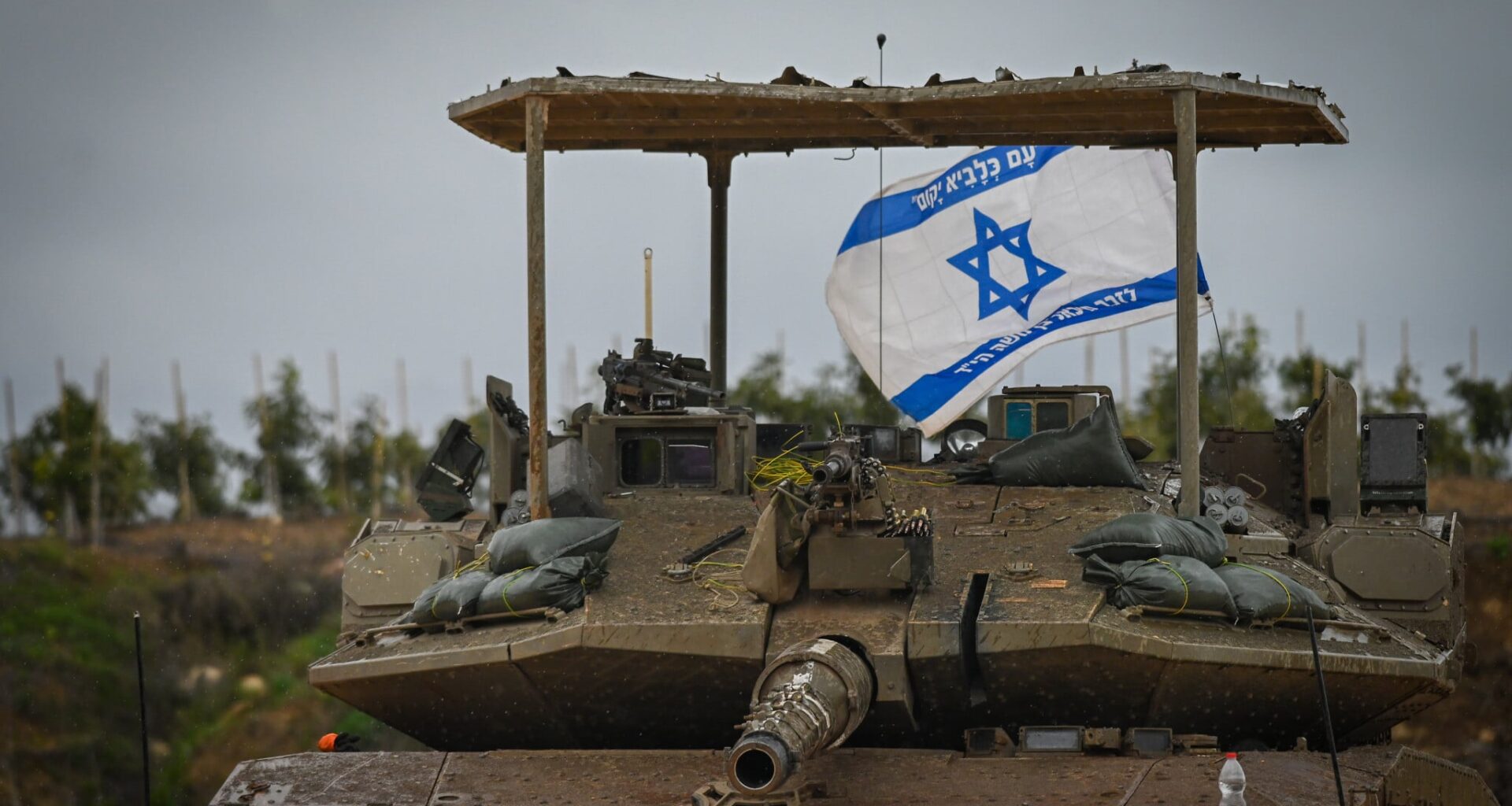
Lebanon was said Saturday to be seeking talks with Israel on ending the renewed flareup between the Jewish state and the Hezbollah terror group, with landmark direct negotiations reportedly expected to be held within days.
France said it was willing to facilitate the talks, but denied a report claiming that it had drawn up a detailed plan that would include Beirut recognizing the State of Israel and ending the state of war between the countries that has been in place since 1948.
Three Lebanese officials told Reuters that Beirut is forming a delegation for talks, but no date has been set. One of the officials said Lebanon needed clarity on whether Israel would abide by Lebanese President Joseph Aoun’s demand for a full ceasefire to allow negotiations to take place. The official also said Lebanon still needed clarity on the framework for the talks, including the agenda.
“Negotiations are on the table and preparations are underway to form a delegation, but… neither the timing nor the location has been determined, with Paris and Cyprus being considered,” an official told AFP, adding: “We also need an Israeli commitment to a truce.”
Jerusalem has so far insisted that any negotiations take place under fire.
Get The Times of Israel’s Daily Edition
by email and never miss our top stories
By signing up, you agree to the terms
A senior Lebanese politician said that Christian, Sunni Muslim and Druze members of Lebanon’s negotiating team had been chosen, but Hezbollah’s Shiite Muslim ally, Parliament Speaker Nabih Berri, had rejected any Shiite participation. Berri believed Israel would offer the Lebanese delegation nothing, said the senior politician, who was familiar with Berri’s view.
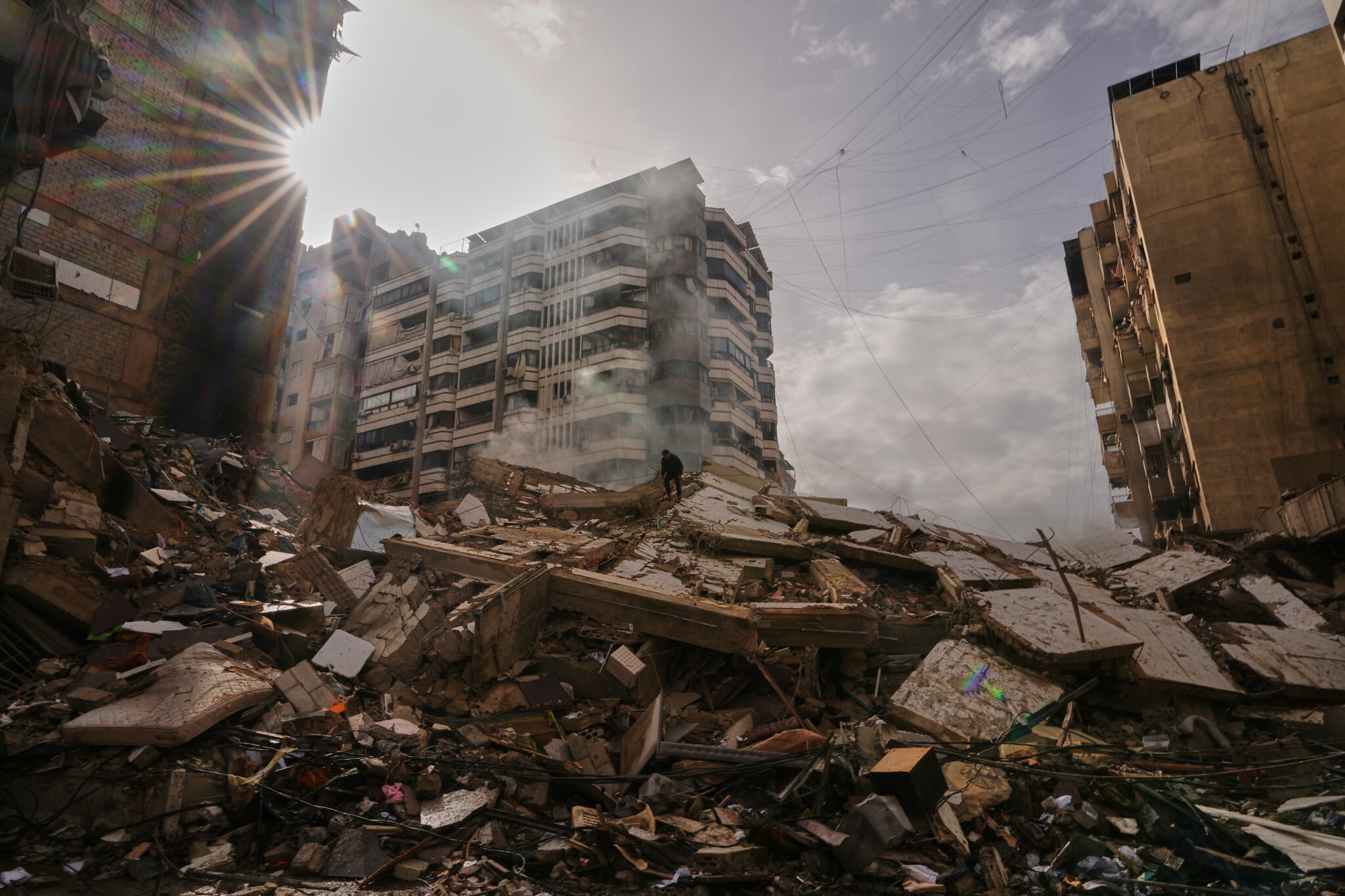
A man stands atop the rubble as smoke rises from a building destroyed in an Israeli airstrike in Dahiyeh, Beirut’s southern suburbs, Lebanon, March 14, 2026. (AP Photo/Hassan Ammar)
Meanwhile, Haaretz reported that direct talks between Israel and Lebanon were expected to be held in the coming days, in what would be a diplomatic milestone between the two states.
The daily, citing two sources with knowledge of the matter, said the negotiations were expected to focus on ending fighting in Lebanon and disarming Hezbollah.
Haaretz reported that US President Donald Trump’s son-in-law Jared Kushner would be involved in the talks, with Prime Minister Benjamin Netanyahu’s confidant Ron Dermer leading the Israeli delegation. The talks could be held in either Paris or in Cyprus, the report said.
There was no comment on the Haaretz report from the Israeli government.
France denies drafting plan to have Lebanon recognize Israel
Also Saturday, the Axios news site reported that France had drawn up a proposal to end the fighting between Israel and Hezbollah that would require Lebanon’s government to recognize Israel, though Paris later denied authoring any plan on the matter.
France’s foreign ministry said there was “no French plan” to stop the fighting between Israel and Hezbollah, though it noted Paris supports Beirut’s “openness to direct talks with Israel” and that it has offered to facilitate them.
“But it is for the parties, and only the parties, to set the agenda for these talks,” it added.
French President Emmanuel Macron similarly said Saturday on X that his government was ready to facilitate ceasefire discussions between Israel and Lebanon in Paris, calling on Israel to “seize this opportunity.”
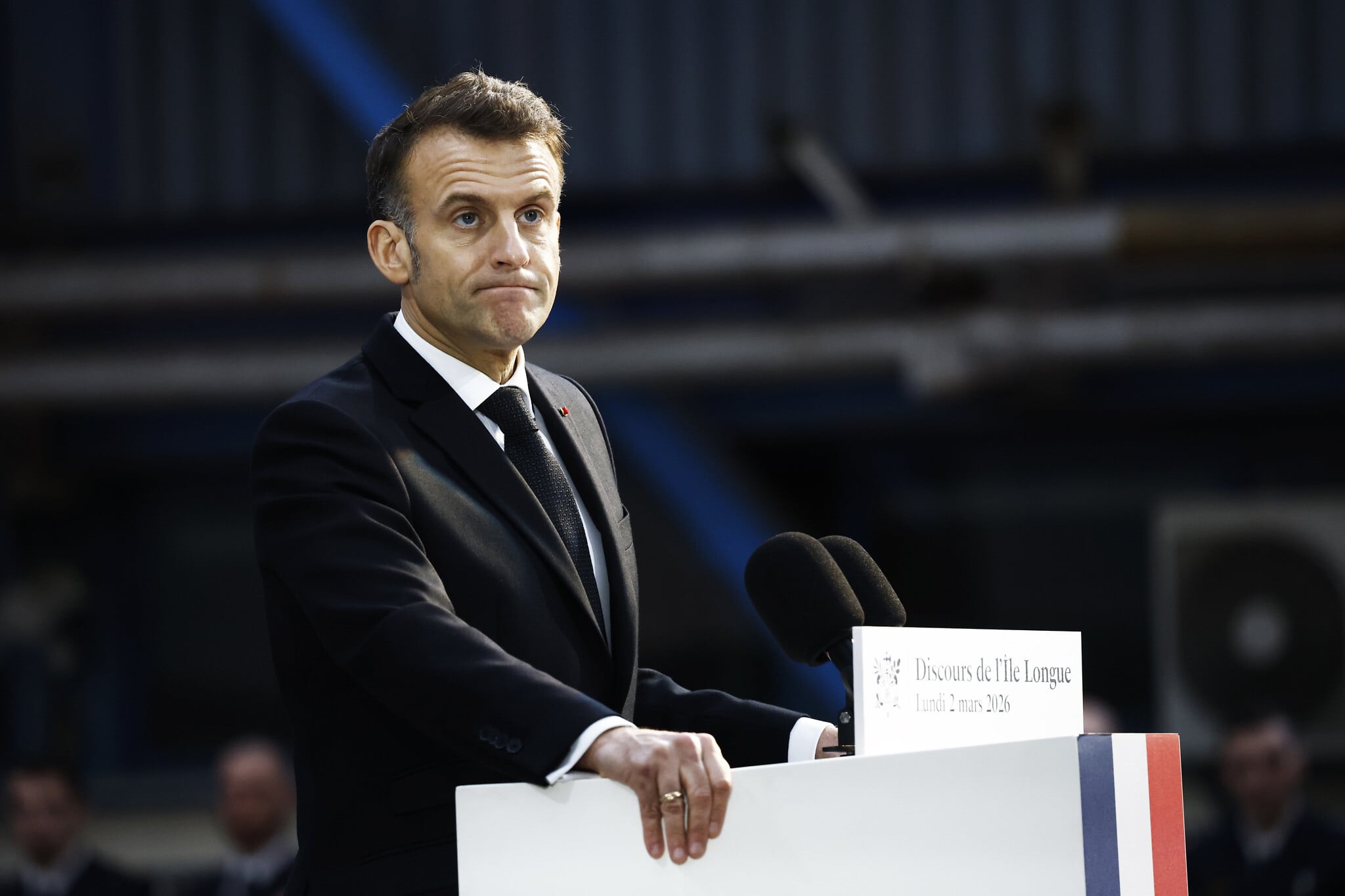
French President Emmanuel Macron delivers a speech next to the submarine ‘Le Temeraire’ at the nuclear submarines’ Navy base of Ile Longue in Crozon, France, March 2, 2026. (Yoan Valat/Pool Photo via AP)
The Axios report said, citing three sources familiar with the matter, that France’s alleged outline has been accepted by Lebanon’s government as a basis for talks, while the US and Israel are both reviewing it.
According to the report, the French plan calls for Jerusalem and Beirut to hold direct talks — which Paris and Washington would back — on a “political declaration” that the sides would agree upon within a month.
Outlining the purported plan, the report said that along with recognizing Israel, Lebanon would vow to respect its sovereignty and territorial integrity, and both countries would also stress their commitment to the UN Security Council resolution ending the 2006 Second Lebanon War and the ceasefire deal reached in November 2024 after more than a year of fighting between Hezbollah and Israel.
Lebanon’s government would also reportedly be committed under the plan to preventing any attacks on Israel from Lebanese territory and to disarming Hezbollah and banning the terror group’s military activity.
Meanwhile, Israeli forces would withdraw from areas captured during the current war within a month, while the Lebanese army would redeploy in Southern Lebanon, with UNIFIL and a group of countries selected by the UN Security Council tasked with verifying that Hezbollah is disarmed.
The report said that Lebanon would be required to declare its willingness to hold talks with Israel on a permanent non-aggression pact, with an agreement ending the formal state of war between the countries since the Jewish state’s founding in 1948, to be signed in two months.
Once the deal is signed, the IDF would then pull back from the five positions it has held in southern Lebanon since 2024. Axios reported the last stage of the French proposal calls for demarcating the Israel-Lebanon and Lebanon-Syria borders by year’s end.
Hezbollah has fired some 100 rockets per day
Meanwhile, Hezbollah carried out sporadic rocket barrages and drone attacks on northern Israel on Saturday, with no reports of injuries.
Sirens had sounded across the Galilee and Golan Heights, with some of the rocket barrages targeting the Haifa area and Safed.
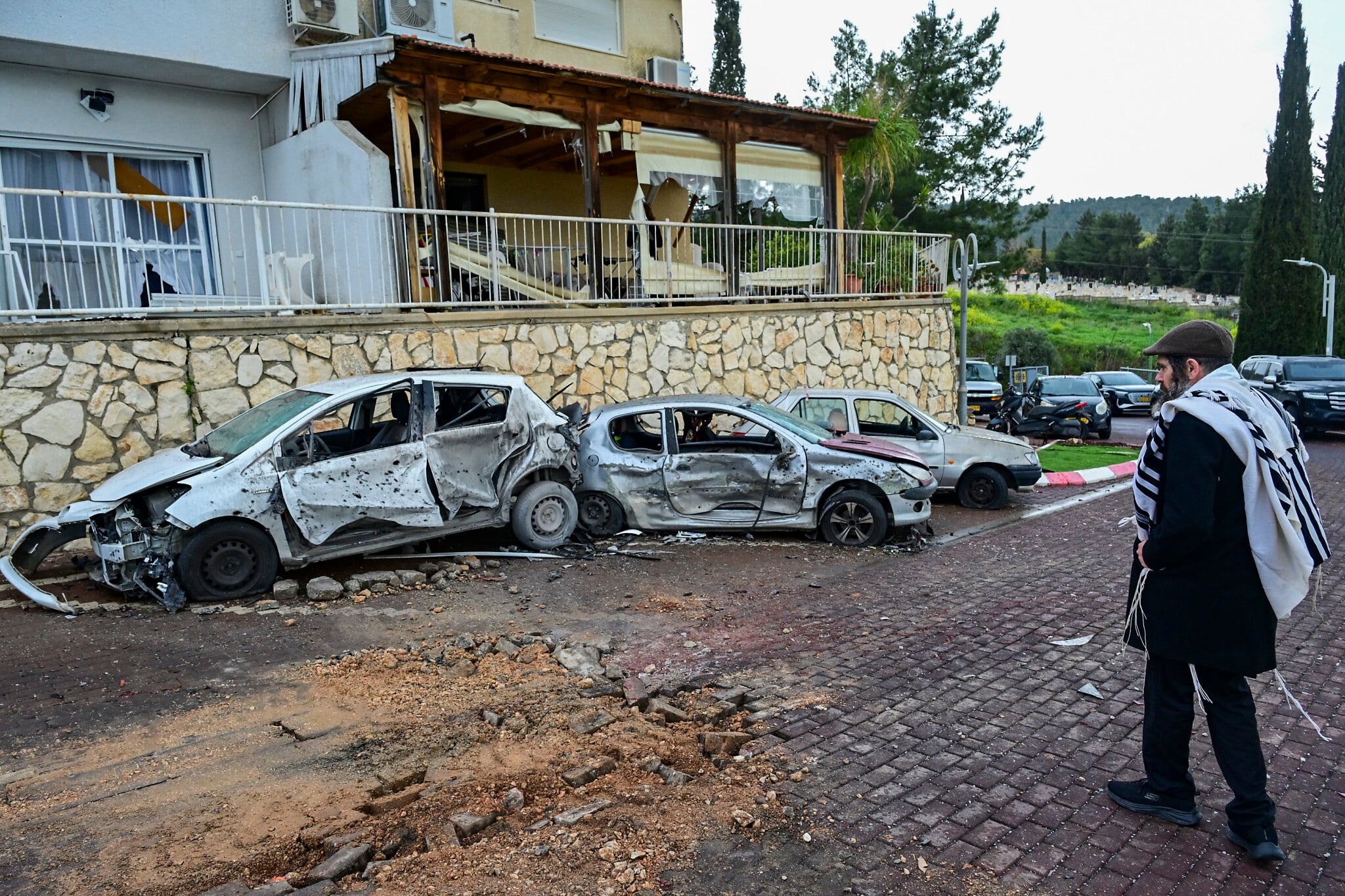
People inspect the damage at the scene where a missile fired toward Israel caused damage in Hazor HaGlilit, northern Israel, March 14, 2026. (Michael Giladi/Flash90)
In all, dozens of rockets were launched throughout the day, with at least one causing damage to homes and cars in Hatzor Haglilit at around 2 a.m. That rocket had been launched concurrently amid a ballistic missile attack from Iran.
Many of the rockets were intercepted by air defenses, while others struck open areas, according to the IDF.
The IDF also reported shooting down several Hezbollah drones that were launched toward the north.
Since March 2, when Hezbollah began attacking Israel in response to the killing of Iran’s supreme leader Ali Khamenei, the terror group has launched around 100 rockets a day, according to the IDF.
The IDF says two-thirds of those rockets have been aimed at Israeli forces operating in southern Lebanon and along the border, while a third have been aimed at Israel.
In addition, Hezbollah has launched more than 100 drones at Israel since the hostilities escalated, the vast majority of which were shot down by the Israeli Air Force, according to the military.
The IDF has said that Hezbollah is launching most of its attacks from deeper within southern Lebanon, and not from close to the border.
IDF keeps up strikes on Hezbollah targets
Lebanese media reported Saturday evening that Israel had launched new strikes on Beirut’s southern suburbs, hours after the IDF reiterated an evacuation warning for the area, a Hezbollah stronghold.
Earlier, the Israeli military said its Air Force had destroyed several Hezbollah command centers during waves of strikes in southern Lebanon and in Beirut on Friday night.
According to the military, Hezbollah operatives were operating at the command centers to advance attacks on Israel.
Since hostilities escalated earlier this month, the IDF says more than 110 Hezbollah command centers have been struck.
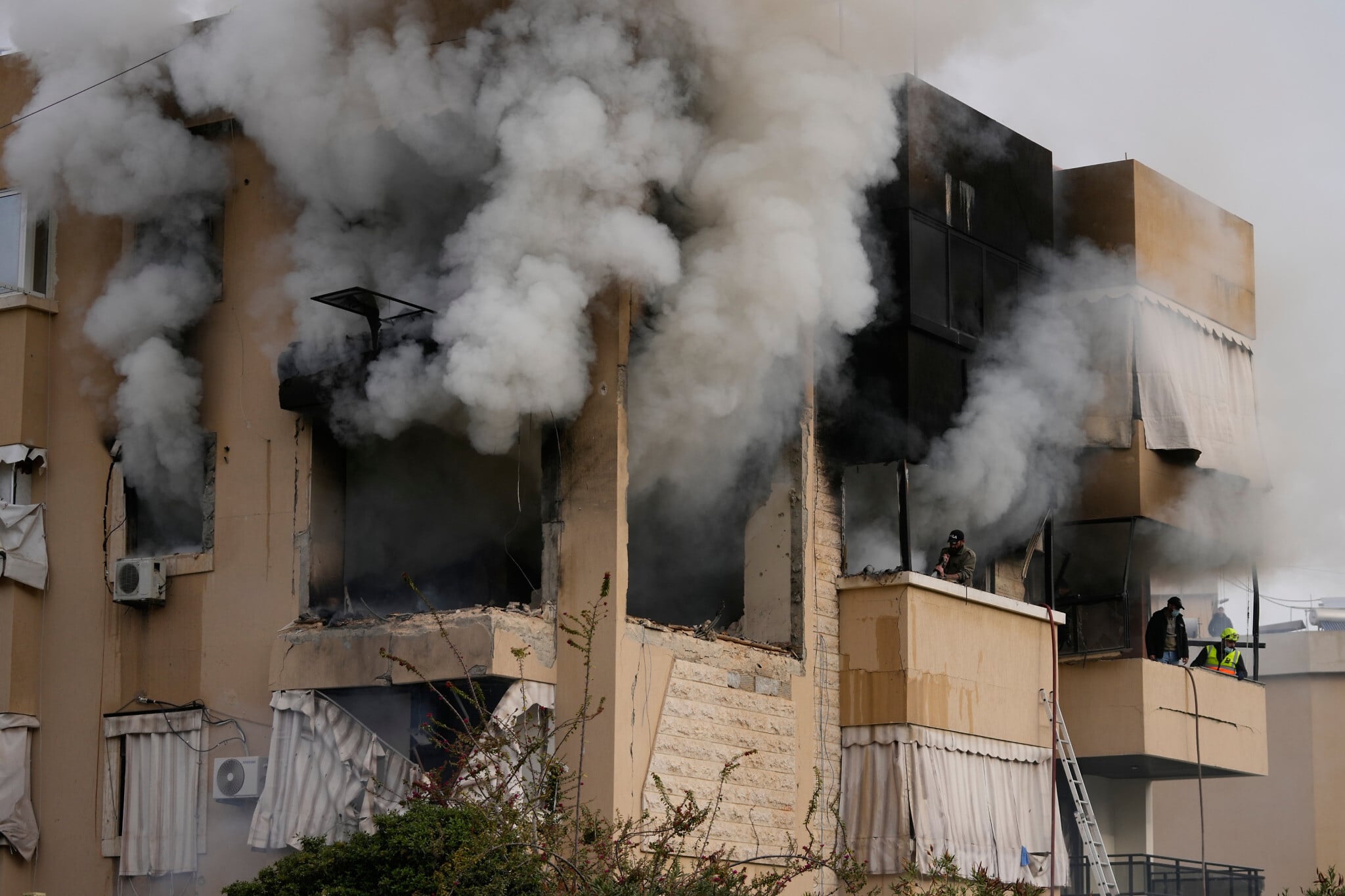
Rescue workers inspect an apartment damaged in an Israeli airstrike as thick smoke fills the building in the southern port city of Sidon, Lebanon, March 14, 2026. (AP Photo/Mohammad Zaatari)
The IDF has also been pushing ground troops deeper into southern Lebanon, and on Saturday said that dozens of Hezbollah operatives had been killed throughout the renewed war in such “targeted raids.”
Last week, troops of the 7th Armored Brigade, under the 36th Division, began an operation in the Rab al-Thalathine area, with the IDF saying it was aiming to locate and clear the Lebanese village of Hezbollah infrastructure and operatives.
The IDF said troops had destroyed numerous Hezbollah sites, including weapon depots, a command center and observation posts.
It said the Northern Command was continuing preparations to receive additional troops in the coming week.
The military also said a strike on Lebanon on Wednesday had killed a commander in Iran’s Islamic Revolutionary Guard Corps (IRGC), Hisham Abd al-Karim Yassin. It described him as a “key commander” in Hezbollah’s communications unit and in the Palestine Corps of the Quds Force, the IRGC’s extraterritorial arm.
The military said the communication unit is responsible for “maintaining communication continuity” within Hezbollah, and it oversees “the development, maintenance and use of communication systems” used by the terror group.
Yassin was involved in assisting Hezbollah rebuild its capabilities, and he “worked to advance Iranian entrenchment in Lebanon,” the IDF added.
Multiple recent reports have indicated that Israel is planning a large-scale ground operation in southern Lebanon aimed at uprooting Hezbollah. Defense Minister Israel Katz has even threatened to seize territory there.