
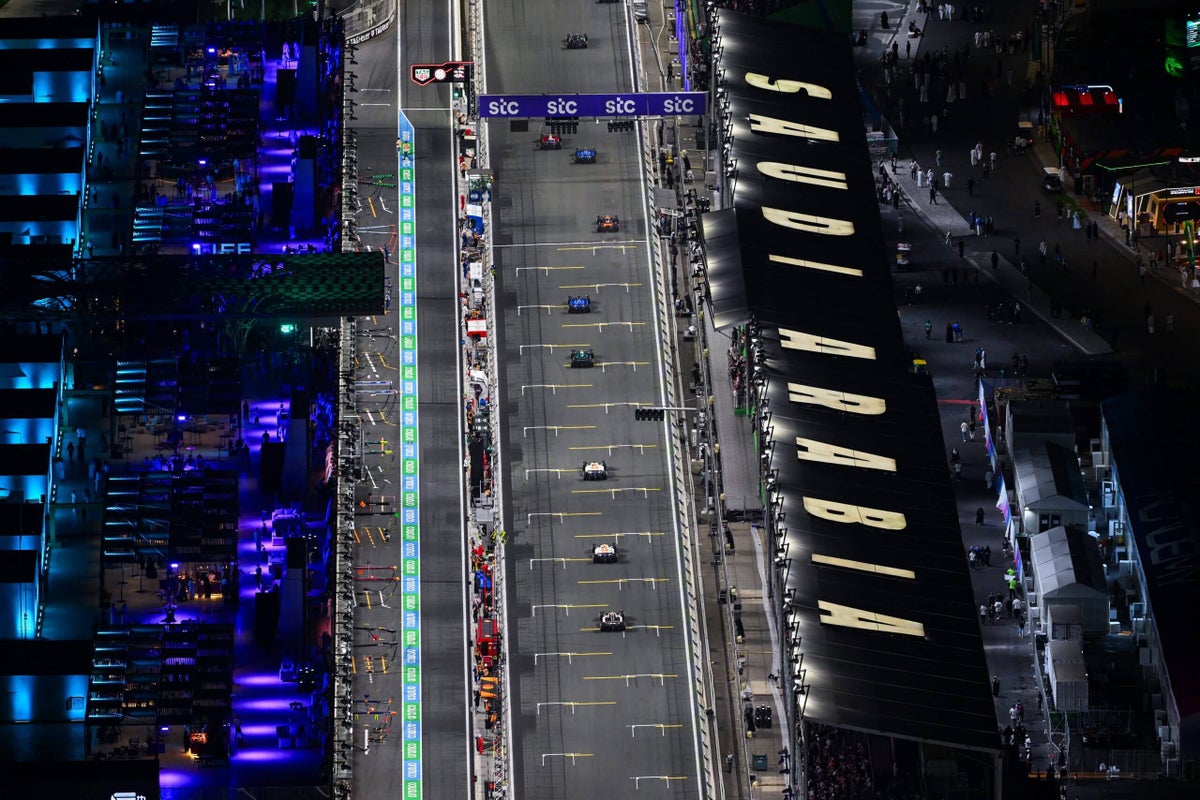
Following confirmation that Formula 1 has cancelled its planned 2026 races in Bahrain and Saudi Arabia due to the unfolding conflict in the Middle East, a number of questions remain.
It is the first time since 2023 that F1 has been forced to scrap a grand prix. That was at Imola, Italy, with the race unable to go ahead due to severe flooding in northern Italy. It was called off with four days’ notice.
But the unfolding situation in the Middle East amid the escalating conflict made this far more pressing for F1. Following airstrikes on Iran by the U.S. and Israel, Iranian forces launched retaliatory strikes on a number of United States military bases and other targets in the region, including some in Bahrain and Saudi Arabia.
Here’s how F1’s decision to call off the races unfolded, what it means for the sport, and what comes next.
Why was canceling F1’s only option?
Following the first strikes by Iran on U.S. military bases in late February, including one in Bahrain just 20 miles from its track, F1 said in a statement that it would “closely monitor” the situation. It noted its season would start with events in Australia, China and Japan, and that the Bahrain/Saudi Arabia races were “not for a number of weeks” — six and seven weeks, respectively.
The closure of airspace in the Middle East and flight cancellations did contribute to some travel issues for F1 personnel getting to Australia for the opening race of the season on March 8. The F1 organization laid on charter flights to help ensure they arrived in time.
Since the start of the conflict, F1 remained in close contact with local authorities in Bahrain and Saudi Arabia, as well as the promoters of the races and the UK Foreign Office. The F1 organization and eight of the 11 teams have their primary headquarters in the UK.
Although there was hope that military action would quickly de-escalate and allow the races to go ahead as planned, once the severity and scale of the conflict became evident, stretching into weeks rather than being resolved in a matter of days, the need to cancel both races grew clearer.
When did F1 make its decision?
Despite the paddock feeling there was only one likely outcome as early as the Australian GP race weekend, one week into the conflict, F1 still had to work through an array of matters before it could formally make the call.
Throughout the past two weeks, F1’s leadership, including CEO Stefano Domenicali, has been closely working with the respective race promoters in Bahrain and Saudi Arabia to discuss what may follow any cancellation.
This includes the impact on their race contracts and the fees due to F1, plus what cancellation meant for ticket holders and paddock hospitality agreements. But the final cut-off was always going to be when freight had to be sent to Bahrain — in the days following this weekend’s Chinese GP.
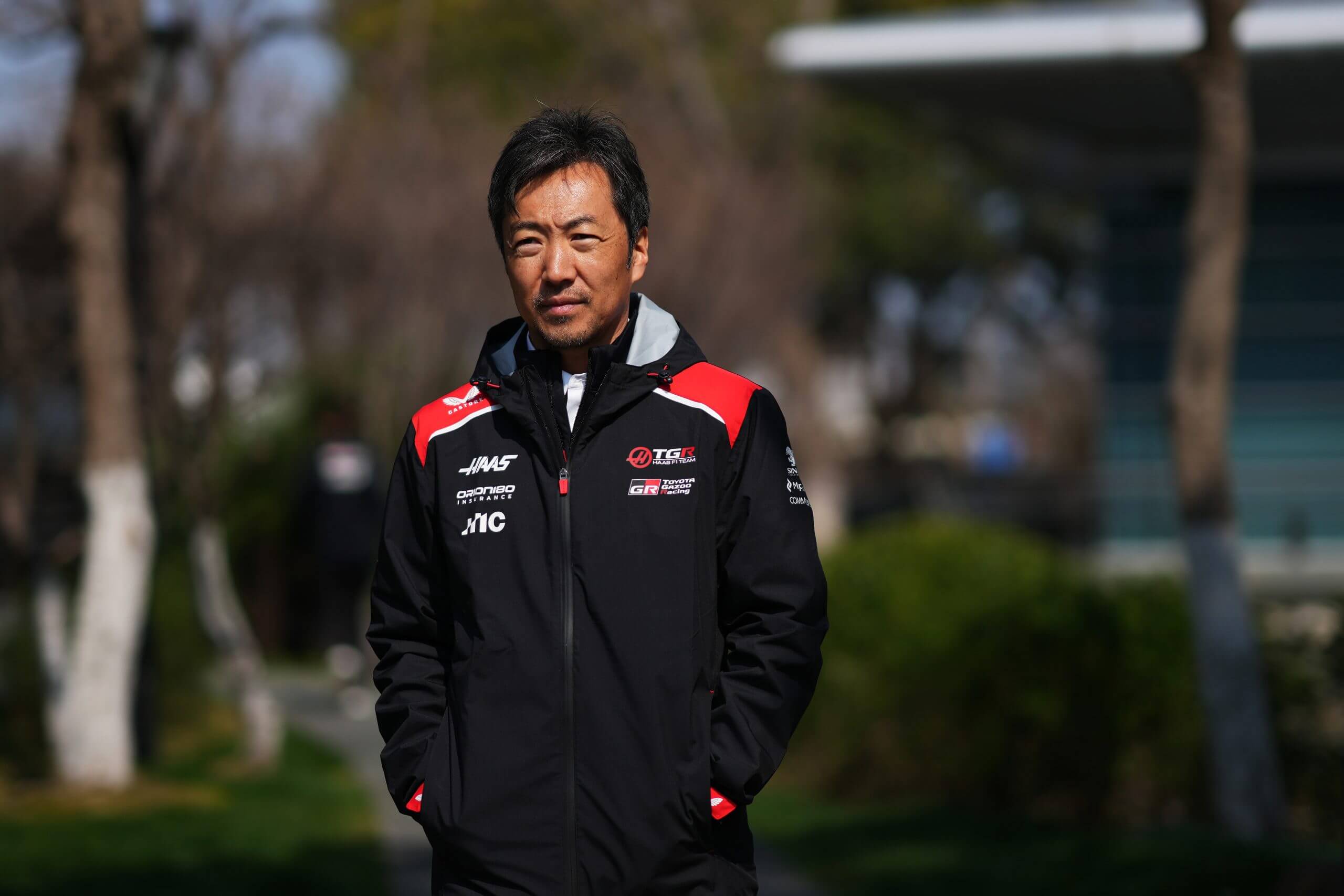
Haas team boss Ayao Komatsu in the paddock at the 2026 Chinese GP. (Alex Bierens de Haan / Getty Images)
Ayao Komatsu, the team principal of the Haas team, said on Thursday that teams would have preferred to know “last week,” but they anticipated that a call would be made in China.
The decision was communicated to the teams on Friday evening in Shanghai, ahead of everything being finalized by F1. This paved the way for the announcement to be made early on Sunday in Shanghai.
Could Saudi Arabia’s race have gone ahead?
It never seemed realistic that the Bahrain race would be able to go ahead, given its closer proximity to Iran and the strikes on the U.S. base that prompted the closure of its airspace.
But there were suggestions that Saudi Arabia’s race, which is held in Jeddah on the country’s western side and away from the Gulf region, could have been viable.
The UK Foreign Office had only advised against travel to certain parts of Saudi Arabia, as opposed to all of Bahrain. The Iranian strikes in Saudi Arabia have only reached as far as Riyadh, the capital in the center of the country.
As recently as Monday, the Saudi Arabian Grand Prix’s X account was promoting ticket sales for the race, suggesting internal plans were still progressing as normal and that the organizer could still have delivered the grand prix.
But while there is likely to be an understandable degree of disappointment for the organizers in Jeddah, given the grand prix stands as one of Saudi Arabia’s most prestigious annual sporting events, there will surely be respect for F1’s decision.
Even if F1 had managed to get security guarantees in place for the Saudi Arabian race to go ahead, the image of the sport pushing on with an event in the region would likely have been met with a very negative reaction. The optics would have been awful.
One team source, speaking to The Athletic on condition of anonymity because they weren’t authorized to speak publicly on the subject, also highlighted the concern of getting F1 freight to Jeddah and missile strikes then occurring in the region — which was targeted by Houthi rebels in 2022 midway through the second Saudi Arabian GP — that could then compromise subsequent events on the calendar.
Will F1 replace the canceled races?
When F1 faced a slew of race cancellations in both 2020 and 2021 due to the Covid-19 pandemic, the sport drafted in a series of replacement events to bolster the calendar and ensure it delivered a decent season of racing to fulfill a minimum schedule length requirement.
In 2020, F1 managed a 17-race season before running 22 races in 2021 despite travel restrictions around the world, with events at tracks such as Imola, Portimão in Portugal, and Istanbul Park in Turkey boosting the schedule.
Keeping the calendar at a certain length helped satisfy important sources of F1 revenue, such as TV contracts and sponsorship deals, which required a certain number of races to be paid in full. Races that did take place behind closed doors paid either no race hosting fees or heavily reduced fees, as many countries did not allow spectator attendance due to lockdown restrictions.
There was reason to expect F1 to seek replacement races for Bahrain and Saudi Arabia this time, however, as a five-week gap now sits in the calendar between Japan (March 29) and Miami (May 3). Stand-in events now had the potential to make up for the lost hosting fees from the two cancelled races.
But, as The Athletic reported last week, replacement races were never a serious consideration for F1 in this scenario. This is because the short notice meant getting a reasonable hosting fee for a stand-in round was never realistic, as ticket sales and logistics would have been hard to arrange with only a few weeks’ notice.
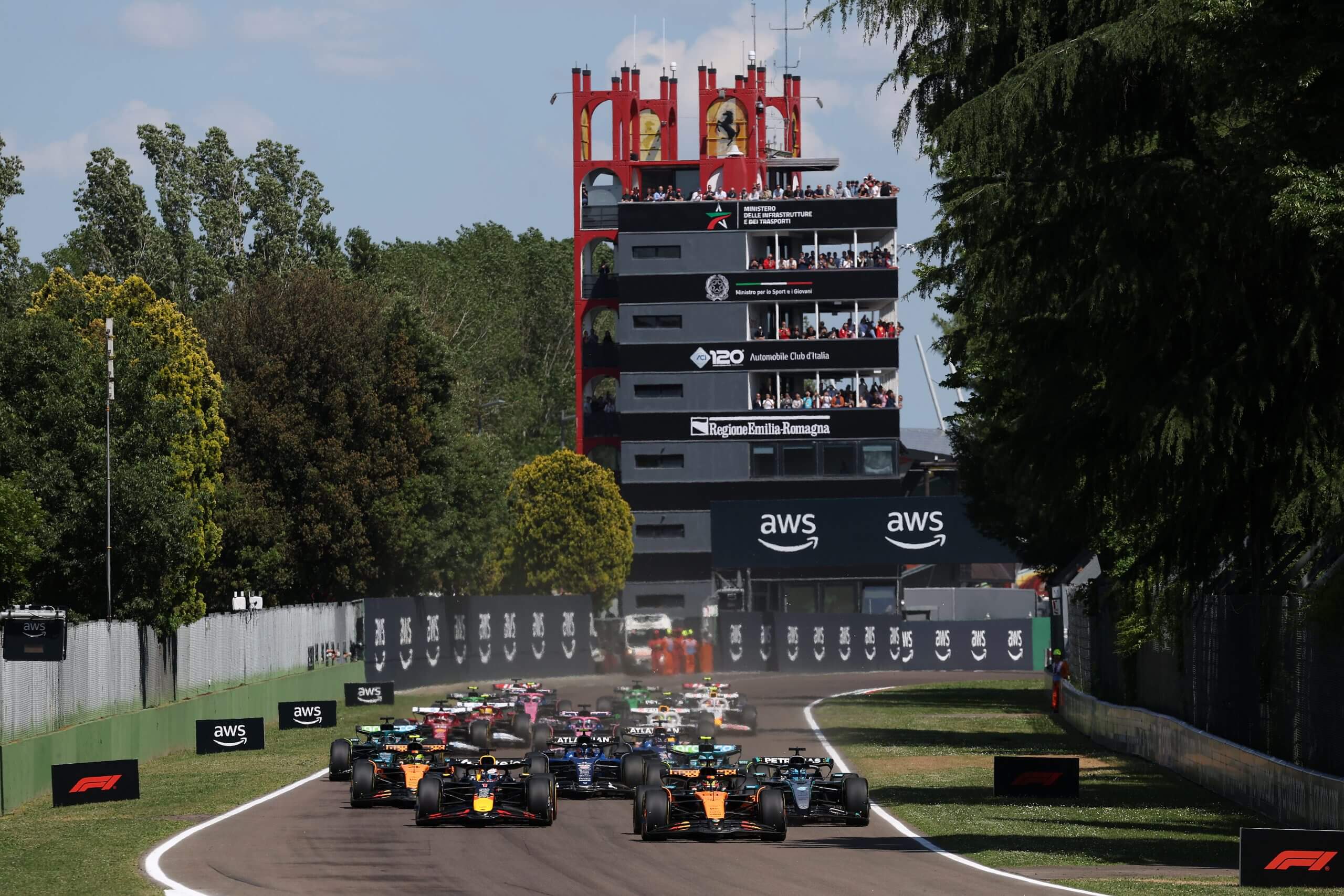
The start of the 2025 F1 race at Imola. (Mark Thompson / Getty Images)
That would have meant the teams losing money after adding in new logistical costs to get to the races, without a share of F1’s hosting fees added into the annual prize money pool to cover their costs, as is usually the case with all planned races.
And that was before even considering the practical challenges of getting a venue ready to host a full F1 event with fans — something most of the Covid-19 stand-ins did not have to consider — in just a few weeks.
Unlike the World Endurance Championship, which has already rescheduled its Qatar round for October, F1 also does not have space in its calendar to squeeze in any extra races later in the year. The calendar will be capped at 22 rounds.
How much could this cost F1 and teams?
Bahrain and Saudi Arabia are two of F1’s highest-paying races, with Saudi Arabia’s deal reportedly worth in excess of $50 million per year.
Zak Brown, the CEO of McLaren Racing, said in Australia that the potential cancellations would likely have a small financial impact on teams in any case. Their prize money pool — which totalled $1.4 billion across the grid last year — is linked to F1’s revenue.
This means any possible fall in hosting fee income would also dent team payments.
But the nature of the cancellation means the financial impact of not having these races was never a significant issue for teams or F1 itself. “We’re not bothered if it does have a little bit of a financial impact,” said Brown. “So be it, with what’s going on.”
One factor that will soften the lost revenue for 10 of the teams is the dilution fee that Cadillac, F1’s new team for 2026, paid to join the grid as compensation to make up for the prize money being cut an 11th way from now on. This payment was upwards of $400 million, giving each team a windfall of at least $40 million that will boost their finances this year only.
There is also no real concern within the F1 paddock that this decision could harm the sport’s relationship with several key stakeholders in the Middle East.
In an FIA statement released about the cancellations, FIA president Mohammed Ben Sulayem said, “Bahrain and Saudi Arabia are incredibly important to the ecosystem of our racing season, and I look forward to returning to both as soon as circumstances allow.”
Bahrain was F1’s first race in the region in 2004. Since then, the sport has laid down deeper roots there, adding events in Abu Dhabi (2009), Qatar, and Saudi Arabia (both 2021). Saudi Arabia’s national oil company, Aramco, is also a key F1 partner, as well as being the title sponsor of the Aston Martin team.
F1 has long-standing deals to race in both Bahrain (to 2036) and Saudi Arabia (to 2030), pointing to the strength of those relationships. This was also indicated in the collaborative approach the race promoters have taken in talks over the cancellations.
In a statement released on Sunday in China, Prince Khalid bin Sultan Al-Abdullah Al-Faisal, chairman of the Saudi Automobile and Motorcycle Federation, said: “SAMF respect the decision taken by Formula 1 regarding the 2026 race calendar.
“Fans across the Kingdom were once again looking forward to the Saudi Arabian Grand Prix in Jeddah this April, but we understand the considerations behind this decision and remain in close partnership with Formula 1.”
What will teams do with the five-week break?
Although the lack of racing between Japan and Miami could have an impact on teams’ finances — and without downplaying the horror of the conflict — in some ways, the break will be welcomed.
The start to the 2026 season has been one of the most demanding in recent F1 history. After the final 2025 race on December 8, teams got only a few weeks of rest, enforced by the regulations, before going into car build and launch preparations in early January.
Because of the all-new cars for 2026, more preseason running was required, with three winter tests instead of one as in previous years. This brought forward all plans, with cars hitting the track almost a month earlier than normal.
A shorter winter, added testing, and then going into an early run of races across Australia, China and Japan far from European bases has stretched team personnel to their limits.
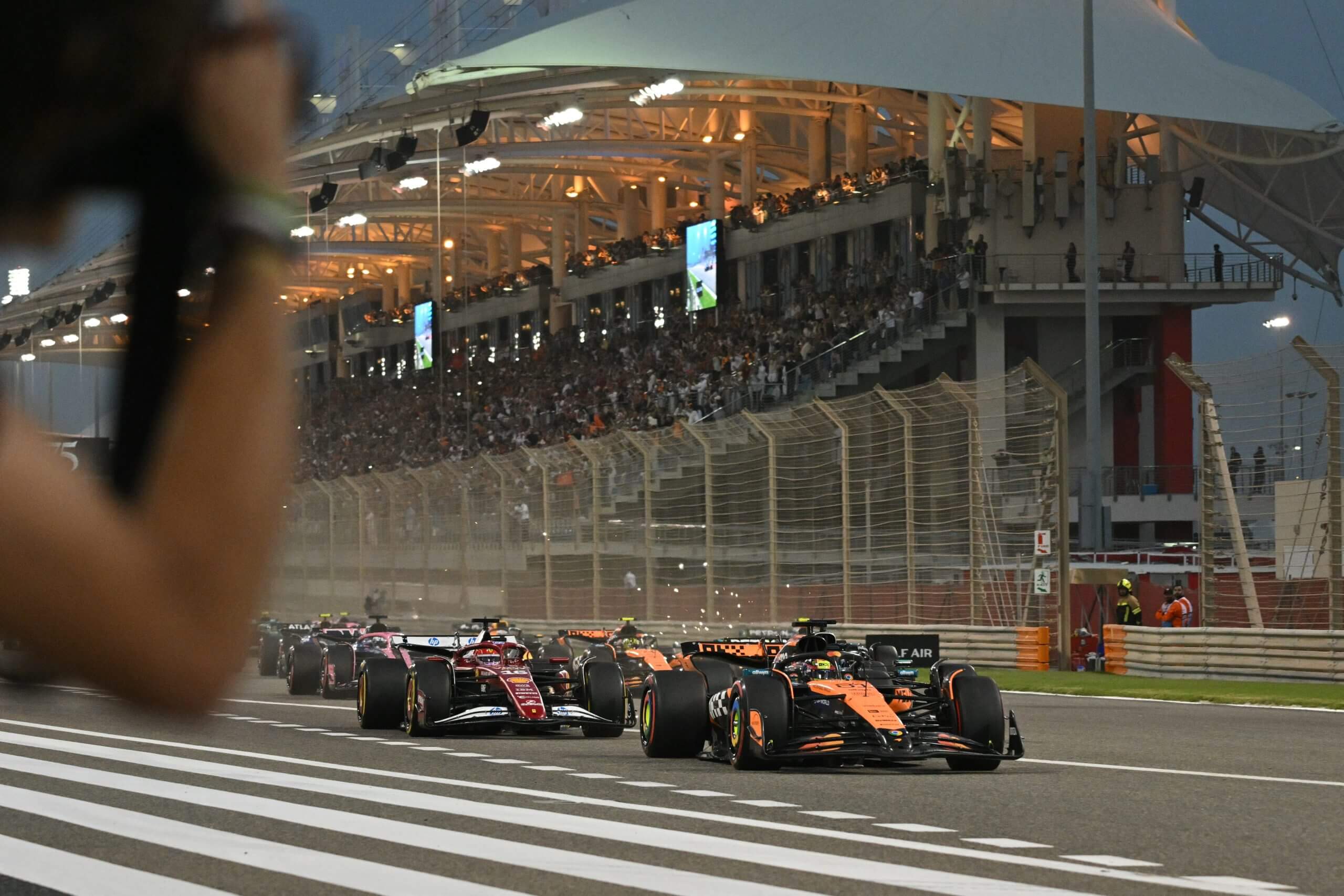
McLaren driver Oscar Piastri leads the start of the 2025 Bahrain GP. (Andrej Isakovic / AFP / Getty Images)
A five-week gap will offer some respite. One team staff member, speaking on condition of anonymity, expressed the keen feelings many have to take a break from traveling, even if there will still be plenty of work to complete at the factories during the new calendar gap.
Unlike the summer and winter shutdowns, which forbid any work being undertaken, teams will be able to use this period to try to develop their car designs, offering some time to catch up.
For a team such as Aston, which has endured a miserable start to this season amid issues with its Honda engine, it will be a precious opportunity to regroup and try to resolve any problems.
But the cancellation of two races also denies a chance for further car running, which is the most useful source of data and learning for any team.
Are further races at risk of cancellation?
Bahrain and Saudi Arabia are not the only countries on the F1 calendar that have been targeted by Iran, with strikes being reported in Azerbaijan, Qatar, and the United Arab Emirates.
All three countries are slated to host grands prix later this year. The Azerbaijan Grand Prix is scheduled for September 26, while the 2026 season will conclude with consecutive rounds in Qatar and Abu Dhabi (part of the UAE) on November 29 and December 6.
Right now, those races are so far out that it is difficult for F1 to give any significant consideration to their viability, especially given the fluidity of the conflict.