
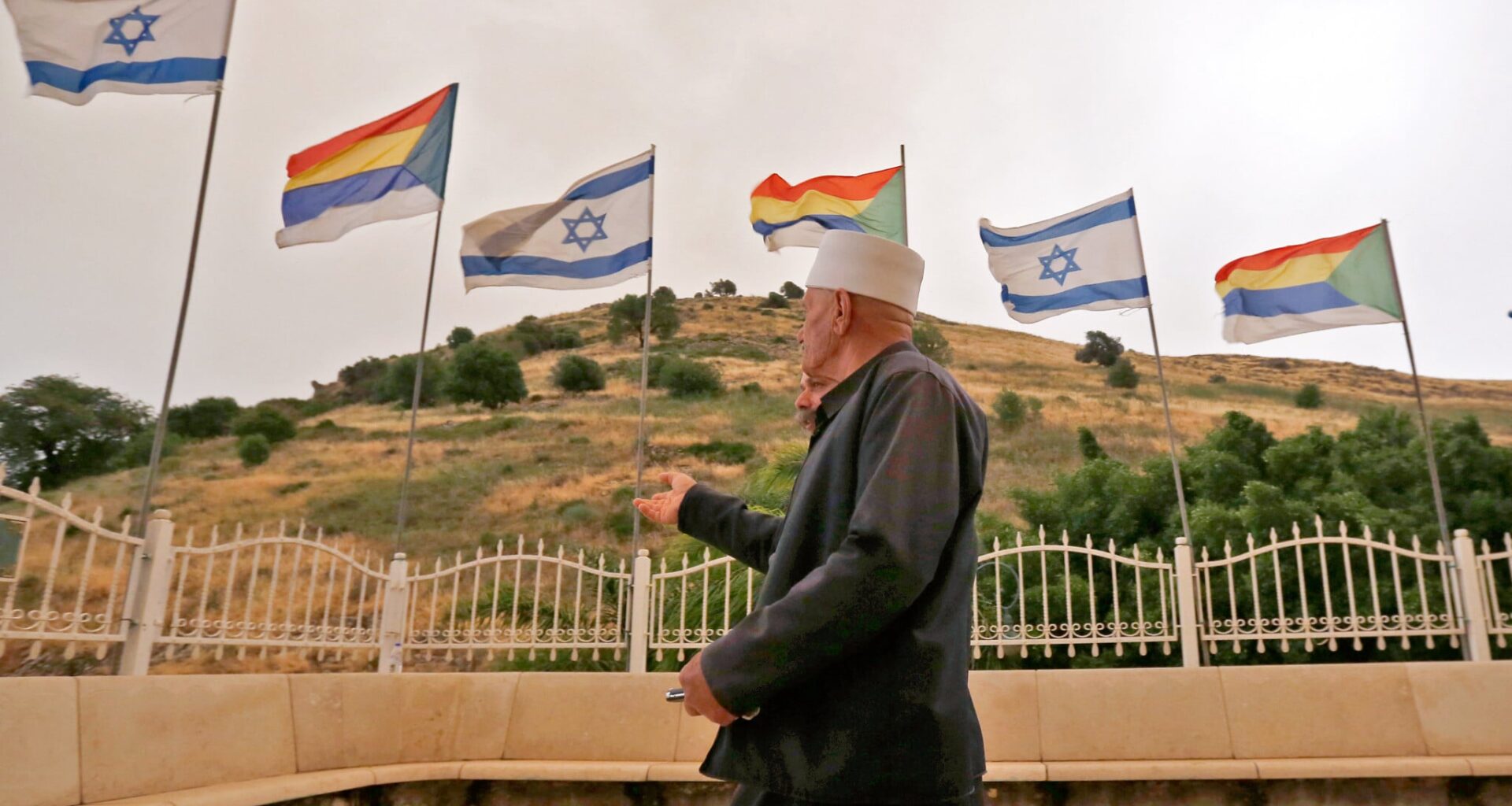
On Sunday, the first IDF soldier from the Druze town of Majdal Shams was killed in combat.
Sgt. First Class Maher Khatar, 38, of the Combat Engineering Corps, was killed alongside Staff Sgt. Or Damari near the Tzivoni outpost – one of five outposts the IDF set up in South Lebanon after the ceasefire agreement signed in November 2024. The two were struck by a mortar shell or a missile fired by Hezbollah as they went out in D9 bulldozers to rescue a stuck tank.
As a result, Majdal Shams, a town of about 12,000 residents, held its first military funeral. In this small town near the Syrian border and the slopes of Mount Hermon, IDF soldiers are still a rare sight, but it seems that this, too, is about to change.
Just over a week before Khatar was killed, and two days before the start of the second war with Iran, The Times of Israel visited Majdal Shams as part of a tour of the area, where Israel borders Syria and Lebanon.
The entire sector felt as if it were sitting on burning coals. Despite the ceasefire agreement, Israeli residents near the border said they felt unsafe and were longing for the moment the IDF would change its security paradigm and strike across the border.
Get The Times of Israel’s Daily Edition
by email and never miss our top stories
By signing up, you agree to the terms
The situation changed on Saturday, February 28, with the joint US-Israeli attack on senior Iranian regime figures. A few days later, Israel also responded to Hezbollah fire from Lebanon, resuming Israel’s campaign against the terror organization.
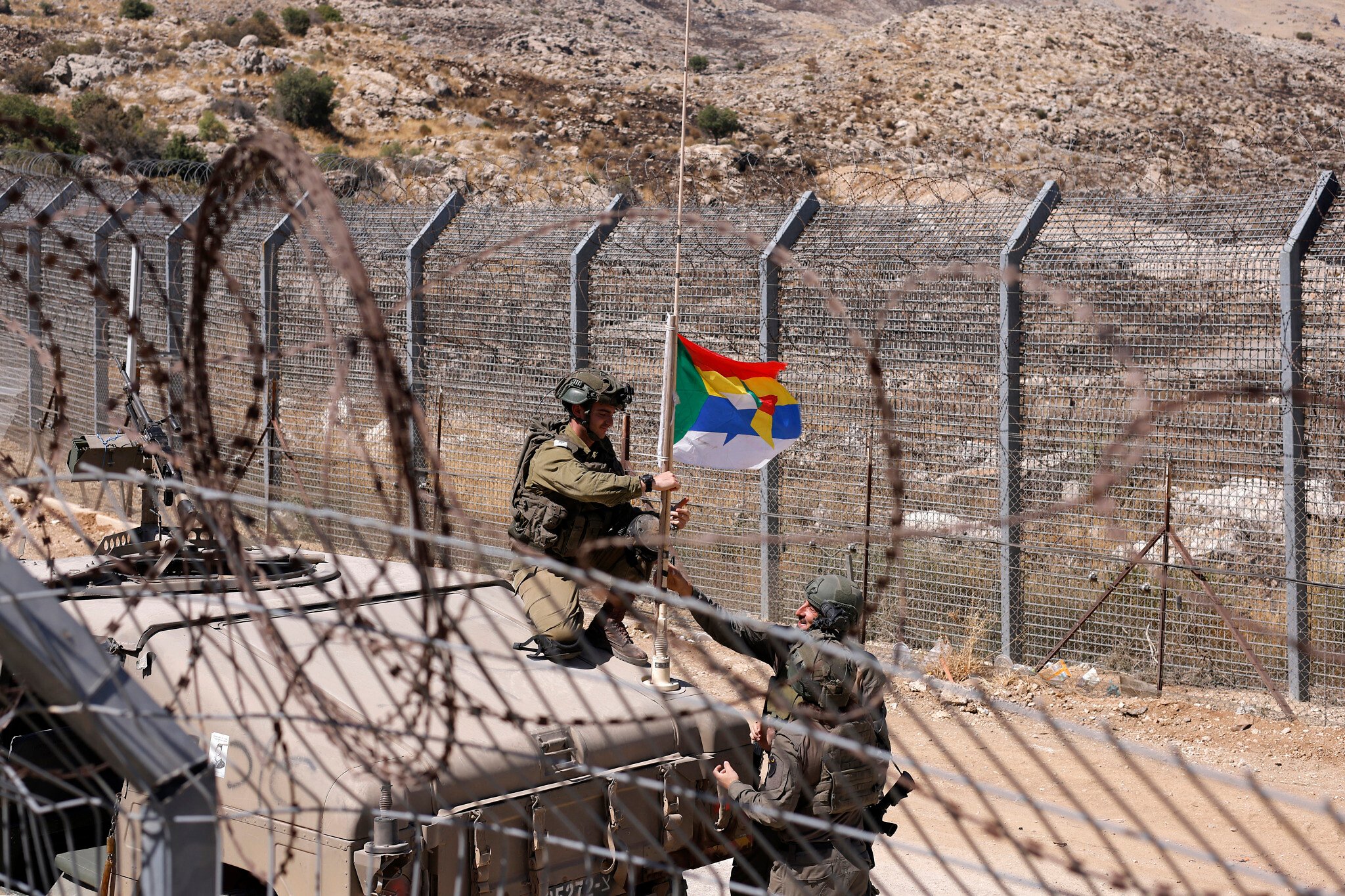
Israeli troops fix a Druze flag attached to the antenna of an army humvee at a position along the barbed-wire fence near the Druze village of Majdal Shams in the Golan Heights on July 19, 2025. (Jalaa MAREY / AFP)
An obligatory stop in Majdal Shams is the soccer field in the heart of the town, where 12 young children were killed when a Hezbollah rocket hit the grounds on the morning of Saturday, July 24, 2024, while a youth game was taking place.
The tragedy left the town and the three other nearby Druze villages – Mas’ada, Ein Qiniyye, and Buq’ata – grieving and furious. A memorial is currently being built at the site of the rocket crater. Surrounding it are sports fields and a toddler’s playground, serving as a violent and painful testament to the massacre site’s centrality in the daily life of Majdal Shams.
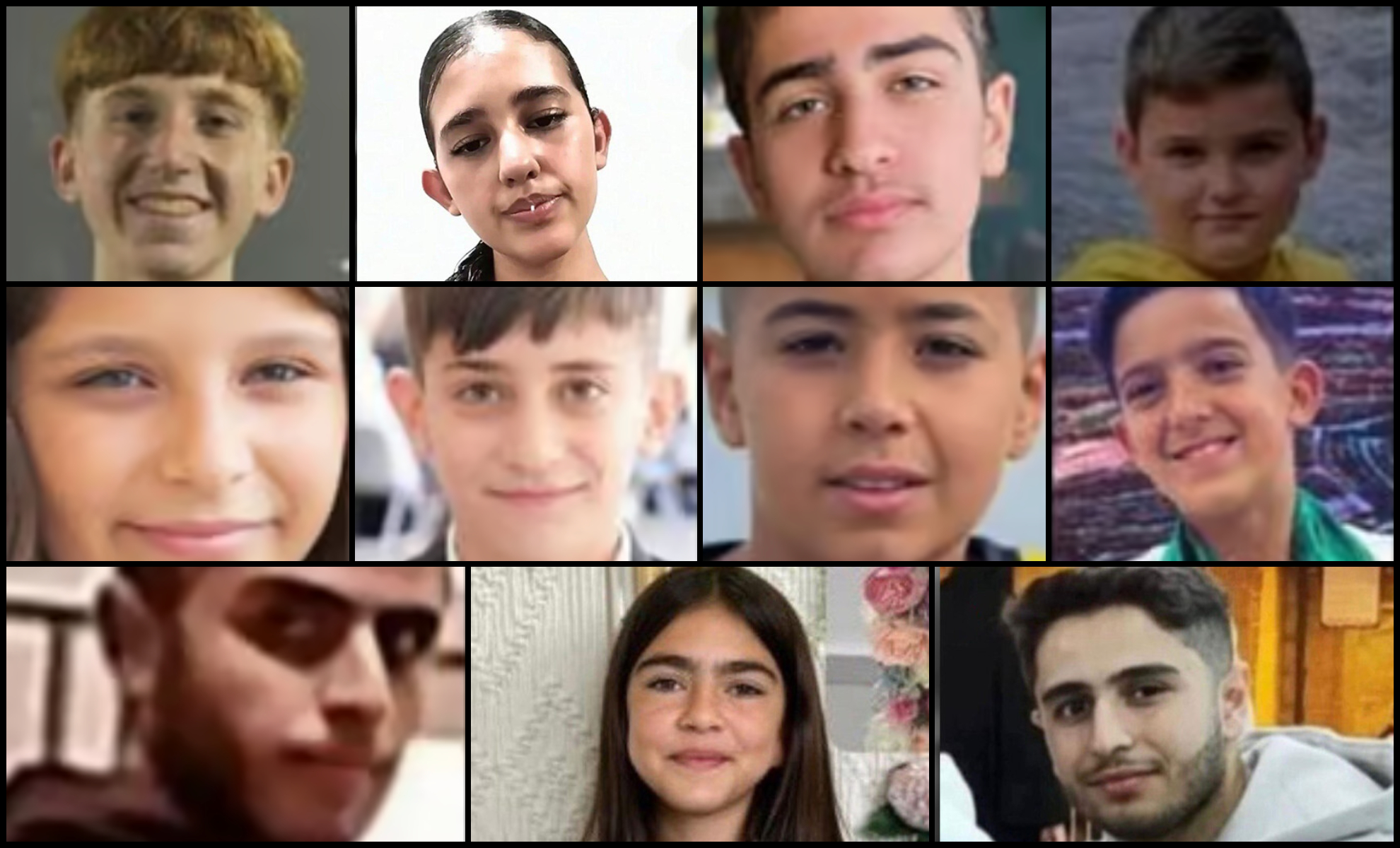
(Top row, L-R) Ameer Rabeea Abu Saleh, 16, Iseel Nasha’at Ayoub, 12, Hazem Akram Abu Saleh, 15, Milad Muadad Alsha’ar, 10 (Middle row, L-R) Alma Ayman Fakher Eldin, 11, Naji Taher Alhalabi, 11, Johnny Wadeea Ibrahim, 13, Yazan Nayeif Abu Saleh, 12 (Bottom row, L-R) Fajer Laith Abu Saleh, 16, Vinees Adham Alsafadi, 11 Nathem Fakher Saeb, 16, who were killed in a Hezbollah rocket attack on Majdal Shams on July 27, 2024
The tour of the Syrian border took place as part of a seminar organized by the Dvora Forum, an Israeli organization dedicated to women in national security and foreign policy, and was led by Lt. Col. (res.) Sarit Zehavi, head of the Alma Research and Education Center, which studies Israel’s security challenges in the north.
A man involved in local civilian matters, who asked not to be identified, noted that local residents were astonished by the amount of support and solidarity they received from people across Israel following the Majdal Shams tragedy.
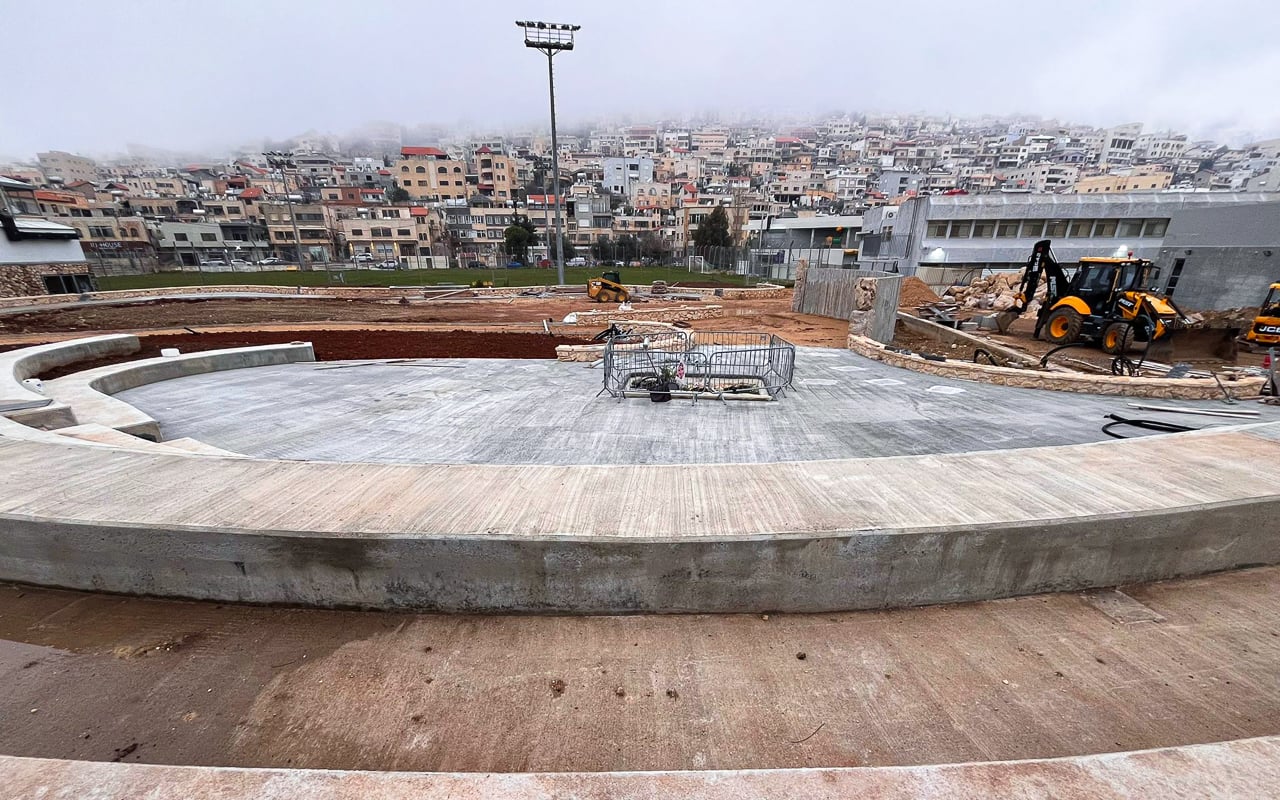
Construction of a memorial taking place in February 2026 at the location where a Hezbollah rocket hit in July 2024 a soccer field in Majdal Shams, killing 12 children (Tal Schneider/The Times of Israel)
Despite the warm relationship between the Druze and the rest of the country’s residents, they were surprised by the embrace and attention, which did not fade even as time passed.
And the fact that Majdal Shams has now also suffered its first military fatality is a somber testament to the ongoing transformation within the four Druze villages in the northern Golan Heights.
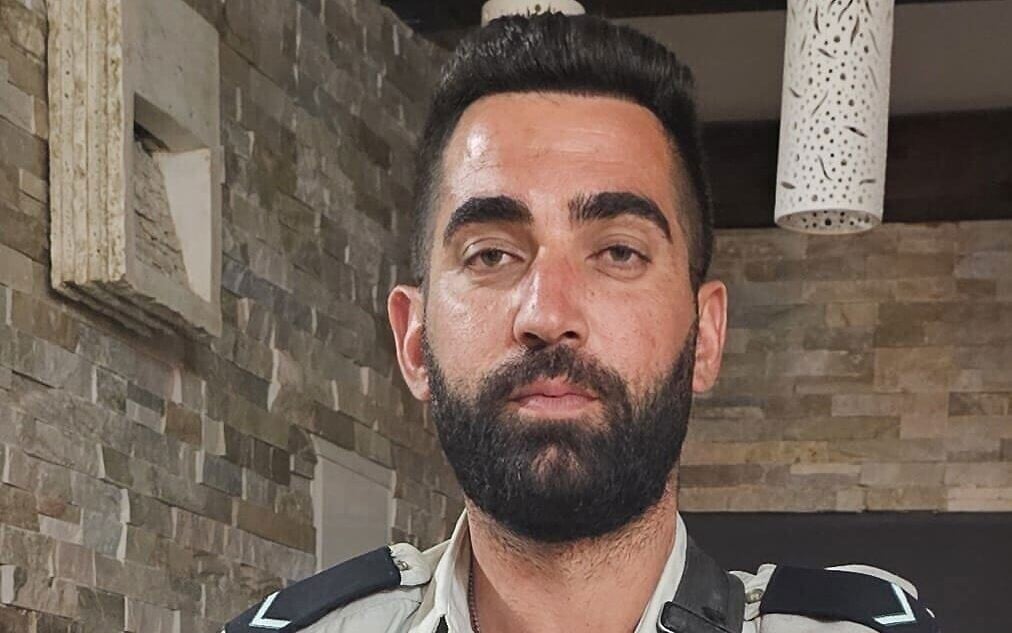
Sgt. First Class Maher Khatar killed in Lebanon on March 8, 2026 (Israel Defense Forces)
For many years, the Golan Druze maintained family ties across the border, but the relationship with the former Syrian regime went beyond mere family connections.
Until about a decade ago, many young Druze crossed the border to spend several years studying at universities in Damascus, even though Syria is one of the four countries legally defined by Israel as an “enemy state.” Bashar Assad’s regime offered free tuition, unconditional admission, and a secular living environment.
For example, the mayor of Mas’ada, Salman Batahish, earned a dentistry degree from Damascus University in 2012. The mayor of Ein Qiniyye, Wael Mughrabi, an educator in the field of sports, also went to study dentistry in Damascus, but dropped out. Many of the engineers and doctors from the four villages are graduates of Damascus University.
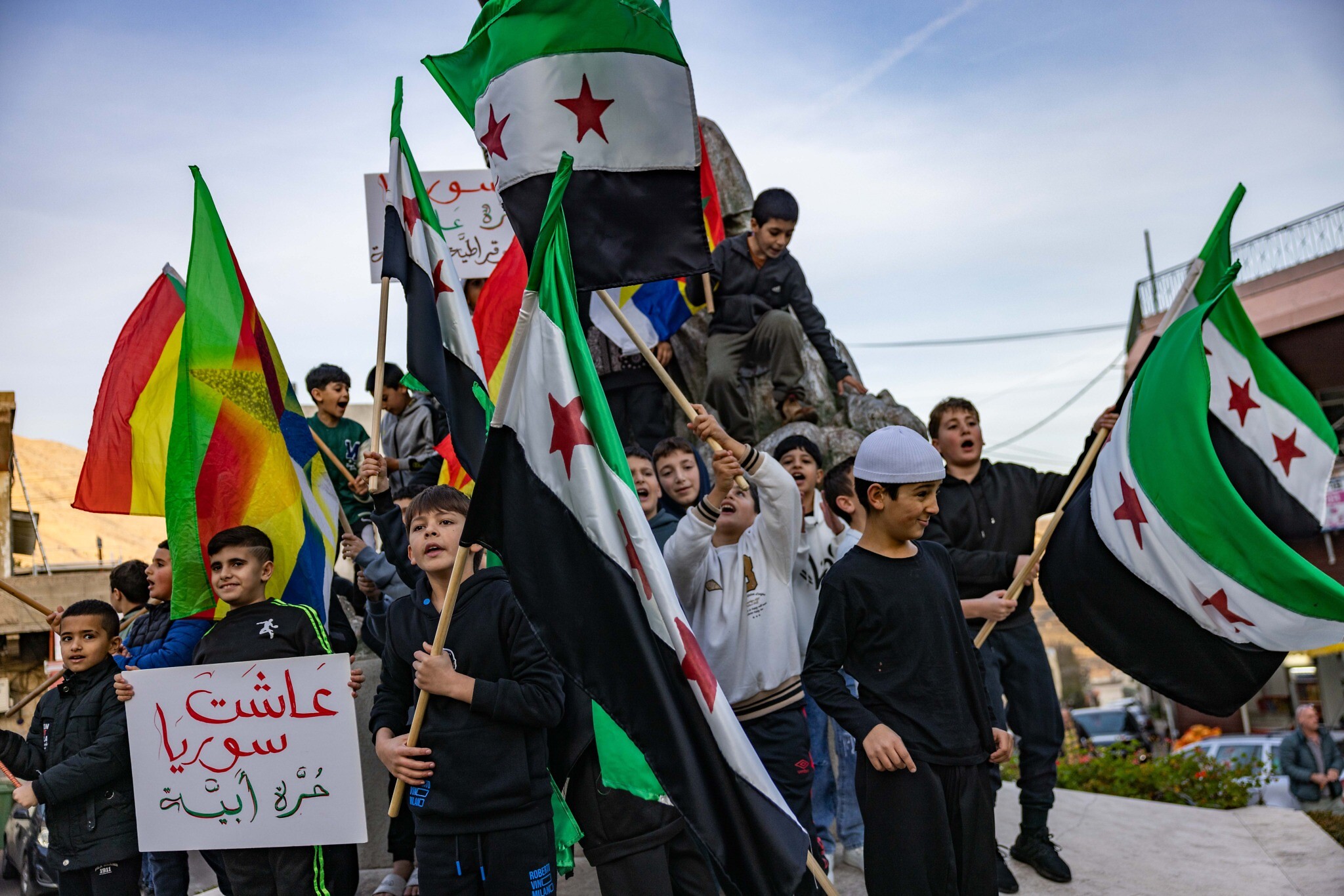
Residents in the Druze village of Majdal Shams celebrate after rebels take over Syria, in Majdal Shams, in the Golan Heights, December 9, 2024. (Chaim Goldberg/Flash90)
The ties between the residents of the four Druze villages in the Golan Heights and Syria were not limited to studies. Agricultural goods, primarily apples, were transported across the nearby border for sale within Syria. Naturally, there were also family ties, including arranged marriages where young Druze women relocated from Israel to Syrian Druze villages to wed.
Since the beginning of the Syrian civil war in 2011, these ties have steadily diminished. At the same time, the affinity of the Druze village residents toward an Israeli identity has continued to strengthen.
While Israel effectively annexed the Golan Heights in 1981 and offered full citizenship to its Druze residents, the vast majority historically rejected it, opting instead for permanent residency. This status allowed them to work and travel freely in Israel while maintaining their Syrian identity, largely out of loyalty or fear of regime retaliation against relatives across the border.
But this long-standing dynamic is shifting.
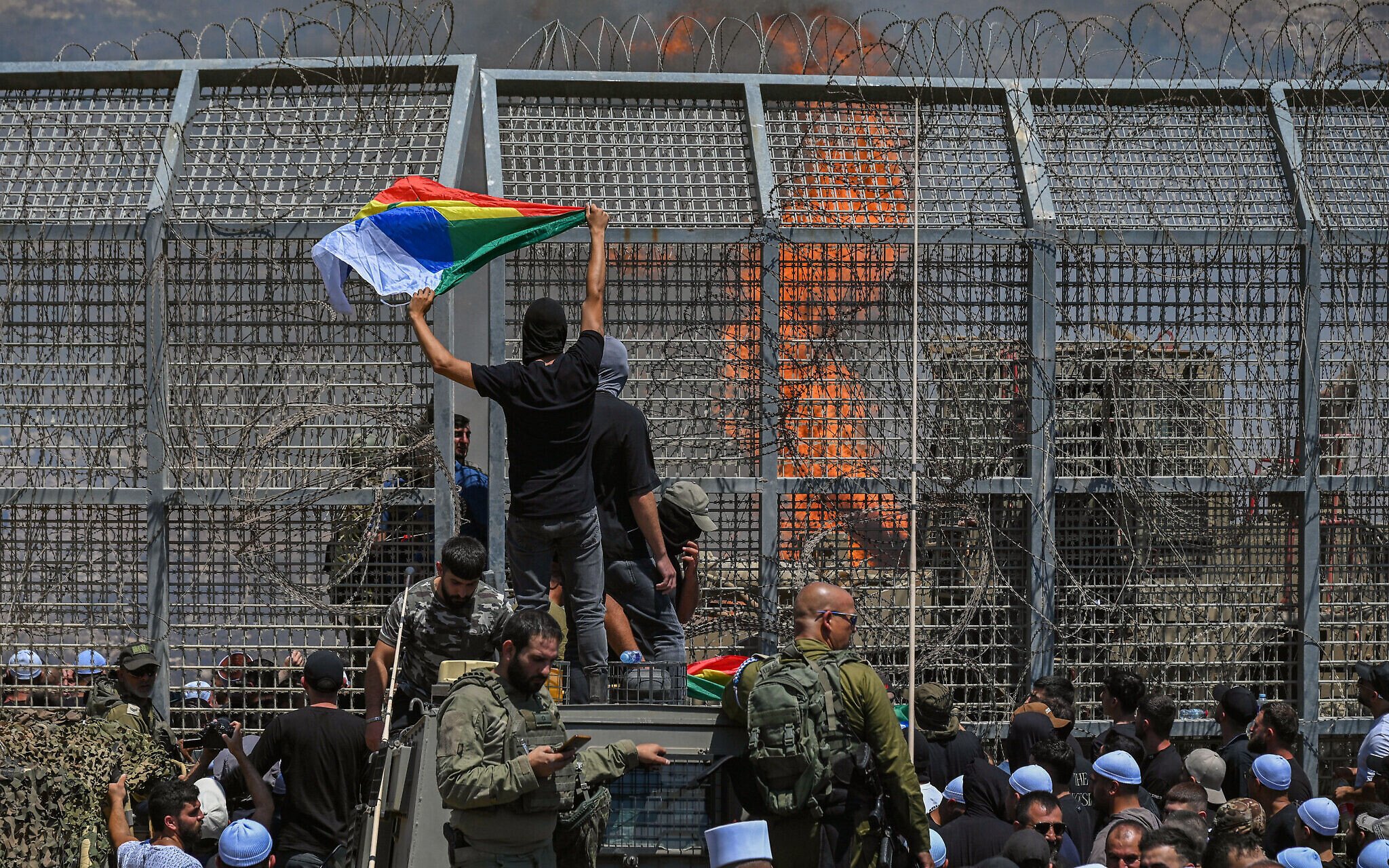
Druze residents protest near the Israeli-Syrian border fence in solidarity with their community in Syria, in Majdal Shams, July 16, 2025. (Michael Giladi/Flash90)
In 2017, then-Interior Minister Aryeh Deri announced the first-ever local elections for the Druze villages in the Golan Heights. While the right to run for office was restricted to those who had completed the naturalization process and held Israeli citizenship, voting rights were extended to all residents, including those who merely held residency status.
Up until that year, only about 20% of the roughly 26,000 residents of the villages had gone through the naturalization process. With the outbreak of the Syrian civil war, the number of people seeking citizenship did rise, but only moderately – amounting to a few dozen additional applications per year.
During the recent tour in Majdal Shams, one of the village residents was asked about the naturalization trend, as distinct from the residency status held by most residents. He noted that, as far as he knew, the numbers were now surging in an unprecedented way.
In past election cycles, residents of the four Druze villages who held Israeli citizenship typically cast their ballots at the polling station in Neve Ativ, a neighboring Jewish Israeli moshav.
The reason was clear: many feared a boycott and social ostracism within their own communities if it became known that they had exercised their citizenship right and voted in Israel’s national elections. Voting in a Jewish town allowed them to cast their ballots anonymously.
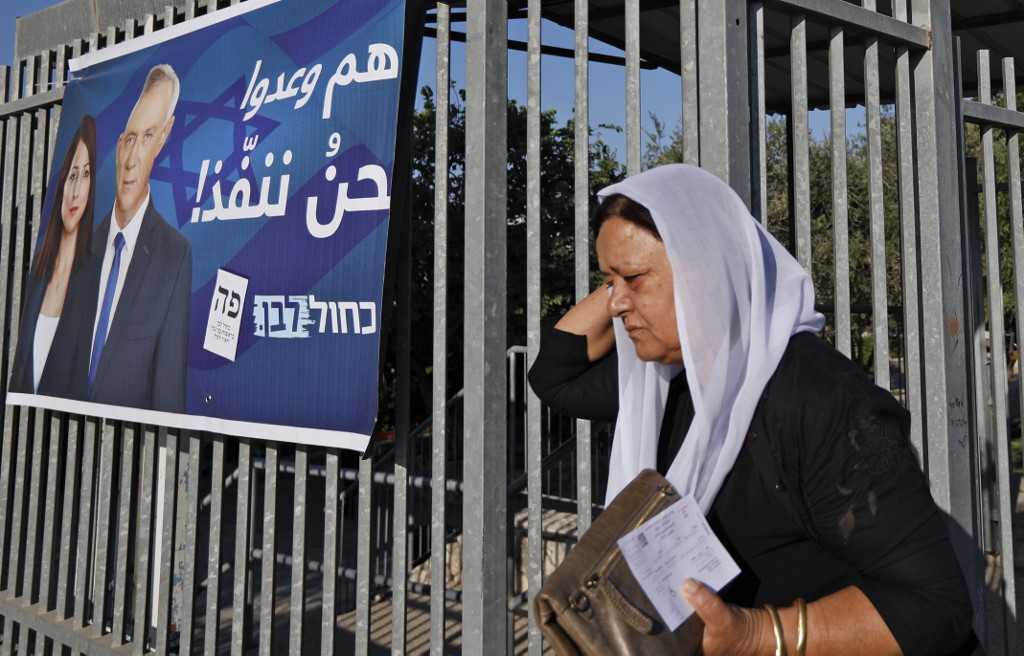
An Israeli Druze woman leaves after casting her vote during parliamentary elections on September 17, 2019, in Daliyat al-karmel in northern Israel. (JALAA MAREY / AFP)
Until 2022, open identification with the Israeli government was still seen by many as a dangerous move, given the rule of the Assad regime in Syria.
In 2022, polling stations were set up within the four communities, yet the election results indicated that voter turnout remained low.
In Majdal Shams, turnout among eligible voters stood at 23% (312 people); in Mas’ada, turnout was 22% (101 people); in Buq’ata, turnout was 25% (190 people); and in Ein Qiniyye, turnout among eligible voters stood at 15% (31 people).
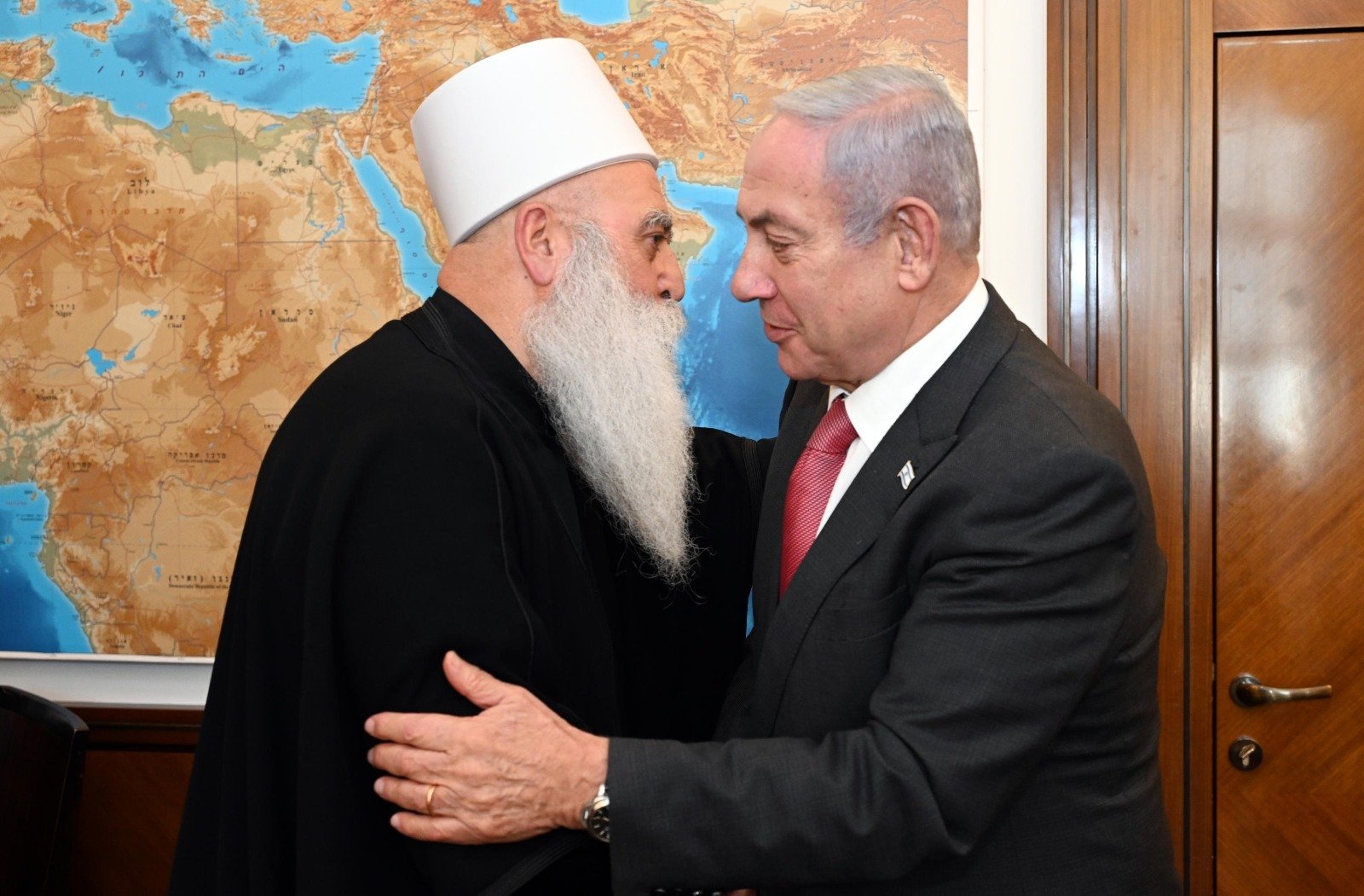
Prime Minister Benjamin Netanyahu meets with Druze spiritual leader Sheikh Muafak Tarif in his office in Jerusalem on June 21, 2023. (Haim Zach/GPO)
In Majdal Shams, the preferred party was Yesh Atid (42%), followed by Likud (14%). Arab party Ra’am received two votes in the entire town, and another Arab party Hadash-Ta’al, received only one.
In Mas’ada, a local party led by Wajdi Taher won 40% of the vote, followed by Likud and Yisrael Beitenu, each with about 12%. In Buq’ata, Benny Gantz’s National Unity party led with 37% of the vote, and Yisrael Beitenu followed with 25%. In Ein Qiniyye, Yesh Atid again led (29%), followed by Likud and Meretz, each taking 22% of the vote.
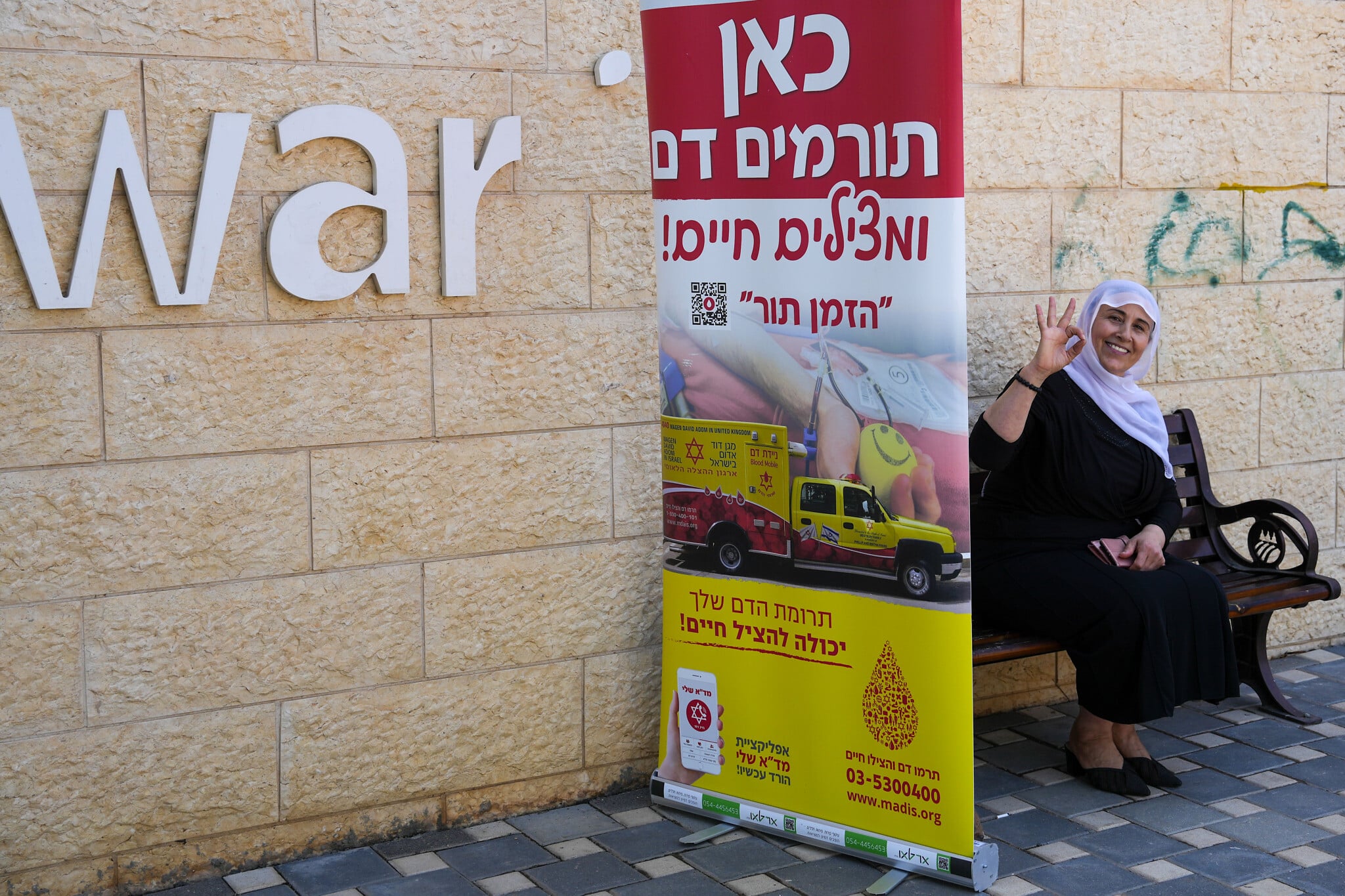
Druze residents of Mas’ada in the Golan Heights donate blood for Druze communities in Sweida, Syria, July 29, 2025. (Ayal Margolin/Flash90)
The local residents now admit that the October 7 massacre shook them, just as it did the rest of the Israelis. This was followed by the massacre of the children in Majdal Shams, the subsequent fall of the Assad regime, and the massacre of their Druze relatives in al-Suwayda, the heartland of the Syrian Druze minority in southwestern Syria.
That final event in particular, which locals refer to as “the Druze October 7,” deeply strengthened their connection to Israel.
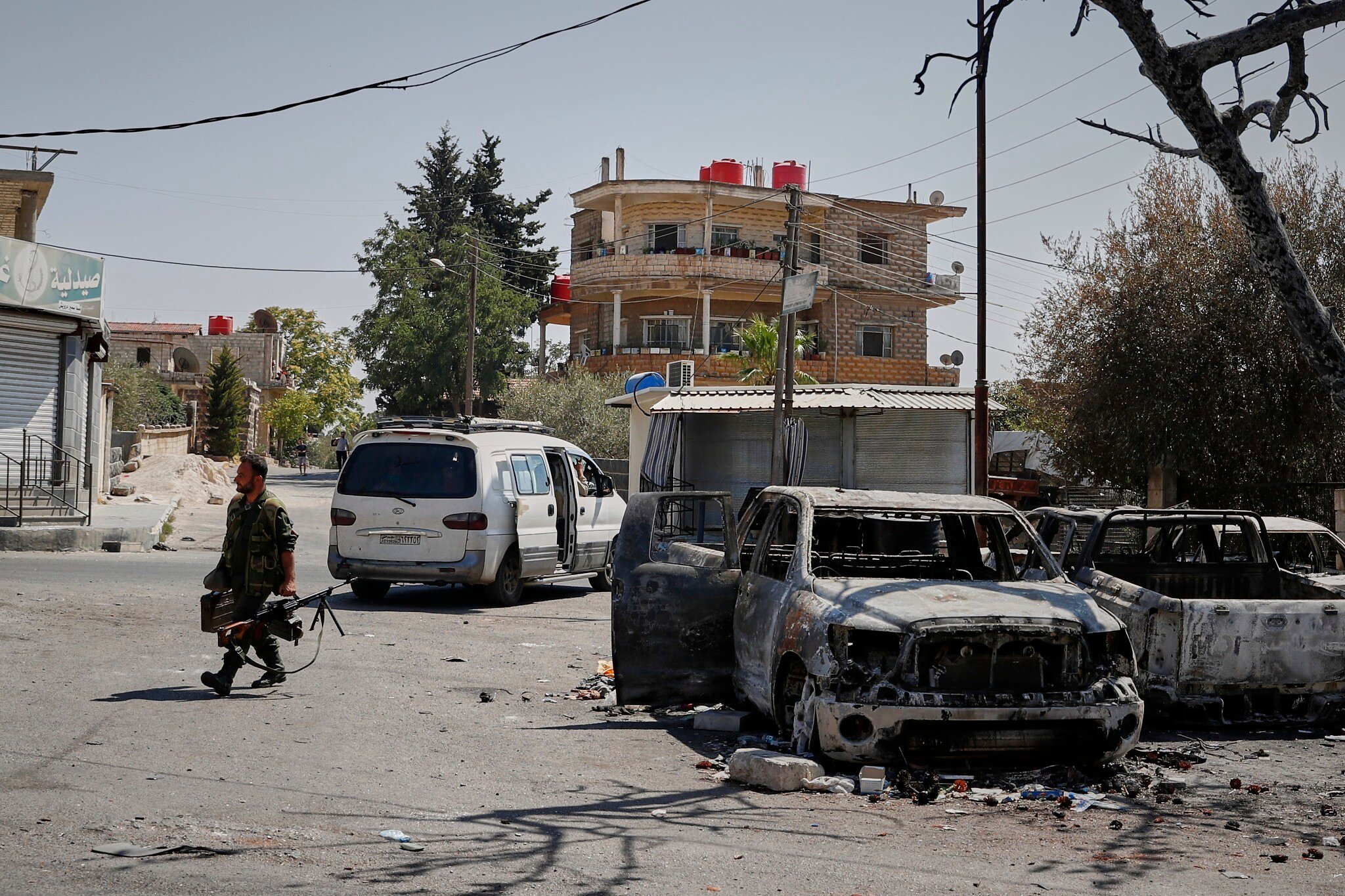
A Druze militiaman carrying a machine gun walks past a burned-out car following sectarian clashes in the Druze-majority town of Sweida, Syria, July 25, 2025. (AP Photo/Omar Sanadiki)
“The new regime in Syria is ISIS. It is worse than Hamas,” said our local host. “They come from the same place. The massacre on July 15, 2025, is our October 7. Our friends and relatives were raped and murdered. Druze from the Galilee and from here tried to cross the border and go in to help. In the end, it was the State of Israel that saved the Druze.”
“On the other side too, they understand this and are raising Israeli flags there,” he continued. “The Druze have tied their fate to the fate of the State of Israel, and everyone saw that Israel took a stand and chose a side. Since the massacre, Israel has been bringing in aid, food, and medical equipment.”
He said that as a result of all these developments, there has been a massive jump in the number of Druze residents going through the naturalization process. But he also pointed out that none of the Druze villages have an Interior Ministry office, meaning that to complete the process, residents must travel to Katzrin, where they sometimes face a long wait.
The Interior Ministry provided The Times of Israel with exact figures: A total of 6,779 Druze residing in the Golan Heights applied for citizenship between 2020 and 2026 across all four villages.
In 2025, the significant surge in the data is abundantly clear: 3,750 people applied during that year, compared to about 500–600 people annually in the preceding years.
The year 2026 has only just begun, yet after only two months, nearly 1,000 people have already completed the naturalization process. In Majdal Shams, for example, about 38% of the village has already gone through naturalization. In the other three communities, roughly 37%–43% have completed the process.
Regarding the absence of Interior Ministry services in the four Druze communities, the ministry stated that opening a branch is a complex process conducted in coordination with the local municipality.
“If there will be an official request from the local authority, it will be examined by the Interior Ministry,” a spokesperson told The Times of Israel. “Across Israel, there are 58 ministry branches spread across roughly 150 communities, which means there is not an Interior Ministry office in every community.”