
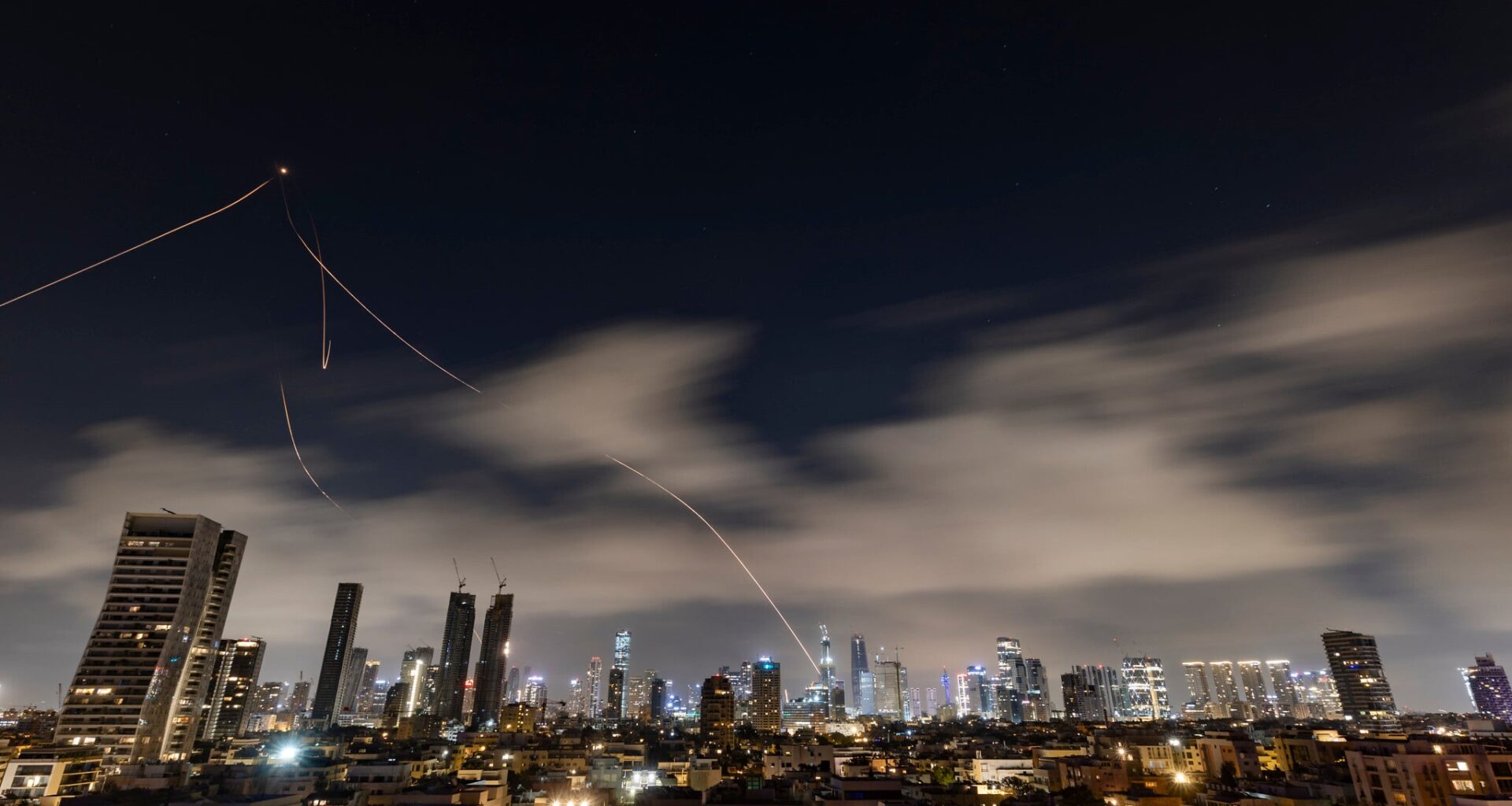
The Israel Defense Forces on Sunday rejected reports that Israel is running “critically low” on air defense interceptors, as the war with Iran, in which the Islamic Republic has fired missiles and drones at Israel repeatedly each day, entered its third week.
An Israeli military official told reporters the IDF had no interceptor shortage as of now. “We prepared for a prolonged conflict. We are monitoring the situation at all times,” the official said.
The IDF has said it is “prepared and ready to handle any scenario,” but officially declined to comment on specific munitions matters following the report from a US news site and a late-night “urgent” government approval of funds for defense procurement.
Speaking Sunday Foreign Minister Gideon Sa’ar also denied the report Israel was running low on interceptors. Asked at a press conference if there was any veracity to the report Sa’ar replied, “The answer is no,” but did not elaborate.
Military officials told The Times of Israel that the operation in Iran had been planned months in advance, and this planning took into account Tehran’s stock of ballistic missiles and drones that it could fire at Israel.
Get The Times of Israel’s Daily Edition
by email and never miss our top stories
By signing up, you agree to the terms
The officials also said that the IDF has prepared for a long war with Iran, which could last several more weeks, during which ballistic missile fire on Israel will likely continue.
Israel operates a multi-tiered missile defense array, with the Arrow 3 currently the country’s most advanced long-range missile defense system, meant to intercept ballistic missiles — like the kind fired from Iran — while they are still outside of the Earth’s atmosphere.
David’s Sling forms the middle tier, and systems like Iron Dome engage short range rockets like those generally fired from Lebanon.
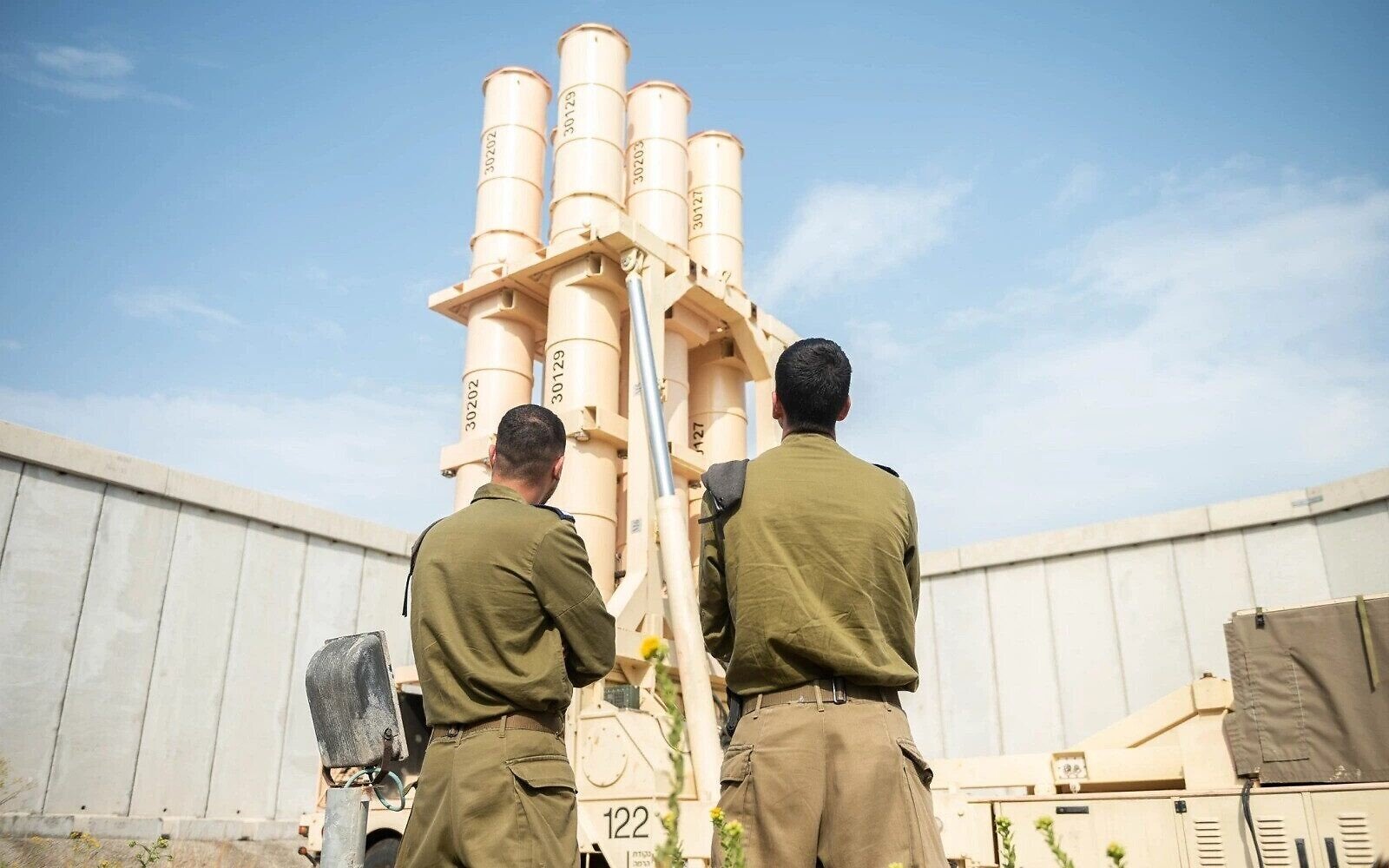
Illustrative: Israeli Air Force soldiers pose in front of an Arrow air defense system battery, in a photo issued by the IDF on June 26, 2025. (Israel Defense Forces)
Taking Iran’s missile stockpile into account means the IDF prepared ahead of time with enough interceptors to handle the threat. Israel also prepared for the likely scenario that the Iran-backed Lebanese terror group Hezbollah would enter the war, as it did on March, 3, saying it was avenging the killing of Iran’s supreme leader Ali Khamenei.
Hezbollah has since fired hundreds of rockets and drones at Israel, as well as at Israeli troops operating in the south of Lebanon.
Additionally, the officials said the IDF is actually running through fewer interceptors than it anticipated at this point in the operation.
Iran has launched around 300 ballistic missiles at Israel in over two weeks thus far, down from the 500 it fired at Israel during the 12-day war in June 2025.
During the June 2025 war, as well, the IDF denied repeated claims that Israel’s interceptor stockpile was low.
The interception rate of Iran’s ballistic missiles is high, according to the IDF, and at similar rates to the June 2025 war.
There have been multiple impacts in residential areas of Israel, including three ballistic missiles carrying Iran’s conventional warheads of several hundred kilograms and around a dozen with cluster bomb warheads. Twelve people have been killed.
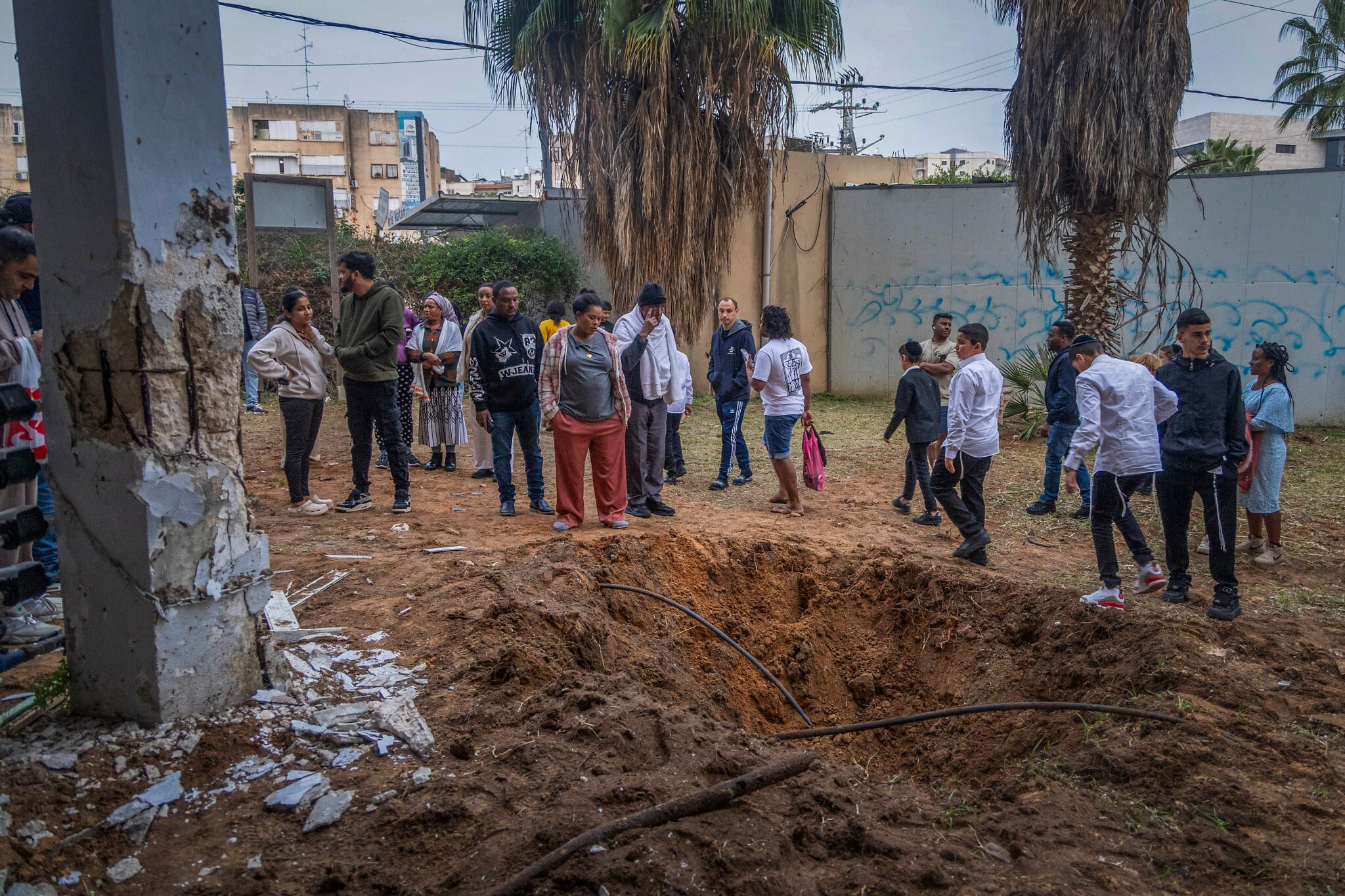
People inspect the damage at the scene where a missile fired toward Israel caused damage in Lod, central Israel, March 14, 2026. (Yossi Aloni/Flash90)
The military has routinely emphasized that, as good as Israel’s multilayered air defenses are, they are not hermetic.
Late Saturday, the US news site Semafor reported, citing US officials familiar with the matter, that Israel informed the US this week that it is running “critically low” on ballistic missile interceptors.
The report claimed the US has been aware for months that Israel has a low capacity, adding that the US is not running low on interceptors of its own.
Additionally, the report claimed that Iran’s launch of cluster munitions “may exacerbate the depletion of the stock,” despite Israel’s use of shorter-range air defense systems like the Iron Dome and David’s Sling to shoot down the individual submunitions, rather than an anti-ballistic missile system.
Israel also uses the shorter-range systems to intercept attacks from Hezbollah in Lebanon, though the report did not say that Israel is running into a shortage of those interceptors.
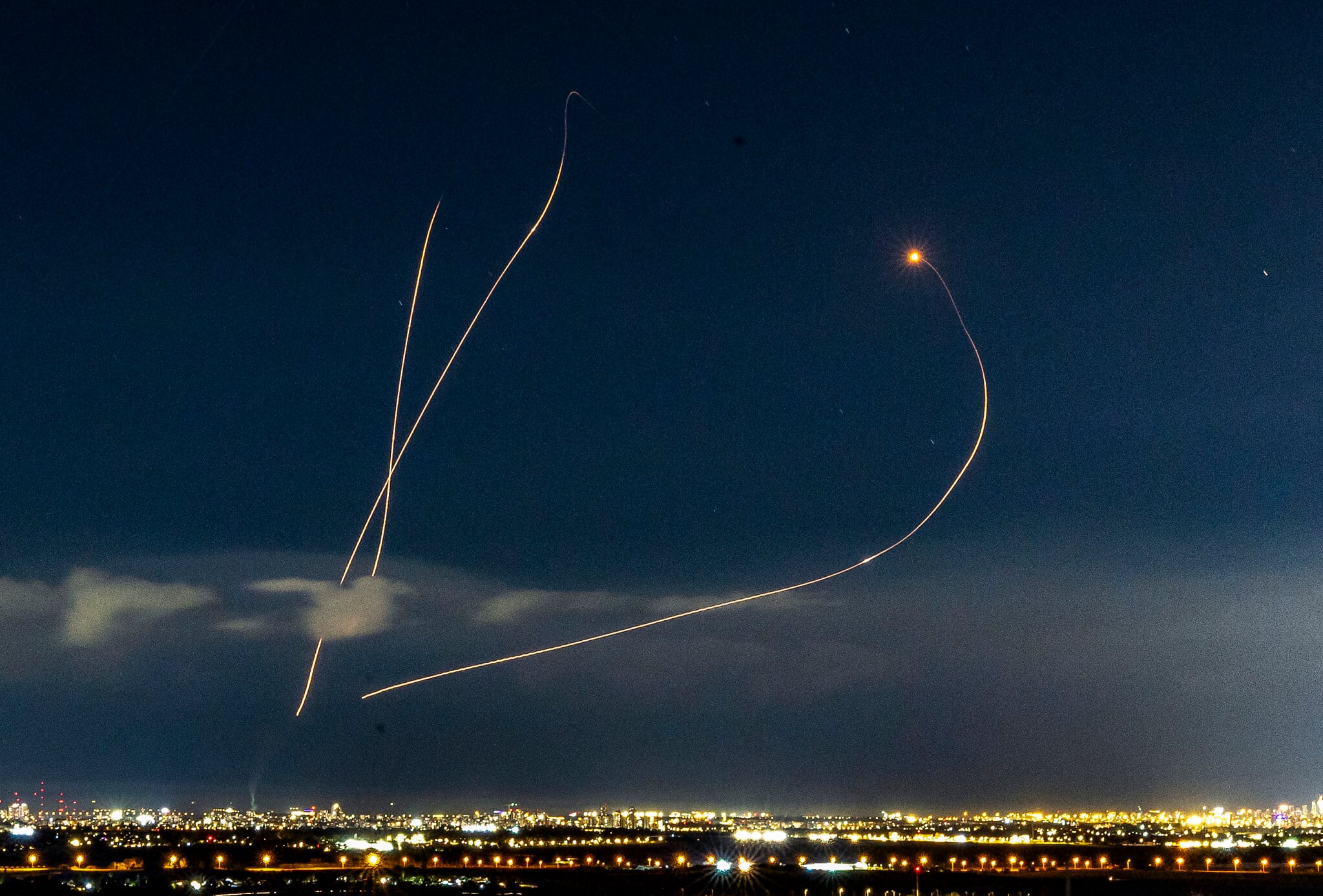
An Israeli missile defense system fires interceptions at missiles fired from Iran, as seen over central Israel, March 9, 2026. (Yossi Aloni/Flash90)
Shortly after the publication of the report, the government approved the transfer of an additional NIS 2.6 billion (around $826 million) in budget funds to the Defense Ministry for “urgent and essential defense procurement” amid the fighting in Iran and Lebanon. The vote was held by phone, late at night.
In a statement, the government said it will cut NIS 1.5 billion from the 2025-2026 budget for interest and commission payments, and take the other NIS 1.1 billion out of the 2025-2026 budgets of other ministries.
It said, however, that if the 2026-2027 budget is approved later this month, as scheduled, the NIS 2.6 billion will instead come from the Defense Ministry budget as normal.
The government voted last week on a revised version of the budget that boosted the Defense Ministry’s funds by NIS 32 billion in light of the war with Iran.
Nava Freiberg contributed to this report
You appreciate our wartime journalism

You clearly find our careful reporting of the Iran war valuable, at a time when facts are often distorted and news coverage often lacks context.
Your support is essential to continue our work. We want to continue delivering the professional journalism you value, even as the demands on our newsroom have grown dramatically during this ongoing conflict.
So today, please consider joining our reader support group, The Times of Israel Community. For as little as $6 a month you’ll become our partners while enjoying The Times of Israel AD-FREE, as well as accessing exclusive content available only to Times of Israel Community members.
Thank you,
David Horovitz, Founding Editor of The Times of Israel