
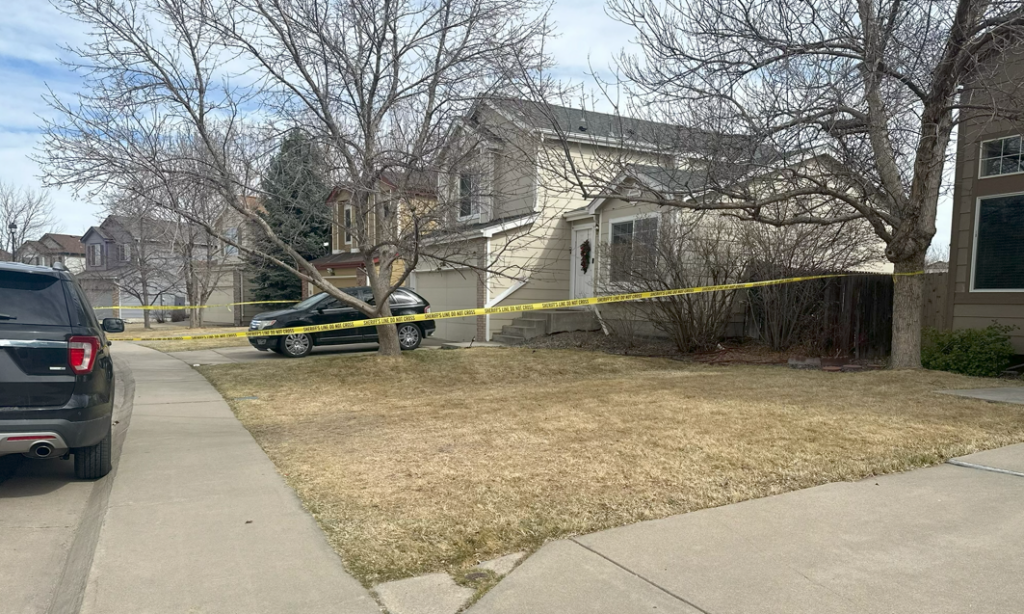
More than 48 hours after an 11-year-old Centennial boy was arrested on suspicion of first-degree murder in the death of his 5-year-old brother, details remained scant.
Arapahoe County Sheriff’s Office (ACSO) deputies on Wednesday arrested the boy at his Centennial home. The victim was a kindergarten student at Timberline Elementary School.
In an earlier statement, Sheriff Tyler Brown said he anticipates an emotionally-wrought case.
“Our hearts go out to the family of these two young boys and to everyone in our community who is grieving this loss,” Brown said. “Cases involving the homicide of children are among the most difficult our deputies and investigators face.”
The Arapahoe County Coroner said no information about the autopsy or the boy’s identity would be released publicly.
“Out of respect for the family, we are not releasing any information at this time,” a spokesperson told The Denver Gazette via email.
ACSO officials said Friday the case is sealed, and they would not be releasing the arrest affidavit or any more information.
Experts have begun to weigh in on the legal and potential moral questions that could arise.
On Thursday, former Arapahoe County felony prosecutor Eric Faddis noted that prosecutors consider a number of factors before deciding whether to try and charge a minor in adult court, including the seriousness of the alleged offense and whether the juvenile has any criminal history.
“They also take into account the juvenile’s maturity, the community interest in punishing the alleged act, as well as the impact on the victim, and in this case, the decedent’s family, of which the defendant is a member,” he said.
On Friday, two defense attorneys specializing in juvenile law in Colorado told The Denver Gazette it’s rare for someone so young to face a first-degree murder charge.
“Anytime we’re hearing about a child who’s alleged to have caused great harm at such a young age, we just really have to look at our own 11-year-old, and remember what it was like when we were 11,” said Hannah Seigel Proff, who has dealt with juvenile cases for 18 years in Colorado.
“We have to think about what we were learning in school, and what our concerns were at that point in life. We really need to think about whether or not the culpability, generally, of a child this young and how, as a society, we want to address the treatment of children who are alleged to cause harm,” Proff said.
Colorado law stipulates that no child under the age of 10 can be charged criminally, what’s called the “age of majority.” Prosecutors are not allowed to move a juvenile case to adult court if the child is younger than 12.
The 18th Judicial District Attorney’s Office indicated formal charges would be filed next week, according to a spokesperson Friday.
“I don’t know whether an 11-year-old can understand what first-degree murder means,” said Isabel Breit, an associate attorney for Recht Kornfeld, P.C. who specializes in juvenile law. “Is the legal definition of first-degree murder in an 11-year-old’s vocabulary, much less something they can understand?”
Both attorneys pointed to the case law established by the U.S. Supreme Court, which in 2005 ruled juveniles can’t be sentenced to death and seven years later ruled they can’t be sentenced to life in prison without parole.
“We really saw a shift in the law around how the courts look at children who have allegedly caused harm, and really understanding the fact that children have developing brains is highly relevant in determining their punishment,” said Proff, who runs her own firm, Proff Law LLC.
The boy is being held in the Marvin W. Foote Youth Services Center in Centennial.
“This 11-year-old is very possibly the youngest person in that facility, surrounded by teens and adults, ordered to follow an unfamiliar schedule, and away from his family,” Proff surmised. “That can be traumatic for anyone of any age.”
She wondered if the facility had shoes that would fit someone that young, or handcuffs small enough, and whether they would be subjected to things like a strip search. Parents are not allowed to visit “for a certain number of days,” she said.
Both attorneys said juveniles are typically cited and allowed to await judicial hearings at home. They said the presumption of innocence until proven guilty applies to minors, just like adults.
If convicted of first or second-degree murder, the suspect could be charged as an aggravated juvenile offender, which would include a sentencing enhancer, Breit said. If convicted, the 11-year-old would face a minimum of three years in Colorado Division of Youth Services detention, and up to seven years maximum.
“I surely hope that this case gets a lot of attention, because I think it’s a very important question for the prosecutors and for the bench and for the community at large of how we treat and address children who are alleged to have caused great harm,” Breit said, “and whether or not our juvenile justice system is the appropriate place to address the needs of a child.”