
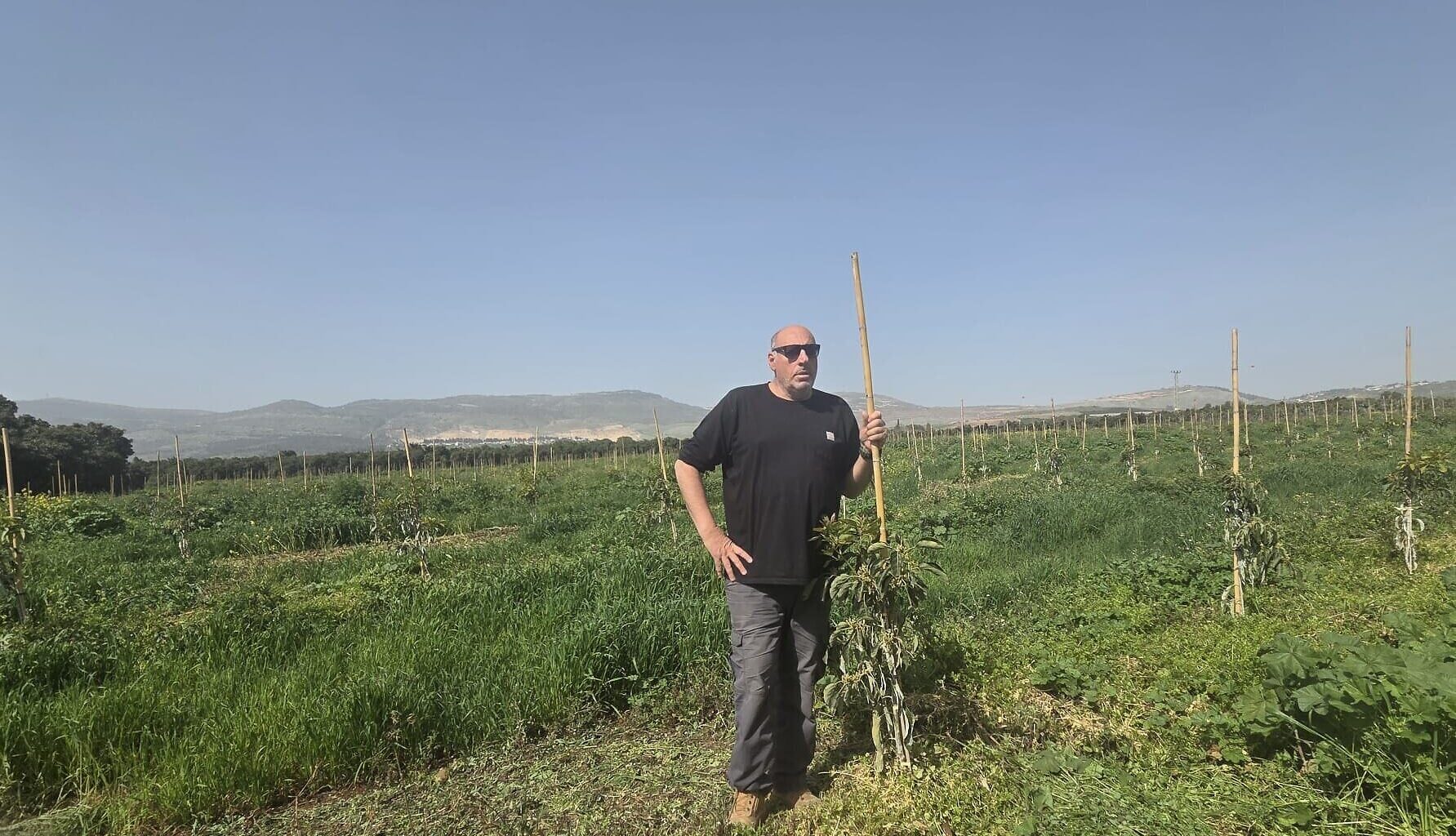
On Thursday morning, after Hezbollah launched 200 rockets and some 20 drones at northern Israel, causing damage and lightly injuring two people, farmer Ofer Moskovitz worked in his avocado grove, situated about 100 yards from the UN-designated Blue Line marking the border with Lebanon.
“It’s dangerous, and it’s stressful, but there’s nothing to do about it,” said Moskovitz. “The field is so close to Lebanon and the Hezbollah stronghold that they see us and we see them.”
Moskovitz, 60, said he has always believed in the strength and will of the IDF, trusting the army when it told northern residents that it had distanced the Hezbollah terror group from the border, allowing locals to return home after many had been evacuated following the fears of a Hezbollah invasion after the October 7, 2023, Hamas onslaught.
About 60,000 northern residents were evacuated when Hezbollah began near-daily rocket and mortar attacks on military installations and residential towns in the north following Hamas’s October 7 massacre. They were allowed to return home 13 months later, when a ceasefire with Israel was reached in November 2024.
In the meantime, Hezbollah had wreaked widespread damage in the north.
Get The Times of Israel’s Daily Edition
by email and never miss our top stories
By signing up, you agree to the terms
“Most of the residents are here; they came back,” said Moskovitz. “There’s an amazing community here, and we go through everything together.”
But Hezbollah is still out there, said Moskovitz, and that is nerve-racking.
“I went to the lookout near us, and as I took pictures, I saw the Hezbollah flags hanging again,” said Moskovitz. “Someone is telling stories to calm us.”
The biggest fear is a Hezbollah invasion into local communities such as Kibbutz Misgav Am, where Moskovitz lives. Many homes on the kibbutz lack safe rooms, even though the government promised to build them for residents after the first round of the war that began in October 2023.
Moreover, said Moskovitz, the walls of their buildings are not strong enough to withstand the newer Hezbollah rockets.
“We just hope they won’t fall in our area,” he said. “I heard the defense minister say today that the northern residents need to hold steady. Easy for him to say when he’s safe within his bunker.”
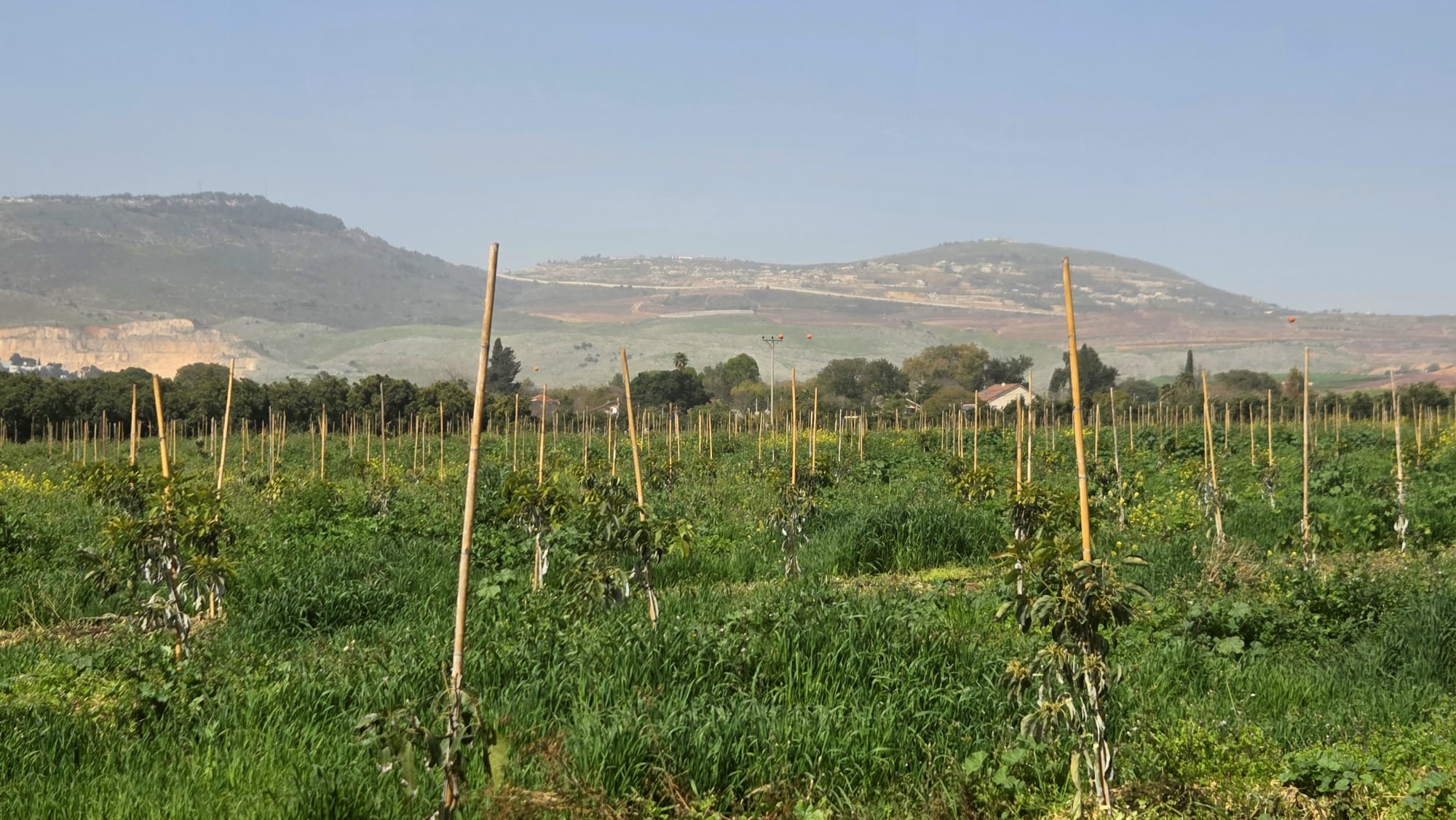
The avocado orchard that belongs to Ofer Moskovitz, overlooking the border with Lebanon on March 12, 2026. (Courtesy)
The regional councils of the communities along Israel’s northern and Gaza borders wrote to Prime Minister Benjamin Netanyahu on Thursday to protest the broad three percent cuts to the budgets of all ministries in order to bolster the defense budget.
Sharing the letter in a post on X, former prime minister Naftali Bennett said that “while the residents of the north were sheltering under heavy barrages of fire, government ministers cut their rehabilitation and protection budgets.”
Each morning, even during wartime, Moskovitz heads to his fields, about a 30-minute drive from home, to work and check in with his Thai workers and see how they fared during the night.
“They don’t get scared, and they don’t leave the field,” said Moskovitz. “They have a field shelter near their rooms, but if they’re in the fields and there’s a siren, they just lie down. They make videos for their families while they’re out there.”
Moskovitz’s avocado fields were a closed war zone during the war with Hezbollah, and nearly 10 acres of his fields were burned by debris from Hezbollah rockets.
Since the ceasefire, he has cleared the field and planted new avocado trees that are just beginning to blossom.
“It’s reassuring to see,” he said.
Planting under fire
Beyond concerns about Hezbollah invasions or rocket fire, farmers in the area are tense about being able to care for their crops, often located along the border.
“It’s the peak of the spraying season,” said Amit Fahima, an orchard grower in Moshav Dishon, also located next to the border with Lebanon.
“We’re also really tired from the sirens at night,” added Fahima.
Residents of Israel’s north have spent hours in shelters and safe rooms since the war with Iran began on February 28, shielding themselves from the massive and near-continuous rocket and drone fire. This has only increased since Hezbollah joined its terror sponsor in attacking the Jewish state.
Farmers, however, sometimes take risks because they have to, said Fahima.
“Waiting isn’t an option,” said Fahima, who is currently working on one of his apple orchards. “We can’t afford to delay replanting.”
Fahima works as a project manager for ReGrow, a philanthropic fund created after October 7 to rehabilitate communities in the Gaza envelope and north.
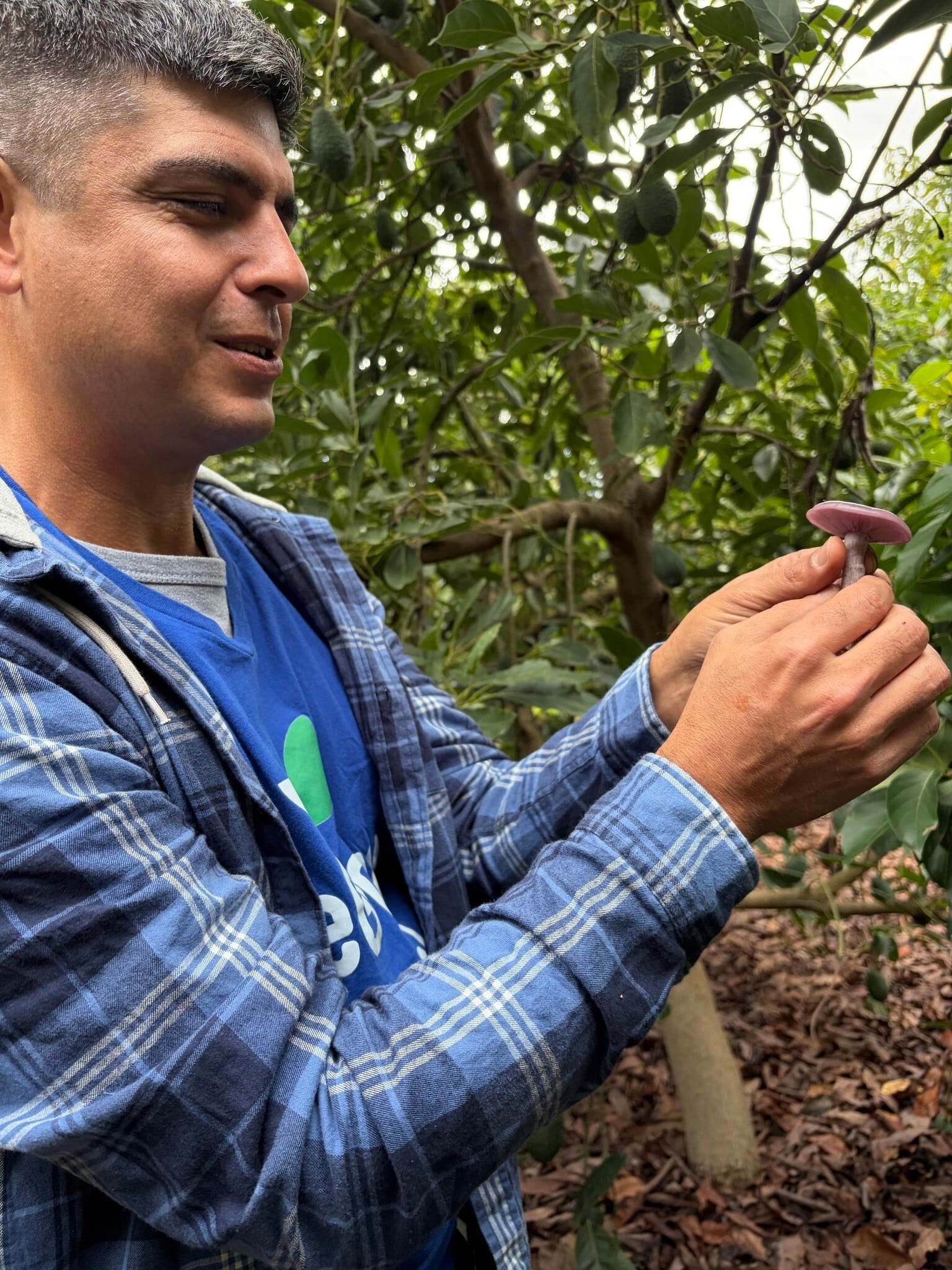
Amit Fahima, a grower from the north, in an avocado orchard on January 14, 2026. (Jessica Steinberg/Times of Israel)
The organization was founded days after October 7 by Danielle Abraham — executive director of partnerships for the Volcani Institute, Israel’s largest agricultural research organization — who witnessed the destruction wreaked on October 7 by Hamas terrorists who destroyed irrigation systems, burned fields and chicken coops, and stole and burned tractors.
In response, she raised $22 million from The Jewish Federations of North America, JNF Netherlands, UJIA, other Jewish federations, and private family foundations, even though most of those organizations don’t usually support agricultural initiatives.
It wasn’t until several months later that ReGrow turned to the north, first planning to obtain data about the status of farms and orchards, discovering that no one had yet mapped the destruction.
“It was before the [November 2024] ceasefire, and I said to the team, ‘Go and get data on the damage, maybe they don’t even need help,’” Abraham told The Times of Israel. “And then we understood that no one had any data. It was such a mess.”
During the months of Hezbollah attacks, more than 1,250 acres of orchards and vineyards in the Galilee and Golan Heights were destroyed, according to ReGrow.
Nearly two and a half years after October 7, large sections of agricultural land along Israel’s northern border still lie damaged or dead.
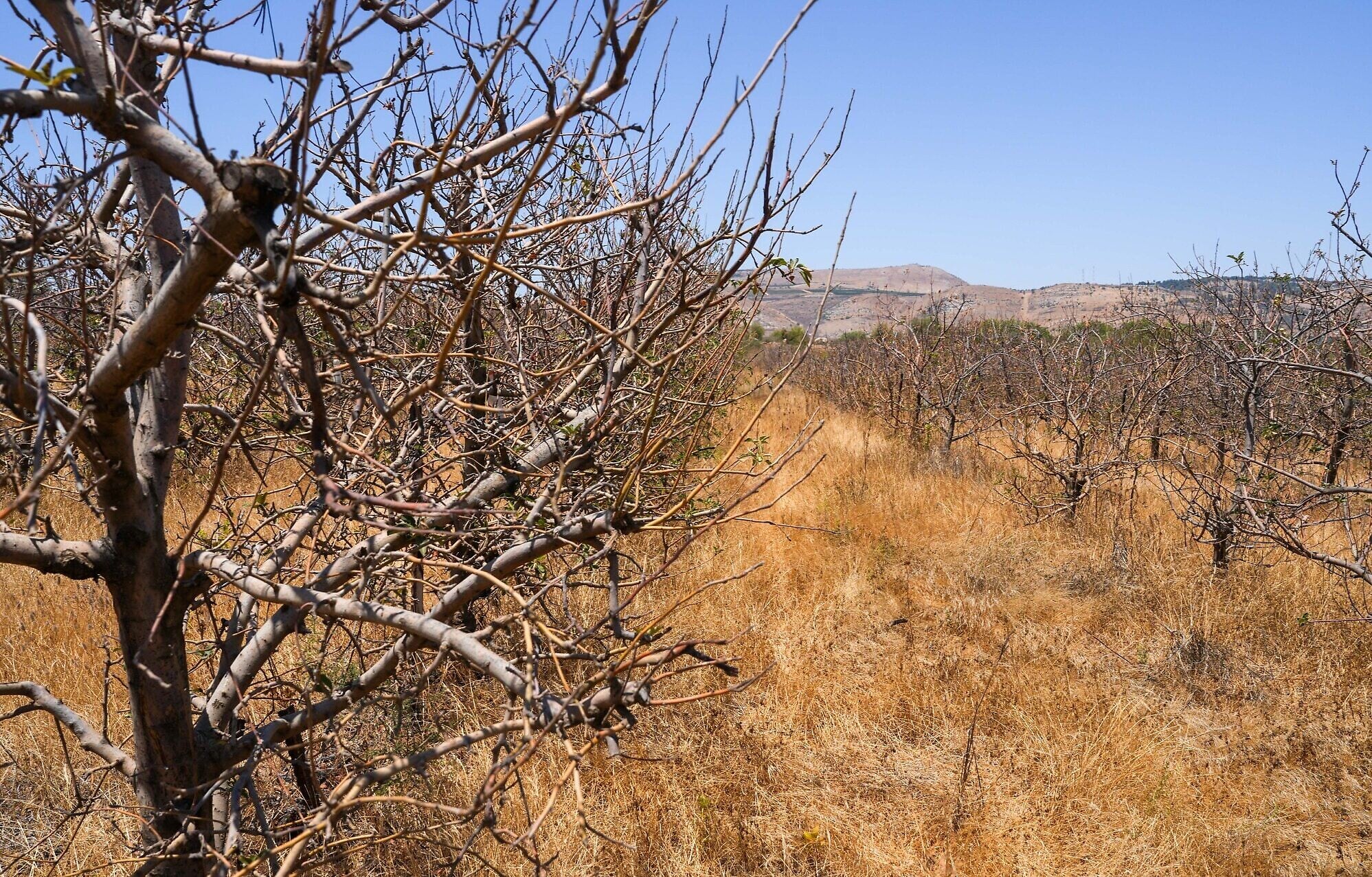
An apple orchard belonging to the Fahima family from Moshav Dishon, which was not watered during the war and dried up, July 23, 2025 (Ayal Margolin)
“It’s embarrassing to call it an emergency when it’s two-and-a-half years later,” said Abraham, who is currently launching a $14 million recovery initiative to fast-track replanting and restore the northern agricultural backbone.
It takes seven to nine years for an orchard to return to full production, and farmers are trying to replant an estimated 550,000 fruit trees and 32,000 grapevines before the current season ends, said Abraham.
Israel’s north supplies the majority of Israel’s fruit and contains nearly half of its vineyards.
Six weeks before the latest war with Iran, The Times of Israel spent time with Fahima in orchards and fields near Metula.
Fahima pointed out the seven-meter (around 30-foot) high concrete wall separating a newly planted orchard from the Lebanese village of Kfar Kila, visible just over the wall.
“This was the Good Fence before [the wall was built in 2012],” said Fahima. “I would work in these fields with Lebanese workers.”
The apple orchard, full of chunks of rich, amber-colored soil, was recently refilled and replanted, dotted with empty milk boxes to support each fledgling trunk.
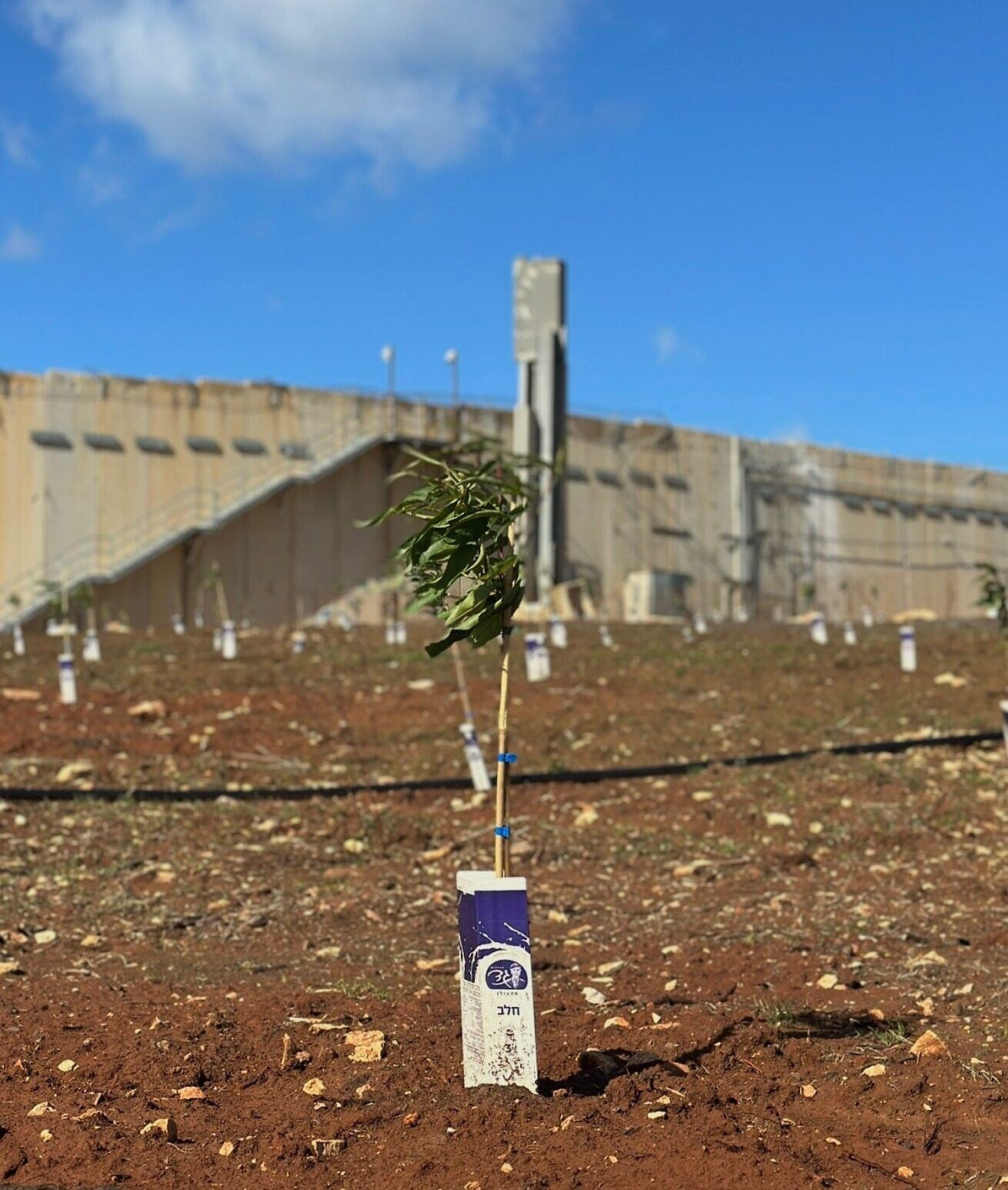
A newly replanted orchard near the border with Lebanon, outside Metula, on January 14, 2026. (Jazzie Morgan)
The orchard belongs to 77-year-old Metula farmer Moshe Weinstein, said Fahima.
On October 31, 2024, Weinstein’s son, Omer Weinstein, 47, and four Thai laborers were killed by a Hezbollah rocket, about 100 yards from Weinstein’s home.
Weinstein, a fourth-generation farmer whose grandfather helped establish Tel Hai with Joseph Trumpeldor, told Channel 12 recently in an emotional interview that he questions why he is holding onto the farm.
“After nine days of this war, they’re shooting at us for hours a day, in the houses, in the orchards, where is the army?” shouted Weinstein. “We’re screwed. What, we’re not citizens of the State of Israel? We had damages here that haven’t even been dealt with yet.”
“Once this war with Iran is done, what will be left here?” said Weinstein. “Who will be left here?”
Moskovitz said two of his three daughters had planned to return to live in Misgav Am with their young families, but decided after the recent outbreak of war that they would wait another few years to decide what to do.
“That’s hard to hear,” he said. “I told them, ‘Do what you need to do, I’ll come to you wherever you are.’”