
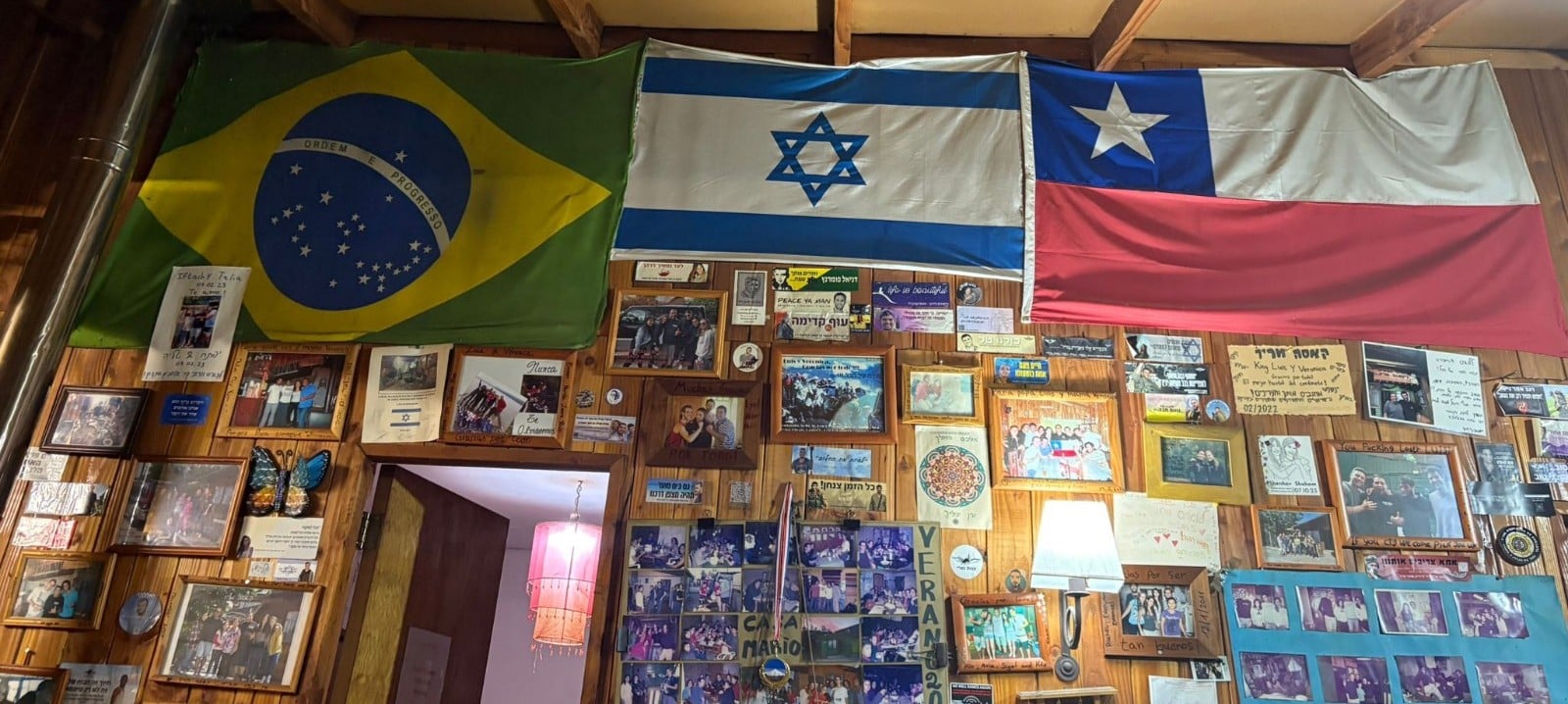
We’re a family that plans. To travel using mileage points, it’s often best to book your trip 11 months in advance. Every summer, as we finished up our family trip to Israel, my husband would already be scanning flights and schedules for the following year. We booked the same apartment in Baka year after year with the same family, so eventually the apartment stopped feeling like an Airbnb and began to feel like our second home.
Planning gave us something comforting: predictability. We knew where we would be each summer, which grocery store had the fruit we liked best, which aunts, uncles, cousins, and friends we would see. Our children grew up with that rhythm. Sometimes that predictability felt boring to them. But I think that boring predictability, of returning to Israel again and again, instead of going somewhere new every year, helped build their identities.
Now we have a post-army lone soldier, and travel for her looks completely different. But that identity still grounds her.
She left in February planning to spend a week in Argentina. Just one week.
As soon as she got there, she ran into a friend from the army. Through this friend, she connected with other Israelis traveling in the region. Suddenly, she had a new lens on her trip.
Who is near me this week?
Who wants to hike up a live volcano?
Who is chilling with penguins in the south?
So her itinerary changed. Then it changed again. And again.
She’s still not back.
It turns out there is a hidden trail connecting young Israelis around the world — from hostels to hiking trails to beach towns. If you speak Hebrew and have a backpack, you’re automatically part of it. It’s not just because you’re travelling. It’s because you share experiences and a unique vocabulary. It’s because you served the Jewish nation in the bravest way: Training and guard shifts. Radios and maps. War rooms and safe rooms. Long months of uncertainty and intensity. And for many, unfamiliar places that weren’t safe at all.
It’s because of these experiences that a whole other world of adventure opened up to her. And it opened up because she knew others on that adventure wouldn’t judge where she lives or how she spent the last few years. These young Israelis understand each other without needing to explain.
My daughter heard the Megillah on Purim with a hundred others at a Chabad in a South American beach town. She’s shared Shabbat meals with travelers who may not keep Shabbat at home but want to hold on to that touchstone ritual while they’re far away. She’s taken long car rides with new friends who somehow listen to the same music she does.
It’s completely understandable that these young soldiers need a break from the intensity of army service and the war. But they’re not trying to get away from who they are. They’re expanding who they are by exploring what else the world has to offer.
What’s inspiring is that the details that often divide people in real life fade in this larger landscape. It doesn’t matter what your politics are, whether you’re religious or secular. What matters is the most meaningful bond: Jewish and Israeli identity.
And because of that bond, they can experience something completely new: the breathtaking beauty of the natural world. Looking around, they see glaciers, jungles, volcanoes, and oceans. With that as your backdrop, a lot of the smaller details in life feel just that way: small. It’s a perspective that will serve them well – and is an important reminder to all of us.
As parents, we spent years planning our trips carefully, returning to the same familiar place each summer. And I’m so glad we gave them that experience.
But watching my daughter now, backpacking across South America with an itinerary that changes by the week, I’m learning right along with her.
Sometimes the world opens not because you planned in advance, but because of the shared experiences, language, and identity that makes people you don’t know into instant companions.
We did give our children a second home by returning every year to that apartment in Baka. And now they can build on that sense of home – no matter where in the world they are.
Shuly Babitz is a writer and public affairs strategist based just outside Washington, D.C. She and her husband have four children, two of whom made Aliyah to Israel. Shuly blogs about Israeli culture, Jewish identity, and her family’s deep ties to Israel.