
Keynes famously said “When the facts change, I change my mind. What do you do, sir?” If ever the US economic facts have changed, it has to be with the outbreak of the US-Israeli war with Iran. Those changes now raise the risk of an economic recession, a rise in inflation, a sharp stock market correction, and heightened credit market strains. Those risks should prompt a rethinking of the Trump administration’s import tariff policy and a backing off of Trump’s relentless attacks on the Federal Reserve’s independence.
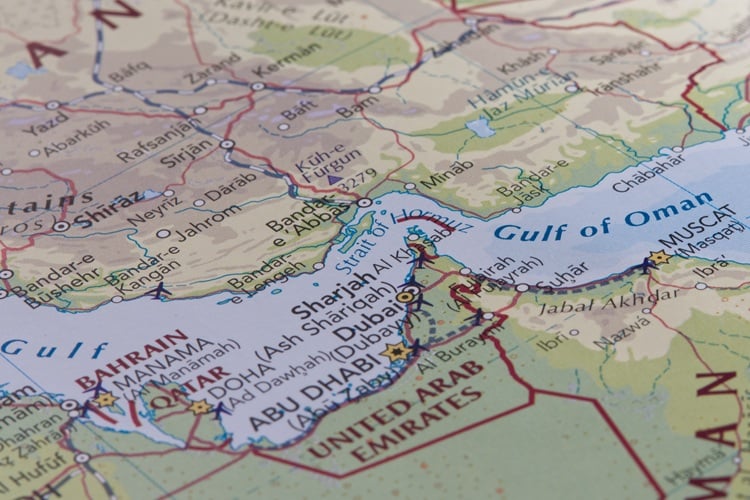
It is too early to gauge how much damage the war will inflict on the US economy. That will depend crucially on how long the Straits of Hormuz are closed and how much damage the Iranians will have inflicted on their Gulf neighbors’ oil and natural gas production capacity. It is difficult to overstate the importance of the closure of the straits. Not only does 20 percent of the world’s oil supply pass through those Straits. So too do 20 percent of the world’s natural gas and 20–30 percent of the world’s fertilizer supply, so vital for the world’s food production. This raises the specter of both an energy and a food price economic shock to the US and world economies.
Being a net oil and food exporter, the United States economy will be less impacted than other major industrialized economies like Europe and Japan by an energy crisis. However, US consumers will still be hit hard by a rise in international oil and food prices.
Mainstream estimates suggest that every sustained $10 a barrel increase in oil prices can increase headline inflation by 0.3 percentage points and reduce output by between 0.1–0.2 percentage points. This implies that should oil prices stay at around $100 a barrel, as implied by the oil futures market, headline inflation could be 1.25 percentage points higher than it otherwise would have been, while output could be lower by between 0.5 and 0.75 of a percentage point. Needless to add, should oil prices rise to $150 a barrel by the end of March, as Goldman Sachs is warning, if the Straits remain closed, the adverse impact of an oil price spike would be all the greater.
One of the bright spots in the US economy over the past year has been the Artificial Intelligence investment boom. By some estimates, that investment has accounted for around half of US economic growth in recent quarters. Higher energy prices could now constitute a headwind to that boom, considering how energy-intensive the AI revolution is.
An even more important Iran-related headwind to the US economic recovery might come from higher long-term interest rates. This is especially the case considering that the US went into that war with an unsustainable public finance position. According to the Congressional Budget Office, even before taking into account the likely increased defense spending, the US budget deficit was set to be over six percent of GDP as far as the eye could see, while by 2030, the public debt in relation to the size of the economy would exceed its level at the end of the Second World War. Higher defense spending, both as a result of the direct $1–$2 billion a day costs of the war as well as the need to deter Russian and Chinese foreign policy adventures, could add substantially to the defense budget.
Underlining the prospect of higher long-term interest rates is the fact that since the Iran war began, 10-year Treasury bond yields have risen by around 30 basis points to their current level of 4.25 percent. This could be a warning that foreigners are losing their appetite for US Treasury bonds. This is especially the case considering that in normal times of heightened geopolitical and economic stability, investors would have sought the safe haven of the US Treasury market and driven down long-term government bond yields.
Higher long-term interests are the last thing that the US economy needs at a time when it is already slowing, when the labor market is weak, when stock market valuations are still stretched, and when cracks are appearing in the private credit market. Elevated 10-year US Treasury yields would lead to higher mortgage and auto loan rates. They could also be the trigger that causes a long overdue equity market correction, and they could also cause real strains in the financial system following years of reckless lending fueled by easy money.
At a time of great challenges to inflation and output, the economy hardly needs additional import tariffs that could add to uncertainty and to inflationary pressures. At a time of inflation and financial system strain, the economy should also be spared from further attacks on the Fed’s independence.