
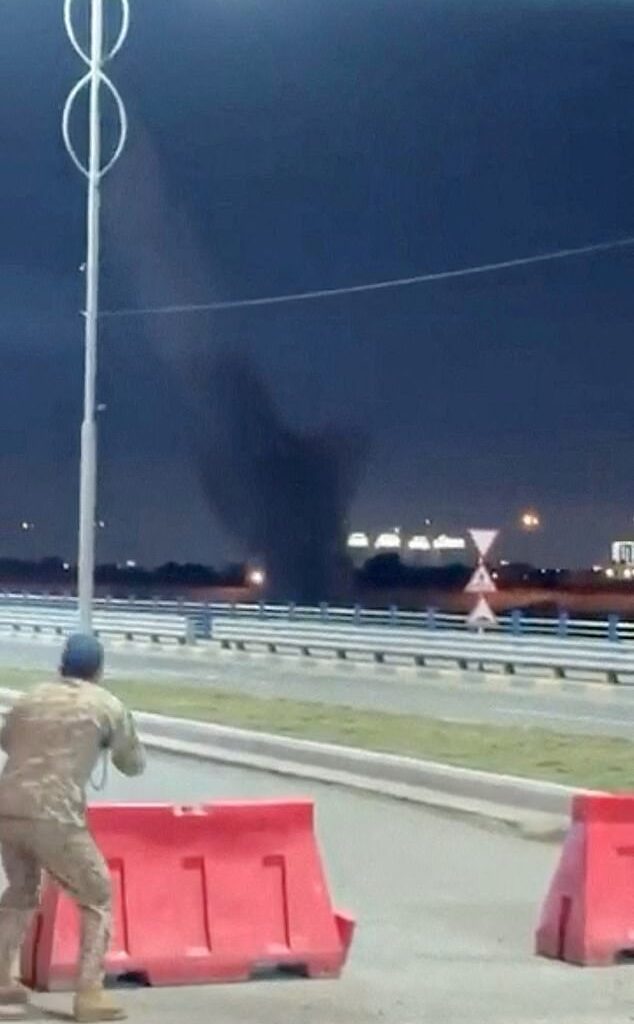
Rockets and at least five drones targeted the US embassy in Baghdad early on Tuesday, Iraqi security sources said, describing it as the most intense assault since the war began.
It came as residents of Dubai and Doha, Qatar, awoke to the sound of explosions as air defences worked to intercept new waves of incoming Iranian fire, as the conflict in the Middle East showed no signs of abating.
Two US officials said no injuries were reported so far in Baghdad.
An eyewitness told Reuters the C-RAM (Counter-Rocket, Artillery, Mortar) air defence system shot down two of the drones, while a third struck inside the embassy compound, from which fire and smoke could be seen rising.
An explosion was heard in the Iraqi capital, another witness said.
Iranian backed militias have been attacking American interests in Iraq in retaliation for the US-Israeli attacks on Tehran which began on February 28.
On Monday, Iran-aligned group Kataib Hezbollah announced the death of its senior commander and spokesperson – Abu Ali Al-Askari – and Popular Mobilisation Forces said air strikes killed at least eight of its fighters in the Iraqi town of al-Qaim near Syria.
Iraqi security forces have been deployed across parts of the capital and closed Baghdad’s fortified Green Zone, which houses government buildings and diplomatic missions including the US embassy.
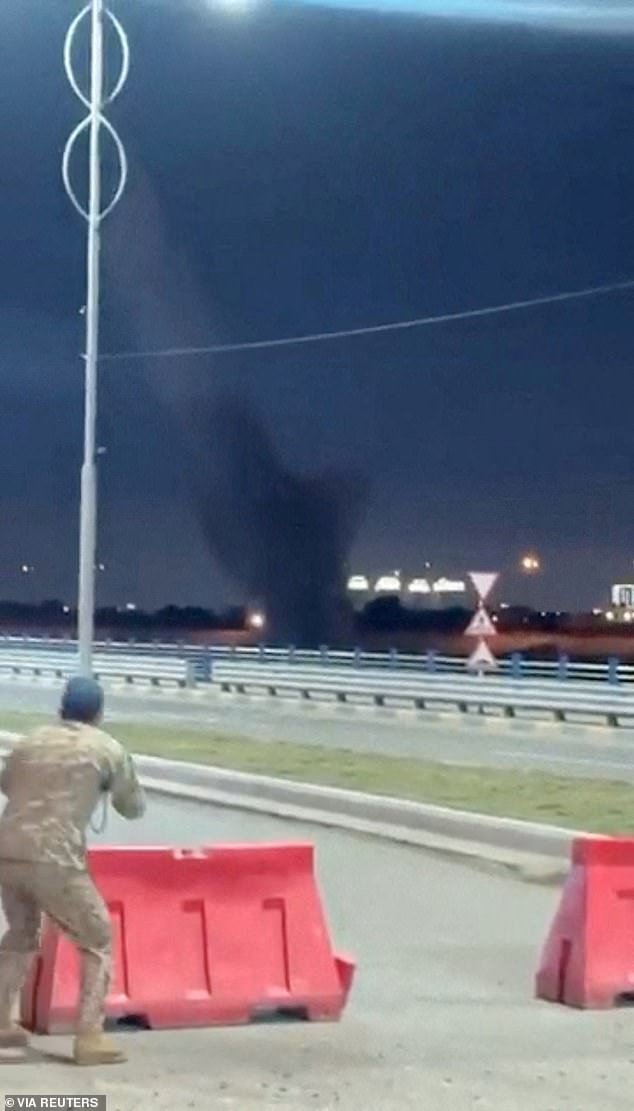
An eyewitness told Reuters the C-RAM air defence system shot down two of the drones
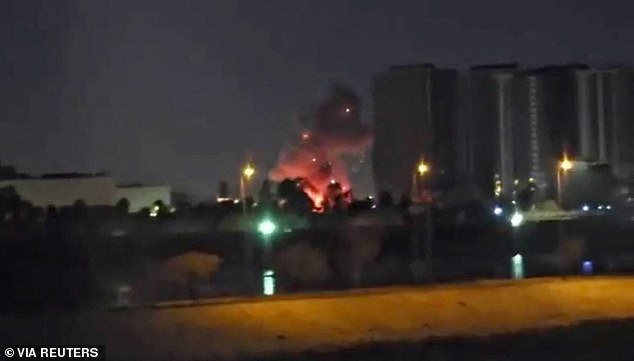
Rockets and at least five drones targeted the US embassy in Baghdad early on Tuesday, Iraqi security sources said
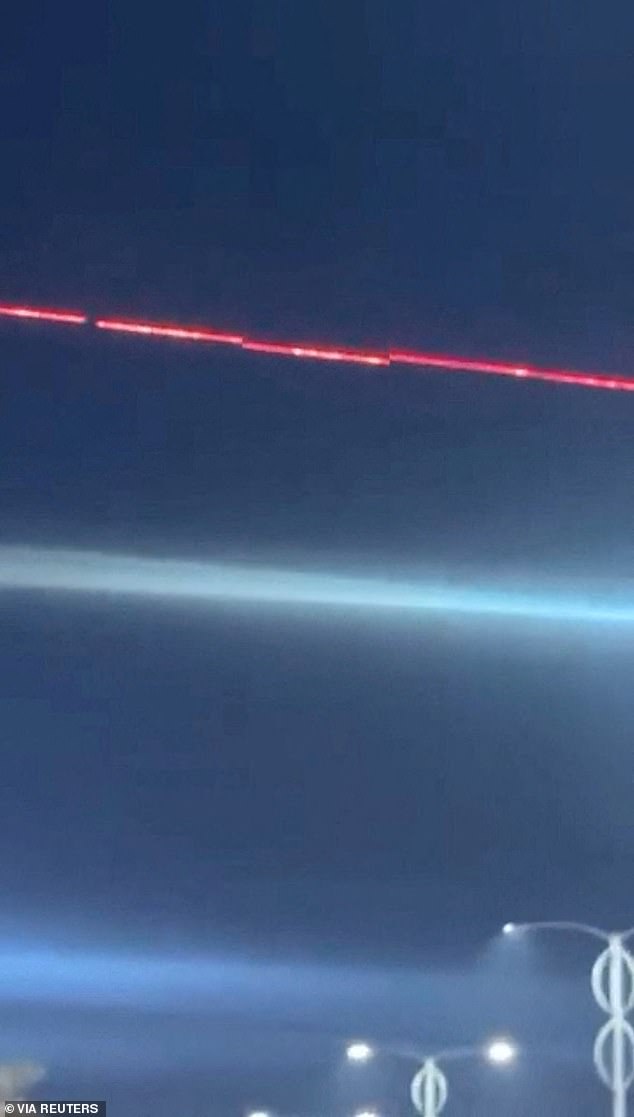
A C-RAM air defence system intercepts drones during reported drone and rocket attacks on the US embassy in Baghdad, Iraq
Interceptions lit up the night sky over Baghdad last night after an earlier drone attack on a luxury hotel on Monday.
An orange glow and explosion were seen after a drone was shot down by a US defence system, in footage aired by the Rudaw network.
It happened hours after another drone struck a prominent hotel in the city’s heavily fortified Green Zone.
Two Iraqi security officials, speaking on condition of anonymity, said the strike hit the top floor of the Royal Tulip Al-Rasheed hotel, which houses diplomatic delegations and international organisations.
The attack caused damage but no casualties, and security forces sealed off the area.
No group immediately claimed responsibility.
Qatar said Tuesday it had intercepted a missile attack as Tehran continues to enact its retaliatory campaign over strikes by the US and Israel that killed its supreme leader.
An AFP journalist heard several explosions in Doha, a day after blasts resounded across the Qatari capital.
Qatar, like several Gulf nations, has been targeted by drones and missiles in the last days.
‘The Ministry of Defense of State of Qatar announces that armed forces intercepted missile attack which targeted State of Qatar,’ the defence ministry posted on X.
In nearby Dubai, an AFP journalist heard three explosions after a mobile phone alert warned residents of the UAE’s most populous city to ‘immediately seek a safe place’ over ‘potential missile threats’.
The major transit hub for international travel briefly shut its airspace as the military said it was ‘responding to incoming missile and drone threats’ around the city.
Iraqi security sources said, describing it as the most intense assault since the war began.
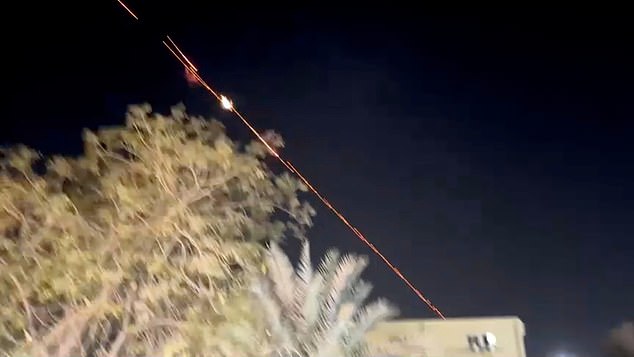
Air defence systems engage projectiles over Baghdad on Monday night
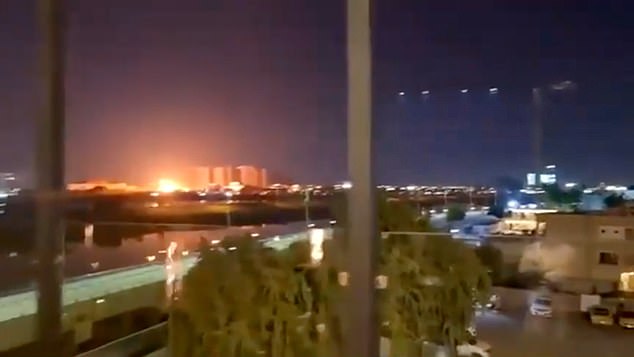
Iraqi security sources described the attack on the US embassy in Baghdad as the most intense assault since the war began
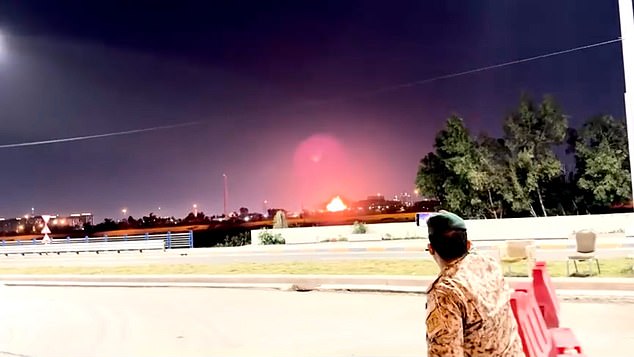
Iranian backed militias have been attacking American interests in Iraq in retaliation for the US-Israeli attacks on Tehran which began on February 28
The Israeli military said early on Tuesday it had begun a ‘wide-scale wave of strikes’ across Iran’s capital and was also stepping up strikes on Iran-backed Hezbollah militants in Lebanon.
Israel also reported two incoming salvos before dawn from Iran at Tel Aviv and elsewhere, and said Hezbollah targeted Israel’s north.
Iran kept up the pressure on the energy infrastructure of its Gulf Arab neighbours, hitting an oil facility in Fujairah, located on the east coast of the UAE, with the Gulf of Oman that has been repeatedly targeted.
State-run WAM news reported that no one had been injured in the blast from the drone strike.
The attack is the second to occur at the major terminal in two days, after oil loading operations were temporarily suspended at Fujairah yesterday when the facility was hit, causing a fire to break out.
Iran’s attacks on Gulf nations and its stranglehold on the Strait of Hormuz, through which a fifth of the world’s oil is transported, have given rise to increasing concerns of a global energy crisis.
Early on Tuesday, Tehran hit a tanker anchored off the coast of Fujairah, one of about 20 vessels targetted since the outbreak of war.
With Washington under increasing pressure over rising oil prices, Brent crude, the international standard, remained over 100 dollars (£75) a barrel, up more than 40 per cent since the war started.
US President Donald Trump said he had demanded that roughly a half-dozen countries send warships to keep the Strait of Hormuz open.
But his appeals brought no immediate commitments, with many saying they are hesitant to get involved in a war with no defined exit plan and sceptical that they could do more than the US Navy.
The UAE shut down its airspace early on Tuesday as its military reported it was ‘responding to missile and drone threats from Iran’.
The closure was soon lifted, and not long after, the sounds of explosions could be heard as the military worked to intercept incoming fire.
The snap announcement on its airspace showed the balancing act Emirati authorities face in trying to keep their long-haul carriers, Emirates and Etihad, flying as Iranian attacks continue to target the country.
Saudi Arabia’s Defence Ministry reported intercepting a dozen drones on Tuesday morning over the country’s vast Eastern Province, home to oil infrastructure.
A Pakistani national was killed by shrapnel in Abu Dhabi overnight following ‘the interception of a ballistic missile by air defence systems’, government officials said on X.
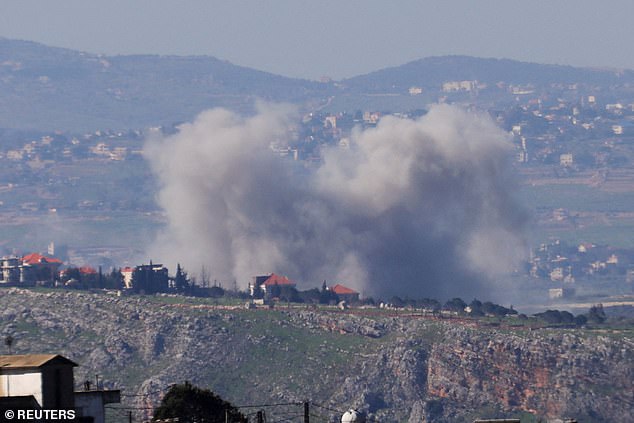
Smoke rises after Israeli strikes in southern Lebanon, amid escalation between Hezbollah and Israel
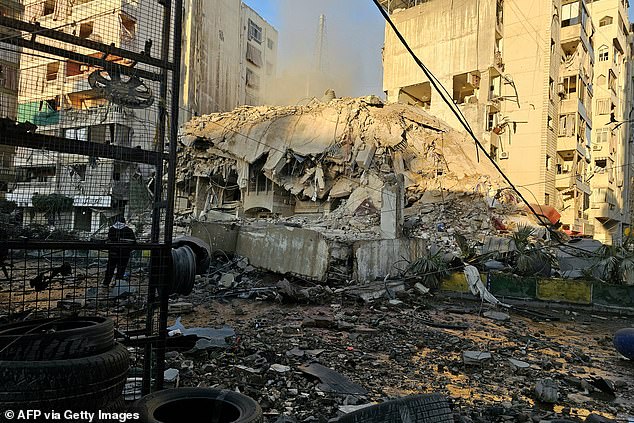
Rubble and debris are strewn across a road at the site of an Israeli airstrike that targeted Beirut’s southern suburbs, in the al Kafaat neighborhood, on March 17
On Monday, Israel’s military announced its troops had launched ‘limited and targeted ground operations’ against the Iran-backed armed group Hezbollah in southern Lebanon.
‘This activity is part of broader defensive efforts to establish and strengthen a forward defensive posture, which includes the dismantling of terrorist infrastructure and the elimination of terrorists operating in the area, in order to remove threats and create an additional layer of security for residents of northern Israel,’ the Israel Defence Forces said.
Lebanese state media reported that Israeli airstrikes struck three neighbourhoods in Beirut early on Tuesday.
It came as the IDF issued an urgent warning to residents in the south – ‘specifically in the village of Arab al-Jal’ – to evacuate as the military says it continues to target Hezbollah infrastructure.
‘The Defence Army will attack military infrastructure belonging to the terrorist Hezbollah in the near timeframe,’ an IDF spokesman wrote in a post on X.
In a joint letter, the leaders of Canada, France, Germany, Italy and the UK called on Israel and Lebanon to begin negotiating a ‘sustainable political solution’.
They expressed concern at a ‘deeply alarming’ humanitarian situation in Lebanon and called for ‘immediate de-escalation’.
‘A significant Israeli ground offensive would have devastating humanitarian consequences and could lead to a protracted conflict. It must be averted,’ the statement said.
At a press conference yesterday, President Trump slammed Sir Keir Starmer over his response to the conflict, saying he’s ‘not happy’ with the UK after the prime minister said it would not be drawn into a ‘wider war’ over Iran.
Trump said he was ‘very surprised’ by the lack of support he was getting from the UK over reopening the Strait of Hormuz, telling reporters:
‘I was very surprised with the United Kingdom, because United Kingdom two weeks ago, I said, why don’t you send some ships over? And he really didn’t want to do it.
‘I said, you don’t want to do it? We’ve been with you. You’re our oldest ally, and we spend a lot of money on, you know, Nato and all of these things to protect you.
‘We’re protecting them. We’re working with them on Ukraine. Ukraine’s thousands of miles away, separated by a vast ocean. We don’t have to do that, but we did it. Well, Biden did it. I mean, I have to be honest with you, Biden got taken to the cleaners, but we worked with them in Ukraine.’
He added that he had told Starmer ‘it would be really helpful if you’d send over a couple of ships and if you have some minesweepers, which they do, be very helpful’.
‘And the prime minister… he says, well, I’d like to ask my team.
‘I said, you don’t have to worry about a team. You don’t have a team. You’re the prime minister. You can make a decision… So it’s very disappointing.’
Several other European countries have expressed reluctance to committing any vessels to the strait, despite Trump’s calls for support.
German Chancellor Friedrich Merz says the war with Iran is ‘not a matter for Nato’, while France made it clear that Paris will not deploy ships directly into the Strait of Hormuz while the conflict is ongoing.
Trump told journalists that there were ‘some countries that greatly disappointed me’ before he singled out the UK.
He had previously called on France, Japan, South Korea, the UK and China to join a ‘team effort’ in restoring the strait, which has effectively been shutdown by Iran.
This is a breaking story. More to follow