
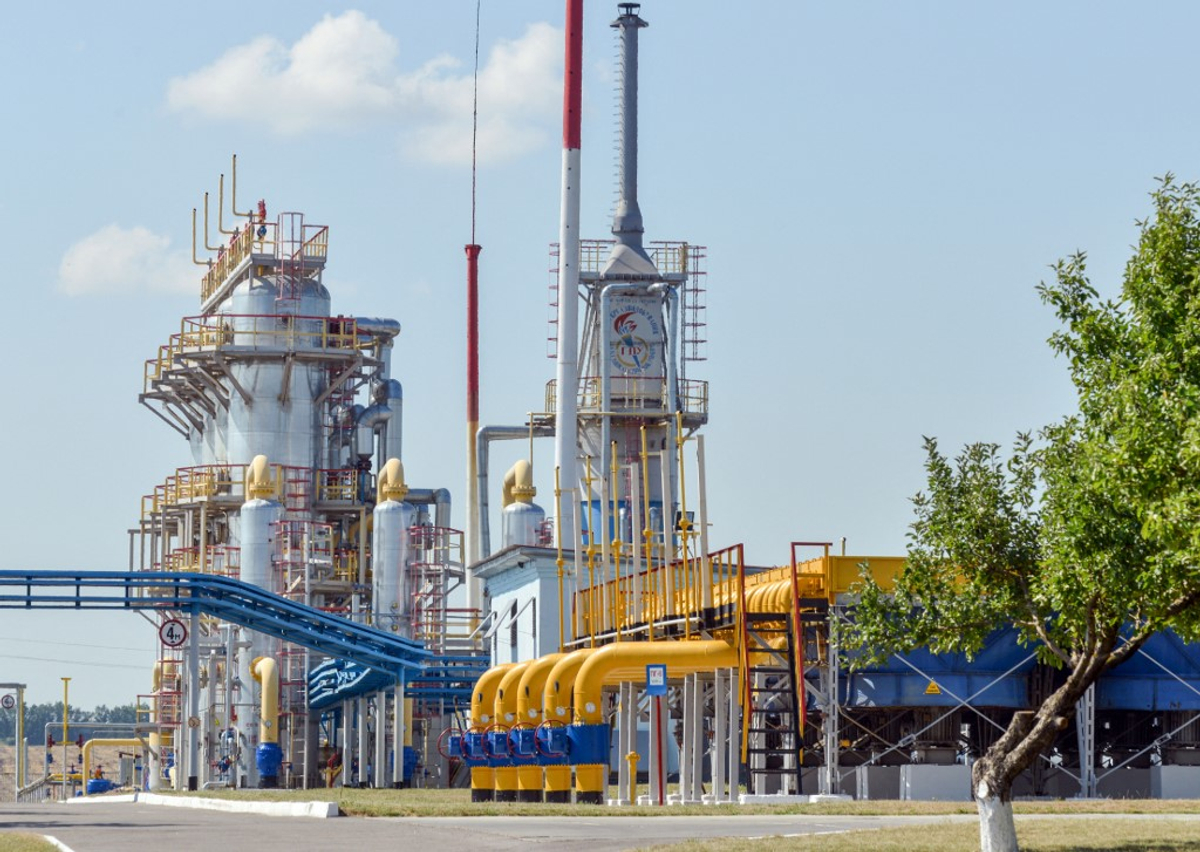
Russian drones targeted a gas compressor at the Orlivka station, part of the newly launched gas corridor designed to help Ukraine address its energy deficit ahead of the 2025–2026 winter season.
The station, operated by the Gas Transmission System Operator of Ukraine (GTS), is located in the Odesa region, near the Ukrainian-Romanian border.
JOIN US ON TELEGRAM
Follow our coverage of the war on the @Kyivpost_official.
Ukraineʼs Ministry of Energy said the facility was damaged in a press release on Wednesday, Aug. 6.
The facility is part of a new Trans-Balkan route launched in July to transit gas to Ukraine from Greek liquified natural gas (LNG) terminals. It has delivered American LNG and test volumes of Azerbaijani gas to Ukraine’s underground storage facilities.
In July, Ukraineʼs state-owned energy giant Naftogaz Group signed its first agreement with SOCAR Energy Ukraine, marking the first gas transportation agreement signed for the Trans-Balkan route.
The attack damaged infrastructure that ensures the flow of gas along this corridor, the ministry said. Technicians are assessing the site, and full damage reports are expected in the coming days.
Ukrainian Minister of Energy Svitlana Hrinchuk said Moscow’s latest attack demonstrated its desire to undermine European energy independence.
“The massive Russian drone strike on a key Trans-Balkan compressor station shows Moscow is using all tools to undermine Europe’s energy independence and alternative gas routes,” Hrinchuk was quoted as saying in the press release.
Other Topics of Interest
Fierce Pokrovsk Battles Grind On, No Quick End in Sight
As Russian forces near the city, after more than 16 months of relentless attacking, they could spend another year and tens of thousands of lives advancing further.
About 20 drones targeted Izmail, Reni and Artsyz in the Odesa region near the Romanian and Moldovan borders on Aug. 6, according to a local airstrike tracking channel.
“If Russia can strike Ukraine’s energy infrastructure with impunity, no European facility will be safe. Impunity only fuels terror. That’s why Russia must be held accountable,” Hrinchuk added.
In August, imports via the Trans-Balkan Gas Route totaled around 0.4 million cubic meters per day, according to ExPro data.
According to ExPro, at the end of July, Ukraine imported Azerbaijani gas via the Orlivka entry point for the first time, but deliveries stopped in early August. In July 2025, the Trans-Balkan route accounted for less than 1% of Ukraine’s total gas imports.
In previous years, the Orlivka station primarily transported Russian natural gas through Ukraine to Romania. However, after the transit ended in early 2025, the station now operates exclusively in reverse mode to import gas into Ukraine, ExPro wrote.