
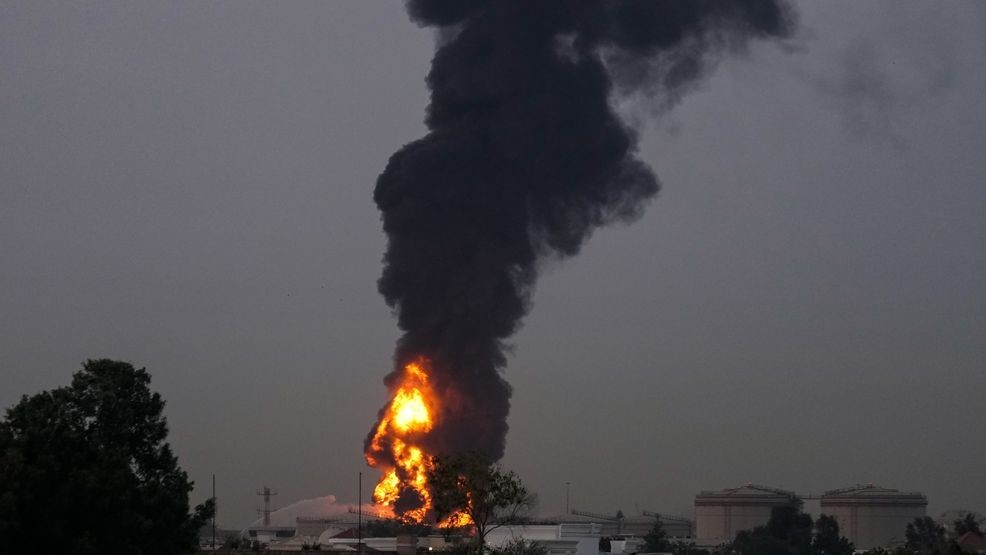
WASHINGTON (TNND) — Israeli officials say overnight strikes inside Iran killed two senior figures in the country’s security leadership, as Iran responded with a new wave of missile and drone attacks across Israel and the Gulf.
Israel’s defense minister said Ali Larijani, a top security adviser, and Gen. Gholam Reza Soleimani, head of the Revolutionary Guard’s Basij militia, were “eliminated” in the strikes.
Iranian state media did not immediately confirm the deaths but indicated a statement from Larijani’s office was expected.
The reported killings come less than two weeks after Iranian Supreme Leader Ayatollah Ali Khamenei was killed at the beginning of the conflict launched by the United States and Israel.
The Israeli military said it carried out a “wide-scale wave of strikes” across Tehran, targeting command centers, missile launch sites, and air defense systems.
Israel also expanded operations against Hezbollah in Lebanon, striking dozens of targets linked to the Iran-backed group.
In response, Iran launched multiple missiles toward Israel, including strikes aimed at Tel Aviv and areas near the Sea of Galilee. Hezbollah also fired rockets into northern Israel.
In the United Arab Emirates, a missile interception over Abu Dhabi resulted in debris killing one person, bringing the country’s death toll to eight since the war began. A separate drone strike hit an oil facility in Fujairah, though no injuries were reported.
The UAE briefly closed its airspace as its military responded to incoming threats before reopening it hours later.
Saudi Arabia reported intercepting multiple drones over its oil-rich Eastern Province, while Qatar said its air defenses stopped a missile targeting the capital, Doha, though a downed projectile sparked a fire in an industrial area.
In Iraq, intercepted drones targeting the U.S. Embassy in Baghdad caused damage from falling debris, while a separate strike hit a residence inside the heavily fortified presidential compound.
Iran’s actions in the Strait of Hormuz have further heightened global concern.
The strategic waterway, which carries roughly 20 percent of the world’s oil supply, has been effectively restricted for U.S. and allied vessels, according to Iranian officials.
Iran has also targeted shipping in the region, with about 20 vessels reportedly hit since the conflict began.
Global oil prices remain elevated, with Brent crude trading above $100 a barrel — up more than 40 percent since the war began.
Iran’s parliamentary speaker defended the strategy, saying the country would not allow attacks to go unanswered.
“They are launching missiles — should we just sit back?” he said on state television.
President Donald Trump has called on multiple countries to contribute naval forces to secure the Strait of Hormuz, though allies have so far been hesitant to commit to a broader military role.
Iran reports more than 1,300 people killed since the conflict began, while Lebanon says over 850 have died and more than one million people — roughly one-fifth of the population — have been displaced.
In Israel, at least 12 people have been killed by Iranian missile strikes.
The United States has also confirmed at least 13 service members killed in the fighting.