
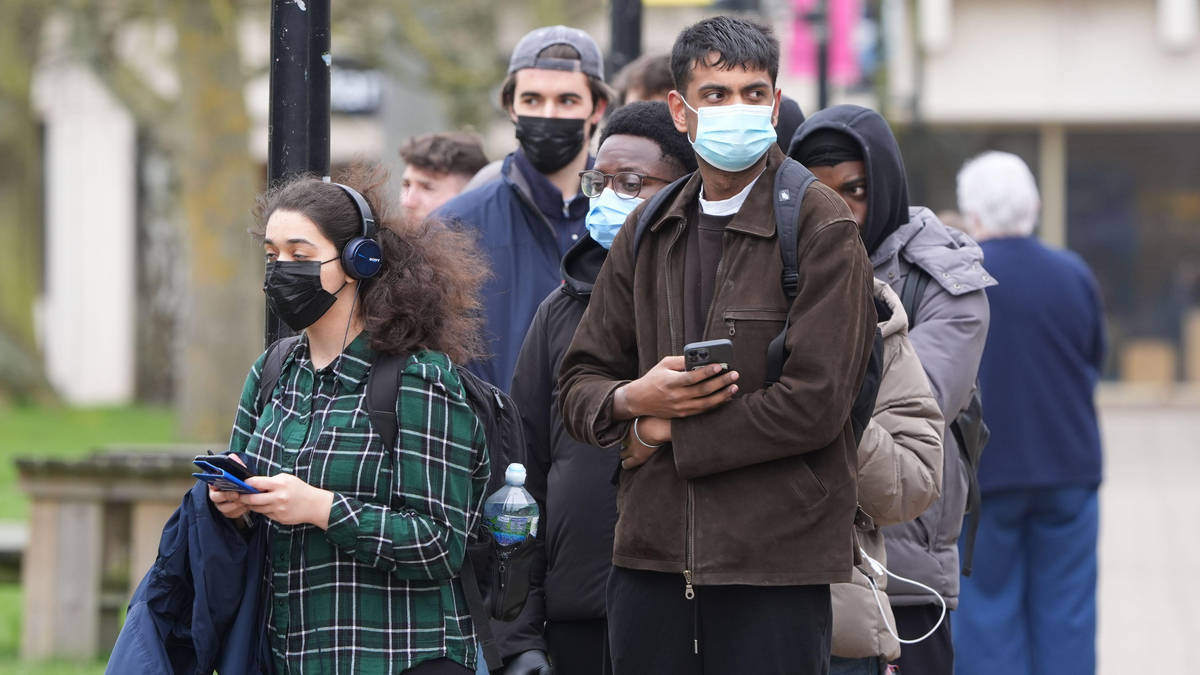
French authorities alerted the UK Health Security Agency (UKHSA) to a confirmed case of meningitis on Saturday in a student who had attended the University of Kent, Health Secretary Wes Streeting told MPs.
He told MPs that 700 doses of “precautionary” antibiotics have been administered to young people who may be at risk of meningitis in Kent, and that vape sharing can spread the disease.
So far two people have died, 11 are in hospital, and a total of 15 UK cases have been identified so far.
Mr Streeting said: “It doesn’t spread very easily. The bacteria is passed to others after a long period of close contact, for example with living with someone in shared accommodation, through prolonged kissing, or sharing vapes and drinks.
“However, the symptoms are also easily mistaken for other common conditions, even for something like a hangover.”
The UK Health Security Agency (UKHSA) today announced that it will launch a vaccination programme for students who live at Canterbury Campus Halls of Residence at the University of Kent to slow the spread of a deadly outbreak of meningitis.
The programme “may expand further” as the health body assesses risk to other groups, it added.
It said in a statement: “Investigations have confirmed that some of the cases are group B meningococcal disease.
“From 2015, the MenB vaccine has been available on the NHS as part of routine childhood immunisations and so those aged over 10 have not received it as part of the routine schedule.
“Given the severity of the situation, a small targeted vaccination programme will begin starting with students resident at Canterbury Campus Halls of Residence at the University of Kent in the coming days.
“The vaccination programme may be expanded further as UKHSA continues to asses any ongoing risk to other populations.
“For now, the priority remains for those offered antibiotics to come forward as this is highly effective at preventing the disease and transmission.”
The number of confirmed UK cases has risen to 15.
Pharmacies meanwhile have said they are experiencing a surge in bookings for private meningitis vaccines.
Superdrug said bookings for its service are 65 times higher than a week ago.
It comes after the UK Health Security Agency (UKHSA) confirmed that some cases in the Kent outbreak are meningitis B.
In the coming days, officials will launch a small vaccination programme for students who live at Canterbury Campus Halls of Residence at the University of Kent.
A jab for menB was introduced for babies as past of the routine childhood immunisation programme in 2015.
But the majority of young people born before 2015 are not protected, unless they have had the jab privately.
A number of pharmacies offer the menB vaccine, including Superdrug, where it is available for children from the age of two months and adults aged up to 50.
A course of two to three doses is recommended, priced at £110 per dose.
A spokesperson for Superdrug said: “At Superdrug, bookings at our nurse clinics for our meningitis service this week have surged to 65 times the level seen last week.”
At Boots, the vaccination service is for adults and children aged two and over costing £220 for two doses.
At Well Pharmacy, the vaccine is available for children from the age of two months and adults aged up to 50.
The course includes two to three doses, depending on age, at £110 each.
Asda also launched a meningitis vaccine service last year, with a full menB course available for £179.76.
On Tuesday, UKHSA said there have been 15 cases of meningitis reported to them in Kent, up from 13 reported previously.
Four of these cases are confirmed to have menB.
UKHSA officials investigating the outbreak, which has left two young people dead and others in hospital, told PA it would confirm the strain in other cases when the full results are available.
Experts also said it “takes time for the immune response to kick in” after vaccination and stressed that getting antibiotics to those exposed should be a priority.
On Monday, hundreds of people who visited Club Chemistry in Canterbury on March 5, 6 or 7 were told to come forward for preventative antibiotic treatment as a “precautionary measure”.
Professor Andrew Pollard, director of the Oxford Vaccine Group at the University of Oxford, said: “The first question on vaccination is whether this B strain is covered by the vaccine as this isn’t always the case – this takes time for the UKHSA to work out in the laboratory and they are working round the clock on this.
“If it does match then B vaccines are great but it takes time for the immune response to kick in after the jab and so the absolute priority today is to ensure that those who have been exposed get antibiotics to stop them developing the disease or spreading the B germs to others.”
The charity Meningitis Now has called for teenagers and young people to be vaccinated against meningitis B on the NHS as part of its No Plan B for menB campaign.
It also says menB jabs should be available on the high street “at a fair price”.