
On Feb. 15, Israel’s Cabinet approved a measure that would allow the state to exert more control over the occupied West Bank. The measure makes it easier for settlers to occupy Palestinian territory.
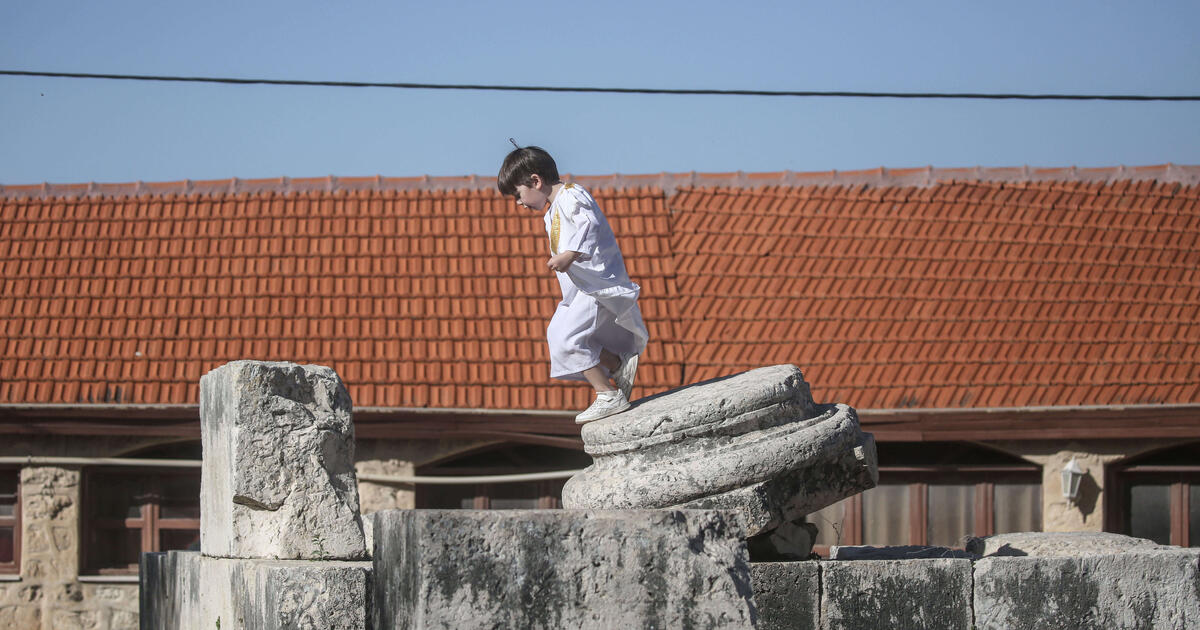
Last spring, I traveled to Sebastia, an ancient Palestinian village outside Nablus in the occupied Palestinian West Bank. It is among the oldest continuously inhabited places in the region. Beginning over 5,000 years ago during the second Iron Age, the residents of Sebastia have lived through the ancient Roman, Byzantine, and Ottoman eras. Sebastia is home to significant religious sites for Muslims, Jews, and Christians, including a Byzantine church and mosque said to be the burial site of St. John the Baptist, also known as the Prophet Yahya.
Walking down Sebastia’s ancient streets, the weight of that history felt almost palpable. I was literally walking in the footsteps of people who traveled thousands of miles to arrive in this place, where empires have come and gone, and where generations of Palestinians have tended the land, raised families, and served as the guardians of holy sites.
Today, Sebastia and its people are under threat. In November 2025, the Israeli Civil Administration—which is overseen by a unit in the Israeli Ministry of Defense that illegally operates in occupied Palestinian territory—issued an order to take approximately 450 acres of Palestinian land on Sebastia’s historic site and unlawfully place it under military control. The Israeli government has recently further expanded control to parts of the West Bank, shifting authority over privately owned Palestinian land from the Palestinian Authority to the Israeli Civil Administration. Israel plans to turn Sebastia into a settler tourist park.
Archaeology is being weaponized by Israel to ethnically cleanse the Indigenous Palestinian community and create an illegal Israeli settler-controlled tourist enclave. Israel occupies Palestinian territories by using the language of “preserving archaeological sites.” This allows Israel to circumvent international humanitarian law, specifically as it pertains to occupation. The Hague Regulations of 1907 offer regulations concerning what is known in international humanitarian law as “occupation law.” As the International Committee of the Red Cross explains, “Under occupation law, the occupying power does not acquire sovereignty over the occupied territory and is required to respect the existing laws and institutions of the occupied territory as far as possible. It is presumed that occupation will be temporary and that the occupying power shall preserve the status quo ante in the occupied territory.” But Israel has consistently ignored occupation law.
After the 1967 Six-Day War, in which Israel occupied the Palestinian territories of the Gaza Strip, East Jerusalem, and the West Bank, the United Nations Security Council Resolution 242 called for Israel’s withdrawal from territories captured during the war. In response, Israel used incremental legal loopholes under occupation law to slowly control Palestinian land without formal annexation. Under occupation law, mandated by the Fourth Geneva Convention and the Hague Regulations of 1907, Israel cannot claim sovereignty or permanently acquire Palestinian land. But as archaeologist Alon Arad noted for +972 Magazine in December 2025, “Israel’s use of archaeology to facilitate the takeover of Palestinian land—a practice that can aptly be described as ‘archaeological cleansing’—long predates Sebastia. For decades, the state has deployed this strategy both within the 1948 borders and across the West Bank[.]”
According to a local resident I spoke with, the order would immediately forcefully displace at least 40 people, causing them to lose their homes and businesses, as well as hundreds of acres of agricultural land with thousands of olive trees. The threat of the Israeli military means that all of Sebastia’s Palestinian residents, who number about 4,000 people, are at risk of being displaced.
Israeli settlers first created an illegal outpost in Sebastia in 1977, now known as the Shavei Shomron settlement, with more than 1,000 settlers now permanently residing there. Israel’s latest plan would connect Sebastia’s archaeological site to that illegal settlement and Road 60, the Israeli-controlled highway that connects Palestinian cities across the West Bank. The plan advances the government’s intention of fully annexing the West Bank and taking over all Palestinian territory.
READ MORE: ‘Put Your Soul on Your Hand and Walk’ Is a Must-Watch Documentary
What is happening in Sebastia is not an isolated event. The Israeli military has been drastically increasing the theft of Palestinian land in recent years. In October 2025, the Israeli Knesset approved a bill to annex approximately 30,000 acres of occupied Palestinian territory in the West Bank between Jerusalem and Bethlehem. By passing the bill, demolishing Palestinian homes, and applying military force, the Israeli government is attempting to formally seize Palestinian towns, including the village of Wadi Fukin, and effectively split the West Bank into two sections.
The Israeli Security Cabinet’s decision in February to register Palestinian lands as Israeli state property is emblematic of Israel’s goals of annexation. Beyond the Israeli government’s forceful domination of Palestinian lands through military violence, the Israeli Knesset also approved a motion to annex the West Bank in October 2025. Annexation is already in full effect, from Israel’s forced expulsions of more than 40,000 Palestinians last year alone, to the permanent fragmentation of Palestinian villages and the prevention of Palestinians’ freedom of movement.
During my travels, I saw a home demolished by the Israeli military right before my eyes. It was in Masafer Yatta, the Palestinian community that had just been featured in the Oscar-winning documentary, No Other Land. But even an Oscar didn’t stop the Israeli military from destroying Palestinians’ lives.
I sat in silence with the family who had just lost their entire life’s belongings, not knowing what to say. “May God return everything and more,” their neighbors gently whispered as they gave their respects. It was the first time I ever heard the words for condolences for land theft. The entire village stood in shock and despair. There was nothing they could do against an army with tanks and weapons, which would—without hesitation—kill anyone who tried to stop the demolition. On my way out, I saw a 6-year-old girl who had just returned from school to find her home turned to rubble.
I sat in silence with the family who had just lost their entire life’s belongings, not knowing what to say. “May God return everything and more,” their neighbors gently whispered as they gave their respects.
For decades, the Israeli government has controlled Palestinian movement through checkpoints and frequently demolished Palestinian homes and structures with total impunity and disregard for international law. Palestinians do not have access to due process and are denied basic rights. Israeli settlers have also been attacking Palestinians and seizing land in the West Bank to build settlements—with full backing and protection of the Israeli military. Between January 2024 and July 2025, Israeli forces and settlers killed 671 Palestinians in the West Bank, including 129 children. More than 40,000 Palestinians have also been forcibly displaced from their homes through Israeli military violence.
On the last day of my trip, I visited Lifta, another Palestinian village with archaeological artifacts dating to the Iron Age. This picturesque village just outside Jerusalem was once home to 3,000 Palestinians who were forcefully expelled by Israel in 1948 during the Nakba, the Arabic word for “catastrophe,” wherein at least 750,000 Palestinians were displaced. About 10 years ago, Israel converted Lifta’s historical site into a luxury shopping district, with homes, stores, and a fancy ice cream shop that are exclusively for Israelis.
Standing there at the site of the Nakba, where children gleefully held their ice cream cones, I had chills. This archaeological theft and occupation is exactly what Israel plans to do with Sebastia and the rest of the West Bank.
But the destruction of Sebastia can still be stopped. Palestinians of Sebastia have long been the guardians of the archaeological site, and they are not going to let their land and its history be easily erased. Organizations and individuals are calling for support from the international community to protect this ancient heritage, launching a “Save Sebastia” campaign in an attempt to stop Israel from taking the land and displacing its people.
When I was visiting Sebastia, I spoke at length with Zaid Azhari, a local historian who was born and raised there. He leads tours for people who visit from across the globe, sharing the ancient history of his hometown. Now, he’s working with activists to try to get the land certified as a UNESCO heritage site to protect Sebastia from Israel’s confiscation. Sebastia is also a sister city of Richmond, Calif., where local activists are working to bring attention to Israel’s attempted takeover of the site. In the U.S., the American Friends Service Committee, which is the organization I work for, is asking people to contact their members of Congress and urge them to tell the U.S. State Department and Israeli embassy to stop the archaeological theft of Sebastia.
What makes Sebastia unique is not the threat of violence and displacement—which is a heartbreaking reality for Palestinians almost everywhere—but that Sebastia symbolizes something that transcends its small borders. As a site that is venerated by Jews, Christians, and Muslims alike, it stands as a rare symbol of our intertwined history. This site does not belong to a single religious group or movement; it is the inheritance of all humanity and must be protected from political erasure.