
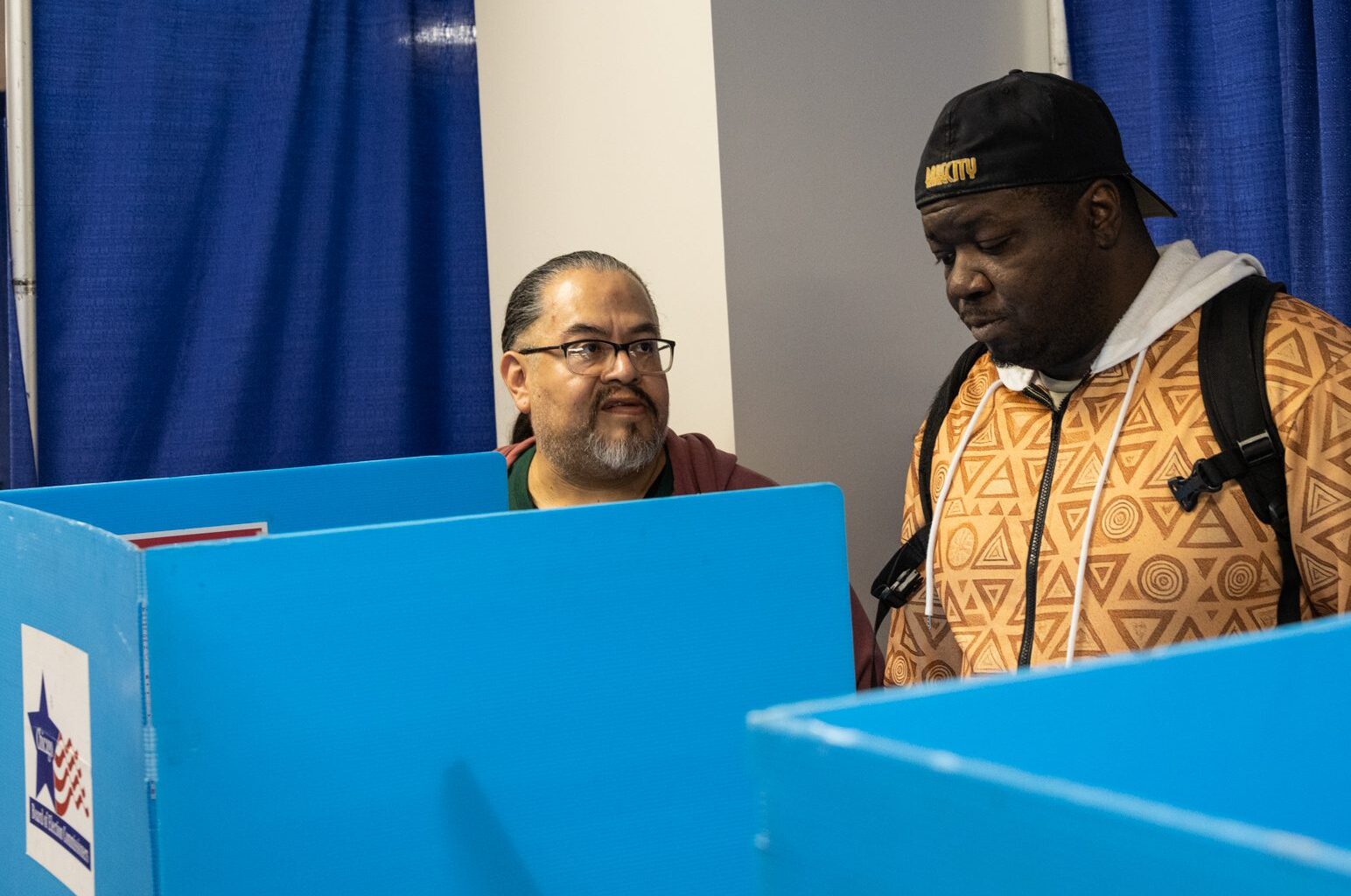
CHICAGO — Chicago voters have cast more than 250,000 ballots as of midday Tuesday, with turnout reflecting a continued shift toward early voting and mail-in ballots.
The numbers have lead to a relatively slow and largely uneventful Election Day, Max Bever, the Chicago Board of Elections spokesperson, said during a call with reporters Tuesday.
By noon, 250,364 ballots had been cast across the city — including early voting and vote-by-mail ballots — representing about 16 percent of Chicago’s 1.55 million registered voters, Bever said.
While the polls saw a steady stream of voters as the day unfolded Tuesday, fewer voters are showing up in person compared to past elections as more people cast ballots ahead of time.
“What we’re seeing right now is a bit of a slower Election Day,” Bever said. “A lot of voters are getting more comfortable with early voting and voting by mail.”
That trend was evident in the lead-up to Tuesday’s primary elections, with early voting totals more closely resembling higher-turnout election cycles. But in-person voting on Election Day is pacing closer to the city’s lower turnout in June 2022, when the primary was pushed back because of delays in getting census data due to the pandemic, Bever said.
Based on current trends, Election Board officials expect overall turnout to land somewhere between those benchmarks. About 22 percent of voters participated in the 2022 primary, compared to nearly 33 percent in the 2018 primary.
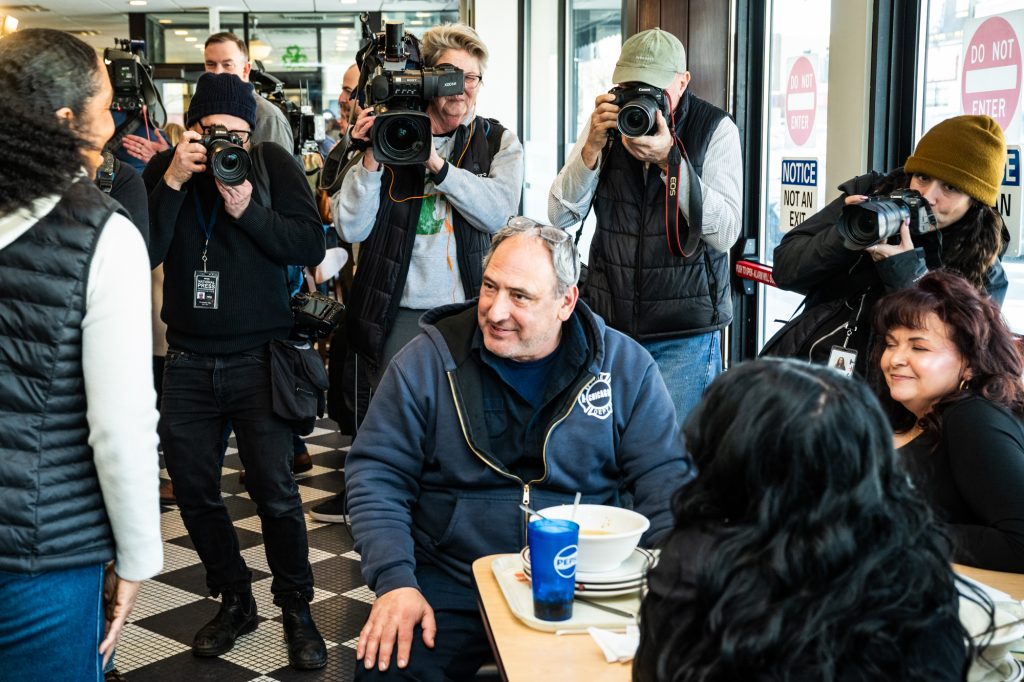 Politicians pack Manny’s Cafeteria and Delicatessen, 1141 S. Jefferson St., in the South Loop in an Election Day tradition in Chicago on March 17, 2026. Credit: Colin Boyle/Block Club Chicago
The final turnout figure won’t be known for weeks. Ballots postmarked by Election Day can be counted through March 31, meaning the total will continue to climb after polls close Tuesday night.
Despite several high-profile races on the ballot, turnout has remained relatively modest — something election officials attribute in part to the nature of a primary election, where voters must choose a party ballot.
While there have been no widespread disruptions, there were some hiccups Tuesday.
Eleven precincts did not open exactly at 6 a.m., but all were up and running shortly afterward, officials said. As a result, no polling places are expected to stay open past the scheduled 7 p.m. closing time.
In another case, a ballot scanner at a South Side polling place was temporarily down late Tuesday morning, prompting election workers to store ballots in a secure auxiliary box until the machine was fixed. Officials said those ballots will be properly scanned and counted.
There was also a brief issue involving a candidate having difficulty casting a ballot at a West Side polling place.
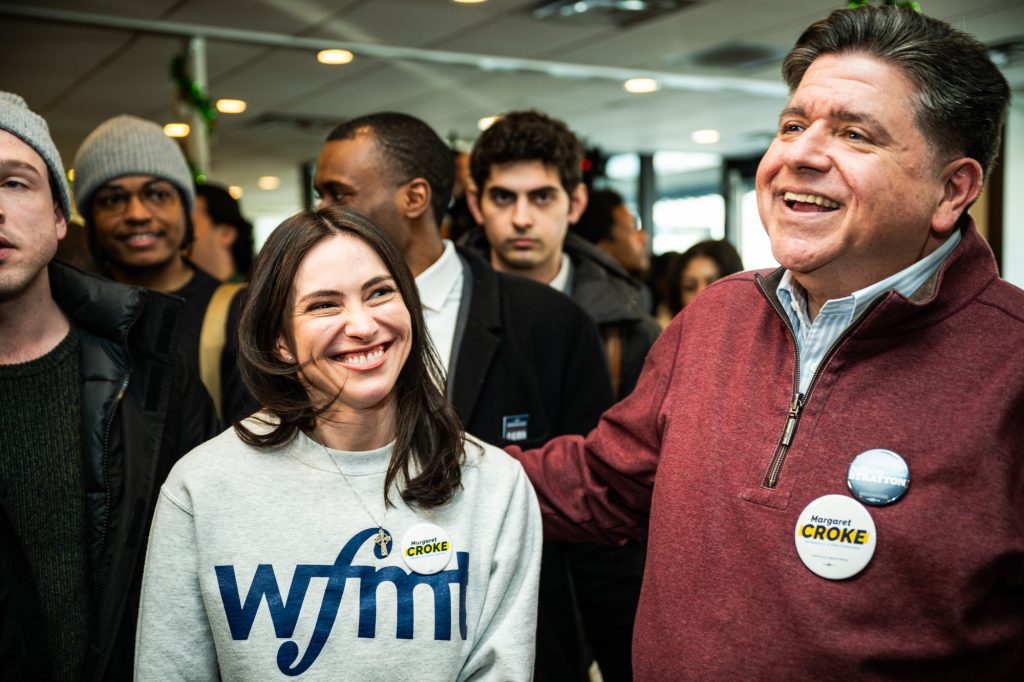 Margaret Croke, candidate for Illinois Comptroller, looks on while Gov. JB Pritkzer speaks as politicians flock to Manny’s Cafeteria and Delicatssen, 1141 S. Jefferson St., in the South Loop for the Election Day tradition of greeting voters and fellow politicians on March 17, 2026. Credit: Colin Boyle/Block Club Chicago
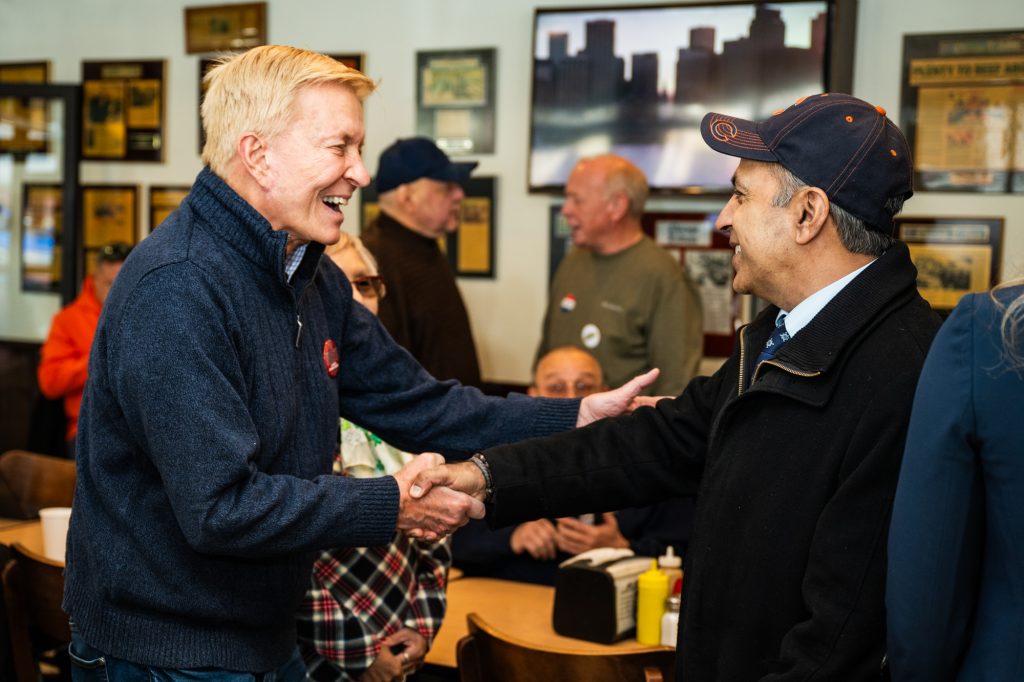 Rep. Raja Krishnamoorthi greets Bob Fioretti as politicians flock to Manny’s Cafeteria and Delicatssen, 1141 S. Jefferson St., in the South Loop for the Election Day tradition of greeting voters and fellow politicians on March 17, 2026. Credit: Colin Boyle/Block Club Chicago
State Rep. La Shawn K. Ford, a candidate in the 7th District Congressional race, said his campaign was told he was incorrectly marked as having already voted when he arrived at his polling place at 1045 S. Monitor Ave.
According to a statement from Ford’s campaign, he challenged the error and waited about 40 minutes while election officials worked to resolve the issue. During that time, he was offered a provisional ballot but declined, arguing he was entitled to cast a standard ballot.
“I showed up to vote just like every other citizen, and I was told that I had already voted — which is simply not true,” Ford said in a statement. “That is deeply concerning.”
Ford ultimately was able to cast his ballot after the issue was resolved, his campaign said.
Otherwise, Bever described the day as “safe” and “smooth” — and even “a bit boring,” a welcome contrast to more chaotic election cycles.
Voting tends to surge later in the day, particularly between 5 p.m. and 7 p.m., when many residents head to the polls after work, he said.
“We’re seeing similar numbers of voters overall,” Bever said. “They’re just choosing to vote earlier in the process.”
Listen to the Block Club Chicago podcast: