
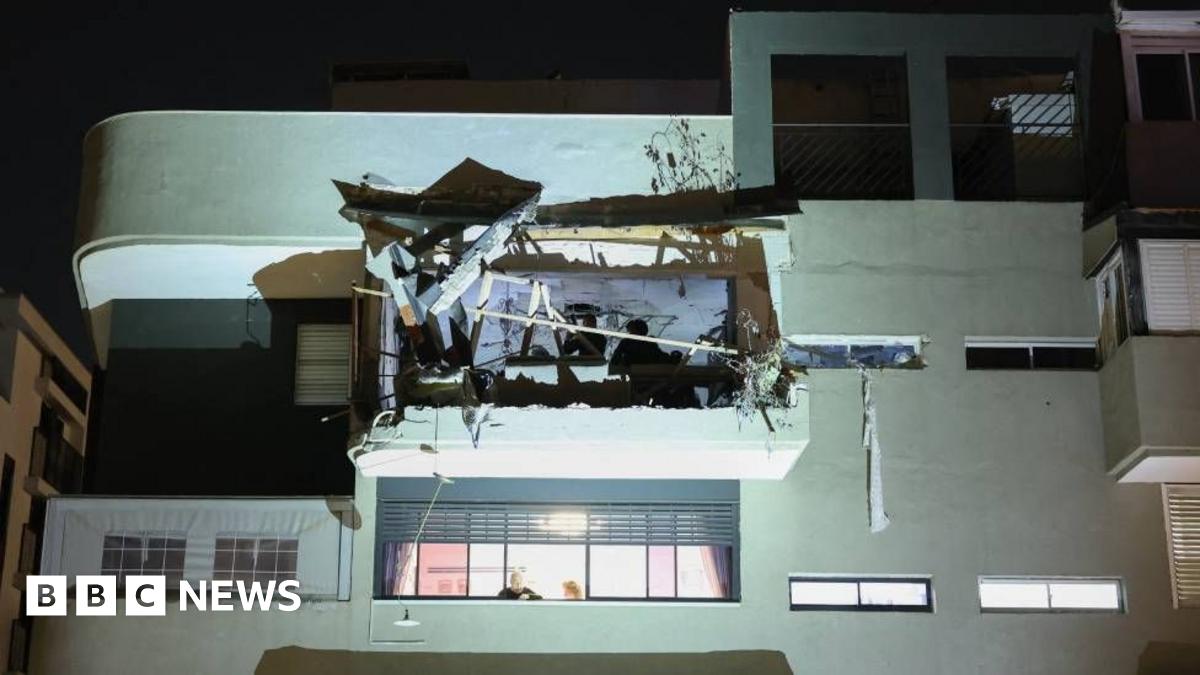
Deaths from Iran’s daily missile attacks have been rare in Israel, with air defences intercepting most of them. But cluster bombs disperse over a wide area and are much harder to defend against, even when the missile carrying them is shot down.
As the war has gone on, Iran has shifted to using more of them.
“You can see the entry point of the rocket that flew all the way from Iran in a huge missile, and broke into dozens of pieces,” said Israeli military spokesman Lt Col Nadav Shoshani during a visit to the site. “We had dozens of impact points like this in central Israel.”
He said that while Israel had intercepted the missiles carrying cluster bombs, each carried 20 to 80 munitions, which were “very difficult to stop”.
While we were there, another alarm sounded, warning of incoming missiles. The neighbour, Sigal, beckoned us into her safe room.
There have been relatively few casualties from Iranian missiles in Israel. Fourteen people have so far been killed directly by strikes, nine of them in one attack in Bet Shemesh in the early days of the war.
The joint US-Israel campaign against Iran, now in its 19th day, has destroyed military sites, oil facilities and other infrastructure across the country, with the US-based Human Rights Activists News Agency (Hrana) reporting on Tuesday that at least 1354 civilians and 1138 military personnel have been killed since the war began.
Israel’s military says it has destroyed more than 70% of Iran’s ballistic missile launchers, and that Iran’s attacks against Israel are now weakening.
Meanwhile, Israel’s population is resilient, and support for the war still appears to be strong.
But the regular alarms, which send Israelis into shelters night and day, and the increasing use of cluster munitions, has left some in this war-weary population starting to ask when and how it will end.