
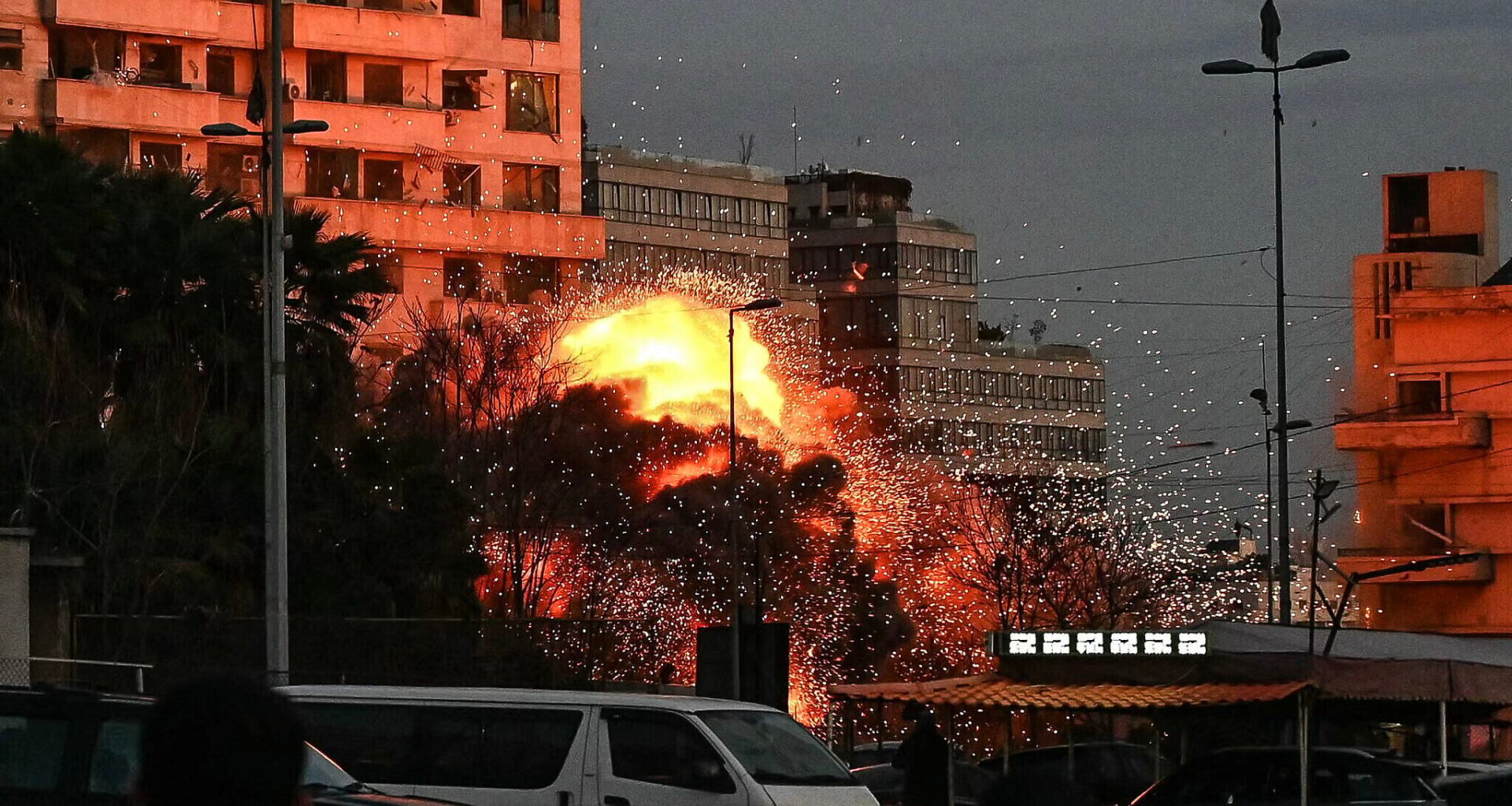
Israeli airstrikes on Lebanon on Wednesday killed at least 14 people and wounded dozens, according to Lebanon’s health ministry, as the Israel Defense Forces said it struck Hezbollah targets in response to the Iran-backed terror group’s rocket barrage on northern Israel overnight.
The military also renewed its call for residents of Hezbollah’s southern Lebanon heartland to flee northward, and said it would bomb crossings used by Hezbollah to move troops and equipment south over the Litani River, which runs some 30 kilometers (18 miles) north of the Israeli border.
Israel has escalated airstrikes and pushed troops farther into Lebanon after Hezbollah earlier this month started launching attacks on Israel for the first time since the November 2024 Israel-Hezbollah ceasefire agreement, which ended over a year of conflict.
Hezbollah has said the strikes were in response to both Israel’s continued presence and strikes in Lebanon since the agreement, and the killing of Iran’s Supreme Leader Ali Khamenei at the start of the US-Israeli bombing campaign in Iran on February 28.
Israeli strikes on central Beirut’s Basta and Zuqaq al-Blat neighborhoods on Wednesday morning killed at least 12 people and wounded 41, said Lebanon’s health ministry, which does not distinguish between combatants and civilians.
Get The Times of Israel’s Daily Edition
by email and never miss our top stories
By signing up, you agree to the terms
“It was at 4 a.m., we were asleep,” said Sara Saleh, a 29-year-old woman displaced from Beirut’s southern district, a densely populated Hezbollah stronghold.
“We fled in our pyjamas,” she told AFP, after she and her family fled a school they were sheltering in nearby.
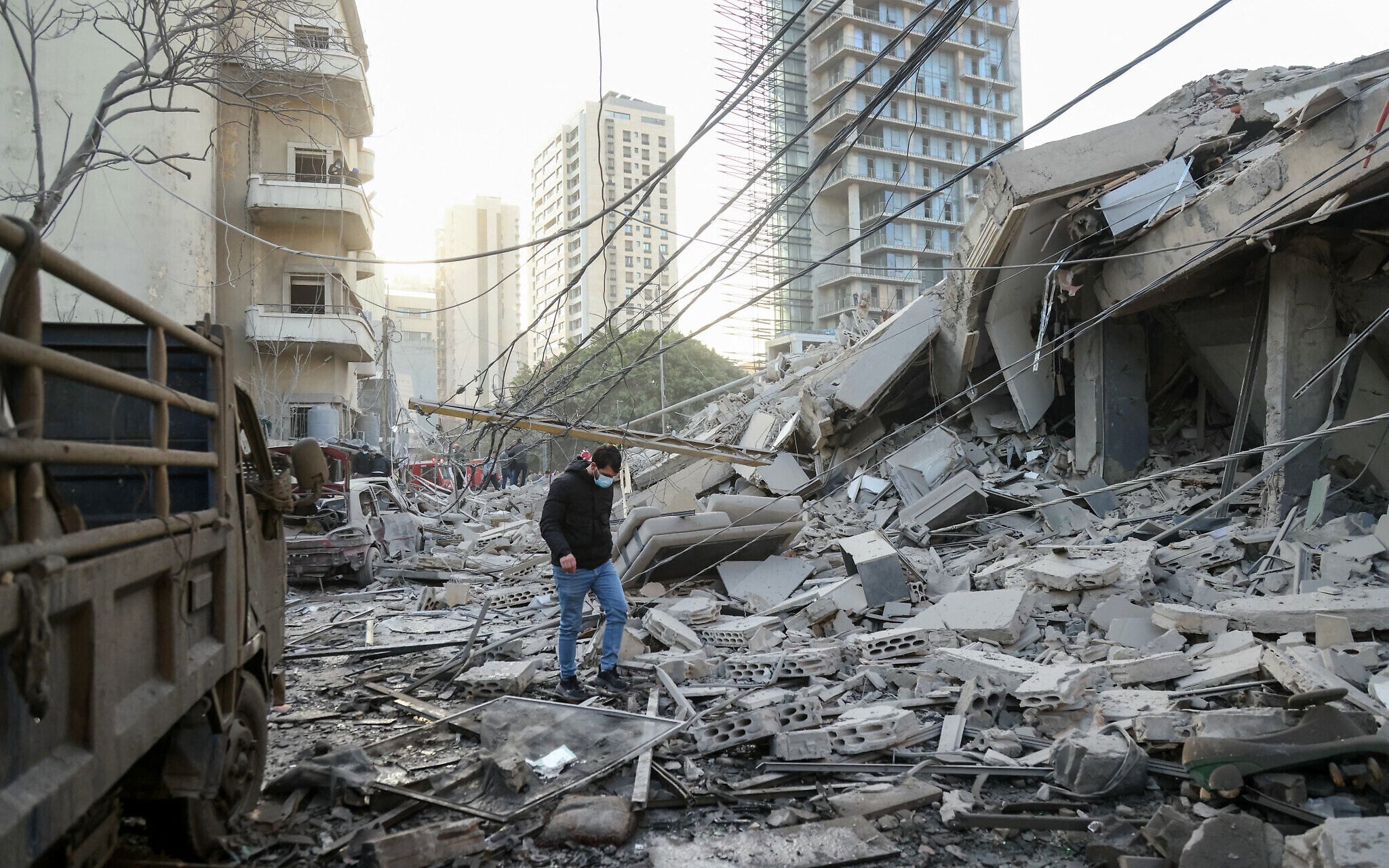
A man walks through rubble at the site of an Israeli airstrike in central Beirut on March 18, 2026. (Ibrahim Amro / AFP)
Among those killed were the director of political programming for Hezbollah’s Al-Manar TV and his wife, while their children and grandchildren were wounded, the network said.
The IDF had issued an evacuation warning for one building in Beirut’s Bachoura neighborhood, saying it would target facilities used by Hezbollah. In the morning, the military said the Air Force had struck facilities of Hezbollah’s quasi-bank Al-Qard al-Hasan in Beirut.
Also in Beirut, the military said a strike carried out by the Israeli Navy targeted a “key” Hezbollah operative. No further details were given.
The IDF said it also struck command centers “deliberately embedded within the civilian population” in the southern coastal city of Tyre, which it described as a Hezbollah “center of gravity.” The Tyre area had already been partially evacuated of civilians, and the military issued a new warning ahead of the strikes.
A building collapses in Beirut following an Israeli strike after the Israeli military called on residents of the city’s central neighbourhood to evacuate, warning of an imminent attack on the Lebanese capital targeting the Iran-backed militant group Hezbollah pic.twitter.com/vQpWZQs68m
— AFP News Agency (@AFP) March 18, 2026
Another airstrike in south Lebanon targeted a headquarters of the Imam Hossein Division, an Iranian militia that operates alongside Hezbollah, the military added.
Lebanon’s health ministry said two people, including a civil defense rescuer, were killed in an Israeli strike on a vehicle near the main seaside road in Sidon. There was no immediate comment from the military on that strike.
Later on Wednesday morning, the military targeted gas stations in Lebanon that it said were owned by Hezbollah.
Al-Amana, a fuel distribution company that is owned by Hezbollah, has been under US sanctions since February 2020. The IDF said the company “constitutes fundamental economic infrastructure that supports Hezbollah’s military capabilities.”
???????????????? Destruction and plumes of smoke were reported following an airstrike on the Al-Amana station in Deir Qanoun. pic.twitter.com/uQAooEWBIZ
— ???????????????? Gabriel Ferrigno | Geopolitics (@bielferrigno) March 18, 2026
The strikes on Al-Amana were intended to cause a blow to both the terror group’s income and mobility, according to the IDF.
“The targeted assets generate millions of dollars of profits for the terror organization. These funds are funneled through accounts owned by Hezbollah’s Al-Quard Al-Hassan Association, and fund Hezbollah’s terror activity,” the military said.
The military also repeated its call, which was first issued on Thursday and renewed on Tuesday, for residents of southern Lebanon to flee north of the Zahrani River, which runs about 18 kilometers (11 miles) north of the Litani River, where the IDF said it would target crossings used by Hezbollah.
#عاجل‼️ انذار عاجل إلى سكان جنوب لبنان المتواجدين جنوب نهر الزهراني
????إن نشاطات حزب الله الإرهابية تُجبر جيش الدفاع على العمل ضده بقوة في تلك المنطقة وهو لا ينوي المساس بكم.
????الغارات مستمرة حيث يعمل جيش الدفاع بقوة كبيرة في المنطقة. ولذلك وحرصًا على سلامتكم نعود ونناشدكم… pic.twitter.com/PHeX38LftQ
— افيخاي ادرعي (@AvichayAdraee) March 18, 2026
The IDF has assessed that just under 1,000 members of Hezbollah’s elite Radwan Force crossed the Litani River into southern Lebanon to confront Israeli forces carrying out a ground operation.
So far, the IDF said it has killed at least 200 Radwan operatives, who the military says are deployed in small cells across nearly every village in southern Lebanon and are mostly retreating after encountering Israeli forces.
“Due to Hezbollah’s activities and the movement of terror operatives to southern Lebanon under the cover of the civilian population, the IDF is forced to carry out extensive and precise strikes against Hezbollah’s terror activities,” said army spokesman Col. Avichay Adraee on Wednesday.
To “prevent the transfer of reinforcements and combat equipment, the IDF intends to attack crossings on the Litani River” in the afternoon, said Adraee. Addressing south Lebanon residents, he added: “For your safety, you must continue moving to the area north of the Zahrani River and refrain from any movement southward that could endanger your lives.”
Last week, the military struck a bridge on the Litani River that it said was being used by Hezbollah as a “key crossing” to move from northern to southern Lebanon.
IDF says it thwarted over half of overnight rocket barrage
The IDF said Wednesday that it thwarted more than half of Hezbollah’s overnight rocket barrage on northern Israel, and assessed that the terror group plans to launch similarly large attacks every few days.
According to military estimates, Hezbollah intended to fire at least 100 rockets. In practice, it mustered around 40 short-range rockets, several missiles, and five drones.
Most of the rockets were intercepted, landed in open areas, or fell short in Lebanon. One, however, struck a home in the northern city of Karmiel, causing damage. All five of the drones were intercepted, according to the IDF.
The Israeli Air Force carried out strikes on Hezbollah rocket launchers, launch teams, and command centers both before and during the barrage, aiming to disrupt it. The military said several launchers were destroyed before they could be used, and at least 10 more were struck afterward.
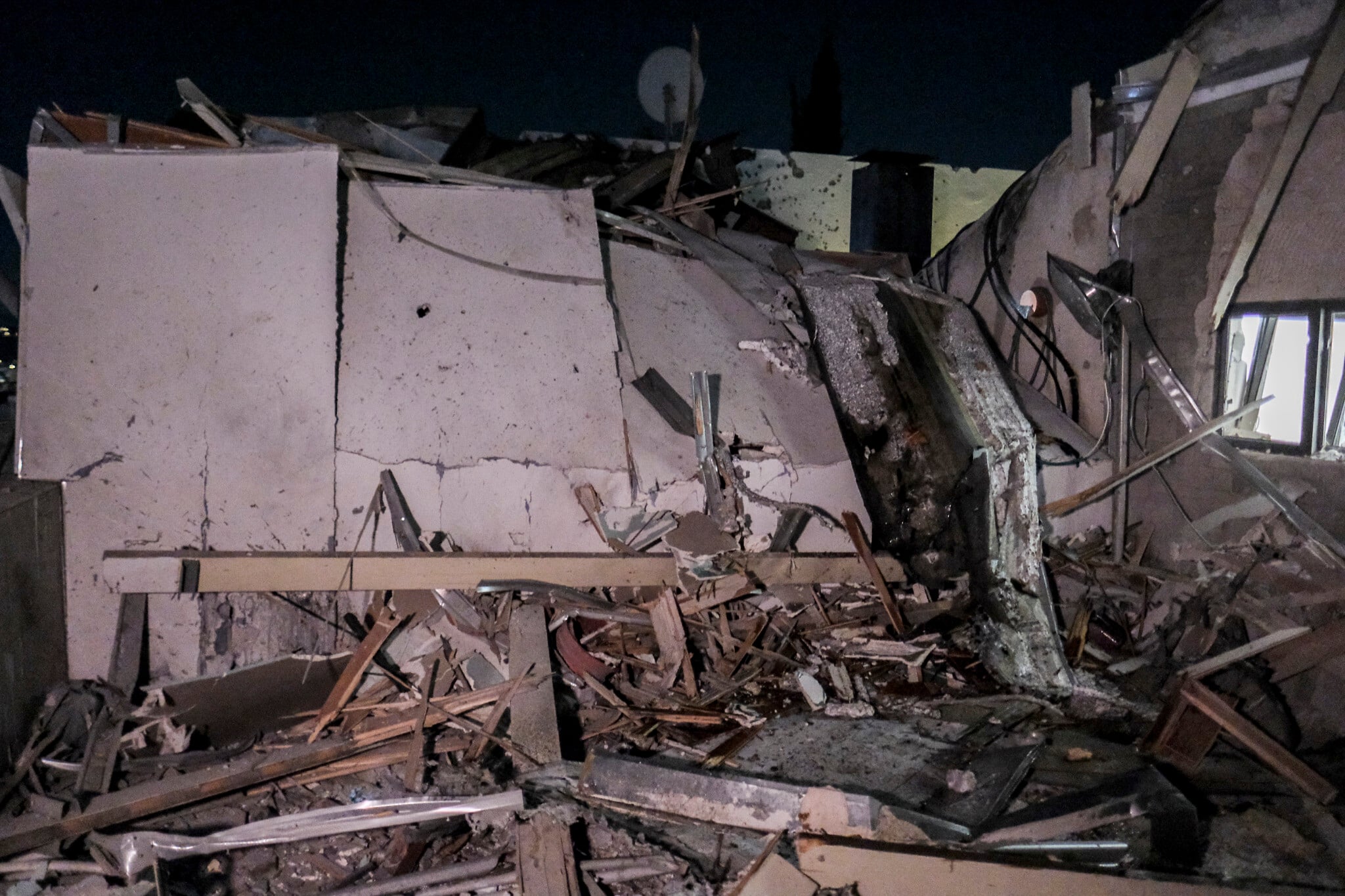
Damage is seen at a home hit by a rocket from Lebanon in Karmiel on March 17, 2026. (Flash90)
In recent days, Hezbollah has been firing an average of about 150 rockets per day, according to the IDF, which assesses that the group is attempting to periodically escalate with larger barrages like the one planned last night.
Roughly two-thirds of the daily rocket fire has been directed at Israeli forces operating in southern Lebanon and along the border, with the remaining third aimed at Israel.
The IDF believes Hezbollah still possesses thousands of short-range rockets with ranges of up to 40 kilometers (24.8 miles), along with hundreds of longer-range projectiles.
However, most of the terror group’s remaining capabilities are now based deeper in southern Lebanon, including north of the Litani River. As a result, short-range rockets are largely limited to targeting troops in southern Lebanon or Israeli communities in the Galilee, rather than cities deeper inside Israel.
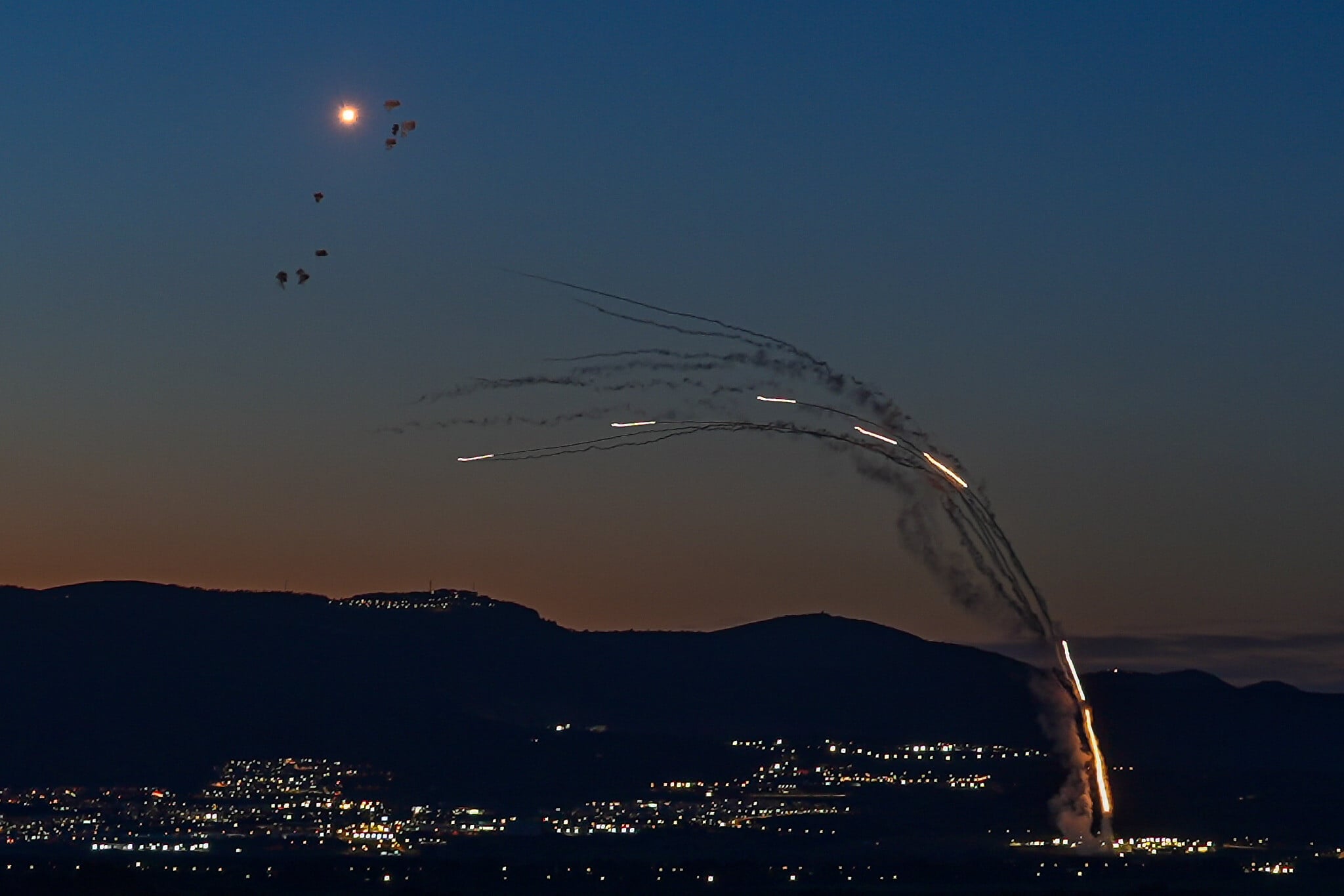
Air defense batteries fire interceptors toward incoming rockets launched by Hezbollah from Lebanon, as seen in northern Israel, March 17, 2026. (Ayal Margolin/Flash90)
The military also assesses that Hezbollah has decentralized its rocket array, using launchers with fewer barrels spread across more locations. While this makes them harder to detect and destroy, it also reduces the number of rockets that can be fired at once.
Meanwhile, the IDF and the Shin Bet internal security service said Wednesday that a senior Hamas moneyman was killed in an Israeli strike on the offices of Hamas’s “fundraising apparatus” in Sidon on Sunday.
Wissam Mustafa Hussein Taha operated under Hamas fundraising chief Essam Khashan and had worked “to raise hundreds of millions of dollars worldwide for Hamas,” the Shin Bet said, adding that the funds “are used to finance terrorism, military buildup, and salaries for operatives in the military wing.”
The IDF on Wednesday also published footage showing the identification of Hezbollah operatives transporting weapons in southern Lebanon, before being targeted in an airstrike.
The operatives were identified by troops of the 91st “Galilee” Regional Division moving RPGs and other weapons out of a car. A short while later, an Air Force drone struck and killed the Hezbollah members, the IDF said.
In another incident, troops of the 401st Armored Brigade identified two Hezbollah operatives who had launched rockets at Israeli forces, and a short while later, they were struck and killed, the military said.
Elsewhere in southern Lebanon, troops of the 300th “Baram” Regional Brigade recently demolished over 80 Hezbollah sites, the IDF said, adding that the brigade killed two Hezbollah operatives who emerged from one of the sites.
יותר מ-80 תשתיות טרור של ארגון הטרור חיזבאללה הושמדו: כוחות חטיבה 300 במהלך ההגנה הקדמי בדרום לבנון
במסגרת מהלך ההגנה הקדמי, כוחות חטיבה 300 בפיקוד אוגדה 146 ממשיכים בפשיטות ממוקדות בדרום לבנון להשמדת תשתיות של ארגון הטרור חיזבאללה.
בשבוע אחרון, הכוחות השמידו יותר מ-80 תשתיות… pic.twitter.com/mWTtP6cYYJ
— צבא ההגנה לישראל (@idfonline) March 18, 2026
Strikes in Lebanon killing or wounding a classroom of kids every day, says UN official
IDF strikes in Lebanon have killed over 900 people and displaced more than a million since Hezbollah renewed its attacks on Israel, according to Lebanese authorities.
At least 111 children have been killed and 334 wounded in Israel’s strikes on Lebanon, according to Lebanese health ministry figures.
“That’s a classroom of children every day since the beginning of the war that’s either killed or injured in Lebanon,” UNICEF Deputy Executive Director Ted Chaiban told Reuters in Beirut on Wednesday.
Israel says it does not deliberately target civilians and that it takes multiple steps, including early evacuation warnings, to mitigate harm to civilians before strikes on terror targets take place.
Children across the region have “paid a terrible price” as the war has expanded across the Middle East, with Iran launching missiles and drones throughout the region in response to the continued US-Israeli bombing campaign, said Chaiban.
“The first thing we’re calling for is a de-escalation, a political way forward to this war,” he said.
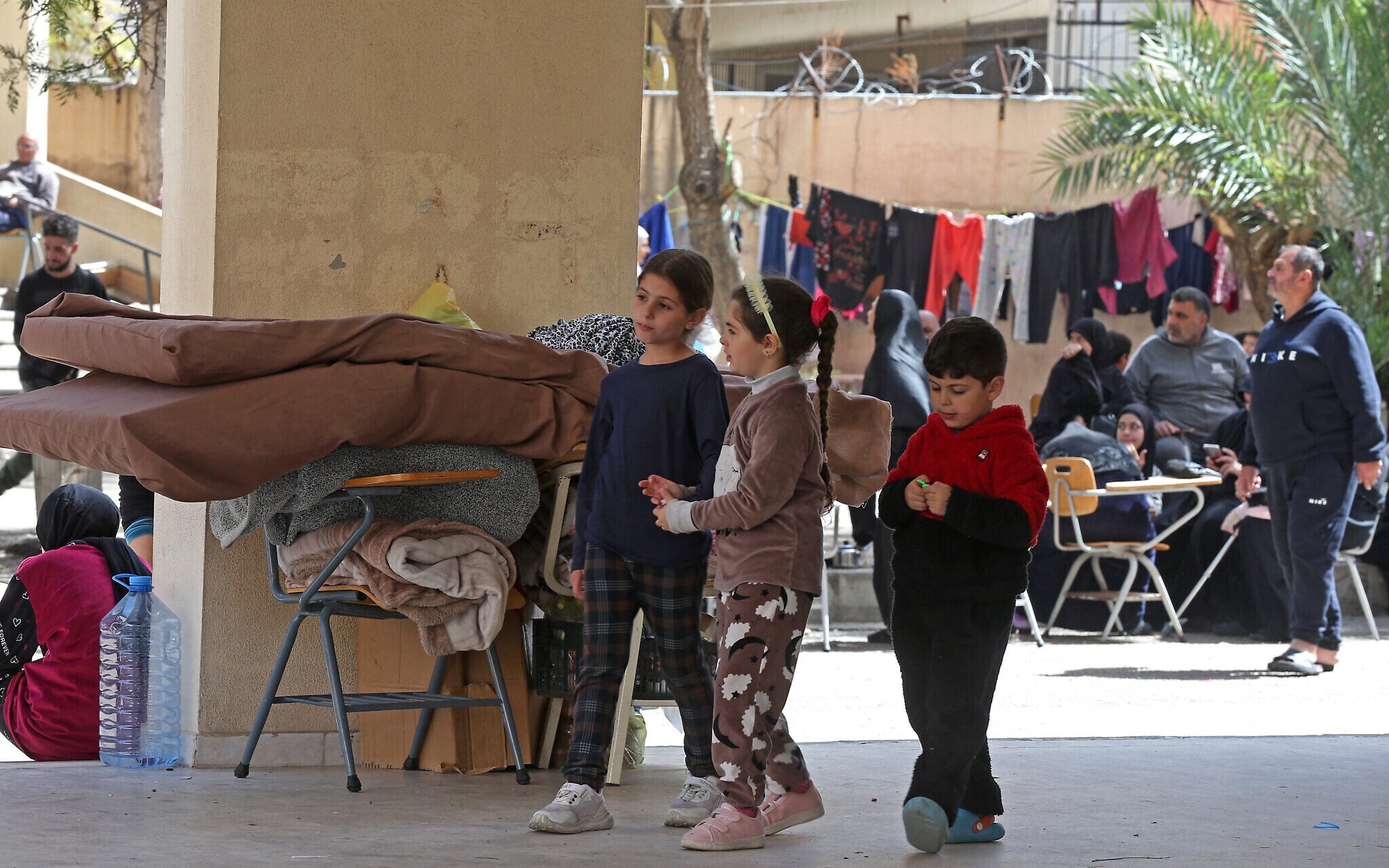
Displaced children from southern Lebanon walk in the courtyard of a school turned into a shelter in the southern coastal city of Sidon on March 18, 2026. (MAHMOUD ZAYYAT / AFP)
On Wednesday, France’s special envoy for Lebanon, Jean-Yves Le Drian, said Hezbollah “bears full responsibility for the resumption of fighting in Lebanon” but “Israel’s response has been disproportionate and counterproductive, as it unites various actors against Israel.”
Speaking to the France Info radio station, Le Drian accused Israel of spurning offers by the Lebanese government to enter into negotiations, and of driving the mass displacement in Lebanon with the IDF’s evacuation warnings.
Israel and the US have criticized the Lebanese state for failing to disarm Hezbollah in accordance with the November 2024 ceasefire agreement. Le Drian said the state had taken steps toward disarmament.
“Israel occupied Lebanon for many years and did not succeed in eliminating Hezbollah’s military capabilities,” Le Drian said. “It cannot now demand that the Lebanese government achieve this in three days under bombardment.”
Times of Israel staff contributed to this report.