
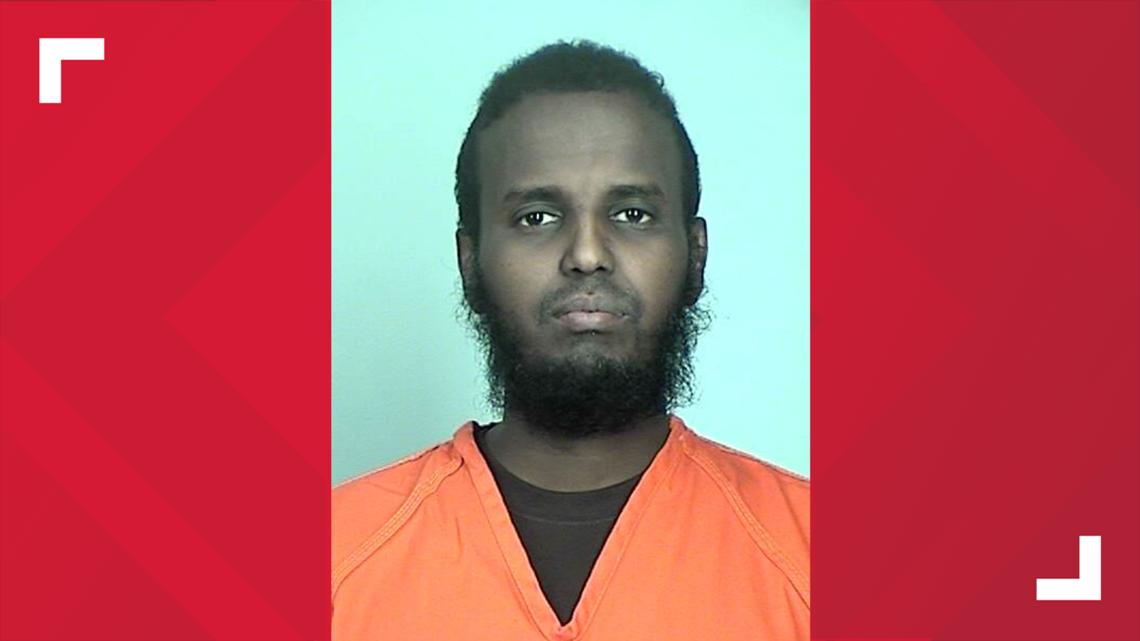
Farah received 28 years as ringleader of the first fraud group to stand trial, and also for masterminding the attempted bribery of a juror.
MINNEAPOLIS — Abdiaziz Farah, one of the most prolific defendants in the $300 million pandemic fraud case known as “Feeding our Future,” on Wednesday received a 28-year prison sentence, the longest term handed down to anyone convicted in the case so far.
Farah claimed to serve 18 million meals to children and submitted $49 million in taxpayer reimbursement claims in the COVID-era scheme. Federal prosecutors say very little food was actually purchased with that money, and very few meals, if any, were served to children.
“Your goal was from the start to be a multimillionaire off the backs of taxpayers with money intended for children,” said U. S. District Court Judge Nancy Brasel, who opined that Farah was motivated by nothing but “pure unmitigated greed.”
The Judge noted the irony that so many of the opportunities in Farah’s life were delivered by government agencies and nonprofits. After getting his housing and college paid for, Farah worked for both MNDOT and the Met Council. Yet as soon as he saw a government program intended to help children, the judge said Farah saw an opportunity to make money.
“Your crime was breathtakingly elaborate,” Judge Brasel added.
A jury convicted Farah in June 2024 of 23 counts, including wire fraud conspiracy, federal programs bribery, conspiracy to commit federal programs bribery, multiple counts of money laundering, and multiple counts of wire fraud.
In addition, Farah was convicted of passport fraud after trying to flee to Kenya, where he sent millions of dollars when the feds were closing in and preparing to arrest him. Farah also has admitted to masterminding the plot to bribe a juror in his trial. He will be sentenced for the bribe at a later date, and it could add years to his term.
“Abdiaziz Farah stands at or near the top of this entire fraud scheme,” said Acting U.S. Attorney Joe Thompson, who was the lead prosecutor in Farah’s trial. “He was in from day one. It was his entity he used, and he recruited others to be involved. He was the money guy. He kept track of all the money that came in. At no point was he trying to feed kids. From day one, he was committing fraud.”
Farah is a former owner of Empire Cuisine and Market in Shakopee, where he initially claimed to be serving meals to children. Evidence at trial showed that when the Minnesota Department of Education changed the rules to disallow for-profit restaurants from participating in the Federal Child Nutrition Program, Farah and others began creating phony non-profits where they claimed to serve meals.
“Bro, the next multi legit millionaires will be me and you,” Farah texted to a co-defendant, shown in trial exhibits.
A Shakopee School District representative testified at trial that Farah falsely claimed to serve meals at some actual meal sites where the school district was feeding children.
In arguing for a lower sentence, Farah’s attorney, Andrew Birrell, pointed out that prolific scam artists Sam Bankman-Fried and Elizabeth Holmes received prison sentences of 25 years and 11 years despite stealing much more money than Farah.
Thompson countered that Farah scammed a pandemic-related program intended to help children in need, which makes his case different.
“None of them did what he did, which is lie about feeding kids,” Thompson said.
Thompson told Judge Nancy Brasel that within two years of coming to Minnesota as a refugee from Somalia, the then-CEO of United Healthcare provided Farah with a full-ride scholarship to the University of Minnesota.
“This country gave him everything. A home. Citizenship. A free college education,” Thompson said. “And how did he repay? By robbing us blind.”
Mukhtar Shariff, Farah’s co-defendant who was also found guilty at trial, received a 17.5-year prison sentence. Co-defendant Mohamed Ismail received 12 years in prison. But the government argued several factors in Farah’s case made him more culpable than his codefendants, putting him in the same company as prolific defendants Aimee Bock and Salim Said.
Judge Brasel asked Thompson whether Farah conceived the fraud scheme.
“He was one of the first who saw the opportunity and took it. Whether he conceived of it, or Aimee Bock did, or a group of people, he was one of the first to do it,” Thompson answered. “He took more money home from this fraud scheme than anyone else.”
Investigators say Farah used the fraud money to purchase a condo in Burnsville, five luxury vehicles, commercial buildings in Kentucky, and two lakefront lots on which he planned to build a multi-million dollar home. In addition, Farah sent more than $1 million to Kenya to purchase real estate in that country.
Judge Brasel confirmed that the U.S. government has no way to recover the money and real estate sent to Kenya. Farah’s family will continue to enjoy and live on the illegal proceeds there.