
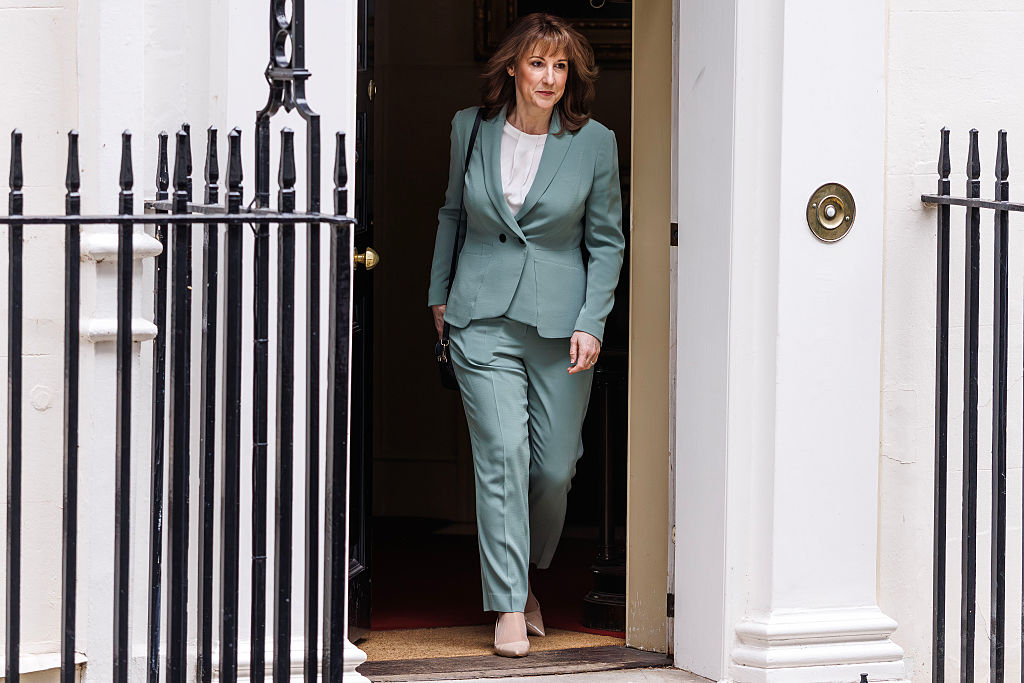
Photo by Dan Kitwood/Getty Images
So Rachel Reeves wants more alignment with the European Union. Or so she announced in her Mais lecture yesterday (17 March). Cue commentators here going off on one, wondering if the Brexiteers will react, whether Leave voters will be concerned. Pro-EU voices retort that public opinion has moved on since the referendum and point to the increasingly clear economic impact of Brexit. What no one does is stop to wonder what the EU might think. This, unfortunately, is how we do Brexit.
We have, of course, been here before. Brexit afficionados will remember the “Malthouse compromise”, that ridiculous and ill-fated episode when, as Theresa May struggled to get her deal accepted by the House of Commons, Conservative MPs managed to agree on a way forward among themselves. The EU rejected it out of hand. Several months later, party politics was to the fore again as Boris Johnson promised to scrap Theresa May’s deal, appealing to a Conservative membership that craved a harder form of Brexit. He won. The UK economy did not.
Now, the Labour Party is in danger of doing the same thing – letting domestic expedience guide its approach to the EU. The government finds itself in a bind of its own making: of wanting to undo the economic damage of Brexit without reopening the Brexit debate. The 2024 manifesto promised not only “tearing down” barriers to trade with the EU, but it also pledged that a Labour administration would not rejoin the single market or the customs union. The thing is, most of those barriers stem from being outside the customs union, and particularly the single market.
How to square this circle? Well, simply, by offering to align with loads of EU laws without rejoining the single market. As the Chancellor put it in her Mais lecture, “There are areas in which regulatory autonomy may be necessary – for sectors with unique characteristics or strategic importance for the UK. But that should be the exception, not the norm.”

Subscribe to the New Statesman today and save 75%
Problem solved? Well, not quite. Certainly, the Chancellor’s words indicate the government’s belief that the argument about alignment is there to be won, and that public opinion has moved sufficiently that arguing in favour of closer alignment is not a political risk. Brexit is not popular, and there are reasons why Nigel Farage may not want to remind people he was one of its architects. And her argument works politically in that aligning with sectors where the UK economy might benefit without signing up to the single market in toto, or to freedom of movement, would not – technically – breach the manifesto’s red lines.
The issue is that the EU, as I’ve argued before, is not a fan of the proposed approach. Neither the EU nor member states are in the business of doing favours for the UK. None of them particular relish the idea of a country that has left the club thriving economically. Viewed from Brussels, the UK faces a choice between signing up to the single market, and the complex web of rights and obligations therein, or learning to live with something approximating the status quo. What is more, it is easy to detect signs of frustration among EU policymakers about a UK that, while detailed negotiations on the “reset” are underway, is proposing grand new initiatives rather than focusing on the detail.
And of course, there is always the prospect that this might get worse rather than better. The precarity of the Prime Minister’s position has prompted various pretenders to prepare themselves for a tilt at the top job. And just as Boris Johnson realised that Brexit would be a key issue for Tory members in 2019, so Labour bigwigs realise the same about their own party.
The same but in reverse. The Labour membership is hugely Europhile, meaning that anyone who aspires to triumph in a potential leadership election must appeal to that sentiment. In other circumstances it would be curious that both our Justice and Health Secretaries have been opining about the possible benefits of a customs union. The thing is, much as with Malthouse, focusing on the domestic politics is not enough. Tempting though it may be for Labour to have a conversation with itself on Brexit, it is important the party keeps one eye on what the EU thinks. Ultimately, any policy position that meets with the approval of the governing party must be negotiated with Brussels. Failing which, a new prime minister would enter office having already promised something they cannot deliver.
The danger is that what little momentum is left in the “reset” risks being lost should the EU conclude that the UK is just not being serious. The Tories banged on about “max fac” (the technology-based core of the Malthouse plan intended to obviate the need for border infrastructure on the island of Ireland) while the EU just rolled its collective eyes. Labour should have learned the lesson that simply insisting on something the EU opposes is no way to move the dial.
All this being said, it’s easy to understand why we go about these things the way we do. It’s all too easy to get blinded by domestic politics. And it is, after all, much easier to hold all the cards if you’re playing solitaire. Domestic feel-good is one thing. Successfully revising our relationship with the EU quite another. Rachel Reeves wants loads more alignment? I want a unicorn.
[Further reading: Inside the Labour factions pressuring Starmer to rejoin Europe]
Content from our partners