
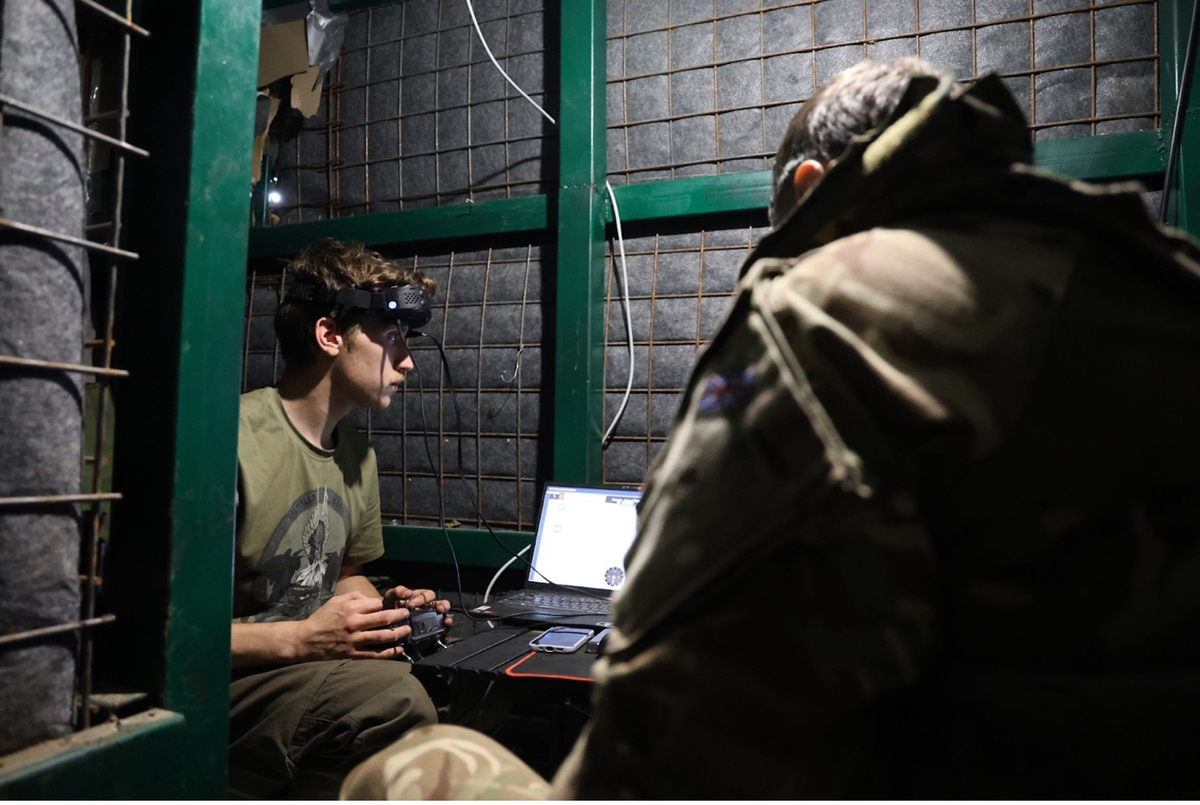
The early morning begins with the crashing of artillery and the whistle of Russian glide bombs raining down on Ukrainian positions in Donetsk Oblast, near the border with Dnipropetrovsk.
In recent months, Russian forces have intensified efforts to expand westward, launching waves of infantry assaults and drone strikes as they attempt to breach the administrative boundary and establish a foothold inside Dnipropetrovsk Oblast. Moscow recently claimed control of villages like Maliivka, just inside the region.
JOIN US ON TELEGRAM
Follow our coverage of the war on the @Kyivpost_official.
Out on the open fields, Russian troops press forward in relentless waves, often attacking in groups of two or three. They alternate between motorcycle assaults and cautious movements on foot, using treelines for cover as they inch toward Ukrainian positions.
Faced with constant pressure and limited manpower, Ukraine’s defenders continue to use technology as a force multiplier.
To blunt these assaults, Ukrainian forces increasingly rely on drones to hold their defensive lines. A drone team from the brigade’s Unmanned Systems Battalion conducts first-person view (FPV) bombing missions. On most days, they launch more than a dozen drones throughout the day, targeting enemy soldiers before they can breach defensive lines.
Among them is Bohdan, a soft-spoken soldier from Lviv, known by his call sign, “Bandera.” He is one of three soldiers sheltering in a dugout, working in tight coordination to fly and strike. His unit is part of a wider chain of FPV teams operating across the front, often in tandem with artillery crews and electronic warfare specialists.

Other Topics of Interest
Trump Hails ‘Great Progress’ in Witkoff-Putin Meeting
Trump says envoy Steve Witkoff had a “highly productive” meeting with Putin, claiming “great progress,” though he offered no details on the topics covered.
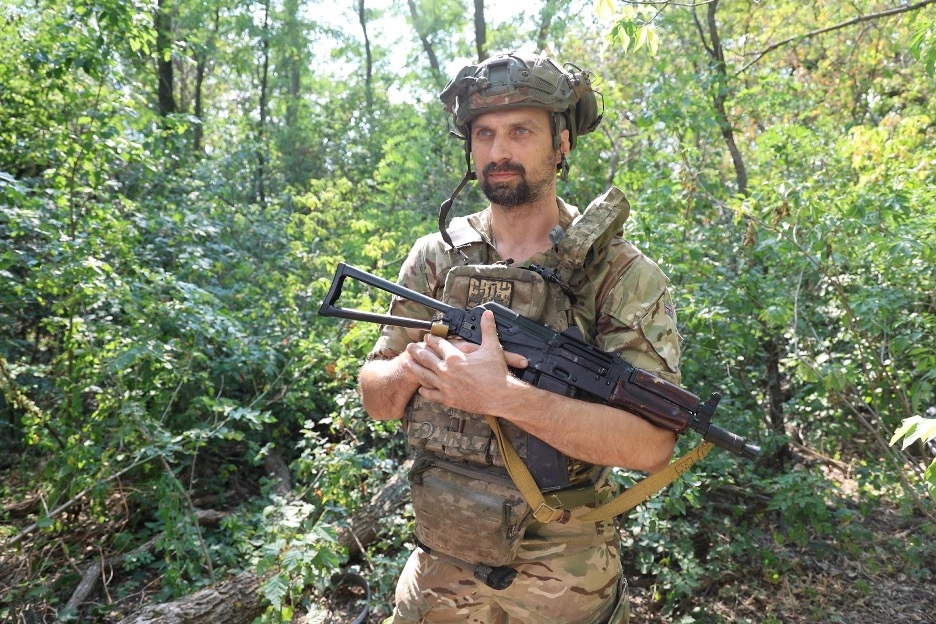 Andriy is part of the Unmanned Systems Battalion of Ukraine’s 110th Separate Mechanized Brigade. Photo: David Kirichenko
Getting to the position on the front is often the most dangerous part. Drone ambushes, especially by fiber-optic drones, are common across the front line. “If you spot it in your rearview mirror, just pray that the road ahead is good and floor it,” Bohdan says. “If you see it on the road ahead, you may need to ditch the vehicle.”
Russia claims that 65% of Ukrainian casualties occur during troop rotations or frontline resupply.
Both Ukrainian and Russian forces rely heavily on Starlink to coordinate battlefield operations. “Most of them use Starlink,” Bohdan says. “But sometimes they rely on relay setups, modems with signal boosters placed kilometers apart.”
As the team monitors enemy movements, Andriy, who goes by the call sign “Price,” pointed to Russia’s most active drone in the area: the ZALA. These long-range reconnaissance drones typically search for roads, artillery positions, and heavy equipment.
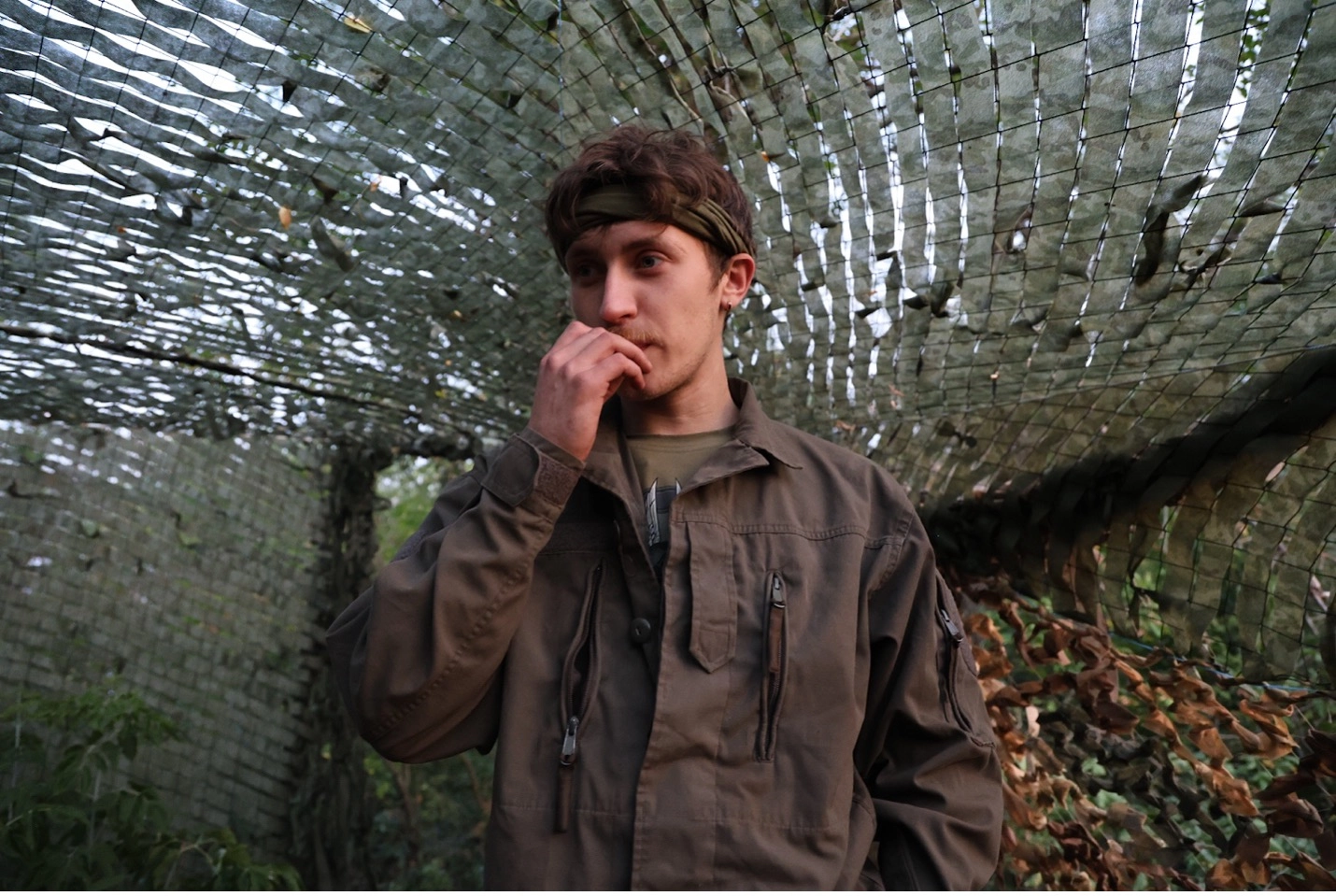 Bohdan, also known as “Bandera,” takes a smoke break after an FPV bombing mission. Photo: David Kirichenko
“They’re not really interested in guys hiding in the bushes anymore,” Andriy says. “If you spot a soldier, he’s already gone within seconds. But artillery? That’s what they care about. A soldier 20 kilometers from the front can’t destroy you. Artillery can.”
For Bohdan, unmanned aerial systems have formed the backbone of Ukraine’s defense.
“Unmanned systems have become a critically important component in the war against Russia,” Bohdan says. “Drones enable reconnaissance – both close and long-range – fire correction, mining operations, delivery of supplies and ammunition, and strikes.”
He adds: “Without exposing operators to direct danger, drone operators have partially taken over the roles of sappers, artillery, infantry, reconnaissance troops, and drivers.”
Bohdan enlisted in 2020, once dreaming of joining the French Foreign Legion. But when Russia launched its full-scale invasion, he chose to stay. Now, he spends his days behind a headset, steering explosive-laden drones into Russian soldiers.
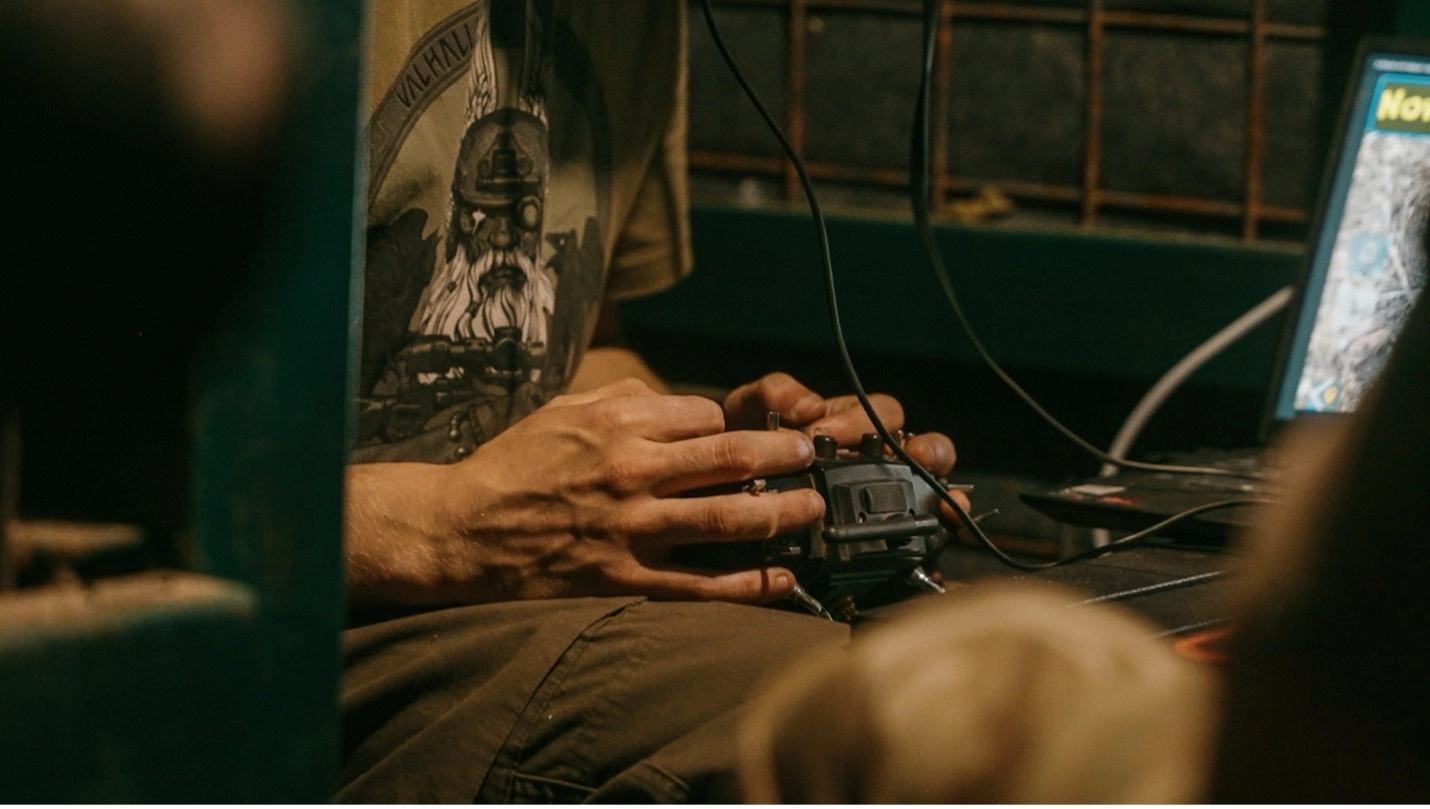 Bohdan conducts an FPV drone strike on a Russian position. Photo: Ryan Van Ert
He admits that operating drones makes it easier to kill. “Of course – it’s the safety of distance,” he says. “You’re hovering six kilometers away – ten, even two – you don’t hear their last breath or how they scream. Or when their body starts convulsing after the final shot.”
While Bohdan focuses on flight and targeting, Serhiy handles the dangerous task of preparing the drones for combat. Serhiy, known by the call sign “Gray,” crouches beside the drone, carefully loading the explosive payload and attaching the detonator. The work is methodical and also unforgiving. “You set it so that everything explodes at once upon contact,” he explains. Any mistake in wiring or arming the bomb can have fatal consequences.
Across Ukraine’s drone units, the risk of handling improvised munitions is well known. “Some guys used to do it all by themselves,” says Serhiy. “They didn’t really understand how to connect things properly and sometimes it ended with them losing their hands.”
One of the biggest challenges in the past for Kyiv has been the reliance on homemade explosive devices, which have caused injuries and deaths and are prone to malfunction. It’s estimated that up to one in ten FPV flights fail because the payload doesn’t detonate on impact.
“If you do everything correctly, don’t improvise, and make sure all the wiring is tidy and nothing’s sticking out, it’s not that dangerous. That’s how I approach it,” Serhiy says.
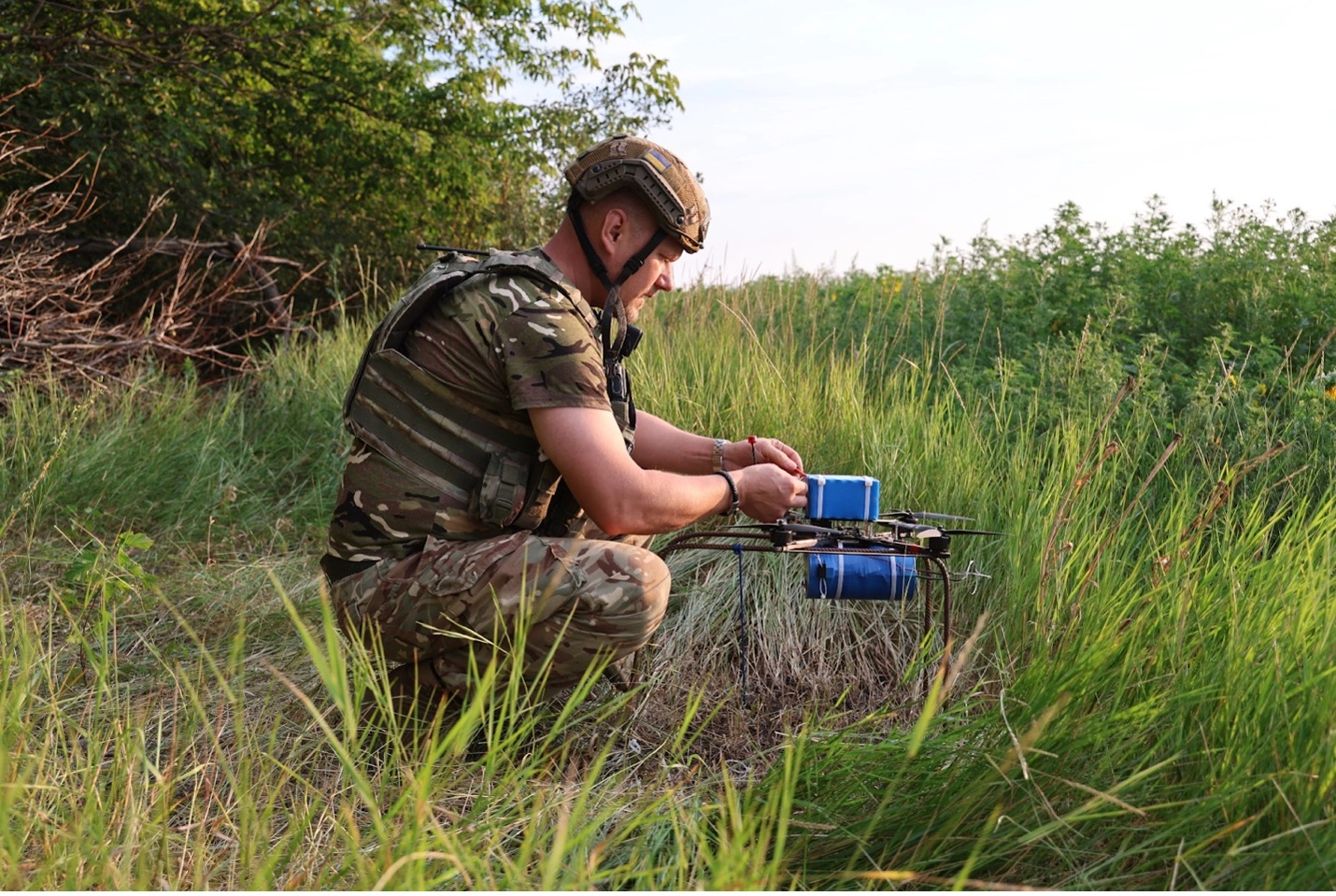 Serhiy prepares an FPV drone for a combat operation in Donetsk Oblast. Photo: David Kirichenko
Still, accidents happen. Serhiy recalls a fatal incident from the previous winter, when a fellow soldier was killed while assembling a payload. “He was very – how should I say – overconfident,” Serhiy says. “You need confidence for this job. But some guys get cocky and do it their own way.”
Serhiy hadn’t planned to work with munitions as he was assigned to the task. “I wanted to be a pilot originally,” he admits with a shrug. “But then I saw all the extra responsibilities they have. Charging drones isn’t so bad in comparison,” Serhiy says. “Still, it’s a dangerous job. But what can you do? Someone has to do it.”
Every FPV bomber drone flight demands precision. Before every flight, Serhiy inspects the drone from top to bottom. “I twist everything on myself. I do all the wiring, check that no wires are damaged. And that the explosive itself isn’t damaged.” Unlike others who rush, he insists on following every safety step. “I do everything the way I was taught.”
While Serhiy ensures everything is ready, the reality of war presses on outside the dugout. Throughout the morning and afternoon, Russian soldiers continue their assaults on Ukrainian positions on foot. “You probably know they’re often threatened – like, ‘If you don’t go out, we’ll shoot you here,’” Bohdan says. “When they’re captured, they say it straight up: ‘If I went back, they’d shoot me.’ Out there, there’s at least a chance.”
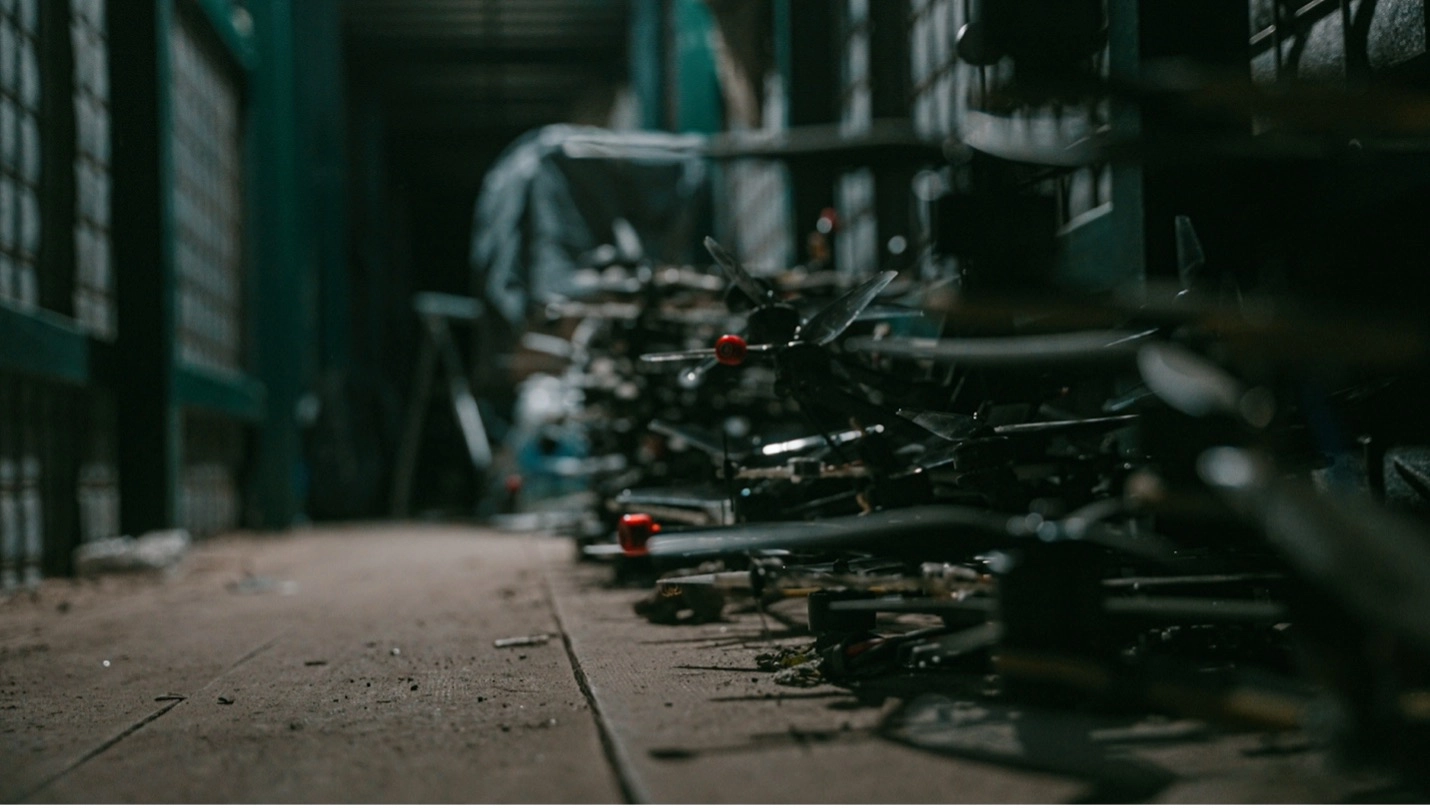 Ukrainian FPV drones in a dugout on the frontline in Donetsk Oblast. Photo: Ryan Van Ert
Back on the surface, the enemy shifts tactics – moving from infantry on foot to motorcycle assaults.
As Russian forces step up their assault using motorcycles, they make a dash for the village, aiming to reach cover inside the houses. “Artillery can flush them into yards or basements,” Andriy explains. “Then FPVs can chase them.”
Once they’re pinned inside, Bohdan flies multiple drones, striking from different angles to ensure he hits them – no matter where in the house they’re hiding. “The most effective approach is combining drones with artillery.”
Over the radio, Bohdan learns that Russian communications have been intercepted. A commander was heard promising the storm troops extra vacation time if they reached the Ukrainian position and survived the assault.
“We’re holding on with everything we have,” says Andriy. “They’re taking land, but at such a cost that no army can afford it. They’re losing a tremendous number of troops.”